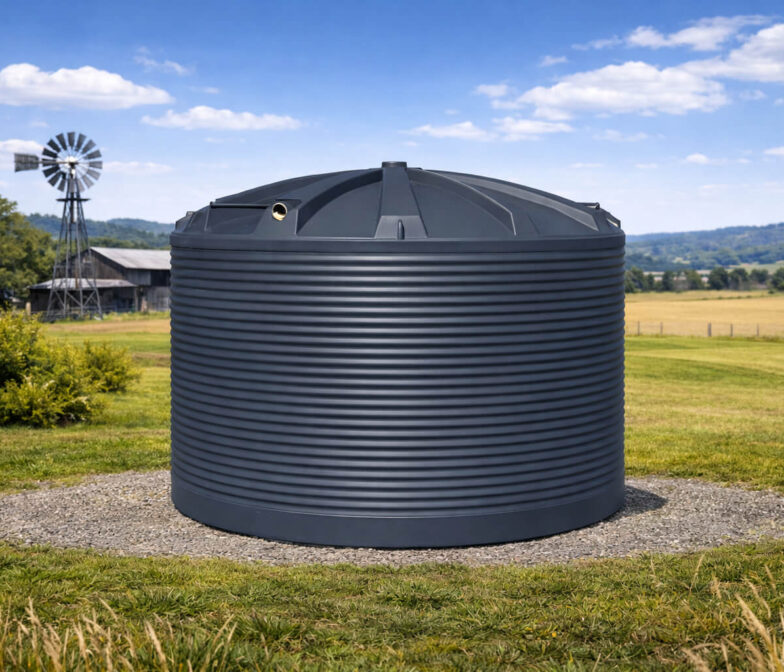
For most Australian homes, farms, and rural properties, poly water tanks are the best choice as they’re lightweight enough to install without heavy machinery, won’t rust or crack under Australian conditions, and cost less to buy and maintain than concrete or steel alternatives.
Why Tank Material Matters
The material your tank is made from affects almost every aspect of ownership, how long it lasts, how much it costs upfront and over time, how easy it is to install, and how much ongoing maintenance it needs. In a country with extreme UV exposure, wide temperature swings, and a growing need for reliable rainwater harvesting, choosing the right material from the start saves money and hassle down the track.
Poly Water Tanks
Benefits of Poly Tanks
Polyethylene water tanks have become the go-to choice for Australian households and farms for good reason:
- Lightweight: Easier and cheaper to transport and install, with no need for heavy machinery on most standard residential sites
- Corrosion resistant: Poly tanks won’t rust or degrade when exposed to moisture, varying water conditions, or chemical contact, making them ideal for long-term water storage
- Cost-effective: Lower upfront cost than steel or concrete alternatives, with minimal maintenance required over their lifespan
- UV stabilised: Manufactured with UV-stabilised materials specifically designed to handle Australia’s harsh sun without cracking or becoming brittle
- Versatile sizing: Available in a wide range of sizes and profiles to suit everything from compact suburban backyards to large-scale rural setups
Why Choose Polymaster Poly Tanks
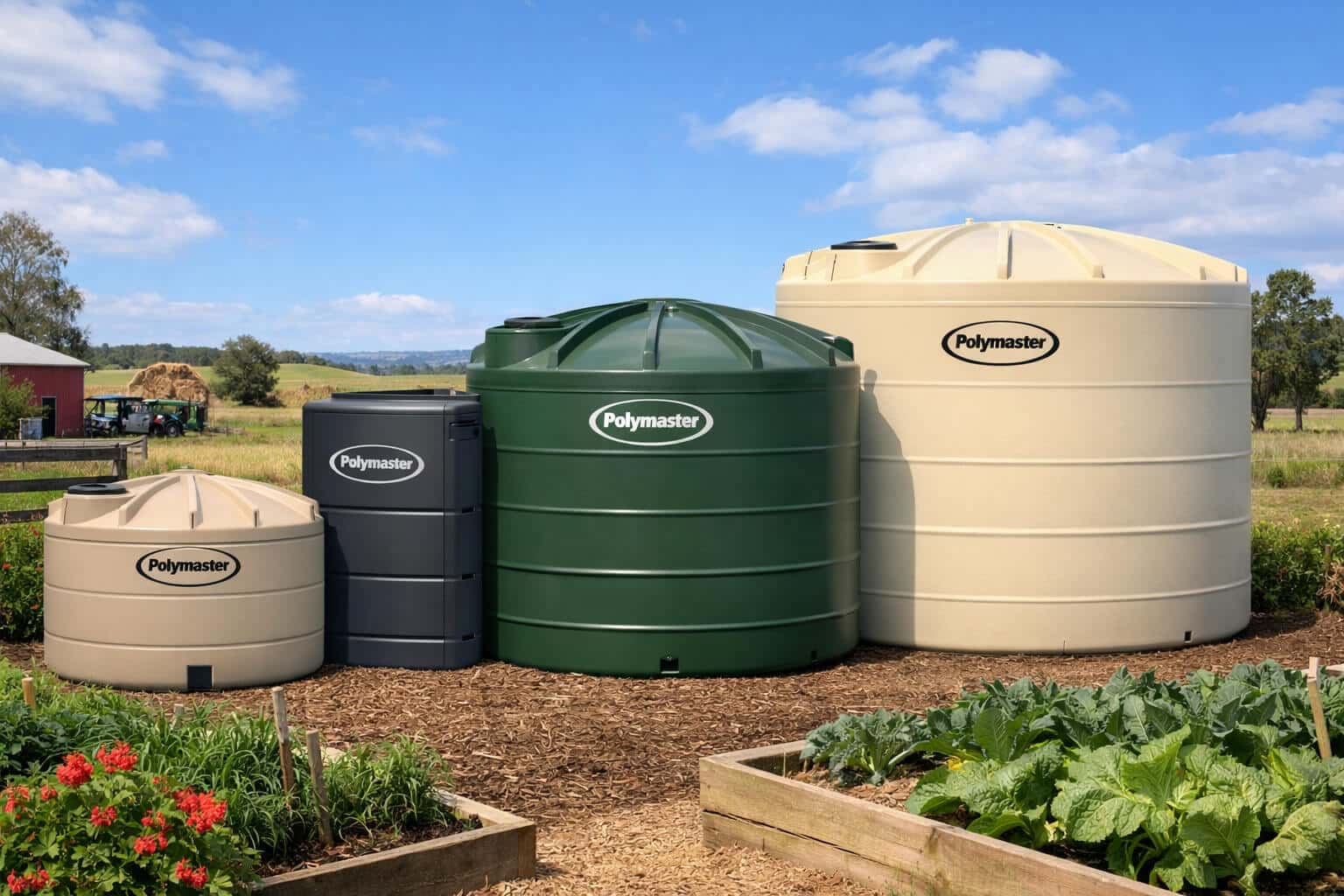
Polymaster poly water tanks are Australian-made and built to meet Australian Standards, with a 25-year design life. The range includes food-grade polyethylene water tanks, making them suitable for storing potable rainwater safely. Our poly water tanks are available from 200 litres up to 50,000 litres, in round, slimline, and underground tank options.
Concrete Water Tanks
Advantages
Concrete water storage tanks have a long history of use on Australian properties, particularly in rural areas. Their key strengths include:
- Extremely strong and structurally robust once installed
- Long potential lifespan when properly constructed
- Can be built below ground, making them a discreet option where above-ground space is limited
- Naturally cool interior temperatures can reduce algae growth in some conditions
Limitations
Despite their strengths, concrete tanks come with significant drawbacks that limit their appeal for most modern installations:
- Very heavy, making transport expensive and installation complex, often requiring excavation equipment and specialist labour
- Higher upfront cost compared with poly alternatives
- Prone to cracking over time, particularly in areas with shifting soils or seismic activity
- Cracks can allow root ingress, groundwater contamination, or leaks that are difficult and costly to repair
- Rough interior surfaces can harbour sediment and bacteria if not properly sealed and maintained
Steel Water Tanks
Advantages
Steel tanks, particularly corrugated Colorbond-style tanks, have a long-standing presence on Australian properties and offer a few genuine strengths:
- Available in very large capacities, sometimes exceeding what poly can provide
- Familiar and widely used in rural and agricultural settings
- Can be a practical option in certain commercial or industrial water storage applications
Limitations
Steel water storage tanks carry many disadvantages that make them a less practical choice for most residential and agricultural buyers:
- Susceptible to rust and corrosion, particularly in humid coastal environments or where water chemistry is acidic
- Tanks need to be constructed onsite and are unable to be moved once installed
- Higher upfront investment than comparable poly tanks
- Ongoing maintenance costs, including repainting, resealing, and addressing rust, add up over the life of the tank
- Heavier than poly, increasing transport and installation costs
- Interior liners can degrade over time, potentially affecting water quality
Which Tank Is Right for You?
The right tank material depends on your property type and how you plan to use it:
- Urban homes: Poly is the clear winner. It’s cost-effective, easy to install without disrupting an established yard, and available in slimline profiles for tighter spaces.
- Rural and farming properties: Poly handles the demands of agricultural use well, including livestock supply, irrigation, and fire-fighting water storage. Large-capacity round poly tanks suit most farm-scale requirements.
- Industrial applications: Steel or specialised poly tanks may suit high-capacity or chemical storage needs, but poly remains the most versatile starting point.
- Underground installation: Concrete or purpose-built underground poly tanks are the appropriate choice where below-ground installation is required.
For the vast majority of Australian properties, polyethylene water tanks deliver the best balance across every key criterion.
Final Thoughts
Concrete and steel tanks both have their uses, but when it comes to the best water tank material for everyday rainwater harvesting, household supply, or agricultural storage in Australia, poly tanks consistently come out on top. They’re lighter, longer-lasting under Australian conditions, lower maintenance, and more cost-effective across the board.
Polymaster’s range of poly rainwater tanks is designed and built to handle the demands of Australian conditions, backed by a 25-year design life and available in sizes to suit any property. Browse the full range or contact us today.
Enquire
More Similar News
View all News
How to Build Your Own Water Tank
How to Estimate Your Rainwater Needs