When planning a rainwater harvesting system for your home, farm, or commercial development, the most critical decision you will make isn’t just about the volume of water you need to store it’s about where you are going to put it.
The debate between underground vs. above-ground water tanks comes down to balancing spatial limitations, aesthetics, engineering requirements, and your budget.
At Polymaster, we have spent over three decades manufacturing premium liquid storage solutions for both orientations. In this comprehensive guide, we will break down the pros, cons, and core differences to help you choose the ultimate water asset for your property.
The Core Profiles at a Glance
Before diving into the technical details, it helps to understand what each system looks like in a modern Australian setting:
-
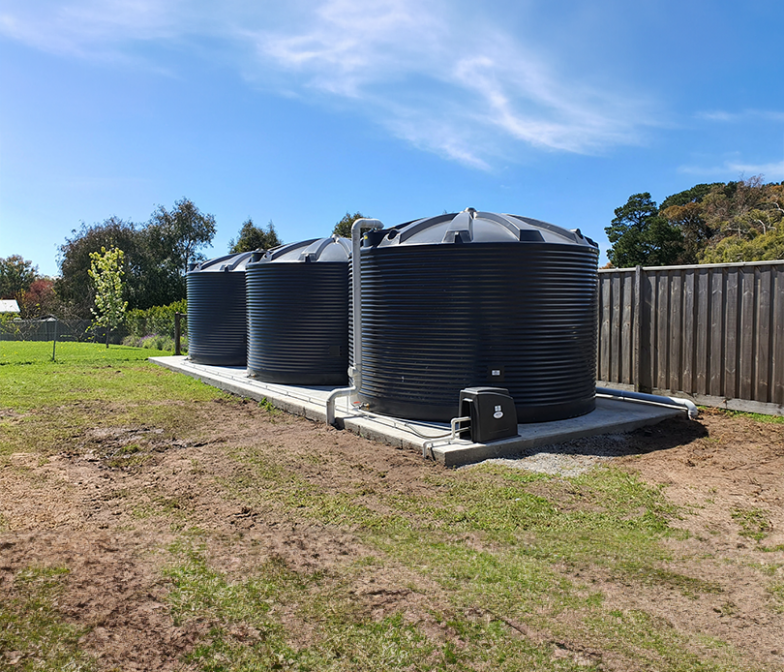
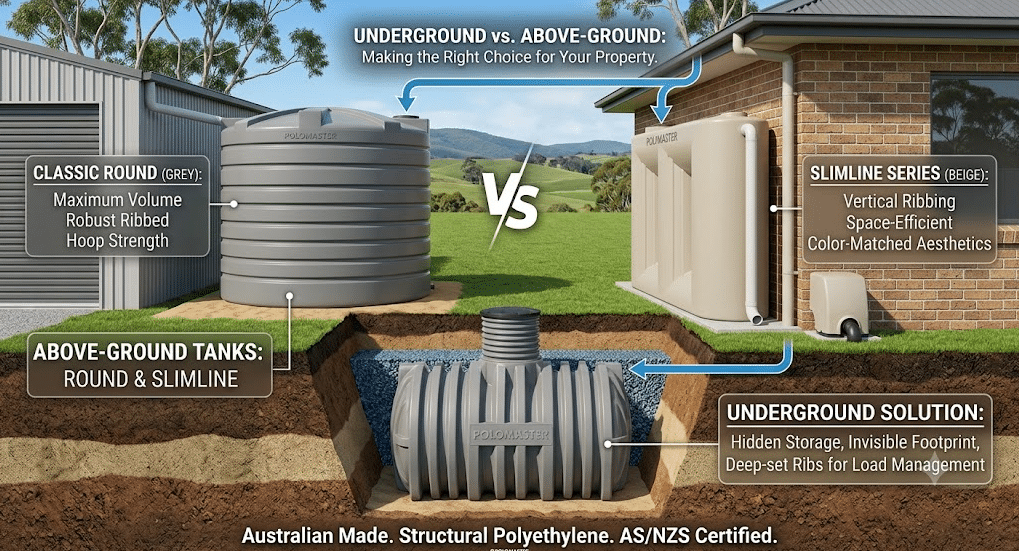
Above-Ground Tanks: The traditional choice. This includes classic Round Rainwater Tanks (the rural workhorses) and sleek, modern Slimline Rainwater Tanks designed to sit flush against fences or house walls.
-
Underground Tanks: The invisible solution. These underground water storage tanks are purpose-built, heavily rib-engineered tanks designed to be completely buried beneath lawns, driveways, or courtyards, leaving zero visible footprint.
Look out for our latest water tank sale and promotions online, or subscribe to our newsletter to stay in the loop.
Comparison: Above-Ground vs. Underground
The Deep Dive: Above-Ground Tanks
For properties with plenty of room, above-ground tanks are the standard for a reason. They are cost-effective, incredibly easy to install, and easily inspected at a glance.
The Advantages:
-
Upfront Affordability: Without the need for heavy machinery, trenching, or complex soil calculations, the initial setup costs are significantly lower.
-
Versatility in Styling: With modern Slimline models, you can turn what used to be an eyesore into a crisp, colour-matched architectural feature that hugs your boundary fence line.
-
Simple Maintenance: Accessing your inlet strainers, checking your tank level indicator, or clearing out sediment is straightforward because everything sits at eye level.
The Trade-Offs:
The main drawback is the space footprint. On compact inner-city or modern suburban blocks, allocating 2 to 3 meters of yard width for a water tank means sacrificing a garden bed, outdoor entertaining area, or kids’ play space.
The Deep Dive: Underground Tanks
If your goal is premium architectural design, maximising your outdoor living area, or meeting strict local council water-retention quotas without cluttering your land, Underground Water Storage Tanks are the ultimate answer.
Crucial Warning: You cannot simply bury a standard above-ground tank. The weight of surrounding earth and shifting soil loads will instantly crush it. Underground tanks must be specifically engineered from the ground up to handle extreme external load dynamics.
The Advantages:
-
Total Architectural Freedom: Out of sight, out of mind. Once backfilled, you can pave over them, lay down premium turf, or build a driveway right on top. They are ideal for high-density housing blocks.
-
Superior Algae Resistance: Algae requires light and warmth to thrive. Because underground tanks are entirely dark and insulated by the earth, your harvested rainwater remains significantly cooler and naturally protected against biological growth.
-
Unmatched Longevity: Protected from the harsh UV rays of the Australian sun and safe from accidental impacts (like lawnmowers or falling tree branches), the poly structure is highly insulated from environmental degradation.
The Trade-Offs:
The engineering requirements mean that underground systems require a higher initial investment. You must account for excavation equipment, soil disposal, and a certified plumbing installation to ensure the system is properly balanced to prevent hydrostatic lifting (floating when empty).
Feature Focus: Polymaster’s Underground Engineering
At Polymaster, we don’t guess when it comes to structural integrity. Our 3,300L and 5,000L Underground Water Tanks are masterpieces of industrial design.
We subject our underground profiles to intense Finite Element Analysis (FEA) to simulate decades of deep soil compaction and traffic weight. Engineered with deep, heavy-duty structural ribs and a seamless, rotational-moulded poly base, they easily withstand intense lateral earth pressures.
Furthermore, our underground setups feature an intelligent, low-maintenance design that includes an optional Self-Cleaning Vortex Filter capable of handling high vehicular weight loads when installed beneath driveways.
Which One Should You Choose?
Choose an Above-Ground Tank if:
-
You are working within a strict initial budget.
-
You have a clear side passage or rural block with plenty of open acreage.
-
You want a fast, simple weekend installation.
Choose an Underground Tank if:
-
You are building a new home or undertaking a major renovation on a compact block.
-
You want to maximise your outdoor entertaining space and preserve your landscaping aesthetics.
-
You need to comply with local council stormwater retention codes without compromising on square meterage.
Take the Next Step
Managing your property’s water assets shouldn’t involve compromises. Whether you want to build up, build out, or build down, Polymaster has a certified, Australian-made solution ready for your project.
Explore the Polymaster Underground Water Storage Tank range here or talk to our expert team today to map out the perfect layout for your property.
More Similar News
View all News
Best Water Tanks for Small Spaces in Australia
Lifting Equipment Requirements for Tank Deliveries