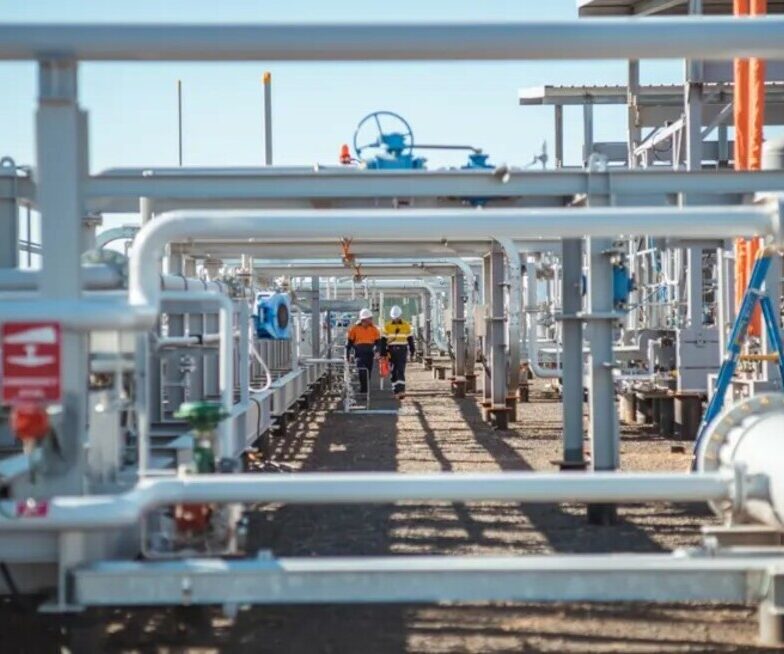
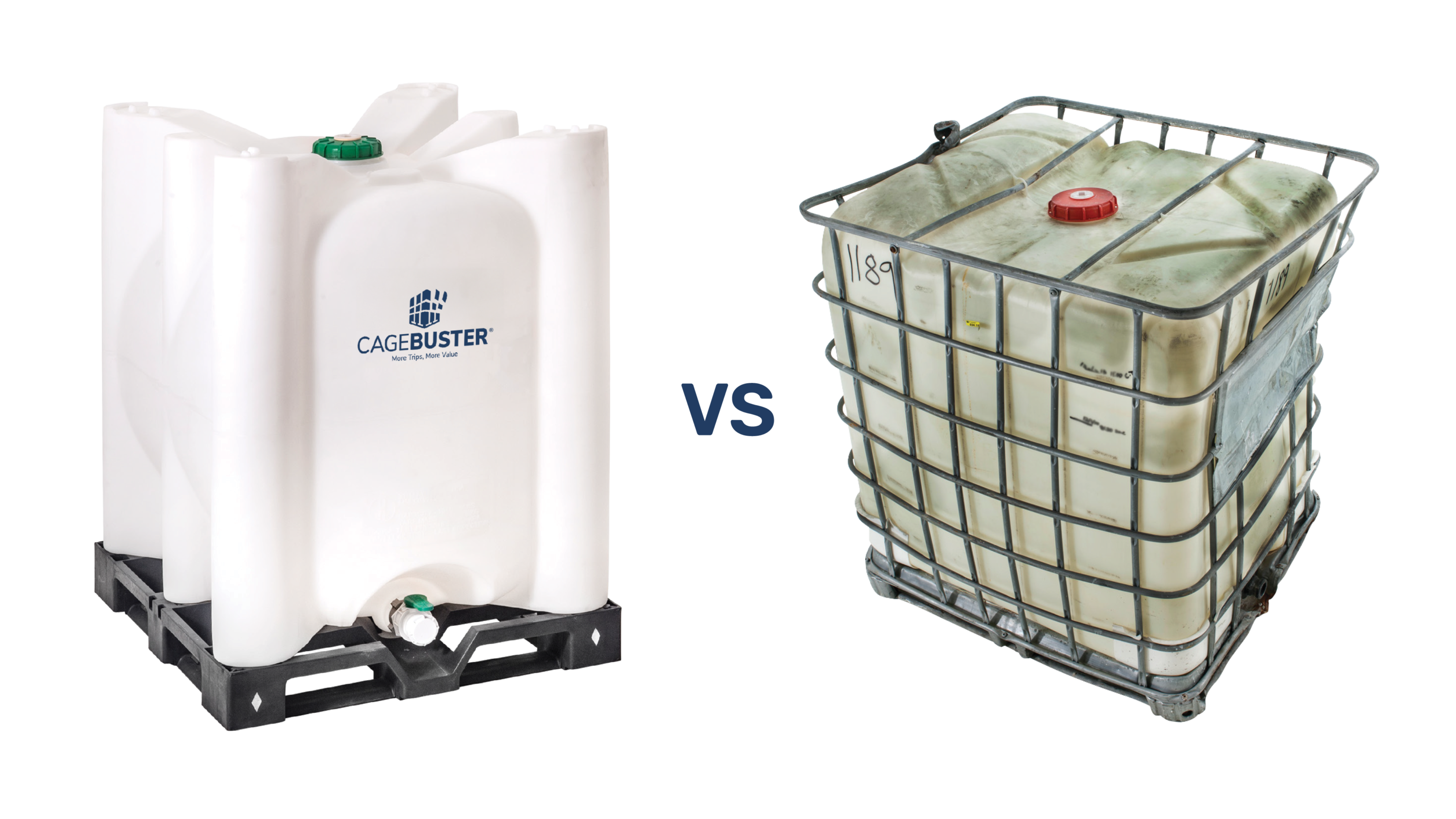
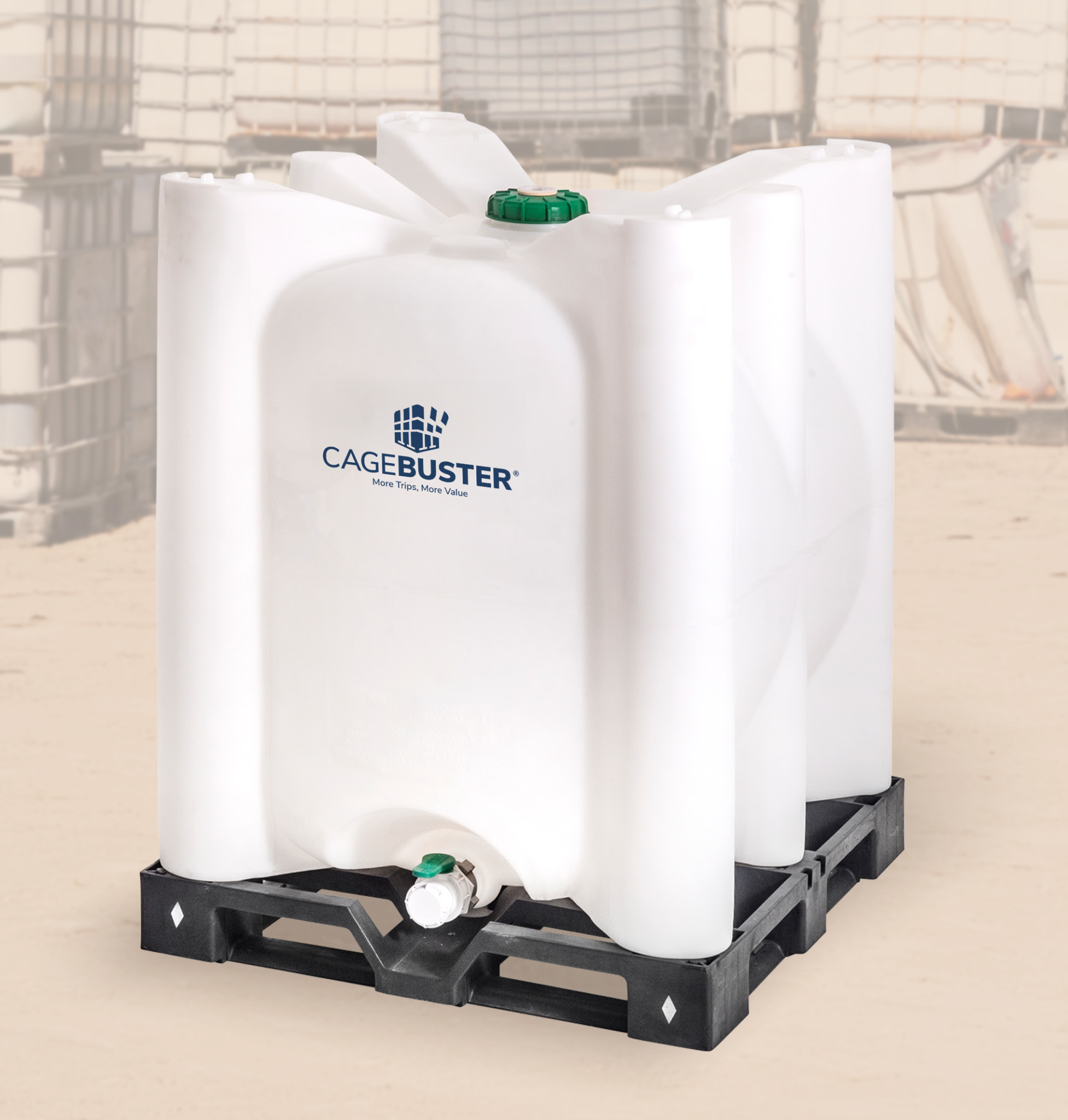
Intermediate Bulk Containers (IBCs) have revolutionised how heavy industry, chemical water treatment plants, and large-scale agricultural enterprises manage bulk liquids. Offering an ideal volume capacity (typically 1,000L to 1,500L), standard IBC container tanks are highly mobile and logistically efficient.
However, when an IBC container tank holds corrosive chemicals, aggressive acids, or hazardous liquids, standard open-air storage poses significant environmental risks, operational bottlenecks, and workplace safety challenges.
In this comprehensive technical guide, we break down the strict regulatory frameworks governing chemical IBC container tanks in Australia, detail the engineering behind Polymaster’s industry-leading IBC Container Tank Storage and Bunding range, and outline how to select the ultimate asset configuration for your site.

1. Navigating Australian Compliance Standards for IBC Container Tanks
In Australia, storing chemical IBC container tanks is strictly regulated to prevent environmental contamination and protect personnel from catastrophic spills. Failing to comply with these rules can result in heavy regulatory fines, operational shutdowns, and severe corporate liabilities.
   AUSTRALIAN COMPLIANCE BASELINE FOR IBC CONTAINER TANKS (AS3780-2008)

  ┌────────────────────────────────────────────────────────┐
  │ 110% Spill Containment Volume Required                 │ ──► Prevents chemical runoff
  ├────────────────────────────────────────────────────────┤
  │ Weatherproofing & Rainwater Ingress Defenses           │ ──► Stops bund overfill & dilution
  ├────────────────────────────────────────────────────────┤
  │ Verified Material Compatibility (PE Construction)       │ ──► Prevents structural corrosion
  └────────────────────────────────────────────────────────┘
The Capacity Threshold: Understanding the 110% Rule
Under AS3780-2008 (The Storage and Handling of Corrosive Substances) and AS1940-2017 (Flammable and Combustible Liquids), any secondary containment structure (bund) must capture a minimum of 110% of the largest single IBC container tank’s capacity, or 25% of the total aggregate volume stored, whichever is greater.
If you place an un-enclosed, open-top spill pallet outdoors, a single heavy downpour can fill the basin with rainwater. This compromises your secondary containment capacity and risks causing a catastrophic chemical overflow in the event of an IBC container tank valve rupture.
2. Deep Dive: The Polymaster Enclosed IBC Container Tank Bund
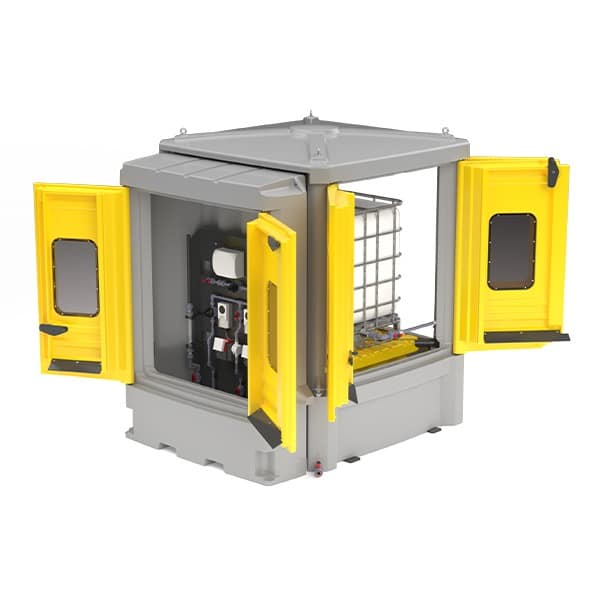
The Polymaster Enclosed IBC Container Tank Bund System represents a major leap forward in environmental safety engineering. It is an all-weather containment, dispensing, and optional dosing station that completely isolates hazardous chemicals from the surrounding environment.
           [ ENCLOSED IBC CONTAINER TANK INFRASTRUCTURE ]

               ┌───────────────────────────────────┐
               │  Upper Level: Secure IBC Container│ ──► Rainproof / UV Shielded
               ├───────────────────────────────────┤
               │   Lower Cabin: Integrated Day Tank│ ──► Continuous Dosing
               ├───────────────────────────────────┤
               │   Base Basin: 110% Compliant Bund │ ──► Captures Spills
               └───────────────────────────────────┘
Technical Blueprint and Features:
-
True Weatherproofing: The unit is designed with rainwater-resistant doors that completely prevent rainwater from entering the storage block. This keeps your bunding area empty and ready to handle an emergency spill.
-
Continuous Dosing via an Integrated 250L Day Tank: Operators no longer have to halt critical processes like chemical dosing or inline water treatment when changing over an empty tote. The IBC container tank continuously feeds a built-in 250L day tank. This design allows you to swap out the primary container with a forklift without interrupting fluid delivery.
-
Advanced Safety Controls: Lockable cabinet doors keep the system secure from unauthorized personnel. Dual-sided passive ventilation safely vents away toxic or corrosive chemical fumes. Clear inspection panels let you view critical systems and read fluid metrics safely without opening the main enclosure.
3. Optimizing Liquid Recovery: The IBC Mother Tank System
A common issue facing industrial liquid management is fluid retention in standard flat-bottomed IBC container tanks. When an ordinary tote drains completely flat, it often leaves up to $100 worth of premium chemical concentrate or fertilizer sitting trapped on the container floor. Over time, this residual waste represents a significant financial loss.
Furthermore, manual decanting and disconnecting hoses under the tote frame often leaves operators exposed to hazardous chemical taints and splash hazards.
     STANDARD FLAT-BOTTOM TOTE                  POLYMASTER 3° GRADIENT COUPLING

          ┌─────────────────┐                             ┌─────────────────┐
          │  Container Tank │                             │  Container Tank │
          │░░░░░░░░░░░░░░░░░│                             │\                │
          └───────┬─────────┘                             └─\──────┬────────┘
     Leaves up to 10-20L trapped!                      Total 100% fluid drainage
Engineering the Mother Tank System
Polymaster engineered the IBC Mother Tank and Cradle System to eliminate fluid retention and improve handling safety.
-
3-Degree Drainage Angle: The heavy-duty structural framework holds the incoming IBC container tank at an exact 3-degree tilted angle. This uses gravity to ensure 100% of the internal fluid drains out smoothly, leaving zero waste.
-
Gravity-Driven Transfers: The design relies entirely on gravity-driven feeding, eliminating the need for expensive transfer pumps. Liquid flows down into a massive 1,500L high-density polyethylene storage block below, which keeps chemical dosing systems running smoothly during tote swaps.
-
Corrosion-Proof Protection: The Mother Tank system can be paired with an 1,800L specialized poly bund. This bund provides 120% secondary containment protection, exceeding standard regulatory baselines.
4. IBC Container Tank Configuration Matrix
To help your team select the ideal setup for your workplace, use this product summary matrix:
5. High-Grade Material Science: Verifying Chemical Compatibility
When dealing with volatile industrial liquids, storing them in general-purpose plastic containers is dangerous. Various chemical compounds can weaken or degrade low-grade plastics, leading to stress cracking and eventual structural failure.
At Polymaster, we perform comprehensive chemical compatibility testing across our entire rotational-moulded poly range. Our heavy-duty IBC container tanks are certified to AS/NZS 4766 and specifically engineered to store a wide variety of industrial chemicals cleanly:
-
Sodium Hypochlorite & Hydrochloric Acid: Crucial for industrial wastewater treatment systems.
-
Sulfuric Acid (98% Concentrations): Demands ultra-thick wall construction and optimized Specific Gravity (SG) engineering.
-
Liquid Fertilisers & Coagulants (Alum/Ferric Chloride): Safely managed by our advanced chemical-grade high-density polyethylene structures.
Future-Proof Your Site Compliance
Managing hazardous bulk fluids requires reliable equipment, strict compliance, and long-term durability. By upgrading your facility with Polymaster’s advanced enclosed bunding or gravity-sloped Mother Tank configurations, you protect your team from workplace hazards, safeguard your property from environmental leaks, and eliminate costly chemical waste.
Ready to find the ideal storage system for your facility? Explore our full range of IBC Container Tanks and Secondary Containment Units or contact our engineering team at 1800 062 064 for a custom quote.
More Similar News
View all News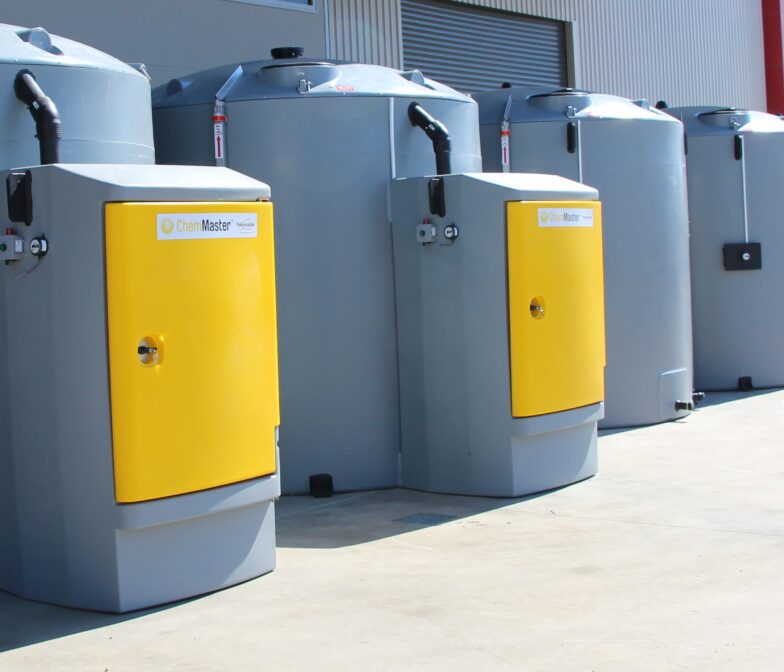
Sodium Hypochlorite in Water Treatment Plants: An Essential Component for Safe and Clean Water
Traditional Concrete Bunding VS Polymaster’s Self-Bunded Tank