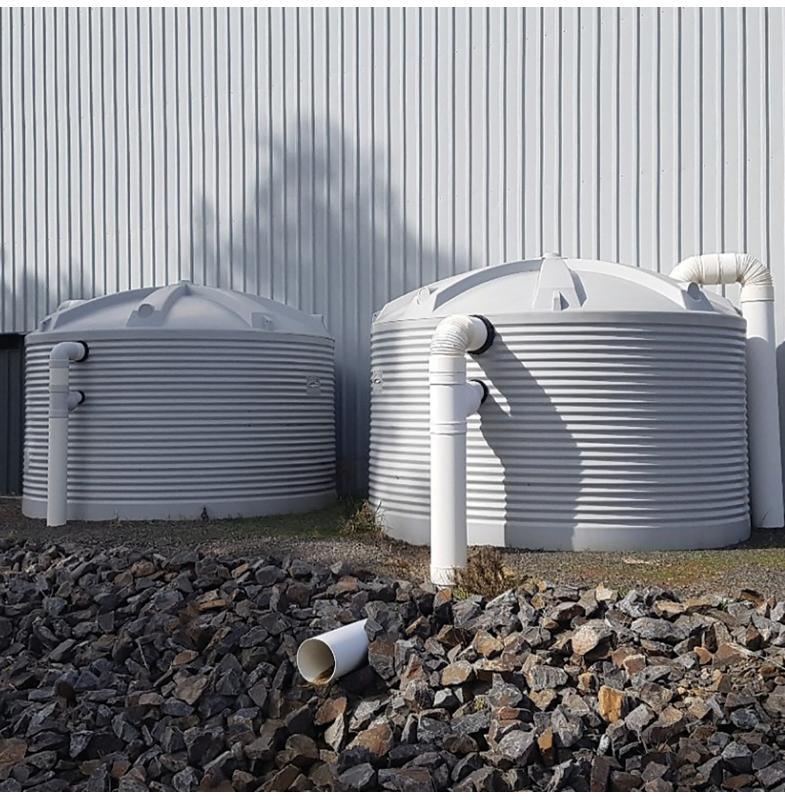
When installing a water tank, many homeowners and project managers focus on capacity and colour. However, the most critical factor for long-term safety and legal compliance is clearance.
“Clearance” refers to the mandatory distance between your tank and other structures, boundaries, or utilities. Failing to meet these requirements can lead to council fines, voided warranties, or even structural damage to your home.
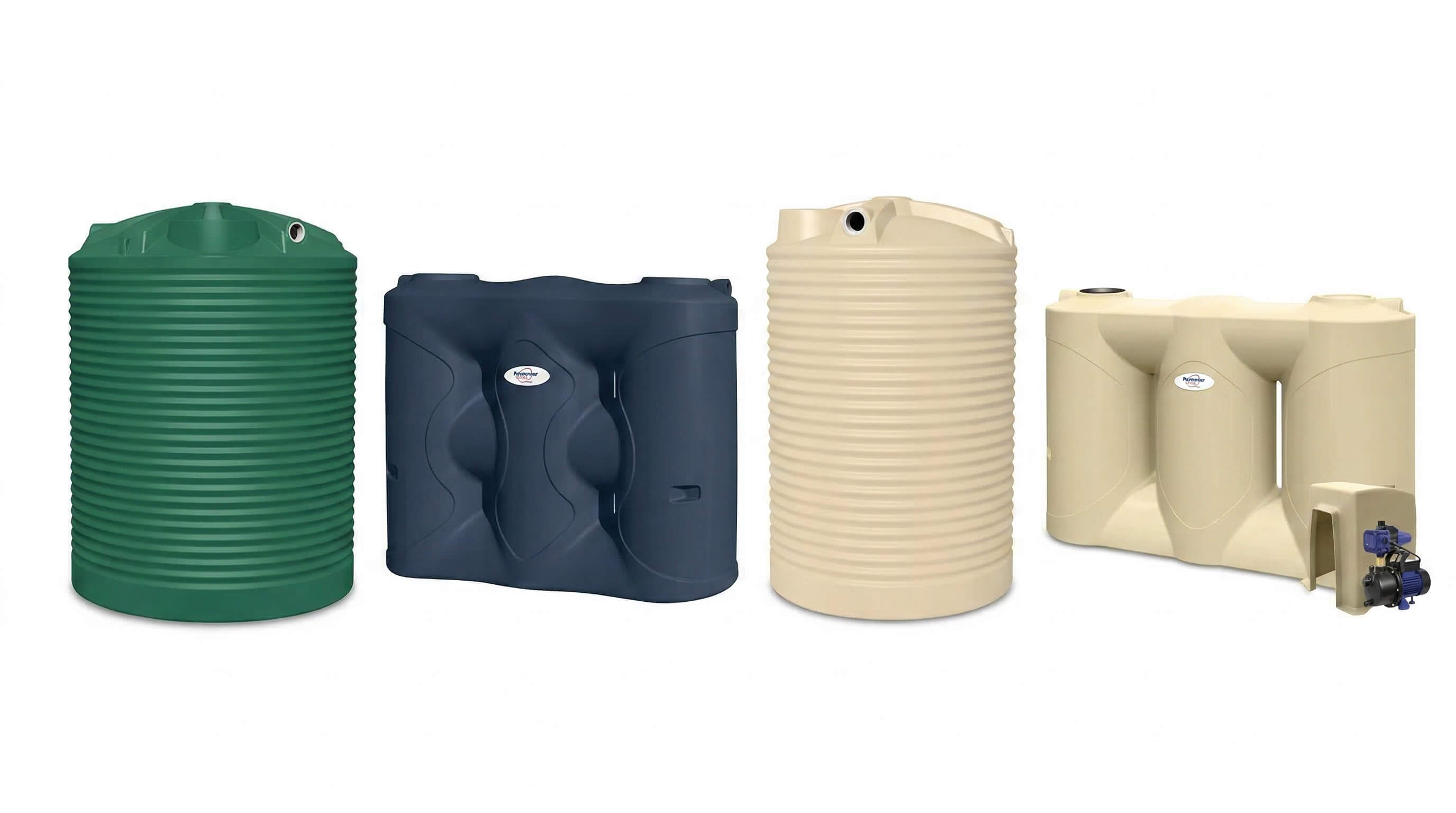
Whether you’re installing a round tank or a slimline unit, here is everything you need to know about water tank clearance.
1. Boundary and Fence Setbacks
Most local councils in Australia have specific regulations regarding how close a tank can sit to your property boundary.
-
Standard Setbacks: Typically, tanks must be at least 450mm to 900mm away from a side or rear boundary fence.
-
The “Zero-Lot” Exception: In some modern developments, slimline tanks are permitted closer to the boundary, but they must not obstruct access or drainage.
-
Easements: You generally cannot place a tank over an easement (areas reserved for council pipes or access). Doing so may result in the council forcing you to move the tank at your own expense.

2. Structural Clearance (Distance from the House)
Placing a tank right against your house wall seems like a space-saver, but it requires careful planning.
Airflow and Maintenance
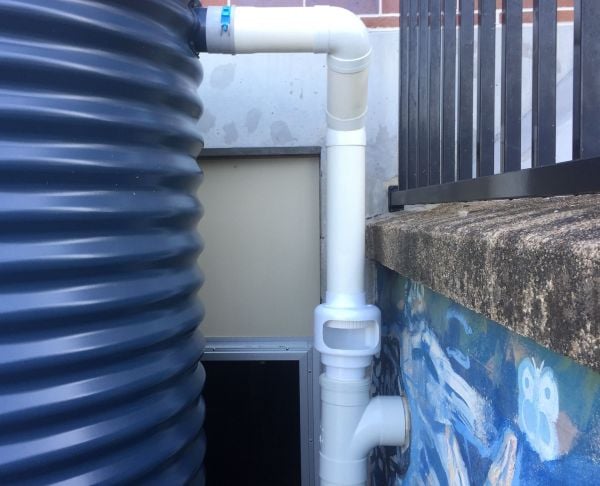
Tanks should ideally sit 50mm to 100mm away from the wall of the house. This gap allows for:
-
Airflow: Preventing moisture buildup which can lead to mold or rot on your house siding.
-
Expansion: Poly tanks expand slightly when full. If the tank is flush against the wall, the pressure can damage your home’s cladding.
-
Inspection: You need enough room to inspect the wall for pests like termites.
Foundation Security
A 10,000L tank weighs 10 tonnes when full. If you place a large tank too close to the house footings without a proper concrete slab, the weight could cause the ground to shift, potentially cracking your home’s foundation.
3. Utility and Overhead Clearances
Before you finalise the spot, look up and look down.
-
Overhead Lines: Avoid placing tanks directly under power lines or low-hanging telecommunications cables.
-
Underground Pipes: Ensure the tank isn’t sitting directly over sewer or gas lines. If those pipes ever leak or need repair, you’ll have to drain and move the tank to provide access.
-
Hot Water Systems: Keep tanks away from hot water unit exhausts or air conditioning compressors. The heat can affect the integrity of the poly over time and reduce the life of the pump.
4. Fire Zone Requirements (BAL Ratings)
If you live in a Bushfire Attack Level (BAL) rated area, clearance is a safety mandate.
-
Non-Combustible Zones: In high-risk zones, you may be required to keep a clear “defensible space” around the tank.
-
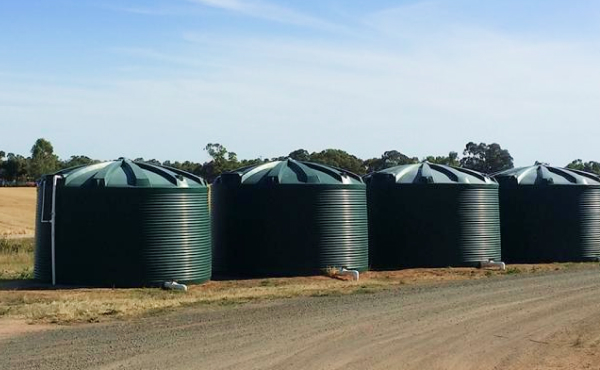
Access for Firefighters: If your tank is designated for fire fighting, it must have specific clearances to allow fire trucks to turn around or park within reach of the valves.
5. Clearance for Pumps and Accessories
Often forgotten is the space needed to service the tank.
-
Pump Covers: Allow an extra 500mm x 500mm area for the pump and its protective cover.
-
Valve Access: You should be able to reach the outlet valve and clean the leaf strainer at the top of the tank without needing to squeeze into a dangerous gap.
| Clearance Type | Recommended Gap | Primary Reason |
|---|---|---|
| Fence/Boundary | 450mm – 900mm | Council compliance & Access |
| House Wall | 50mm – 100mm | Ventilation & Pest inspection |
| Pump Space | 500mm x 500mm | Maintenance and repairs |
Expert Tip: Measure Twice, Buy Once
Before purchasing your tank, we highly recommend checking your local council’s website for “Rainwater Tank Installation Guidelines.” Every LGA (Local Government Area) in Australia has slightly different rules.
Need help sizing a tank for a tight space?
Check out our Slimline Range for narrow clearances.
Contact Polymaster for technical drawings and dimensions.
Call 1800 062 064 to speak with our installation experts.
Polymaster: Helping you get the fit right, the first time.
More Similar News
View all News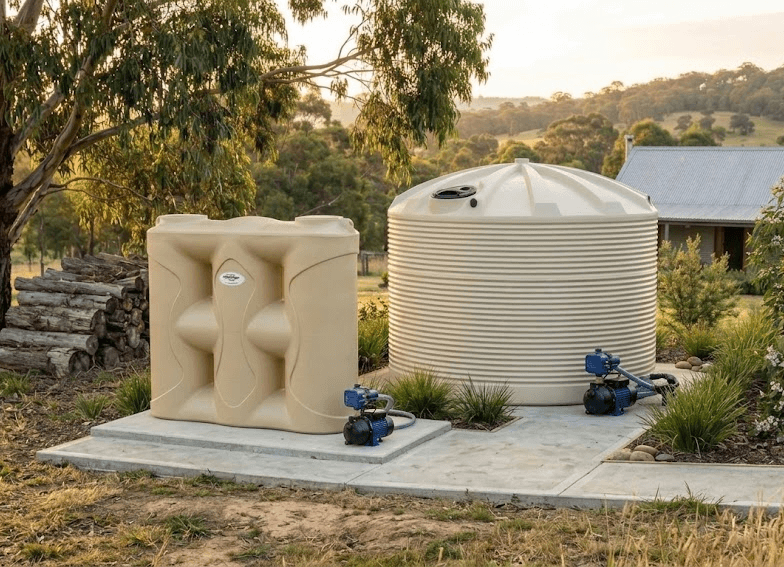
Water Pumps

How To Choose The Right Stock Water Trough