
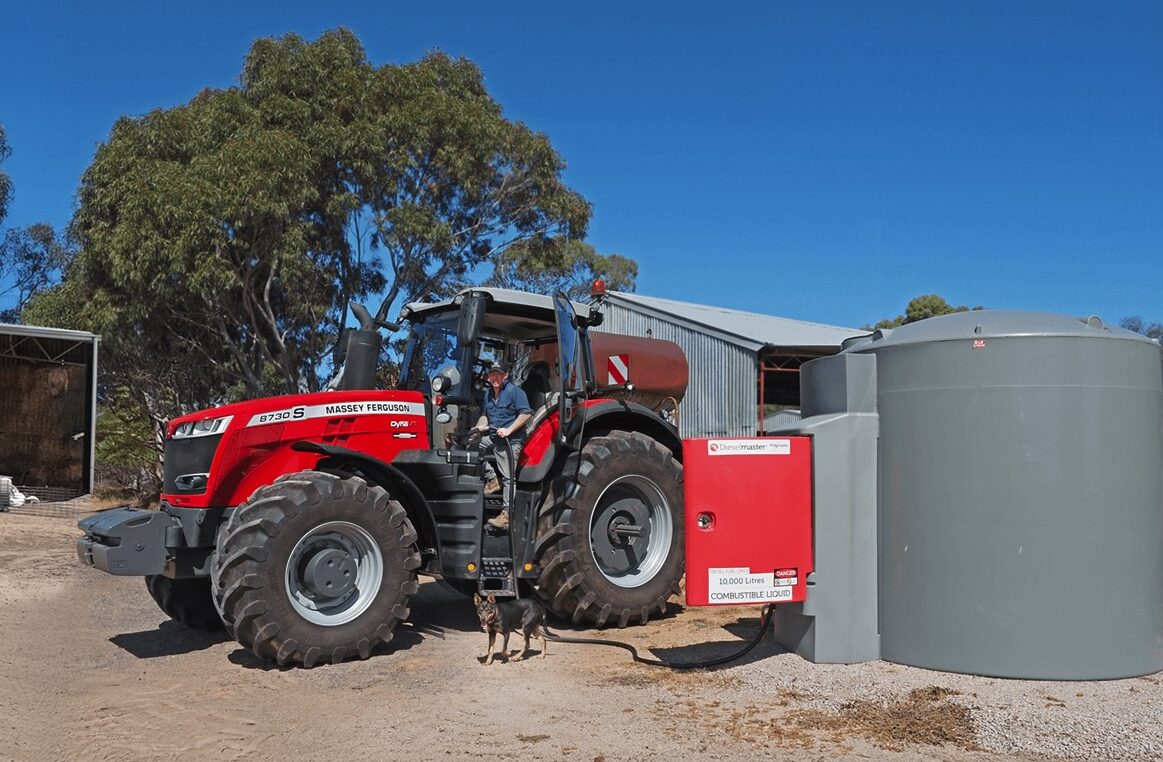
In 2026, managing diesel on-site isn’t just about having a place to park your fuel – it’s about navigating a tightening landscape of environmental compliance, theft prevention, and strict workplace safety standards.
Whether you’re running a broad-acre farm in the Wheatbelt or a Tier-1 construction site in Sydney, how you store your fuel directly impacts your bottom line. With the recent updates to AS 1940:2017 and the new 2026 Workplace Exposure Limits (WEL), “good enough” storage is a thing of the past.
Here is everything you need to know about diesel security and why self-bunded poly tanks are becoming the gold standard for Australian industries.
1. Compliance: More Than Just a “Suggestion”
In Australia, diesel is classified as a C1 Combustible Liquid. While it’s less volatile than petrol, the legal requirements for its storage are extensive.
-
The 110% Rule: Under Australian Standards, any tank over 2,000L must have secondary containment (bunding) capable of holding 110% of the tank’s capacity.
-
AS 1940 Compliance: This standard dictates everything from separation distances (usually 15m from boundaries for poly tanks) to the type of venting required.
-
2026 Workplace Exposure Limits: New regulations now strictly monitor diesel particulate matter. Ensuring your storage and dispensing areas are well-ventilated is no longer optional – it’s a health and safety mandate.
Pro Tip: Choosing a self-bunded (double-walled) tank is the easiest way to hit these marks. It’s essentially a “tank within a tank,” eliminating the need for expensive concrete bund walls.
2. The Poly vs. Steel Debate: A 2026 Perspective
For decades, steel was the default. But in 2026, the data has shifted. Here’s how they stack up for modern diesel security:
| Feature | Poly (High-Density Polyethylene) | Steel |
| Corrosion | 100% Rust-proof (Zero internal scale) | Prone to internal rust and scale |
| Condensation | Superior insulation; less water buildup | High thermal transfer; more condensation |
| Weight | Lightweight; easy to relocate via forklift | Heavy; requires cranes/specialized transport |
| Longevity | 20+ years (UV-stabilised) | Varies; requires regular repainting |
| Impact | Absorbs hits and “bounces back” | Dents or cracks, leading to rust points |
The Winner for 2026? For storage up to 10,000L, Poly wins on maintenance and fuel purity. Steel remains the choice for massive 50,000L+ industrial installations, but for most farms and sites, poly’s resistance to “diesel bug” (caused by condensation) makes it the superior choice for fuel security.
3. Preventing Fuel Theft and Contamination
With diesel prices remaining a significant overhead, your tank is a target – not just for thieves, but for environmental “accidents” that lead to massive EPA fines.
-
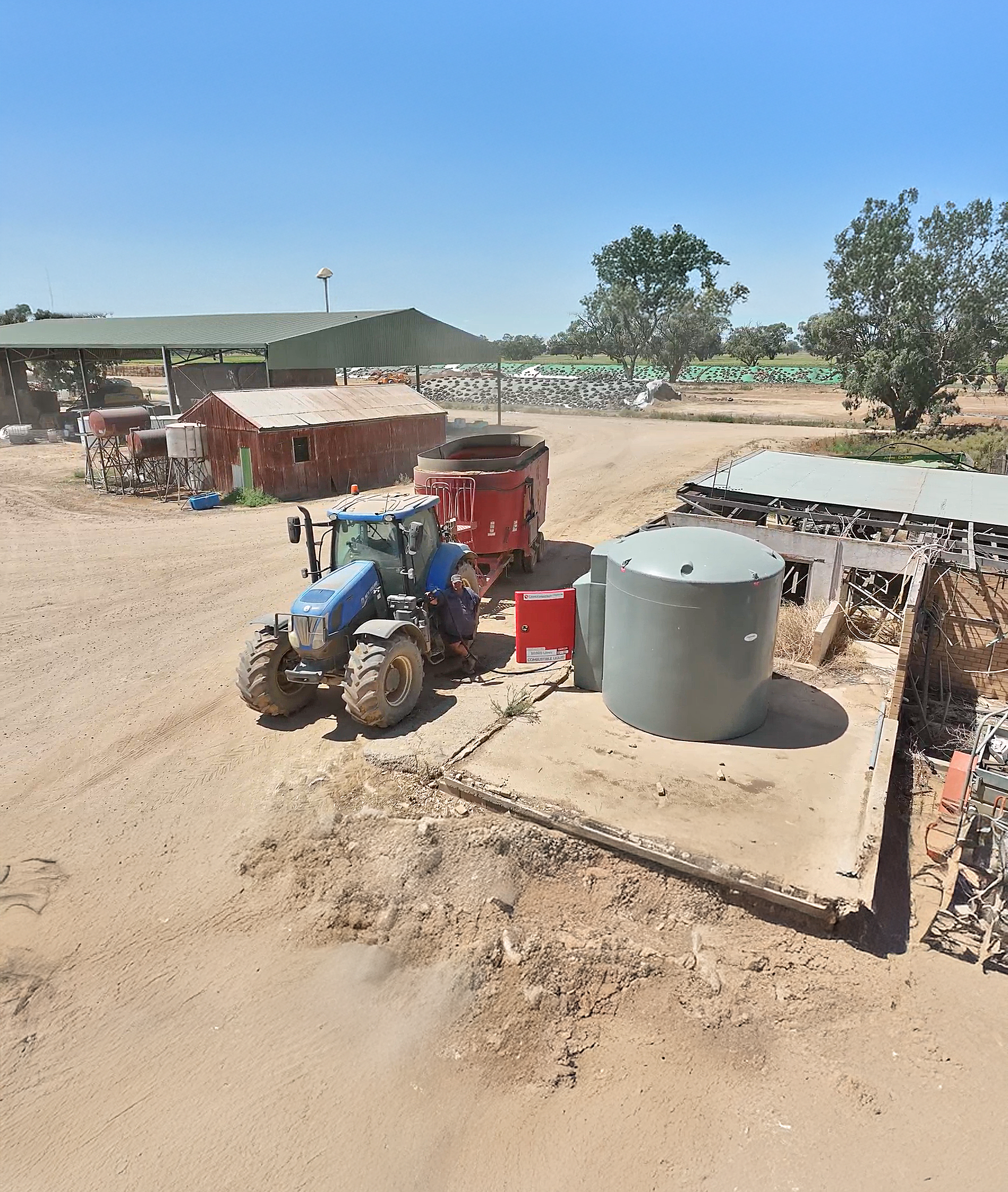
Locked-In Security: Look for tanks with integrated, lockable pump compartments. If the pump and hoses aren’t behind a heavy-duty, tamper-proof hatch, your fuel is a sitting duck.
-
The “Diesel Bug” Threat: Water is the enemy of diesel. It leads to microbial growth (sludge) that ruins modern Common Rail Diesel engines. Poly tanks insulate better against the day/night temperature swings that cause tank “sweating.”
-
Smart Monitoring: In 2026, we recommend IoT level sensors. Getting a notification on your phone when your fuel level drops unexpectedly can be the difference between catching a thief (or a leak) and losing $10,000 of inventory.
4. Checklist: Is Your Site “Audit-Ready”?
If a regulator walked onto your site tomorrow, would you pass? Check these off:
-
Signage: Are “No Smoking” and “Combustible Liquid” signs visible from 10m?
-
Fire Safety: Do you have a 30m clear zone and the correct fire extinguishers?
-
Spill Kits: Is there a dedicated spill kit within 15m of the dispensing area?
-
Foundation: Is the tank on a level, non-combustible surface (like a concrete pad)?
The Cost of Doing Nothing
Non-compliance in 2026 can result in fines ranging from $10,000 to $250,000, not to mention the environmental cleanup costs if a single-skin tank fails. Investing in a high-quality, Australian-made, self-bunded poly tank isn’t just a purchase – it’s an insurance policy for your business.
More Similar News
View all News
Poly Diesel Fuel Tanks vs Steel Diesel Tanks
Is your Diesel tank compliant with AS1940 standard?