How you treat a contaminated diesel tank depends on what you are dealing with. Water alone is resolved by draining the sump and fitting a water-absorbing filter, while diesel bug requires a biocide treatment and filter replacement, and severe cases may need professional fuel polishing. Water ingress and microbial growth are the leading causes of on-site diesel contamination in Australia, and left untreated, both produce sludge and organic acids that corrode fuel system components and cause serious engine damage.
How Does Water Get Into a Diesel Tank?
Water contamination is more common than most operators realise, and condensation is the primary cause. As temperatures cycle between day and night, moisture in the air space above the fuel condenses into water droplets and settles at the bottom of the tank. The more air space in the tank, typically when it is less than 50–70% full, the more condensation forms. This is particularly problematic in humid climates and across seasonal environments, making it a significant issue for Australian farm and fleet operators.
Other entry points include:
- Damaged seals, vents, or fill caps allow rainwater ingress
- Contaminated fuel delivery from the supplier
- Unsealed or poorly fitted tank fittings on older or non-purpose-built tanks
How to check for water in a diesel fuel tank:
- Apply water-finding paste to a dipstick; it changes colour on contact with water
- Draw a fuel sample: clean diesel sits above a distinct layer of cloudy or dark water if contamination is present
Even small amounts of water create serious problems. As little as 0.05% water content can be enough to support microbial growth and begin corroding fuel system components.
What Is Diesel Bug and Why Is It a Problem?
Diesel bug is the informal term for microbial contamination in diesel fuel, primarily bacteria and fungi that colonise the fuel/water interface, where they have access to both the nutrients in diesel and the moisture they need to survive. The most common species is Hormoconis resinae, though multiple organisms are typically present in a contaminated tank.
These organisms cause three distinct types of damage:
- Biomass and sludge: settle at the bottom of the tank and block the filters
- Organic acids: corrode tank walls, fuel lines, and injector components
- Biofilm: coats surfaces and accelerates filter clogging
Modern ultra-low-sulphur diesel (ULSD), which is now standard across Australia, is significantly more susceptible to microbial contamination than older high-sulphur formulations. Fleet operators and farmers storing large volumes of ULSD should treat prevention as routine, not reactive.
Visual signs of diesel bug contamination:
- Dark or black sludge visible at the bottom of the tank
- Fuel appearing hazy, darker than normal, or with visible particulate matter
- Fuel filters are clogging more frequently than expected
- Black streaks or residue when drawing a fuel sample
How to Clean a Diesel Fuel Tank Step by Step
If contamination is confirmed, follow this process:
- Pump down the fuel level as low as possible without running the pump dry
- Draw a sample and inspect for colour, clarity, sludge, or unusual smell to confirm the extent of contamination
- Apply a biocide, such as Grotamar 82 or Biobor JF, which are industry-standard products available from agricultural and fuel suppliers. Dose at the manufacturer’s recommended rate and allow 24–48 hours contact time
- Circulate the treated fuel by running the pump to ensure full tank coverage
- Replace fuel filters; they will almost certainly be clogged if contamination was significant
- Drain the sump drain point to remove accumulated water, biomass, and sludge
- For severe contamination, arrange fuel polishing (a professional filtration service) or a full tank decontamination by a specialist
Do not skip the filter replacement step. Running a pump through a contaminated filter after treatment will reintroduce biomass into the system.
Preventing Contamination With the Right Tank Setup
Prevention is far cheaper than treatment. The following practices significantly reduce the risk of water and microbial contamination in stored diesel:
- Keep tanks as full as practical to minimise air space and reduce condensation
- Position tanks in shade or use a UV-stabilised poly tank to reduce thermal cycling and temperature-driven condensation
- Fit a water-absorbing filter on the dispensing outlet to catch moisture before it reaches the equipment
- Add biocide at every fill for any tank storing fuel beyond three months
- Drain the sump drain every three months to remove accumulated water and settled biomass
- Inspect the tank and fuel annually, draw a sample, check fittings, and replace filters on schedule
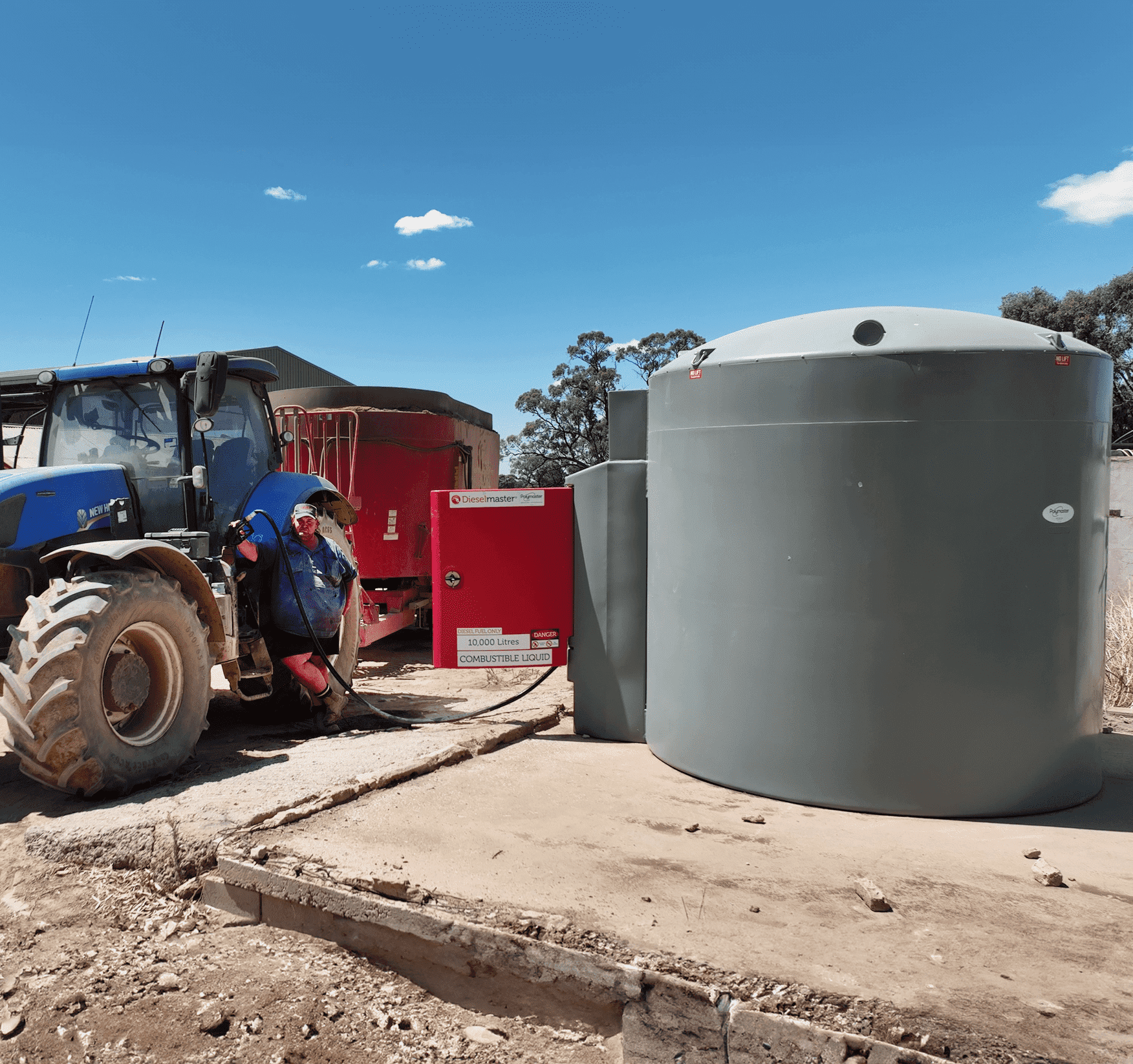
Polymaster’s 10,000L self-bunded diesel tank is designed with contamination prevention built in, featuring an Italian Piusi pump system and an integrated water filter as standard. For a full service and inspection schedule, see our guide to service and protect your diesel bunded tank.
Browse Polymaster’s self-bunded diesel range with integrated water filtration, or contact our team for site-specific advice on the right setup for your operation.
More Similar News
View all News
Diesel Fuel Storage Tanks Farm Use – Farm Diesel Tanks
Can You Store Diesel in a Polyethylene Tank?