A dedicated fire water tank gives rural properties an independent, always-available water supply to fight fire before emergency services arrive. On a working farm, where response times can be long and mains water pressure unreliable, having a properly sized tank and pump system on site is one of the most important investments a property owner can make.
Bushfires are a recurring threat across rural Australia. Dry grass, sheds full of hay, machinery, fuel storage, and livestock all represent significant risk during fire weather. In many regional areas, the nearest fire station is tens of kilometres away, and emergency services may already be stretched across multiple simultaneous incidents.
The Risk of Fire in Rural Australia
The first minutes of a fire event matter most. A property with no on-site water supply is dependent on what arrives on a tanker, and that wait can be the difference between saving a shed and losing everything. Even farms served by a rainwater tank or dam are not automatically prepared, as these systems are rarely set up for rapid, high-volume delivery under pressure.
A dedicated fire water tank, positioned and plumbed specifically for emergency use, is the foundation of any practical farm fire plan.
What Are Fire Water Tanks?
Fire water tanks are large-capacity storage tanks reserved exclusively, or primarily, for emergency firefighting use. Unlike a standard rainwater tank that is drawn down through daily household or agricultural use, a dedicated fire tank is maintained at full capacity, so water is available when it is needed most.
On farms, fire water tanks are typically used in two ways:
- Static storage via a large round poly tank positioned near key assets such as the shed, house, or hay storage, with pump access for fire hoses
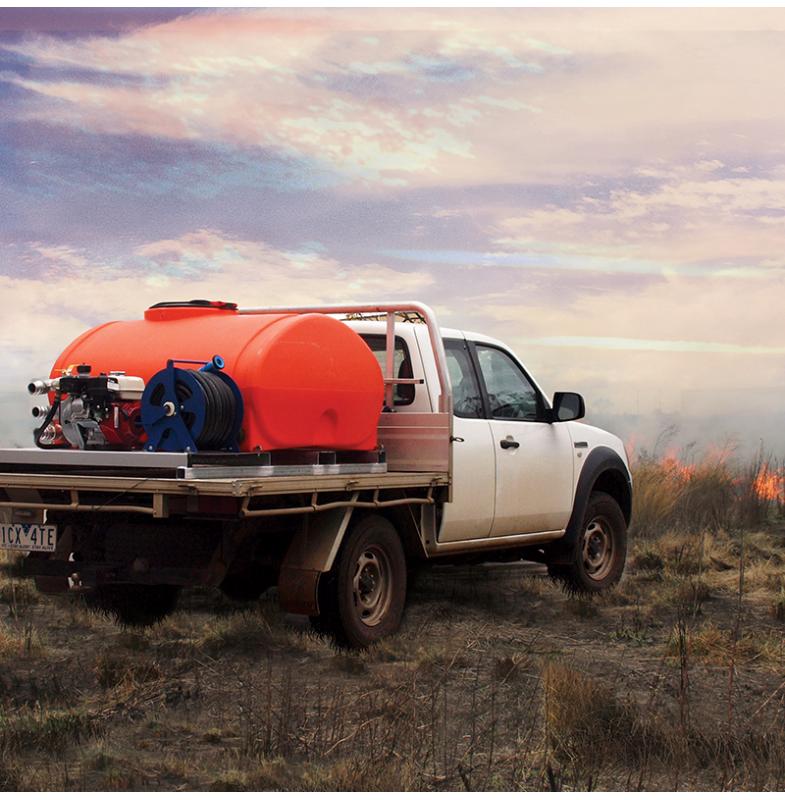
- Mobile firefighting via skid-mounted units, ute packs, or trailer packages that can be driven to where the fire is
Fire Service Requirements for Farms
Rural fire service requirements for on-farm water storage vary by state and local area, and the specific requirements depend on factors including property size, fire risk zone, and development type. It is always worth confirming the current requirements with your local Rural Fire Service or Country Fire Authority before purchasing.
As a general guide, many rural fire services across Australia recommend or require:
- A minimum dedicated water storage volume for firefighting, often starting from 10,000L for residential rural properties and scaling up for larger holdings or high-risk zones
- Tank positioning that allows fire truck access without needing to enter the fire zone
- A dedicated outlet fitting sized for a fire hose connection, typically a 65mm or 100mm camlock or Storz fitting
Clear identification of the tank as a fire supply
Polymaster’s range of round poly tanks is available from 200L to 50,000L, and any certified Polymaster tank can be fitted with the appropriate outlet configuration to meet your local fire service specifications.
Benefits of Installing a Dedicated Fire Tank
Separating fire water storage from the general water supply has practical advantages beyond compliance.
- Always full when needed. A fire tank is not depleted by irrigation, stock watering, or household use. It is there in reserve.
- Faster response. Water is available immediately on site, without waiting for mains pressure or a tanker delivery.
- Protects key assets. Positioned strategically near buildings, machinery, or high-value stock areas, a fire tank provides targeted protection where it matters most.
- Supports volunteer fire crews. Rural fire service volunteers arriving on your property benefit enormously from a known, accessible water point. It removes a critical variable from an already high-pressure situation.
- Peace of mind. Knowing the water is there and that the system is set up to use it quickly changes how you approach fire season.
across Australia are increasingly requiring stormwater management tanks as part of development approvals. As urban density increases and more natural ground is replaced with hard surfaces, the pressure on public drainage grows.
Why Farmers Choose Polymaster Fire Tanks
Polymaster’s fire-fighting range is designed specifically for Australian rural conditions and covers everything from compact ute-mounted units to large static storage and skid-mounted packages.
The range includes:
- Ute packs and compact slip-on units from 200L to 800L, for rapid response across the property
- Skid-mounted packages from 600L to 2,000L, with 6.5HP pump options, including electric start models
- Trailer packages from 1,200L to 2,000L, for high-volume mobile firefighting
- Water cartage tanks from 600L to 3,000L, suited to trucks and trailers
For static storage, Polymaster’s round poly tanks are manufactured from UV-stabilised, food-grade polyethylene, certified to AS/NZS 4766, backed by a 25-year design life, and can be fitted to meet your rural fire service outlet requirements.
Final Thoughts
A fire water tank is a practical necessity, and in many areas, a compliance requirement. The right setup depends on your property size, local fire service requirements, and the assets you need to protect, but the starting point is the same for every farm: dedicated storage, proper access, and the right pump to use it.
Polymaster supplies fire-ready tanks and complete firefighting packages to rural properties across Australia. Contact our team to discuss the right fire water tank for your property.
More Similar News
View all News
Best Water Tanks for Small Spaces in Australia
What Is the Life Expectancy of a Poly Tank?