When storing hazardous chemicals, acids, or volatile water treatment liquids on site, managing your inventory in standard IBC container tanks or IBC totes is incredibly efficient for transport and logistics. However, the moment those containers are designated for outdoor storage, your site safety dynamics change dramatically.
Leaving bulk chemical containers exposed to the unpredictable elements introduces severe operational risks, from direct UV degradation to dangerous chemical reactions. More critically, managing hazmat fluids in open-air conditions can unintentionally breach Australian compliance laws overnight.
In this guide, we dive into the operational safety checklist that every Work Health and Safety (WHS) officer, site auditor, and chemical plant manager must implement when managing IBC chemical storage outdoors.
1. Eliminate the “Rainwater Dilution Risk”
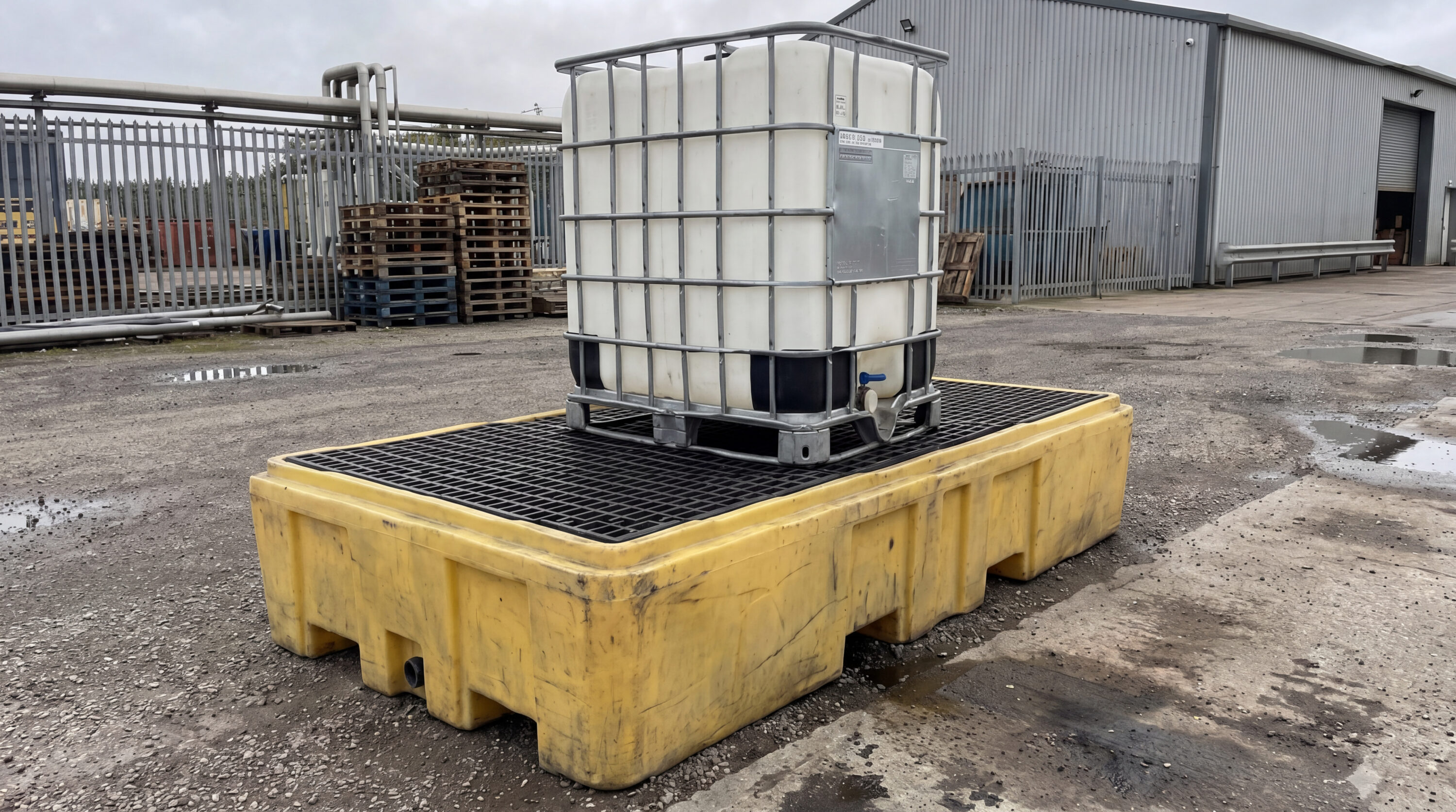
One of the most common oversights on industrial and agricultural sites is placing standard IBC container tanks on open-top secondary containment spill pallets in outdoor areas.
Under Australian Standards AS3780-2008 (The Storage and Handling of Corrosive Substances), your secondary containment bund must legally hold a minimum of 110% of the largest single container’s volume.
        THE OPEN-TOP BUND PROBLEM (OUTDOORS)

        ┌─────────────────────────┐
        │   IBC Container Tank    │
        ├─────────────────────────┤
        │ ░░░░ Rainwater ░░░░░░░ │ ──► Captures rainwater during downpours
        └─────────────────────────┘
        * LEGAL BREACH: Leftover capacity drops below the required 110%!
When an open-top spill pallet is subjected to a heavy downpour, it captures rainwater. As water pools in the bottom of the basin, it reduces your available spill volume. If a valve failure occurs on an IBC tote, the combination of stored rainwater and chemical overflow will breach the perimeter wall, causing illegal chemical runoff and exposing your business to severe EPA fines.
The Solution: Outdoor IBC chemical storage must feature a weather-resistant, rainproof cover designed explicitly to keep water out of the containment basin.
2. Defend Against Intensive UV Degradation
The harsh Australian sun is a primary enemy of chemical stability. Constant UV exposure breaks down standard polymer chain links in basic plastic totes, leading to structural embrittlement and stress cracking over time.
Beyond the container itself, solar radiation causes thermal spikes inside the tank. Many common industrial compounds – such as Sodium Hypochlorite (liquid chlorine) or concentrated Peracetic Acid – rapidly break down, outgas, or lose their active chemical potency when exposed to extreme heat and light.
Storing your IBC container tanks inside a dedicated, UV-stabilized structure shields volatile chemicals from direct sunlight, extending the working life of your storage assets and preserving the purity of expensive chemical concentrates.
3. Implement Passive Dual-Sided Venting
When hazardous chemicals experience temperature fluctuations outside, they naturally outgas. In enclosed spaces, this creates an accumulation of toxic, corrosive, or flammable fumes.
If your outdoor storage unit lacks proper ventilation, these trapped gasses endanger operators when doors are opened and create a highly corrosive environment that can degrade plumbing fixtures, pumps, and monitoring equipment.
Ensure your outdoor storage setup incorporates passive, dual-sided venting to consistently clear chemical fumes, keeping the internal environment safe for routine maintenance.
Outdoor Storage Compliance Checklist
Before your next site audit, verify that your outdoor liquid assets check every box on this technical safety matrix:
The All-Weather Industry Gold Standard: Polymaster’s Enclosed Bund
To solve the unique challenges of storing chemical IBC totes outside, Polymaster designed the Enclosed IBC Bund System (Version 2.0). Built as a robust 3-in-1 system, it seamlessly combines weatherproof chemical storage, heavy-duty secondary bund containment, and an integrated fluid dispensing station into a singular plug-and-play unit.
               [ POLYMASTER ENCLOSED BUND ARTIFACT ]

         ┌────────────────────────────────────────────────┐
         │  ✔ Lockable Outer Shell Keeps Weather Out      │
         ├────────────────────────────────────────────────┤
         │  ✔ Dual Outward Swing Doors For Fast Loading   │
         ├────────────────────────────────────────────────┤
         │  ✔ Clear View Windows For Safe Level Checks    │
         └────────────────────────────────────────────────┘
Featuring wide-opening access doors, operators can easily forklift full IBC container tanks directly onto the reinforced interior stand from three different approach angles.
For continuous inline processes like municipal water purification or industrial wastewater neutralization, the system can be configured with a built-in 250L day tank. This day tank continuously gravity-feeds your dosing line, allowing operators to safely disconnect and replace an empty IBC tote without shutting down site production.
Future-Proof Your Facility Today
Protecting your site against chemical leaks means choosing purpose-built infrastructure engineered for local requirements. Moving your chemical management into an engineered, enclosed environment shields your team from unexpected hazards and secures your site compliance.
Ready to upgrade your chemical storage layout? Explore Polymaster’s full range of Enclosed IBC Container Tank Storage Systems or call our technical engineering team at 1800 062 064 for a specialized site consultation.
More Similar News
View all News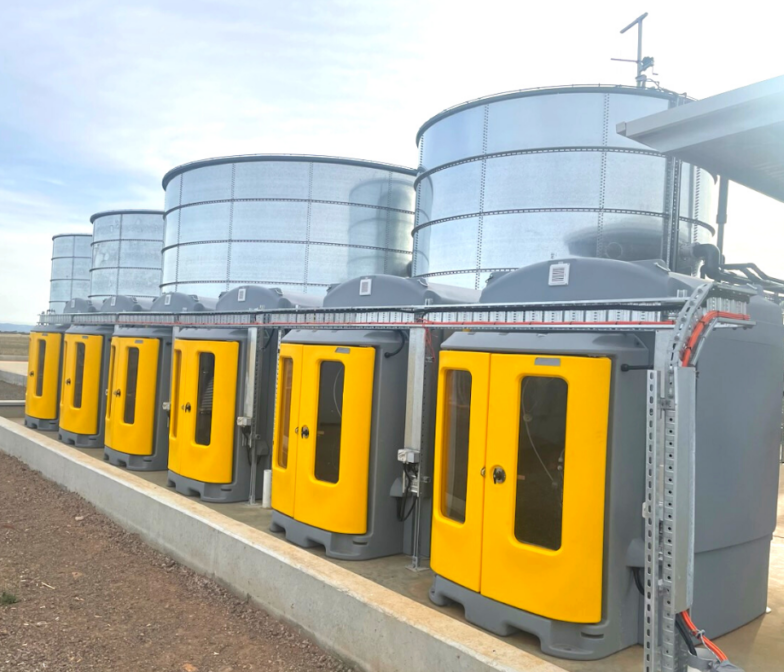
Storing Chemical IBCs: Essential Tips for Safe and Compliant Storage
Why a Self-bunded tank outperforms a Single-Walled Tank!