
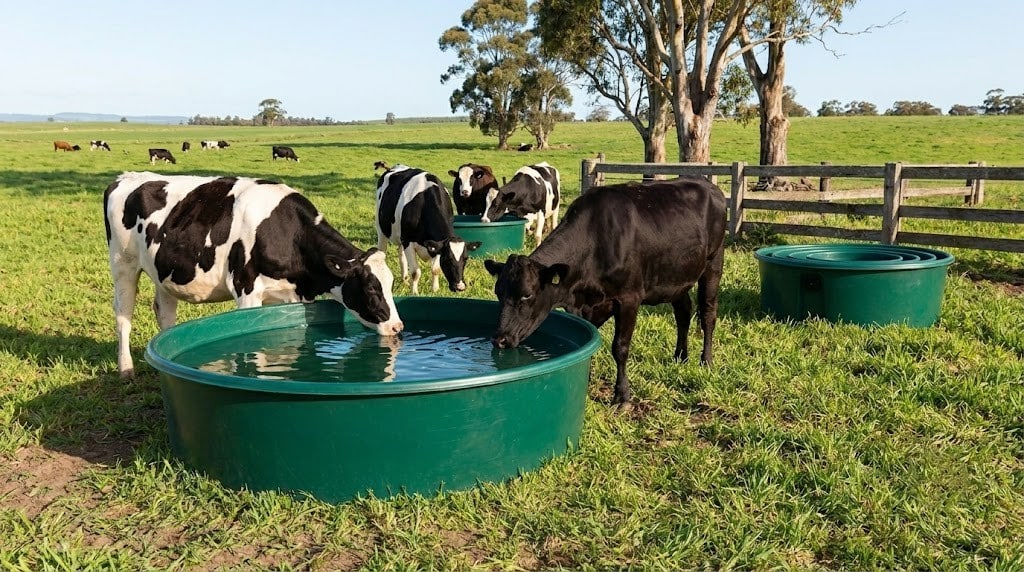
Providing livestock with reliable access to clean water is one of the most important responsibilities on any farm. Whether you’re managing cattle, sheep, horses, goats, or mixed livestock, selecting the right water trough size can significantly impact animal health, productivity, and operational efficiency.
Many farmers focus on feed requirements when planning livestock management, but water consumption is equally important. Choosing a trough that is too small can lead to overcrowding, reduced water availability, and increased maintenance. Choosing the right size water trough helps ensure your animals always have access to fresh water while reducing the time spent monitoring and refilling watering systems.
This guide explains how to choose the right water trough size for your livestock and the key factors every Australian farmer should consider.
Why Water Trough Size Matters
Water is essential for livestock health, growth, milk production, reproduction, and overall wellbeing.
An undersized trough can create several problems:
- Increased competition between animals
- Reduced water availability during hot weather
- More frequent refilling requirements
- Increased stress within herds
- Reduced productivity
A properly sized trough helps ensure all animals have adequate access to water, even during periods of peak demand.
Understanding Livestock Water Requirements
Before selecting a water trough, it’s important to understand how much water your animals consume each day.
Water consumption varies depending on:
- Animal species
- Body size
- Temperature
- Feed type
- Activity levels
- Pregnancy or lactation
Australian summers can dramatically increase water requirements, making trough sizing even more important.
Typical Daily Water Consumption
Cattle
Cattle can consume:
- 30 to 60 litres per day during mild weather
- 80 to 100 litres or more during extreme heat
Lactating dairy cattle often consume significantly more.
Sheep
Sheep generally require:
- 4 to 12 litres per day
- Higher volumes during summer or when grazing dry feed
Horses
Horses typically consume:
- 20 to 55 litres per day
- More during exercise or hot weather
Goats
Goats generally require:
- 5 to 15 litres per day
- Additional water during warmer conditions
Understanding these requirements helps determine the minimum storage capacity required within your watering system.
Factors That Determine the Right Water Trough Size
Every farm is different, which means there is no single trough size suitable for every operation.
Number of Animals
The most important consideration is the number of livestock sharing the trough.
For example:
- A small horse paddock may only require a single trough
- A cattle operation may require multiple larger troughs
- Mixed livestock may need separate watering points
The larger the herd, the greater the trough capacity required.
Peak Demand Periods
Water demand increases during:
- Summer
- Dry conditions
- High temperatures
- Breeding periods
- Lactation
Always size your trough system based on peak demand rather than average daily consumption.
Refill Rate
A trough connected to a reliable water source may not require as much storage capacity as one supplied intermittently.
Consider:
- Bore water systems
- Rainwater storage systems
- Gravity-fed systems
- Pump-fed systems
The slower the refill rate, the larger the trough capacity generally required.
Distance Between Watering Points
Large paddocks may require multiple troughs rather than one oversized unit.
Benefits include:
- Reduced walking distance for animals
- Better grazing distribution
- Reduced competition at watering points

Choosing a Water Trough for Cattle
Cattle are among the highest water-consuming livestock on Australian farms.
When selecting a cattle trough, consider:
- Herd size
- Seasonal demand
- Refill capability
- Future expansion
Larger round troughs are often preferred because they:
- Allow multiple animals to drink simultaneously
- Provide substantial water reserves
- Offer excellent durability
For many cattle operations, installing multiple watering points can improve access and reduce crowding.
Farmers looking for durable livestock watering solutions can explore Polymaster’s range of round water troughs designed for Australian farming conditions.
Choosing a Water Trough for Sheep
While sheep consume less water than cattle, trough size remains important.
Factors to consider include:
- Flock size
- Climate conditions
- Grazing rotation systems
Sheep often benefit from:
- Lower-profile troughs
- Easy access points
- Multiple watering locations
Smaller-capacity troughs may be sufficient for many sheep operations, provided refill rates remain reliable.
Choosing a Water Trough for Horses
Horses can be particularly sensitive to water quality.
When selecting a horse trough, focus on:
- Cleanliness
- Ease of maintenance
- Adequate capacity
- Safe access
Horse owners often prefer larger troughs that maintain consistent water levels while reducing refill frequency.
Round troughs are popular because they provide:
- Smooth edges
- Easy access from multiple angles
- Simple cleaning and maintenance
Why Round Water Troughs Are So Popular
Round troughs are one of the most common choices across Australian farms.
Their popularity comes from several advantages.
Multiple Drinking Positions
Animals can access water from various points around the trough, reducing crowding.
Structural Strength
The circular design provides excellent strength and durability.
Easy Cleaning
Round troughs generally have fewer corners where debris can accumulate.
Long-Term Reliability
Quality polyethylene troughs can provide many years of dependable service.
Poly Water Troughs vs Other Materials
Modern polyethylene troughs have become increasingly popular throughout Australia.
Benefits include:
- UV resistance
- Corrosion resistance
- Lightweight construction
- Low maintenance
- Long service life
Unlike steel troughs, poly troughs will not rust, making them ideal for Australian farming conditions.
Common Mistakes When Choosing a Water Trough
Choosing a Trough That Is Too Small
One of the most common mistakes is underestimating livestock water consumption.
Always allow for:
- Summer demand
- Herd growth
- Peak usage periods
Ignoring Future Expansion
Many farmers increase livestock numbers over time.
Choosing a slightly larger trough now can avoid costly upgrades later.
Poor Placement
Even the best trough can perform poorly if positioned incorrectly.
Choose locations that provide:
- Easy livestock access
- Stable ground
- Reliable water supply
- Efficient grazing distribution
Overlooking Water Quality
Water quality is just as important as water quantity.
Regular cleaning helps:
- Prevent algae growth
- Improve animal health
- Encourage consistent water intake
Water Trough Placement Tips
Proper placement can significantly improve livestock performance.
Consider placing troughs:
- On stable, level ground
- Away from muddy areas
- Close to reliable water supply
- Within easy reach of grazing areas
Good placement reduces maintenance and improves water accessibility.
How Climate Affects Trough Size
Australian weather conditions can vary dramatically throughout the year.
During summer:
- Water consumption rises
- Evaporation increases
- Refill demand grows
Choosing a larger trough capacity helps maintain adequate water reserves during extreme weather.
This is especially important in northern and inland regions where summer temperatures can remain high for extended periods.
Choosing the Right Trough for Your Farm
The best water trough size depends on several factors working together.
Ask yourself:
- How many animals will use the trough?
- What species am I watering?
- What are my peak summer water demands?
- How quickly can the trough refill?
- Am I likely to expand livestock numbers?
Answering these questions will help determine the most suitable capacity for your operation.
For many Australian farmers, a durable poly trough provides the ideal combination of strength, longevity, and ease of maintenance.
Final Thoughts
Choosing the right water trough size for your livestock is about more than simply holding water. The right trough supports animal health, improves efficiency, reduces maintenance, and ensures reliable access to fresh water throughout the year.
By considering livestock numbers, water consumption, climate conditions, and future growth, you can select a trough that delivers long-term value and dependable performance.
Whether you’re watering cattle, sheep, horses, or mixed livestock, investing in the right trough size today can help support a healthier and more productive operation for years to come.
More Similar News
View all News