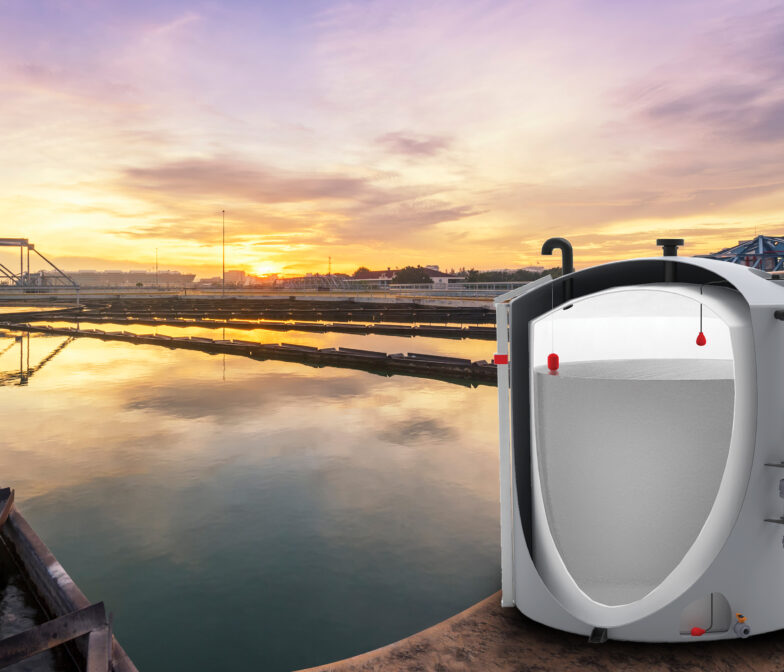
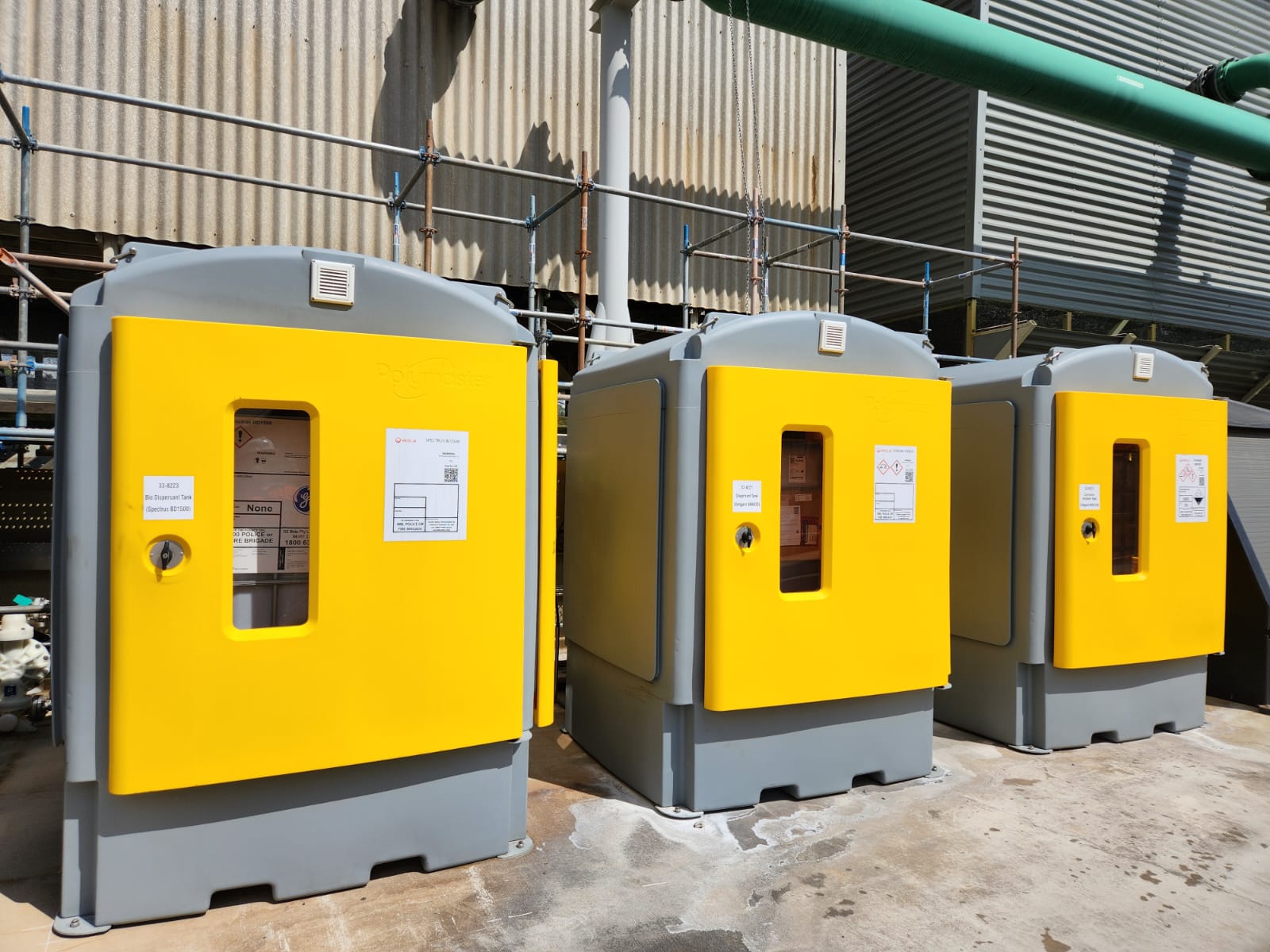
An IBC Bund is a secondary containment system designed to capture spills, leaks, or ruptures from an Intermediate Bulk Container. In Australia, bunding is a mandatory requirement under Australian standards for hazardous chemical storage, not an optional safety measure.
What Does AS3780 Require for IBC Bunding?
Two standards govern IBC bunding requirements in Australia, depending on the chemicals stored: AS3780-2008 applies to corrosive substances, and AS1940-2017 applies to flammable and combustible liquids.
Key requirements include:
- Capacity: The IBC bund must contain a minimum of 110% of the largest IBC’s capacity, or 25% of the total aggregate volume, whichever is greater
- Material compatibility: Bund materials must be chemically compatible with the substances stored. Polyethylene is the standard choice for most corrosives and is chemically tested across a wide range of industrial chemicals
- Drainage separation: Bunds must be isolated from stormwater drains and general drainage systems
- Disposal: Any liquid collected in the bund must be disposed of according to environmental guidelines
Polymaster’s IBC storage systems are designed for both hazardous and non-hazardous chemicals, with materials tested for chemical resistance and compliant with AS4766:2006.
Polymaster’s Enclosed IBC Bund
Polymaster’s Enclosed IBC Bund solves containment and weather protection in a single unit. Key features include:
- 110% bund capacity built in as standard
- Weather-resistant polyethylene construction to protect the IBC from the elements
- Forklift access from 3 sides for practical site use
- An optional integrated chemical dosing system inside the lockable cabinet
Available in different configurations, and chemically compatible with acids, hypochlorites, hydroxides, and a broad range of industrial chemicals.
See Polymaster’s IBC storage range or contact our team to discuss the right IBC bund solution for your site.
More Similar News
View all News
Why Cone Bottom Tanks are Perfect for your Business
Why a Self-bunded tank outperforms a Single-Walled Tank!