Safeguarding Every Drop: The Ultimate Guide to Tank Water & Rainwater Harvesting
In Australia, water is more than just a resource; it’s a lifeline. Whether you’re managing a suburban garden in Melbourne, a bustling construction site, or a sprawling farm in the outback, the way you capture and store water can define your property’s resilience.
At Polymaster, we’ve spent over 30 years perfecting the art of water storage. In this guide, we dive deep into everything you need to know about tank water, from choosing the right vessel to understanding why quality polyethylene is the modern gold standard.
Why Tank Water is the Smart Choice for Australians
Relying solely on mains water can be expensive and, during drought periods, restricted. Installing a rainwater tank offers several key benefits:
-
Cost Savings: By harvesting free rain from your roof, you significantly reduce your quarterly water bills.
-
Water Security: A full tank acts as a vital backup during mains supply interruptions or harsh summer restrictions.
-
Sustainability: Rainwater harvesting reduces the “peak flow” into stormwater systems, helping to prevent local flooding and erosion.
-
Plant Health: Rainwater is naturally soft and chlorine-free, making it far superior to tap water for your garden and lawns.
Finding Your Fit: Types of Water Tanks
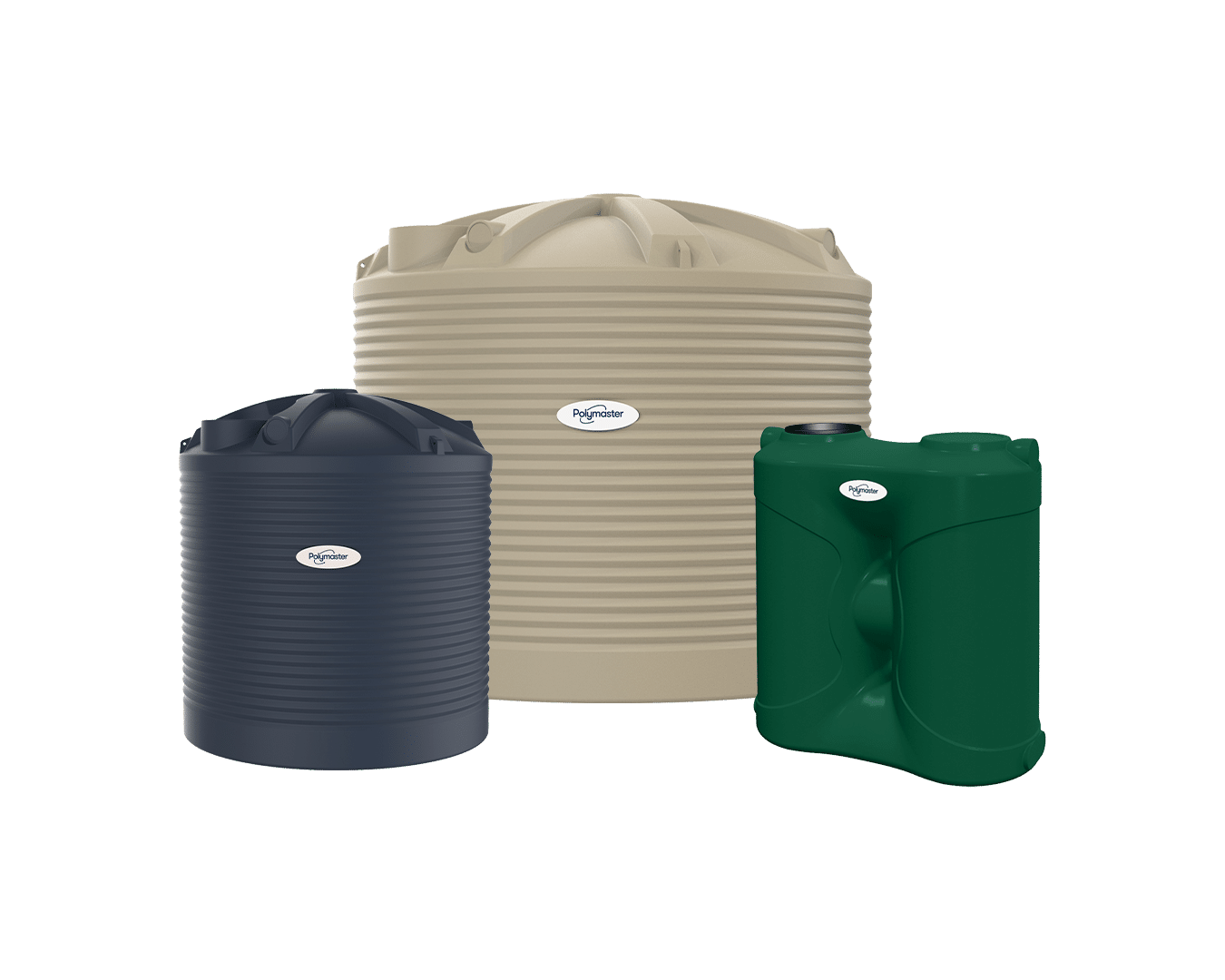
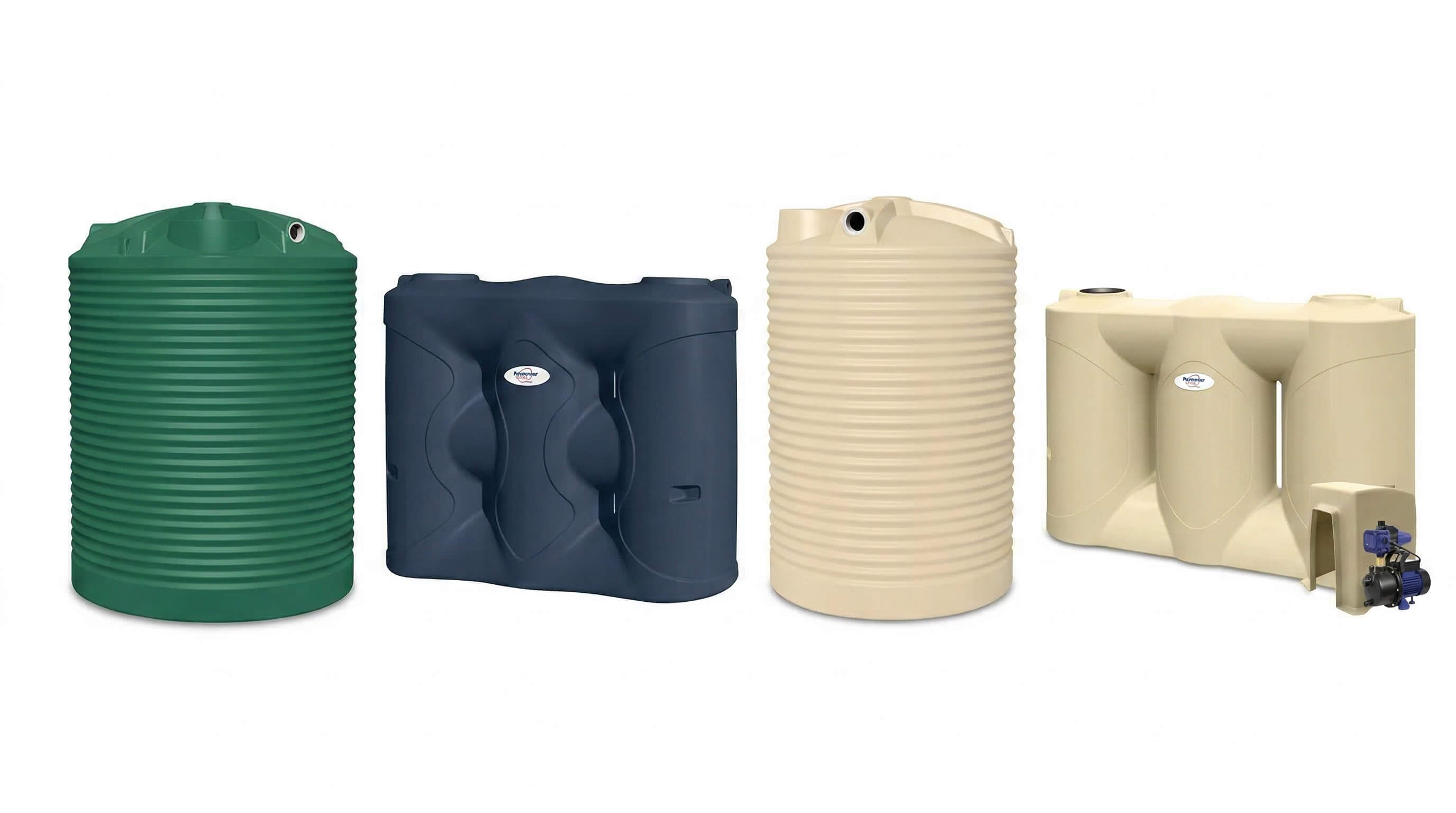
Every property has different constraints. That’s why we’ve developed a range of configurations designed to disappear into your landscape or stand strong as a rural landmark.
1. Round Water Tanks (The Classic Workhorse)
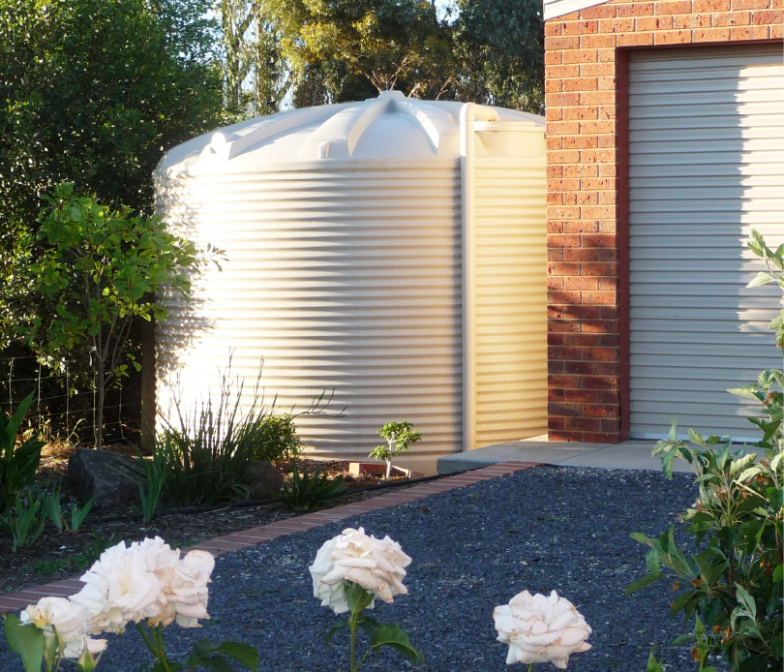
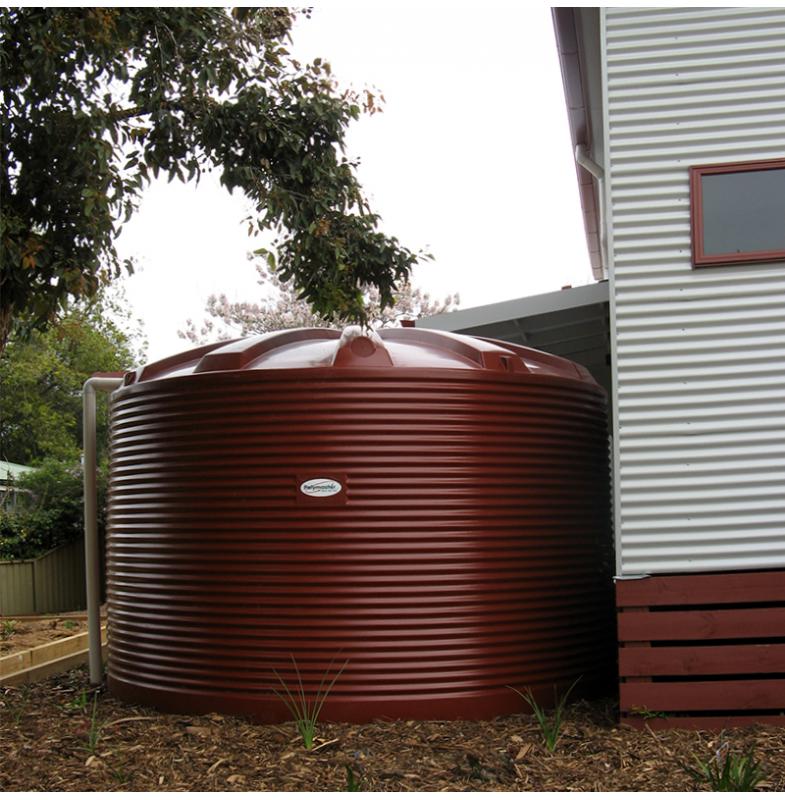
Our round rainwater tanks are the most popular choice for rural and large residential properties.
-
Capacity: Ranges from 200L up to a massive 50,000L.
-
Durability: Features a one-piece construction with no joins or seams, eliminating the need for internal support poles.
-
Design: Available in both smooth and corrugated finishes to match your aesthetic preference.
2. Slimline & Slendastyle™ Tanks (Space Savers)
For urban homeowners with limited yard space, our slimline tanks are designed to tuck neatly against fences or house walls.
-
Sizes: From 600L up to 5,000L.
-
Builder Friendly: Ideal for meeting 6-star energy ratings on new developments without sacrificing usable yard space.
3. Underground Water Tanks (The “Out of Sight” Solution)
When you have zero footprint to spare, look down. Underground water tanks are an increasingly popular choice for architects and developers.
-
Maximised Space: Installed under driveways, lawns, or garden beds.
-
Temperature Control: Being buried keeps your water cool and prevents algae growth by eliminating sunlight.
-
Engineering: Built using Finite Element Analysis (FEA) to withstand significant ground and water pressure.
The Polymaster Difference: Quality You Can Trust
Not all poly tanks are created equal. When you choose a Polymaster tank, you are investing in:
-
AS/NZS 4020 Certification: This is the Australian Standard for drinking water. Our tanks are made from BPA-free, food-grade polyethylene, ensuring your water stays safe for everything from irrigation to emergency household use.
-
UV+ Double Strength: Our exclusive resin provides the highest level of protection against the harsh Australian sun, preventing the plastic from becoming brittle over time.
-
Waterguard Technology: Available on many models, this antimicrobial technology helps reduce bacteria and odours, keeping your water fresher for longer.
-
Warranty Peace of Mind: We stand by our craftsmanship with up to a 20-year warranty on our round tank range.
How to Calculate the Tank Size You Need
Choosing the right size is a balance of your catchment area (your roof size), your local rainfall, and your intended usage.
-
Catchment: 1mm of rain on 1m² of roof equals 1 litre of water.
-
Usage: Are you just watering a few pots, or are you flushing toilets and running a washing machine? A household of four typically uses a 10,000L tank in 2 to 6 weeks if it’s the primary source.
-
The Formula: Use our Rainfall Calculator to see exactly how much you can expect to harvest in your specific postcode.
Maintenance: Keeping Your Water Pure
While poly tanks are low-maintenance, a few simple steps will ensure your tank water stays crystal clear:
-
Leaf Strainers: Check and clean the inlet strainer regularly to prevent debris from entering the tank.
-
First Flush Diversion: Consider a first flush system to divert the initial, dustiest water from a storm away from your tank.
-
Desludging: Every 2–3 years, check for sediment buildup at the bottom and hire a professional cleaner if necessary.
Ready to Secure Your Water Future?
Whether you’re looking for a small 600L slimline for your garden or a 50,000L behemoth for the farm, Polymaster has the expertise to guide you.
Get started today:
-
Find your local distributor across VIC, NSW, SA, and QLD.
-
Request an instant quote for your project.
-
Call 1800 062 064 to speak with our water storage experts.
Polymaster: Safeguarding every drop for the future of Australia.
More Similar News
View all News
How to Build Your Own Water Tank
The Ultimate Guide to Choosing the Right Rainwater Tank in Australia