


Home Chemical & Industrial Chemical Storage Tanks CageBuster IBC Tote
CageBuster IBC Tanks
A caged IBC gets four to six trips before the cage bends, the bottle splits or the whole thing goes to landfill. A CageBuster gets forty or more.
There is no cage, because the tank does not need one. 1,000L of one-piece polyethylene with walls three times thicker than a standard caged bottle, on a recycled plastic pallet, UN 31H2 certified for packing group II and III hazardous materials. It pays for itself inside two to three trips.

Engineered to Save Your Bottom Line
Over 50% Lower Cost Per Trip
- Forty plus trips against four to six. The purchase price is higher and the running cost is less than half.
Built to Last
- 100% polyethylene construction with no corrosion and no chemical attack. Walls three times thicker to withstand forklift damage.
Safety First
- UN 31H2 certified for the transportation of packing group II and III hazardous materials.
Sustainable Solution
- Fewer replacements, less landfill, and a tank that is 100% recyclable at the end of its life.
COST PER TRIP
Cost Per Trip: Which IBC Delivers Better Value?
If your company is reusing caged IBC totes, the business case is straightforward. The CageBuster costs more to buy and considerably less to run.
CageBuster | Caged IBC | |
Estimated life expectancy | 40+ trips | 4 to 6 trips |
Useful life cost per trip | $25 to $30 per trip | $80 to $120 per trip |
Savings That Scale
Estimated useful life savings with CageBuster, by fleet size.
Fleet size | Lifetime savings | Savings per year |
250 units | $725,000 | $145,000 |
500 units | $1,450,000 | $290,000 |
1,000 units | $2,900,000 | $580,000 |
2,500 units | $7,250,000 | $1,450,000 |
Features and Benefits
Free Standing Tank Design
No metal cage to bend, corrode or replace. It also makes exterior cleaning far easier with nothing in the way.
3x Thicker Container Wall
Moulded by rotational moulding rather than blow moulding, which is what gives the wall thickness and the resistance to forklift damage.
Unique Castle Structure
Superior strength that resists the warpage and liquid pooling problems that show up on aging caged IBCs.
Innovative Stacking Lug
Stacks with itself and with most caged IBC designs, so it fits your existing warehouse layout.
Curved Radius Side Walls
Easier access to the top ports, which makes filling and inspection less of a reach.
Sloped Drain Trough
Faster and more complete draining than a caged IBC, so less product is left behind.
100% Recycled Plastic Pallet
More robust and more versatile than a timber base. Conveyor friendly, with an anti-skid feature that stops the IBC sliding in trailers.
Valve and Lid Thread Connections
Compatible with many caged IBC components, so your existing fittings carry over. A 2 inch replaceable bung port is available as an option.
UN 31H2 Certified
For the transportation of packing group II and III hazardous materials.
100% Polyethylene Construction
Resists the corrosion and chemical attack associated with metal cages.
What It Holds
Polymaster IBC tanks undergo chemical compatibility testing, so the specially formulated PE material safely contains what is actually in use across Australian industry.
- Sulphuric acid (98%)
- Hydrochloric acid
- Nitric acid
- Sodium hypochlorite
- Sodium hydroxide
- Sodium metabisulphite
- Ferrous chloride and ferric chloride
- Magnesium hydroxide
- Alum
That is a sample rather than the full list. Polymaster tanks are compatible with more than 1,965 chemicals. Tell us what you are storing and we will confirm it.
Specifications
Capacity
1,000L
Tank construction
100% polyethylene, one piece, rotationally moulded
Wall thickness
3x a standard caged IBC bottle
Pallet
100% recycled plastic, conveyor friendly, anti-skid
Certification
UN 31H2, packing group II and III hazardous materials
Bunded storage
Compatible with the Polymaster Enclosed IBC Bund
Where CageBuster Is Used
The CageBuster suits any operation moving bulk liquid repeatedly rather than once. The more trips a tote makes, the further ahead it gets.
- Chemical manufacturing and distribution, where totes cycle continuously between plant and customer
- Agricultural chemical distribution, where seasonal peaks put totes through hard use
- Pharmaceutical storage, where contamination risk from a corroding cage is unacceptable
- Food processing, where exterior cleaning matters and a cage gets in the way
- Wastewater management, where chemicals attack metal cages from the outside in
Store It Safely as Well
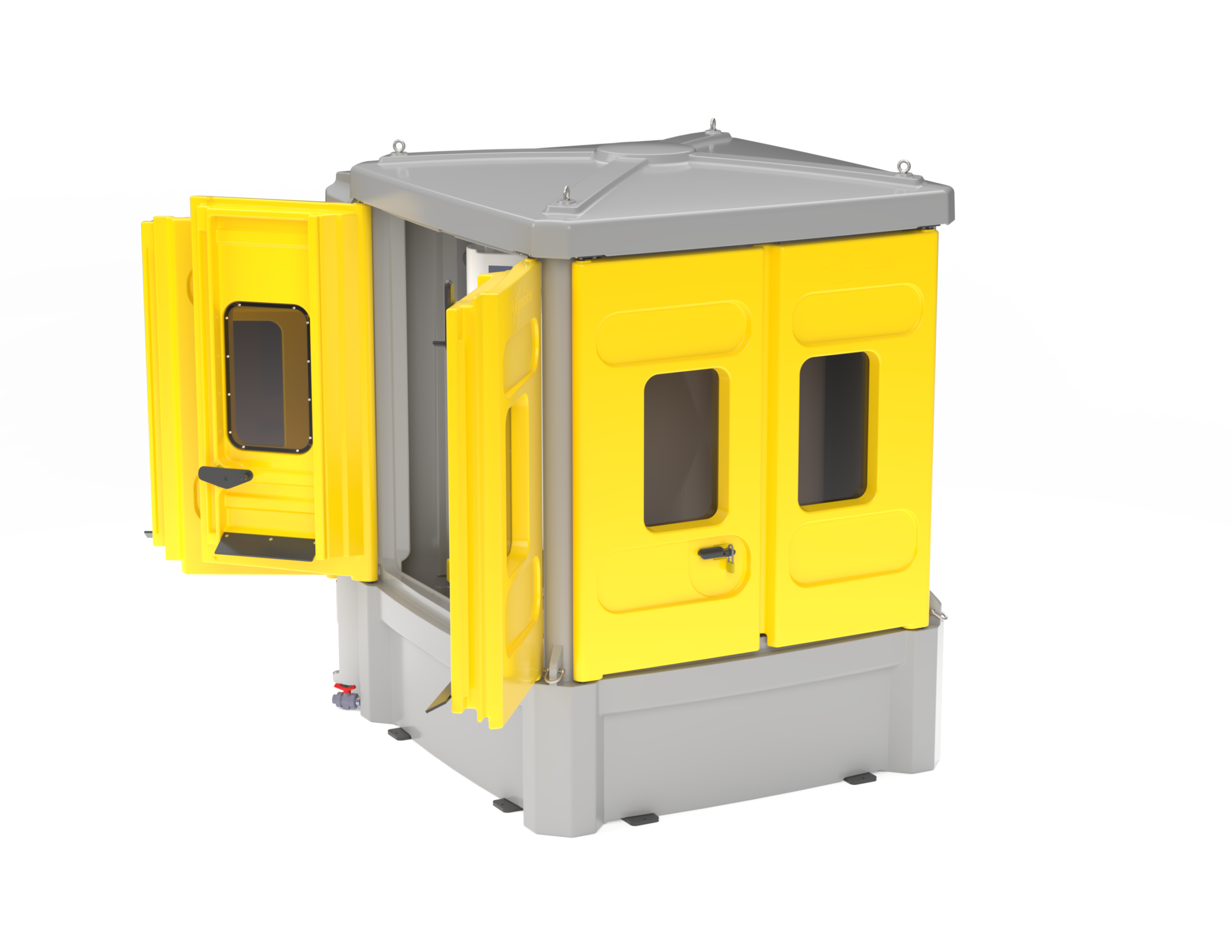
The CageBuster is compatible with the Polymaster Enclosed IBC Bund, so the tote and the storage it sits in come from the same manufacturer and are designed to work together.
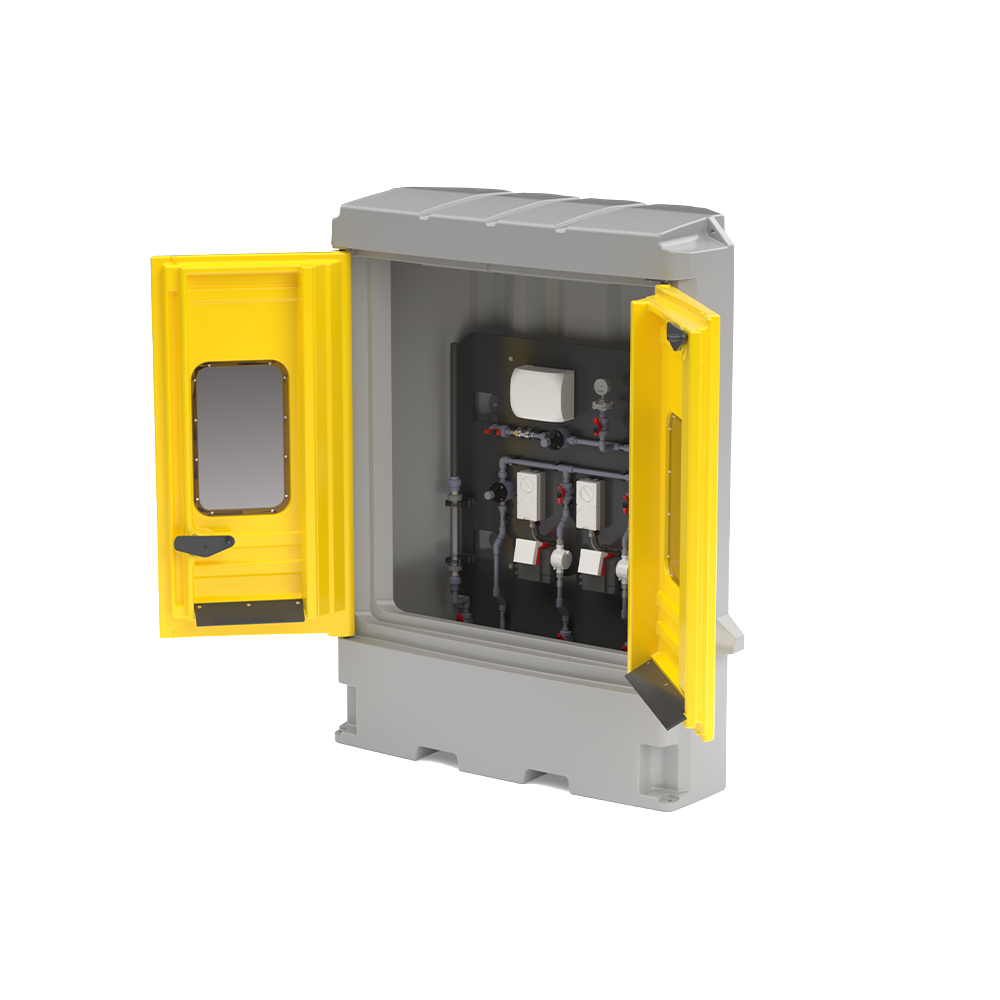
The Enclosed IBC Bund solves the problems that come with IBC storage and chemical decanting, in a weather resistant, purpose built enclosure.
- Safe and compliant storage in a lockable, weather resistant cabinet
- Advanced bunding and spill containment built into the unit
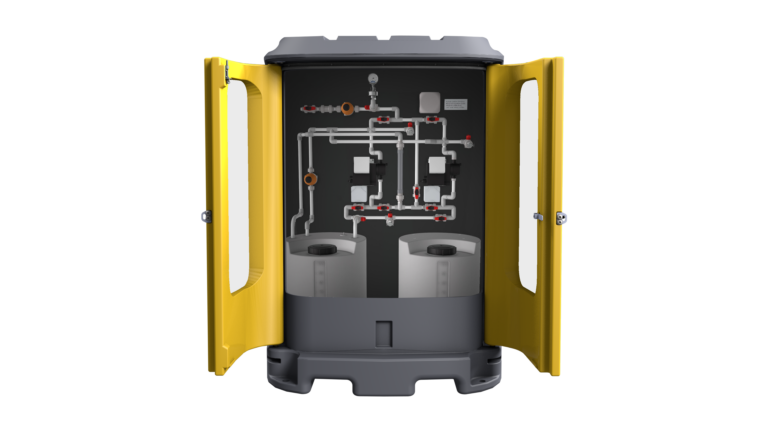
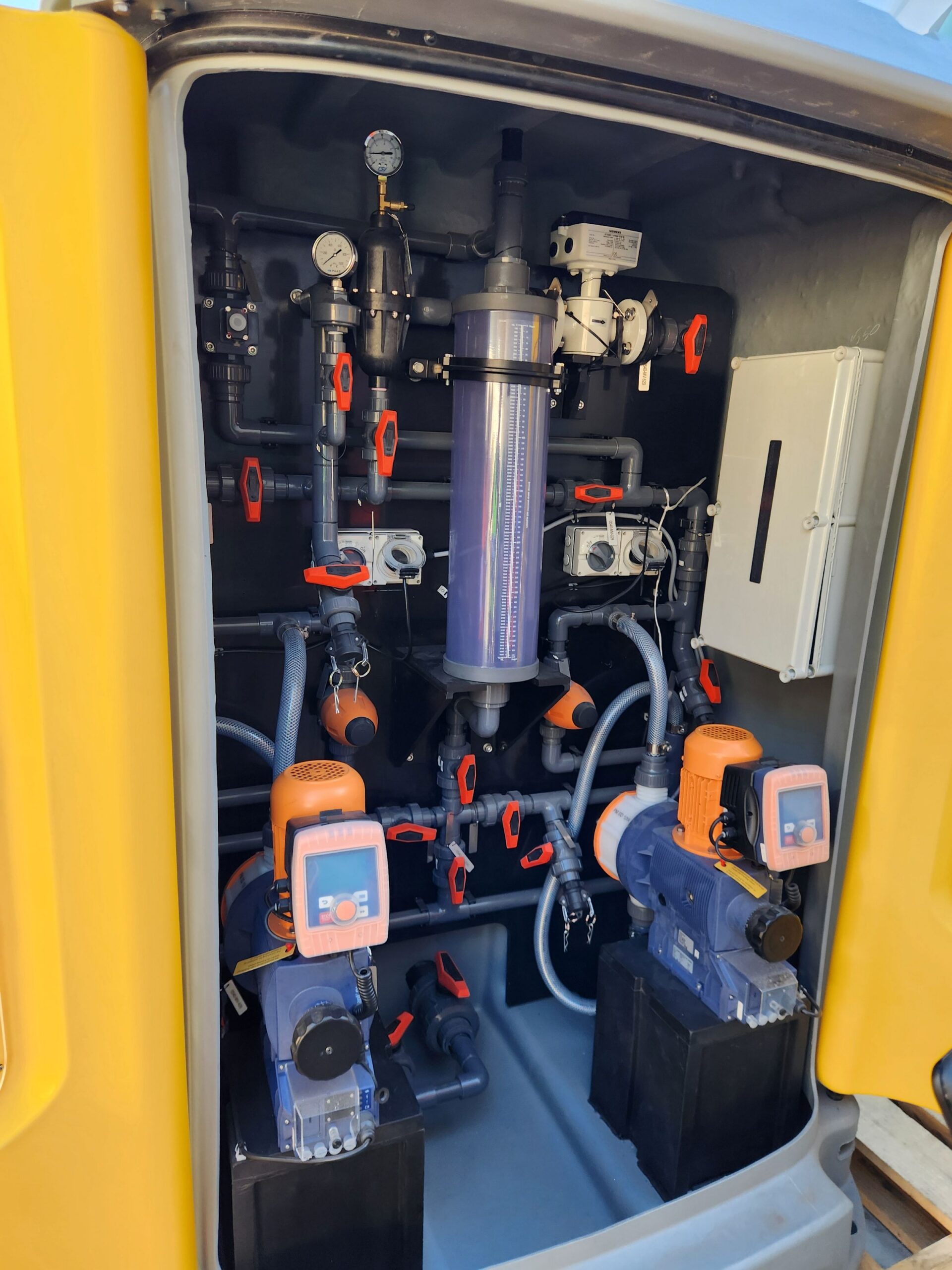
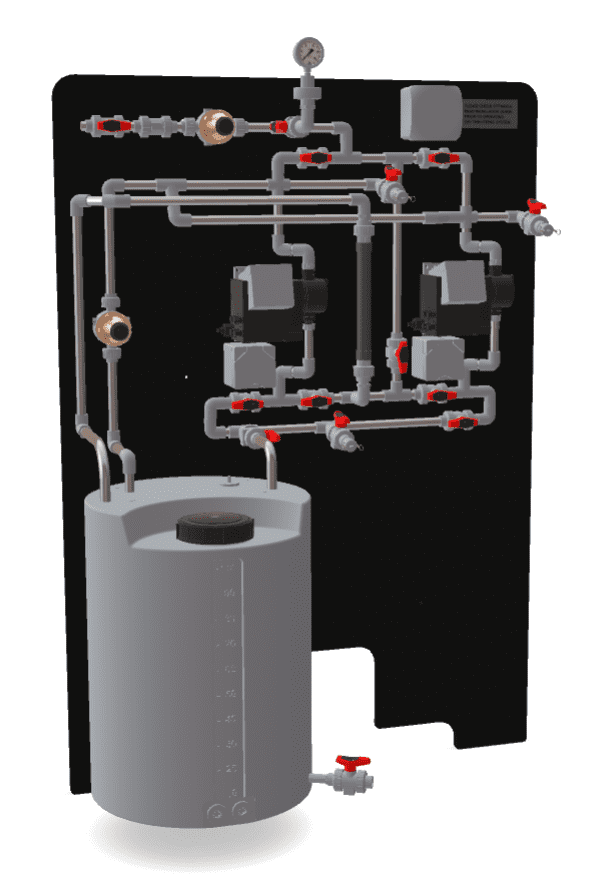
- Customisable dosing system where the IBC feeds a dosing duty
- Superior ventilation for safe decanting
- Easy installation and maintenance, delivered as a complete unit
Working Out the Numbers on Your Fleet?
Tell us how many totes you run and how often they cycle. We will show you what the switch looks like for your operation.

FAQs
Frequently Asked Questions
What is an IBC tank?
An intermediate bulk container. A pallet mounted, reusable container holding around 1,000 litres, used to store and transport bulk liquids. Most are a plastic bottle inside a steel cage. The CageBuster is the same capacity without the cage, because the tank wall is thick enough to stand on its own.
What is the difference between an IBC tank and an IBC tote?
Nothing. They are the same thing under two names, along with pallet tank and IBC. Tote is more common in North America, tank and IBC more common here.
What is a CageBuster IBC?
An intermediate bulk container without the metal cage. The tank is moulded from polyethylene thick enough to stand on its own, so there is no cage to bend, corrode or replace. It sits on a recycled plastic pallet and stacks like a conventional IBC.
How long does a CageBuster last?
Forty or more trips, against four to six for a caged IBC. That is the figure from end-user surveys and it varies with the application, but the gap is the point.
Is it worth the higher purchase price?
It pays for itself in two to three trips. After that you are ahead, and you stay ahead, because there are no replacement bottles, no cage repairs and no freight on either.
Is it recyclable?
Yes. The tank is 100% recyclable polyethylene and the pallet is made from 100% recycled plastic. Longer service life means fewer units through the waste stream in the first place.
Can I use my existing valves and lids?
In many cases yes. Valve and lid thread connections are compatible with many caged IBC components. A 2 inch replaceable bung port is available as an option.
Can it be stacked with our existing caged IBCs?
Yes. The stacking lug is designed to work with itself and with most caged IBC designs, so you do not need to segregate them in the warehouse.
Is it certified for hazardous materials?
Yes. UN 31H2 certified for the transportation of packing group II and III hazardous materials.
Can it be used with the Enclosed IBC Bund?
Yes. The CageBuster is compatible with the Polymaster Enclosed IBC Bund, so you can store and decant from it in a lockable, weather resistant enclosure with bunding and spill containment built in.
What capacity is the CageBuster?
1,000L.