


Home Water Tanks Rainwater Tanks
Rainwater Tanks
Every millimetre of rain that falls on your roof is water you have already paid to have delivered. A rainwater tank is what stops it going down the drain. Roughly a thousand litres for every hundred square metres of roof, every time twenty millimetres falls.

POLYMASTER RAINWATER TANK SOLUTIONS
Choose Your Tank Type
The right tank comes down to space, not water type. All three types hold rainwater equally well, but differ in fit and install cost.
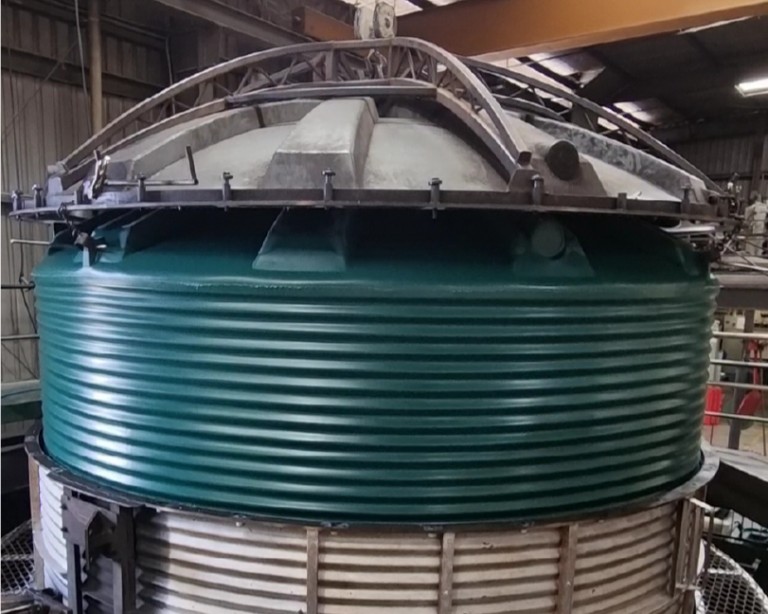
Polymaster has manufactured rainwater tanks in Australia since 1994, from 200L to 50,000L, in round, slimline and underground designs. Every tank is one-piece moulded from UV-stabilised polyethylene, certified to Australian standards, with a 25-year design life.
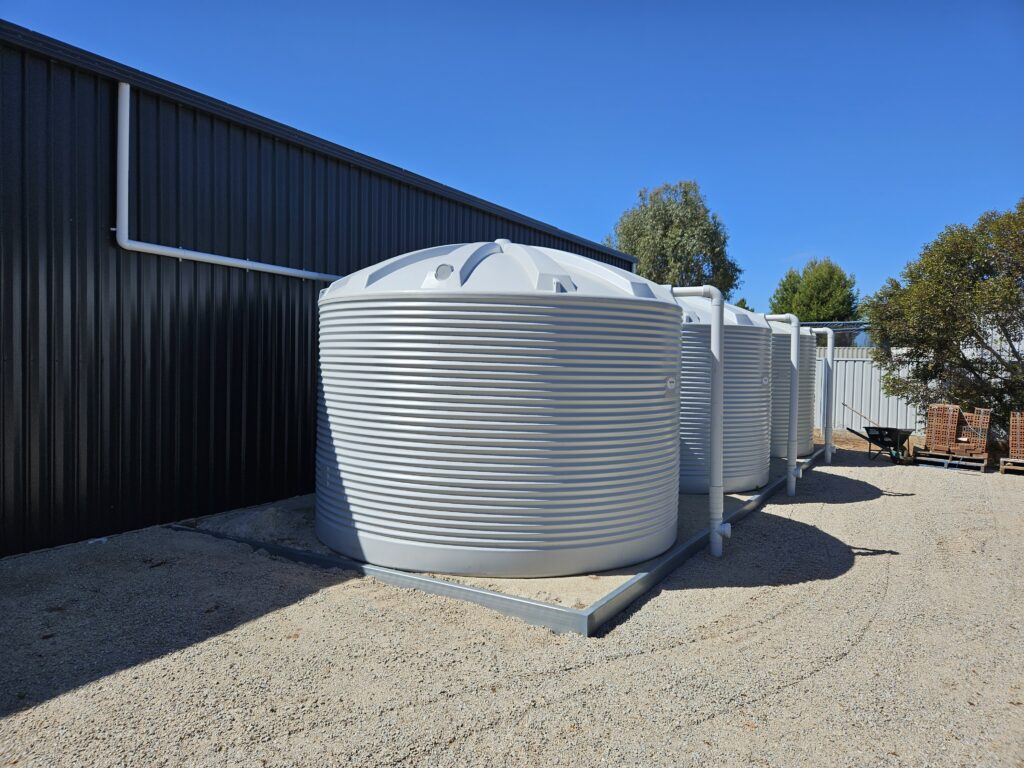
Round Water Tanks
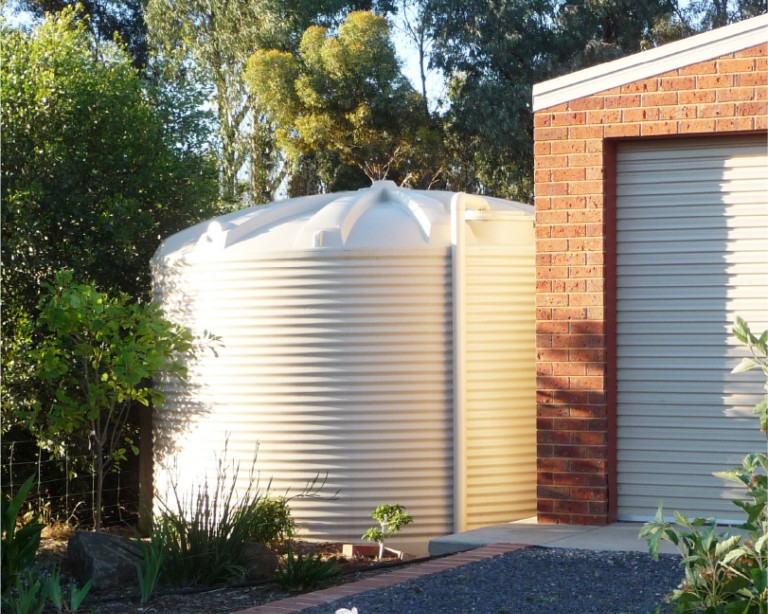
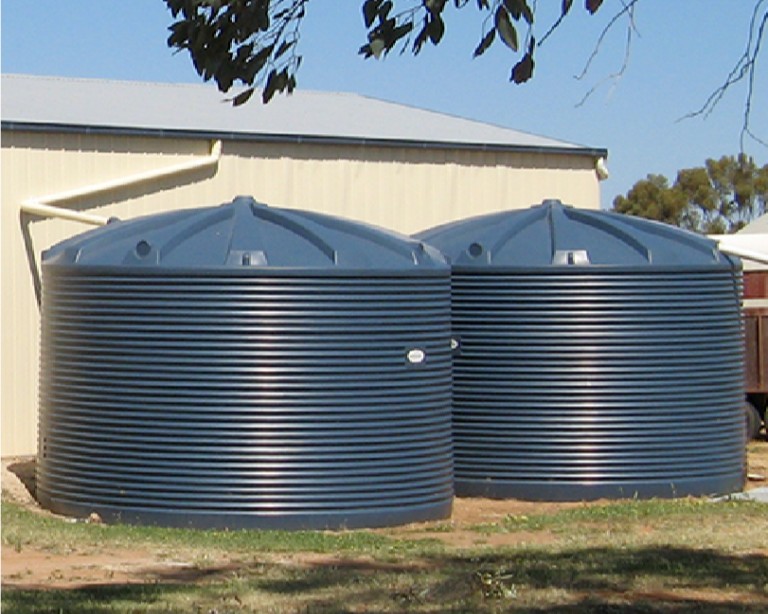
200L to 50,000L in corrugated and smooth wall profiles. The most cost effective option per litre and the simplest to install, so the default choice wherever there is open ground for one. Low profile models suit sites with height restrictions.
View Range
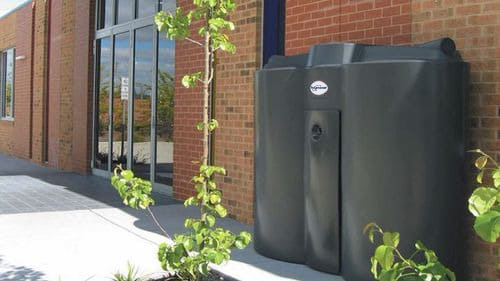
Slimline Water Tanks
600L to 5,000L, from 580mm wide. Built for narrow side passages, boundary fences and courtyards where a round tank will not fit. More per litre than round, but often the only option that works on a suburban block.
View Range
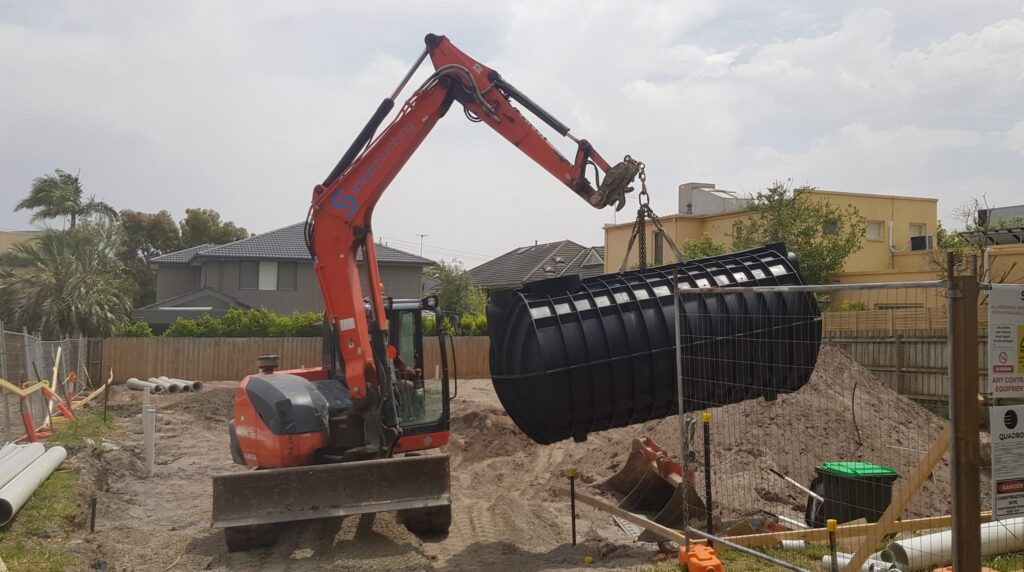
Underground Water Tanks
3,300L and 5,000L. The tank disappears entirely and you keep the full surface area of the block. Costs more to install because of the excavation, so it suits sites where the space above ground is worth more than the saving.
View Range
Highest Quality and Standards
Every Polymaster round water tank is independently certified, Australian-made, and built to perform reliably across residential, rural, and industrial applications.
Food Grade Polyethylene
Certified to AS/NZS 4020, the Australian standard for products in contact with drinking water.
ISO 9001 Quality Management
Polymaster holds ISO 9001 certification, the international standard for quality management systems.
Australian Made
Designed, engineered, and manufactured right here in Australia, built for our climate and our conditions.
Independently Certified
Certified to AS/NZS 4766:2006 for polyethylene storage tanks.

RAINWATER HARVESTING
What Your Roof Can Actually Collect
Roof area and rainfall decide everything. The calculation is straightforward: multiply your roof catchment area in square metres by your annual rainfall in millimetres, and that is roughly what you could collect in a year in litres.
A 200 square metre roof in a district getting 500mm a year is around 100,000 litres. Not all of it ends up in the tank, since some is lost to the first flush, to overflow in heavy downpours and to evaporation off a hot roof, but it shows what is running off.
Tank size then depends on how you use it. If the tank is topping up a garden it can be smaller and turn over often. If it is your main household supply through a dry summer, you need enough to carry you between decent falls. Our rainwater calculator does the sums against your postcode.
RAINWATER TANK APPLICATIONS
What People Use Rainwater For
Garden and Irrigation
The most common starting point. A tank between 1,000L and 5,000L covers pots, beds and a small lawn through a dry stretch, and a garden pump gives you pressure at the hose. No restrictions on tank water.
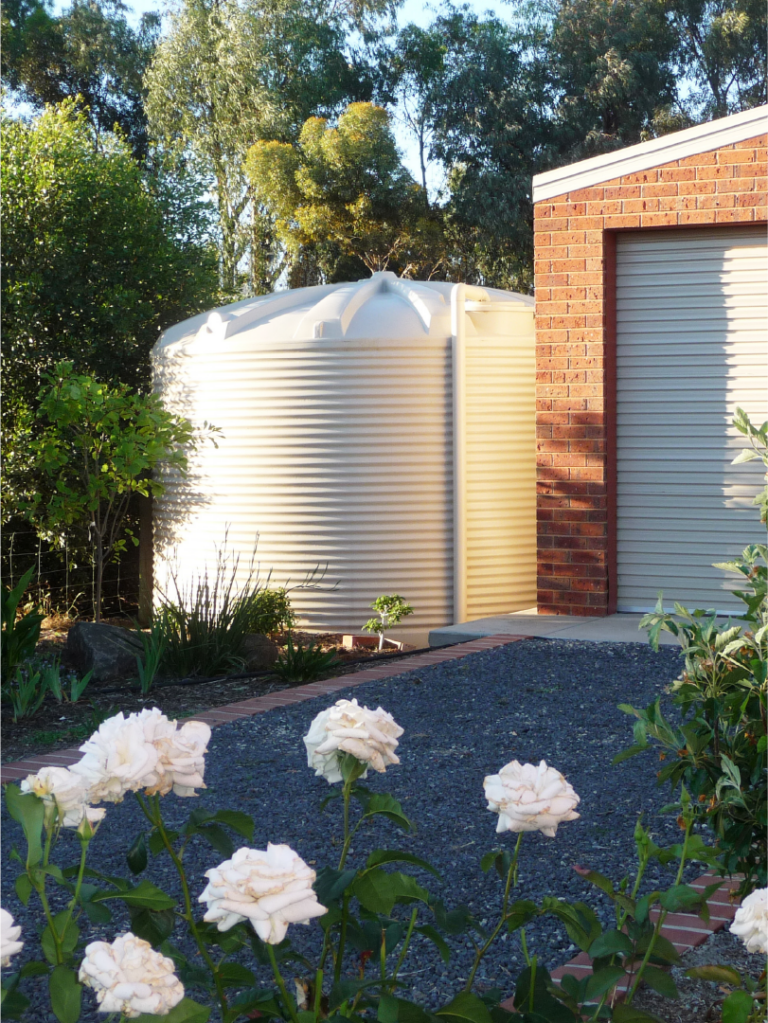
Household Supply
Toilets, laundry and hot water, with an automatic rain to mains changeover so the system switches to town water when the tank runs dry. Most household setups sit between 3,000L and 5,000L, or considerably larger where rainwater is the only supply.
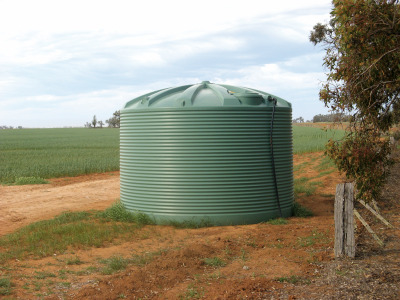
Rural and Stock Water
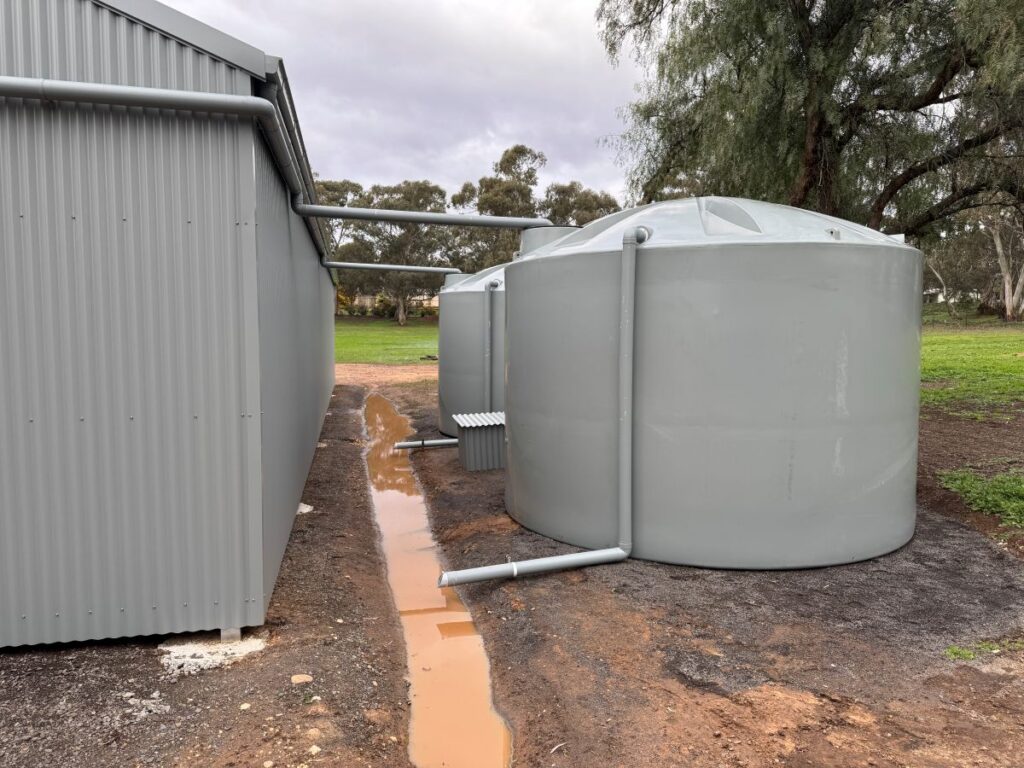
Where there is no mains connection, rainwater off shed and house roofs is the supply. Tanks from 13,600L up, often interconnected, and sized to carry a property through summer rather than just between falls.
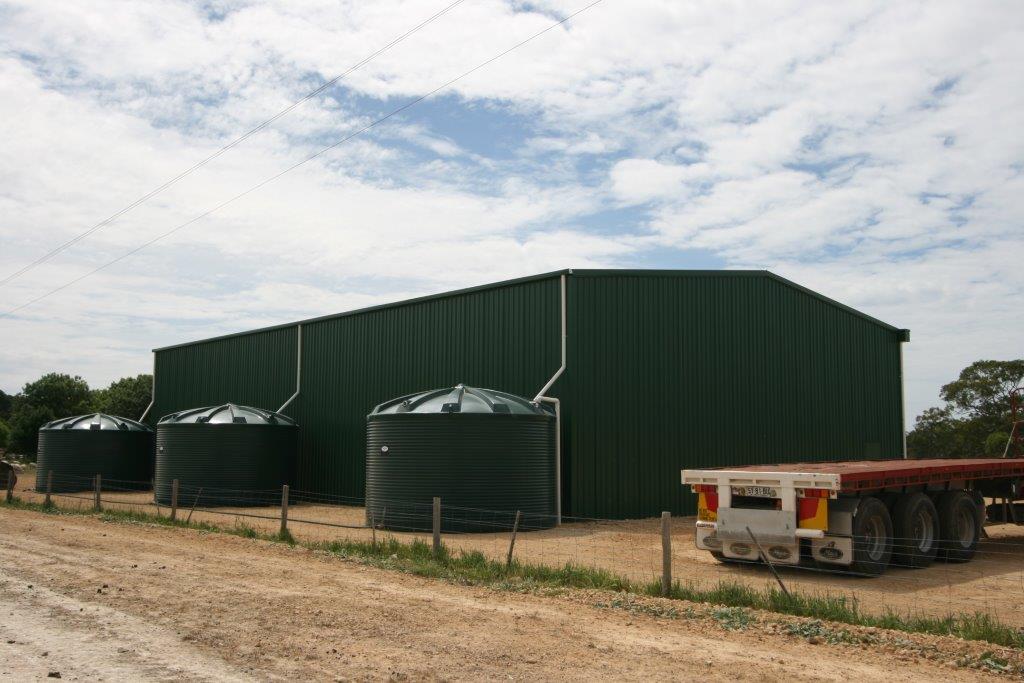
New Builds and Council Requirements
Many councils now require rainwater storage on new homes and renovations, with the volume and the connected fixtures set by state or local rules. Where stormwater detention is also required, that is a different product again.
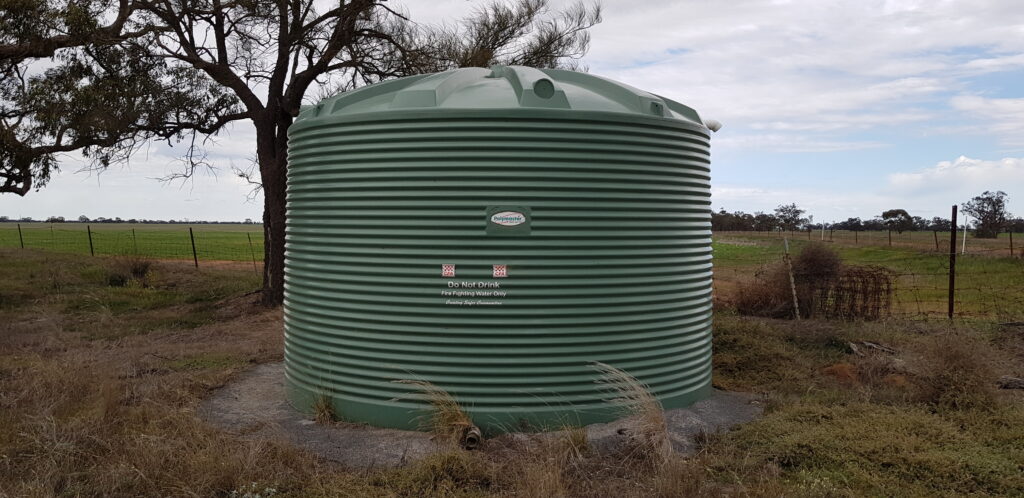
Fire Fighting Reserve
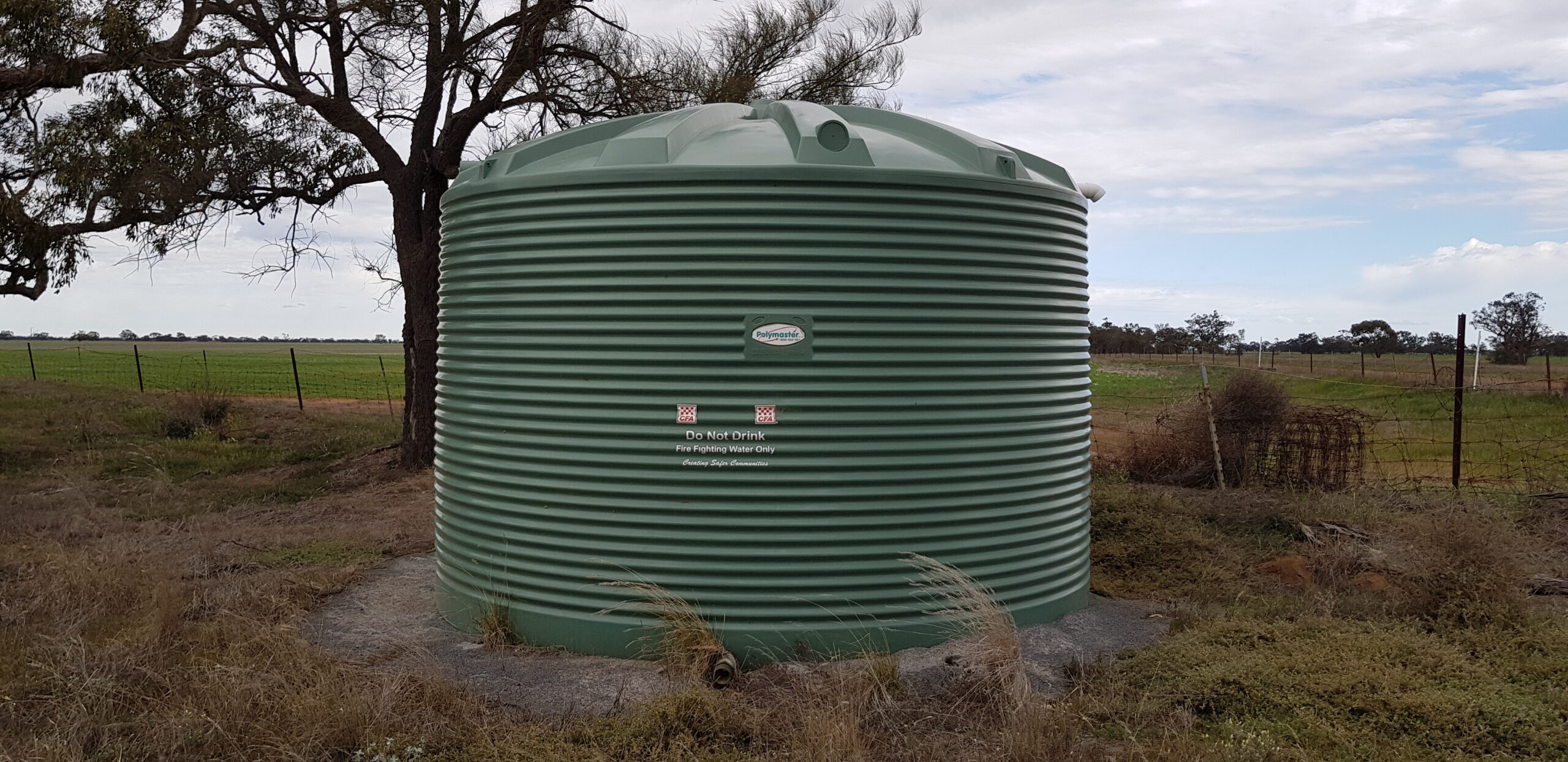
A dedicated reserve, or a portion of a larger tank held back for it. CFA, CFS and RFS fittings can be installed at the factory to meet your local fire authority requirements.
WATER QUALITY
Keeping the Water Clean
What gets into the tank decides what comes out of it. Three things do most of the work.
Leaf screens and gutter guards stop the bulk of it at the inlet. Every Polymaster rainwater tank comes standard with an inlet leaf screen.
A first flush diverter dumps the first few litres off the roof, which carries most of the dust, bird droppings and debris that has built up since the last fall.
Regular maintenance is the rest. Clear gutters, leaf screens and first flush diverters every six months. Check the inside of the tank every two to three years, and if there is sludge on the floor, pump it out and hose it down.
You do not need to empty the tank annually. That wastes water and does nothing maintenance-wise. Drain only when a clean out is genuinely due, when fittings are being upgraded, or when local health rules require it.
“Our Polymaster rainwater tank has been a great investment. Having extra water available for the garden and household use gives us real peace of mind.”
"We chose a Polymaster rainwater tank for our home and have been really impressed with the quality. It looks great, feels solid and gives us plenty of water storage for the garden and around the house.”
DELIVERY AND DISTRIBUTION
Delivery Across Victoria, South Australia, New South Wales, and Queensland
Polymaster delivers rainwater tanks direct to your property or to your nearest stockist, with over 1,600 agricultural and plumbing stores across Victoria, South Australia, New South Wales and South East Queensland. Call us on 1800 062 064 and we will point you to your nearest one.
Zone 1, Free Delivery
- Our Zone 1 coverage includes Victoria, Southern New South Wales, South Australia, South East Queensland and North East New South Wales.
- Within this zone, delivery is free for tanks exceeding 13,000L. For tanks under that, a $165 inc GST charge applies to deliver to site.
Zone 2, Delivery Charges Apply
- For locations outside Zone 1, charges apply based on your location.
- Contact our team for a tailored quote.
Preparing Your Site
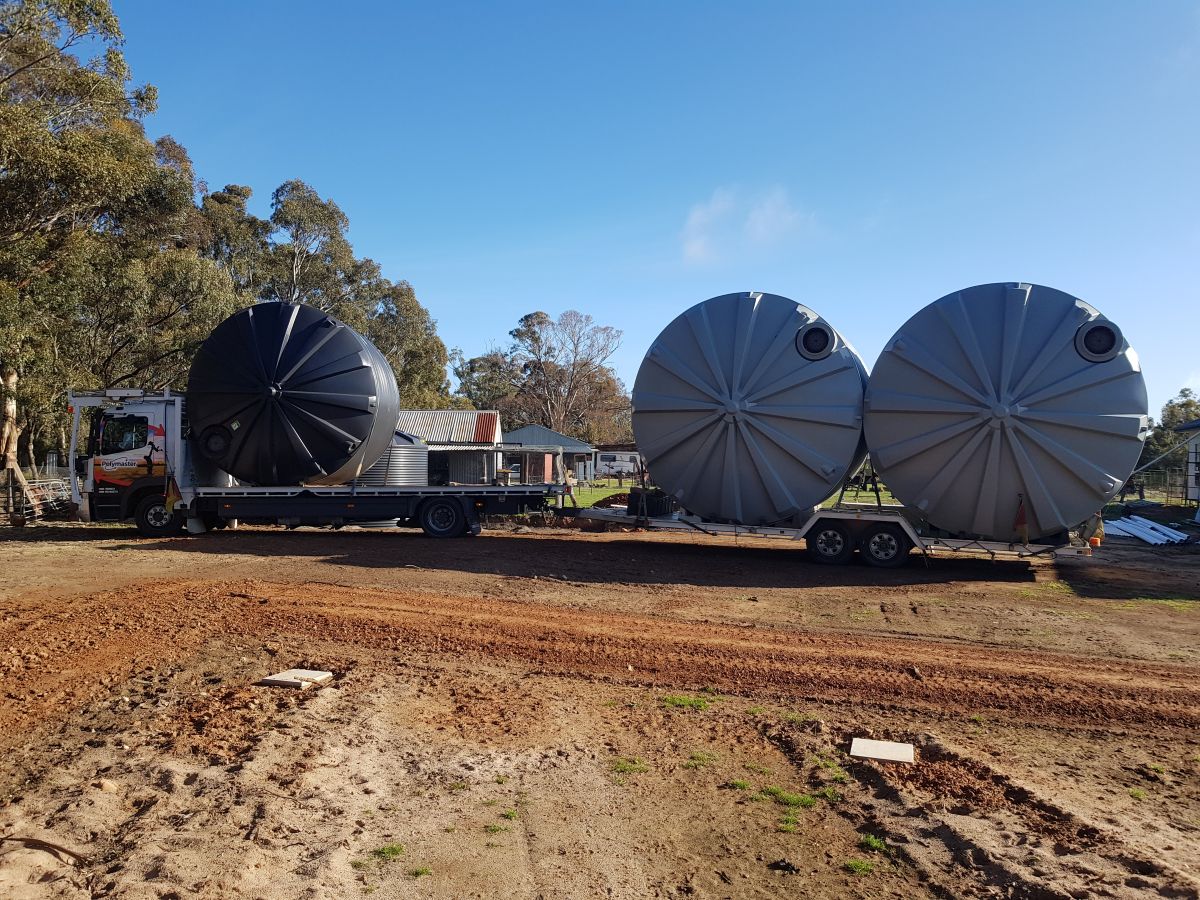
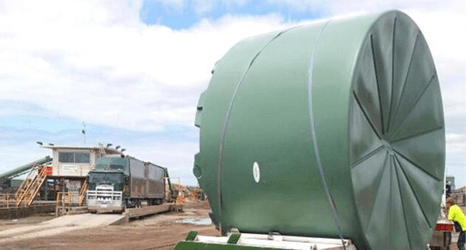
Truck and trailer clearance required is 19 metres long, 5 metres high and 3.5 metres wide. Check for low branches or powerlines on your access route and make sure your gate and entrance can accommodate a 19 metre truck and trailer. A flat, clear area of at least 5 metres by 5 metres is required for unloading. Our logistics team will contact you approximately seven days before delivery.
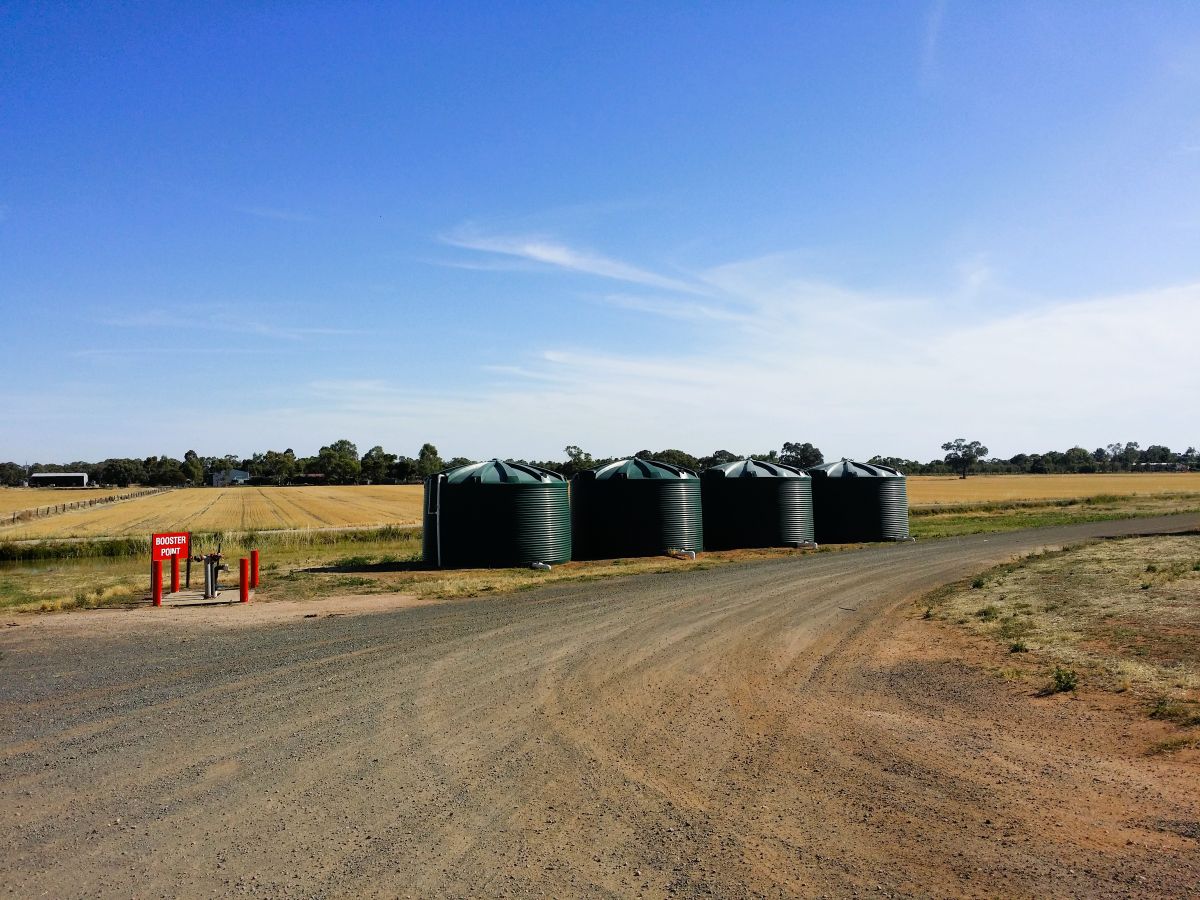
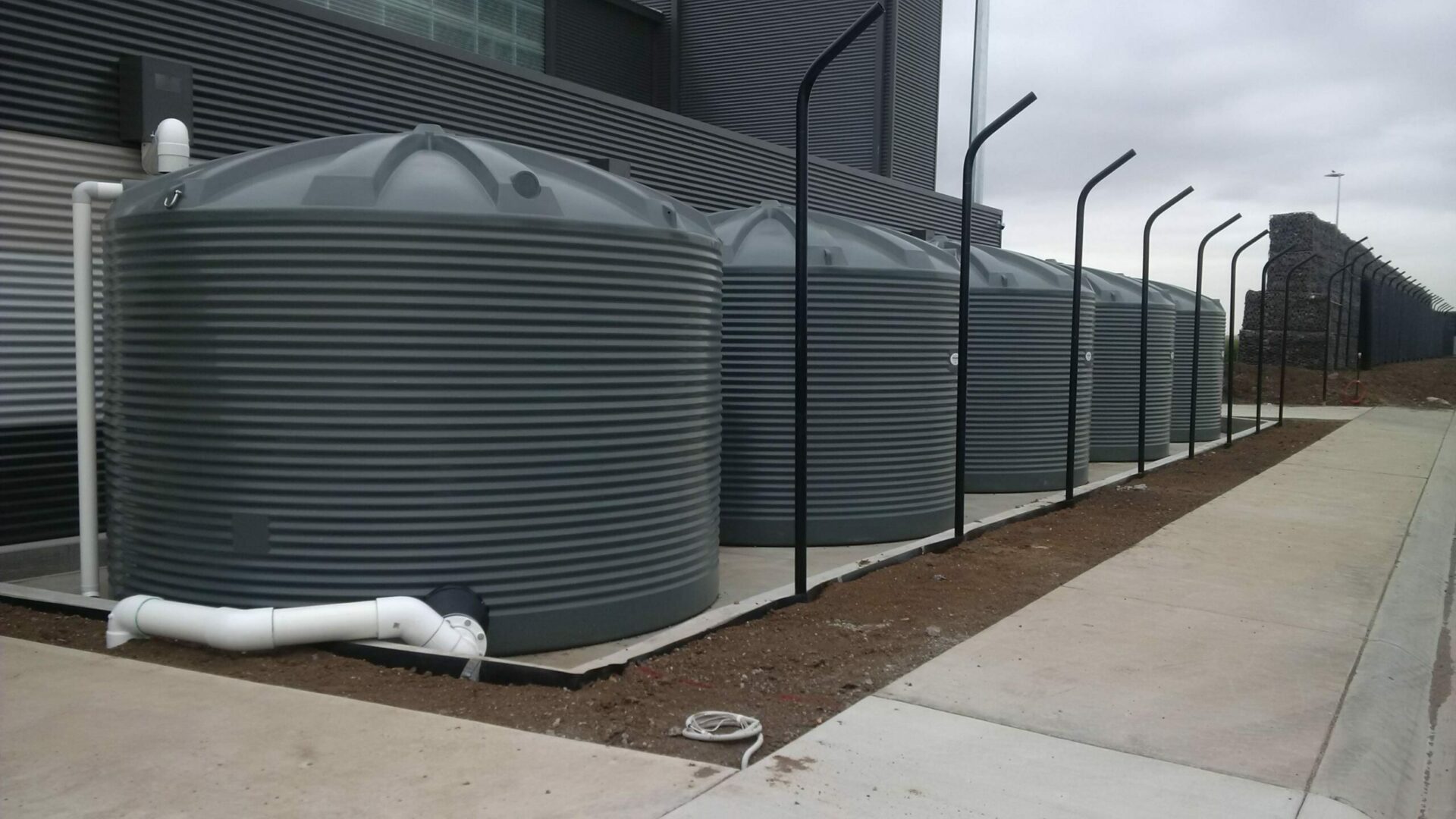
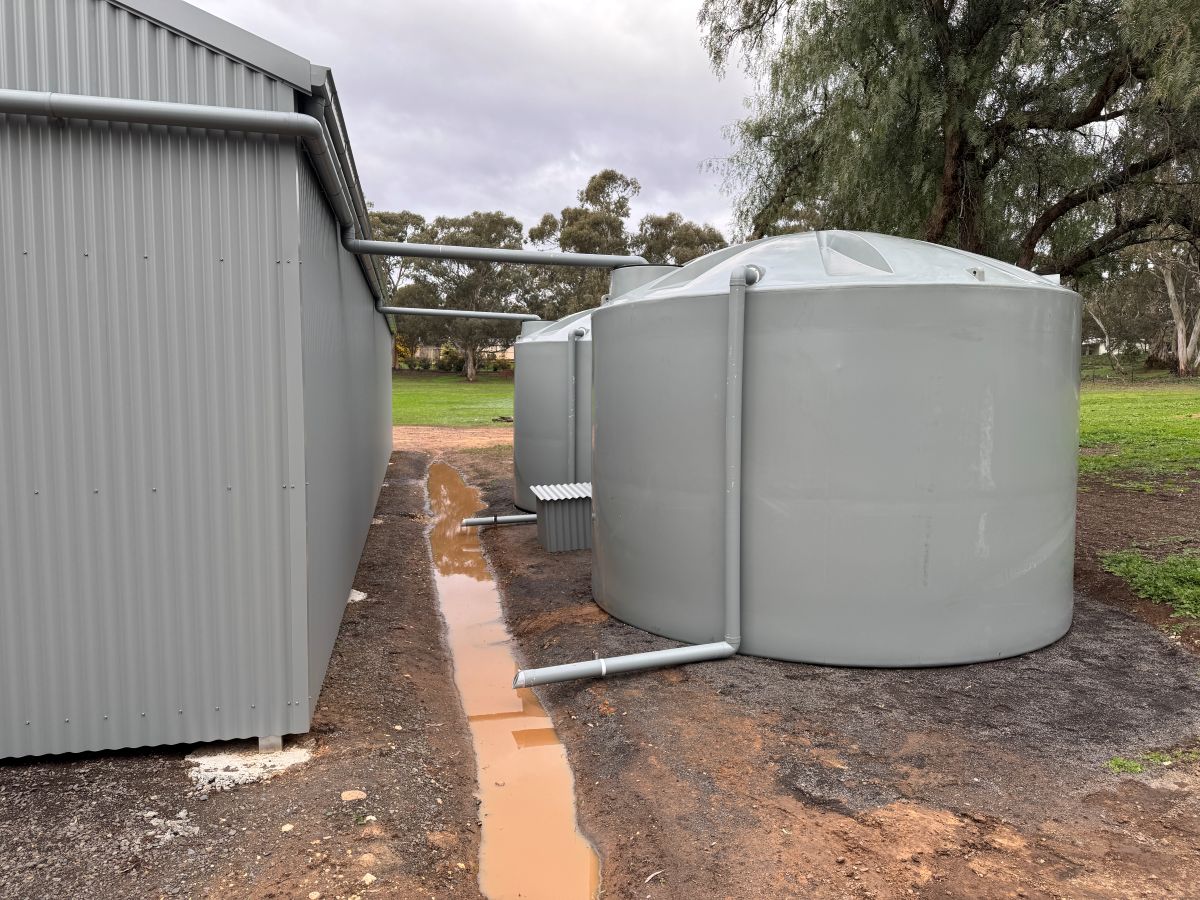
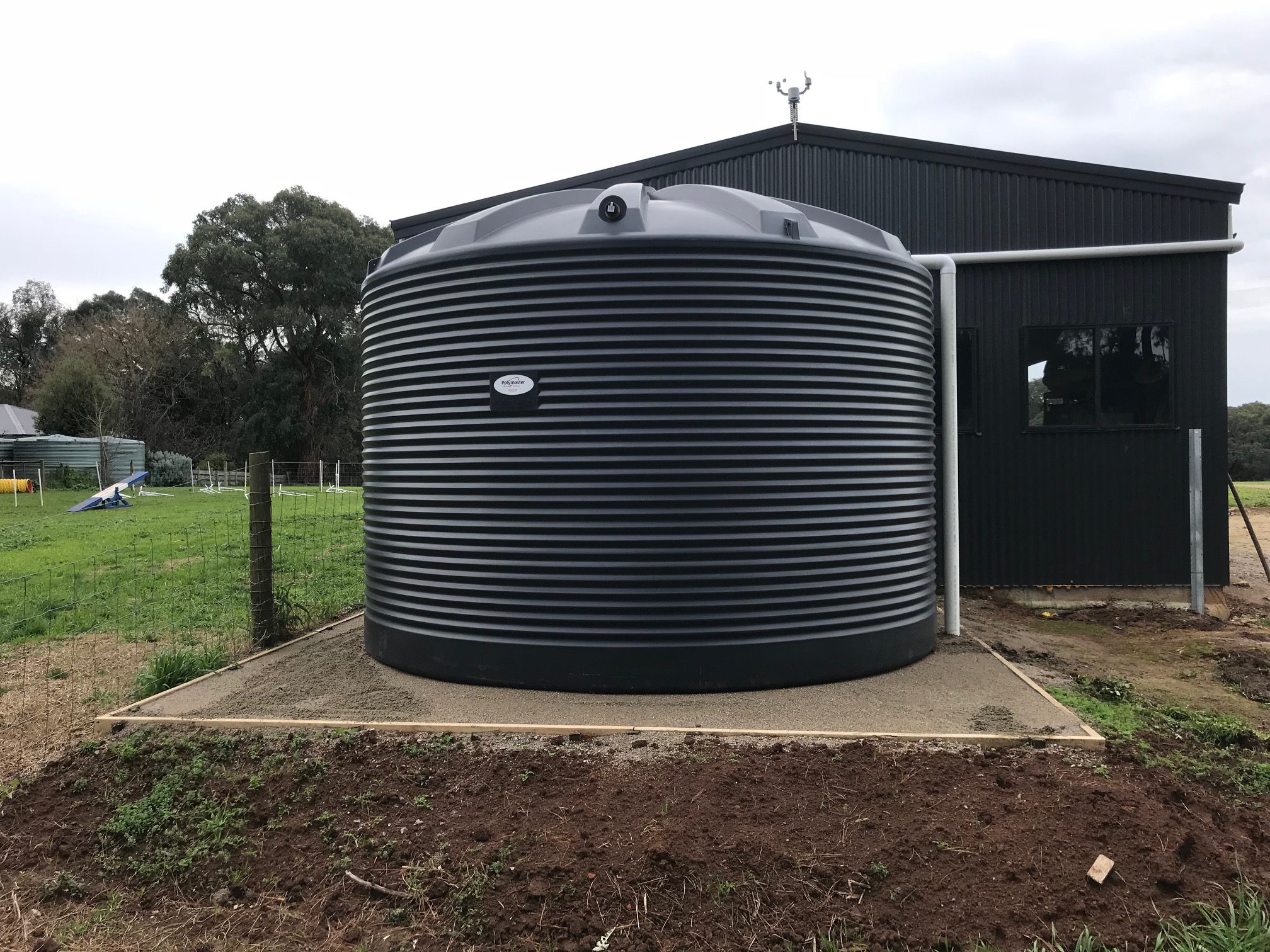
RAINWATER TANKS IN THE FIELD
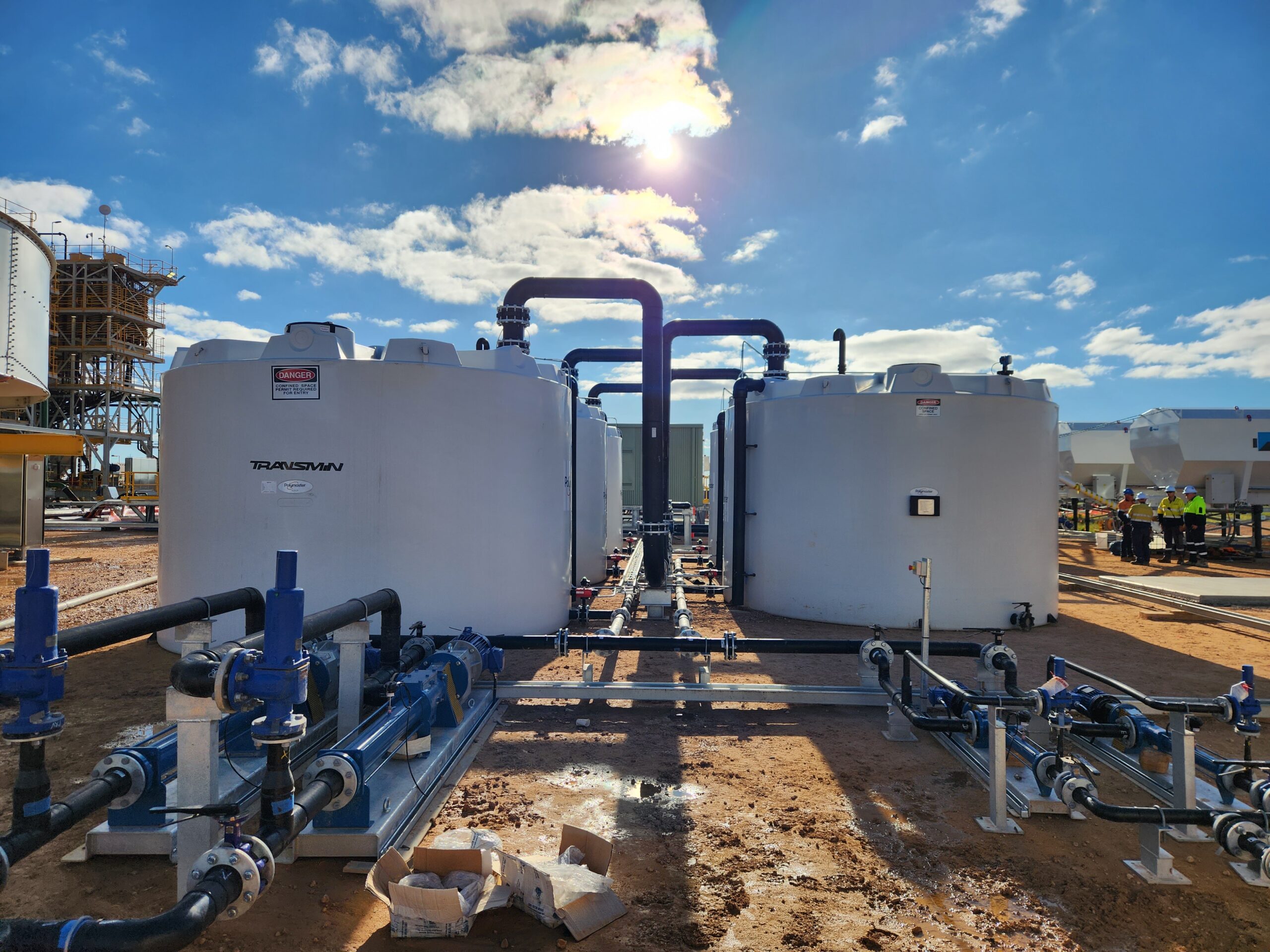
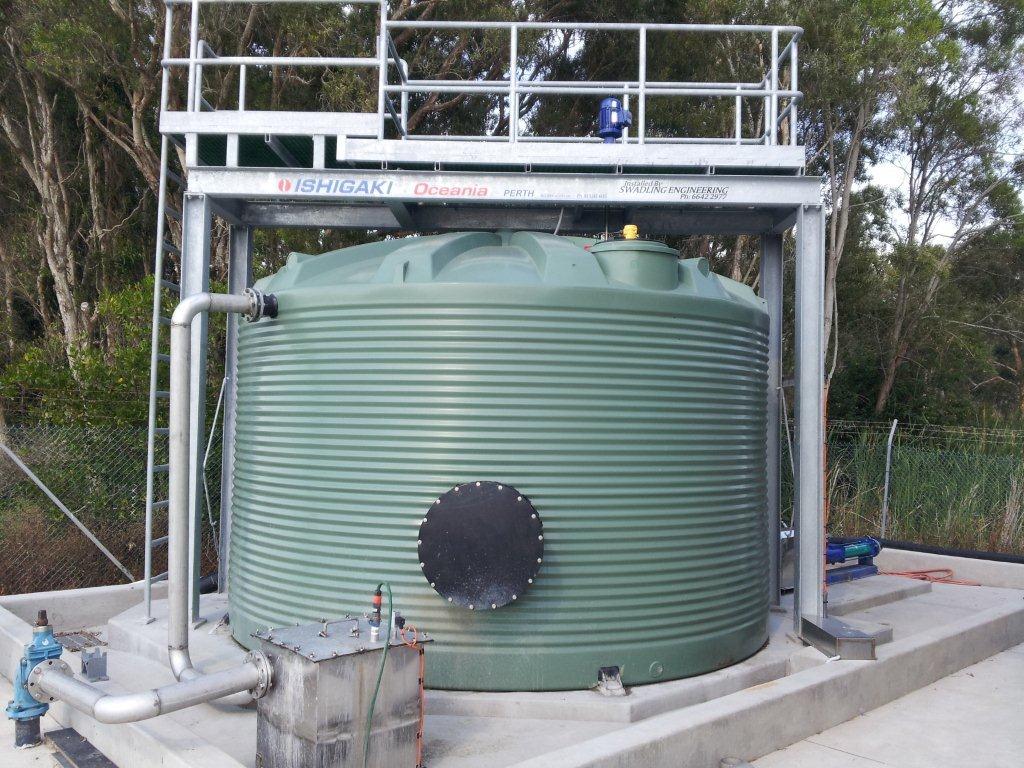
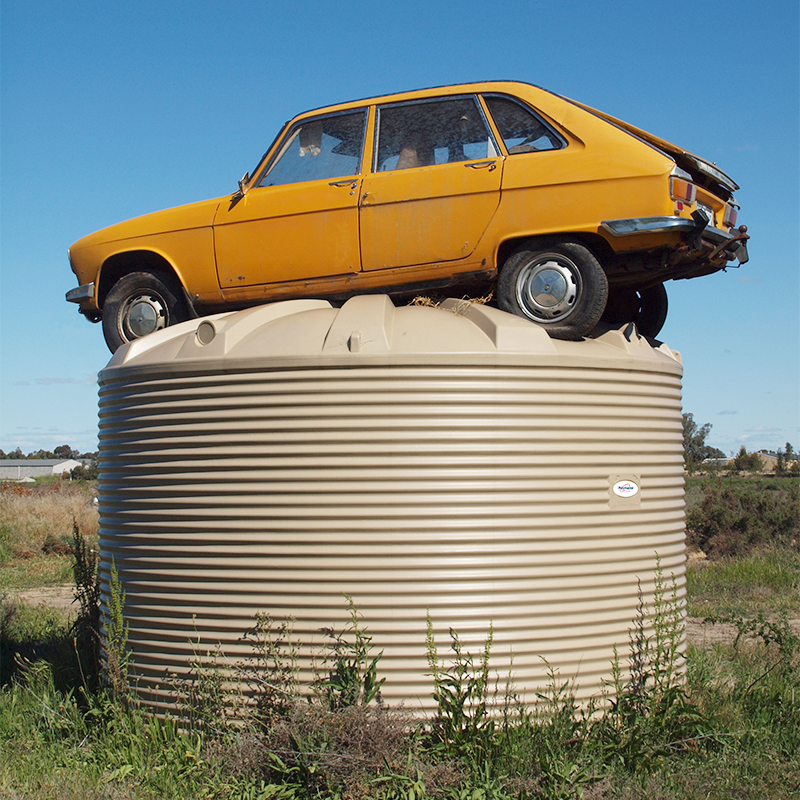
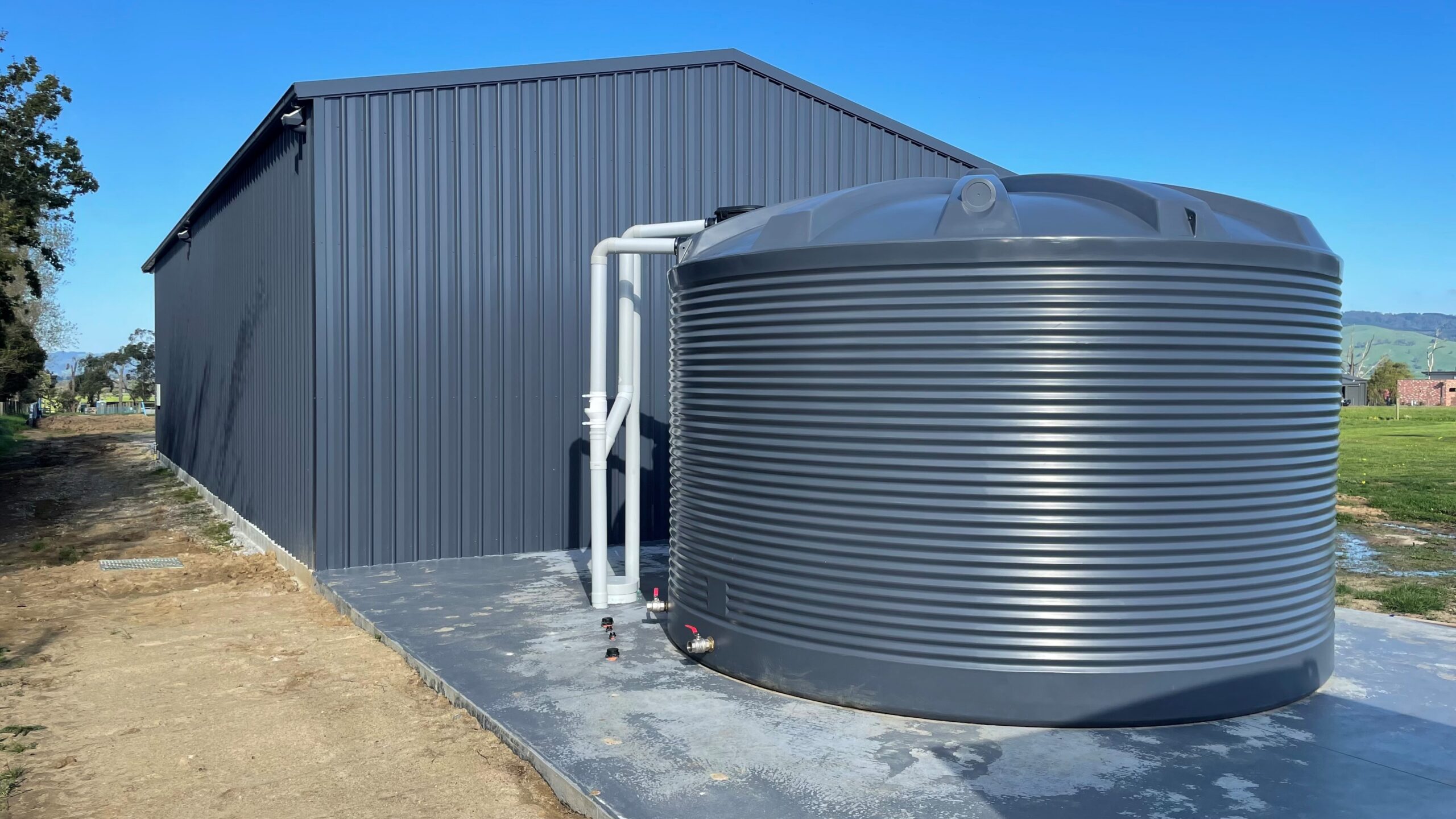
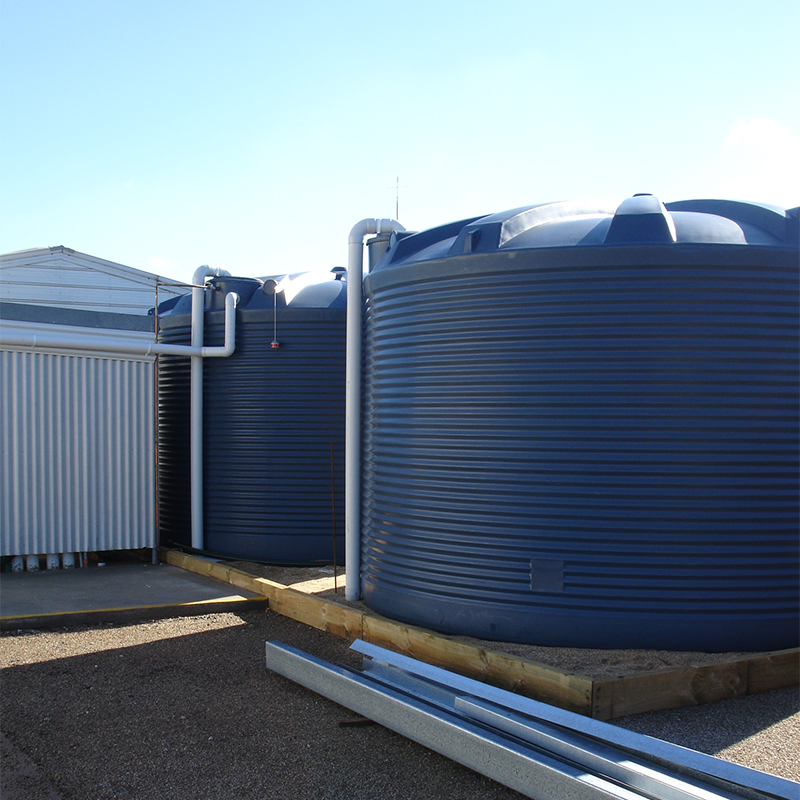
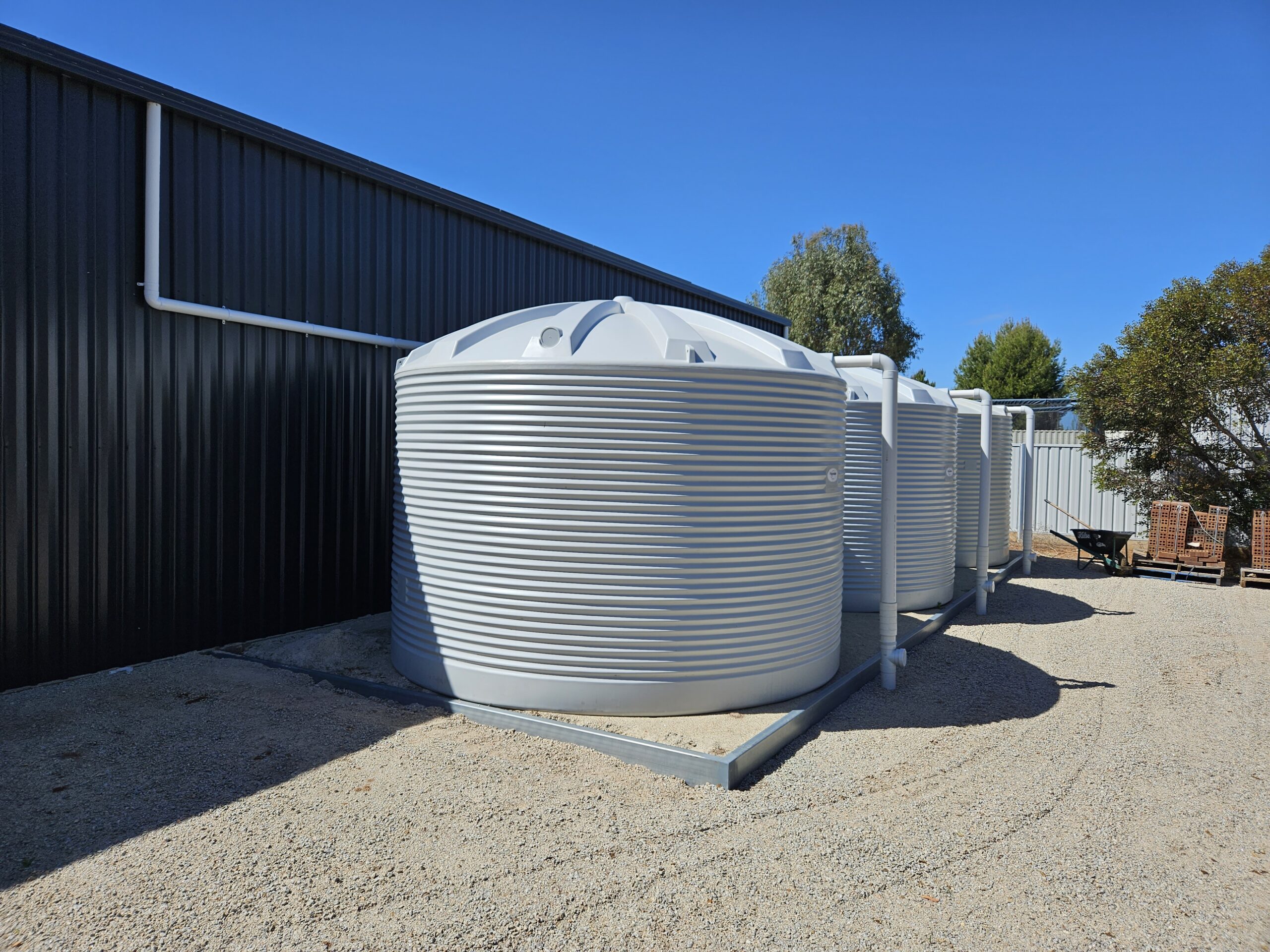
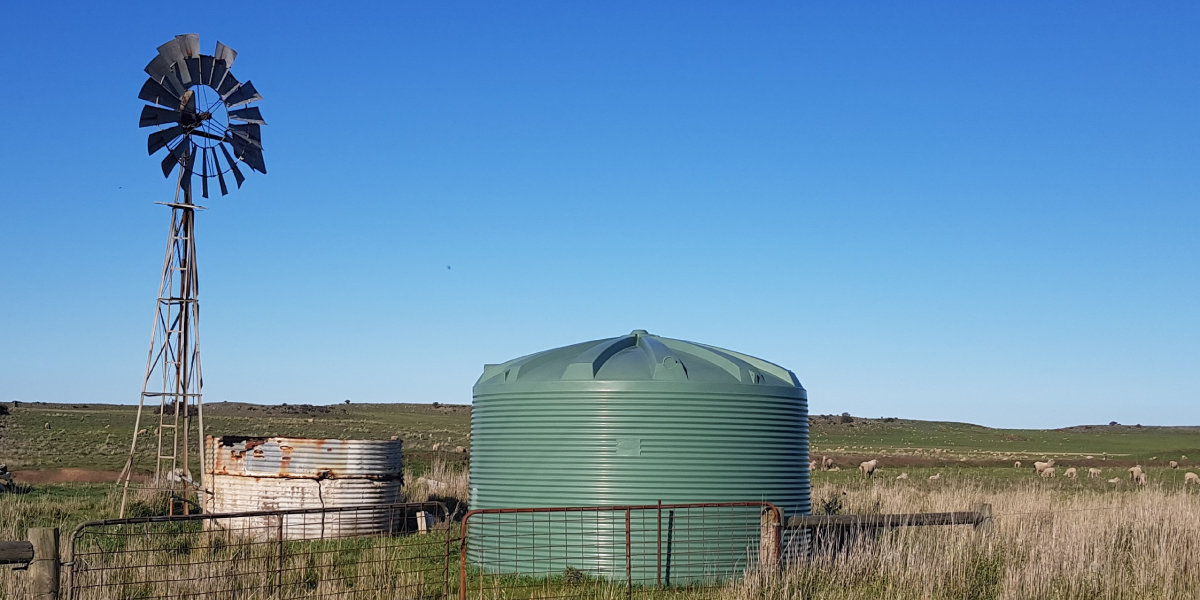
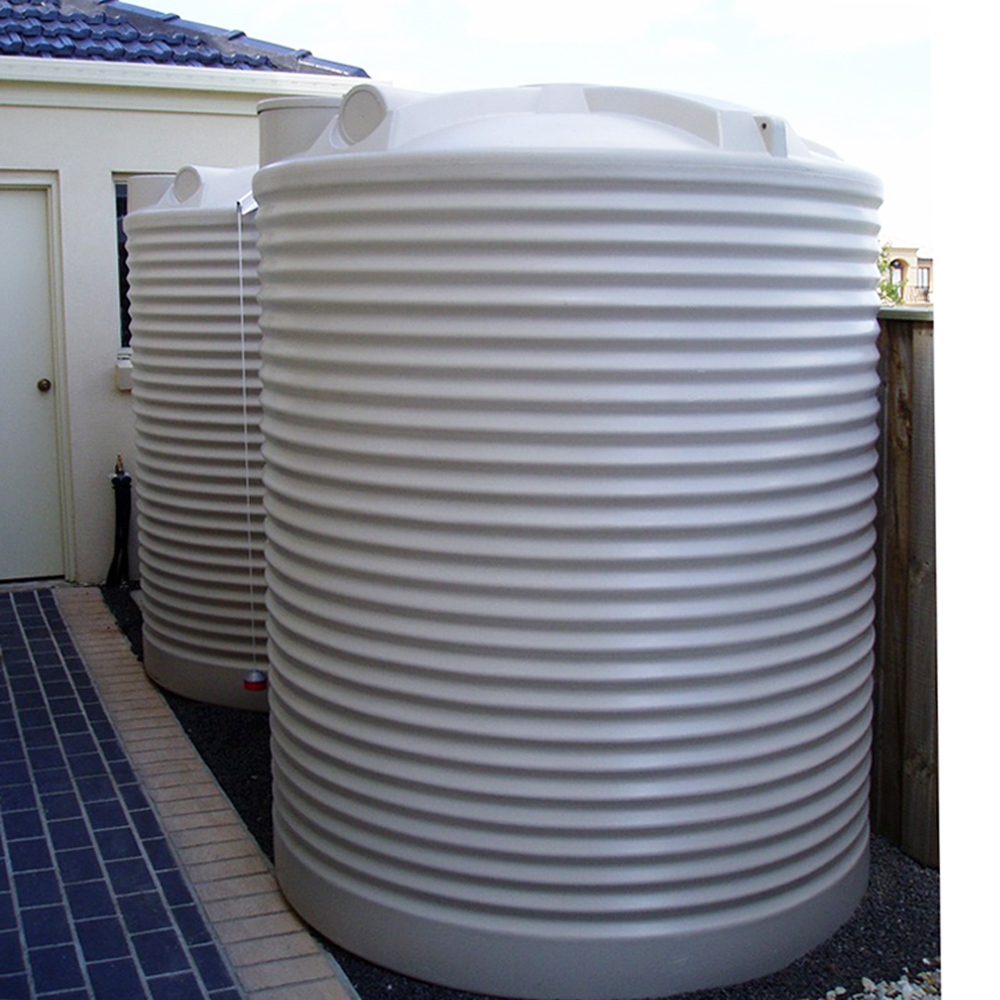
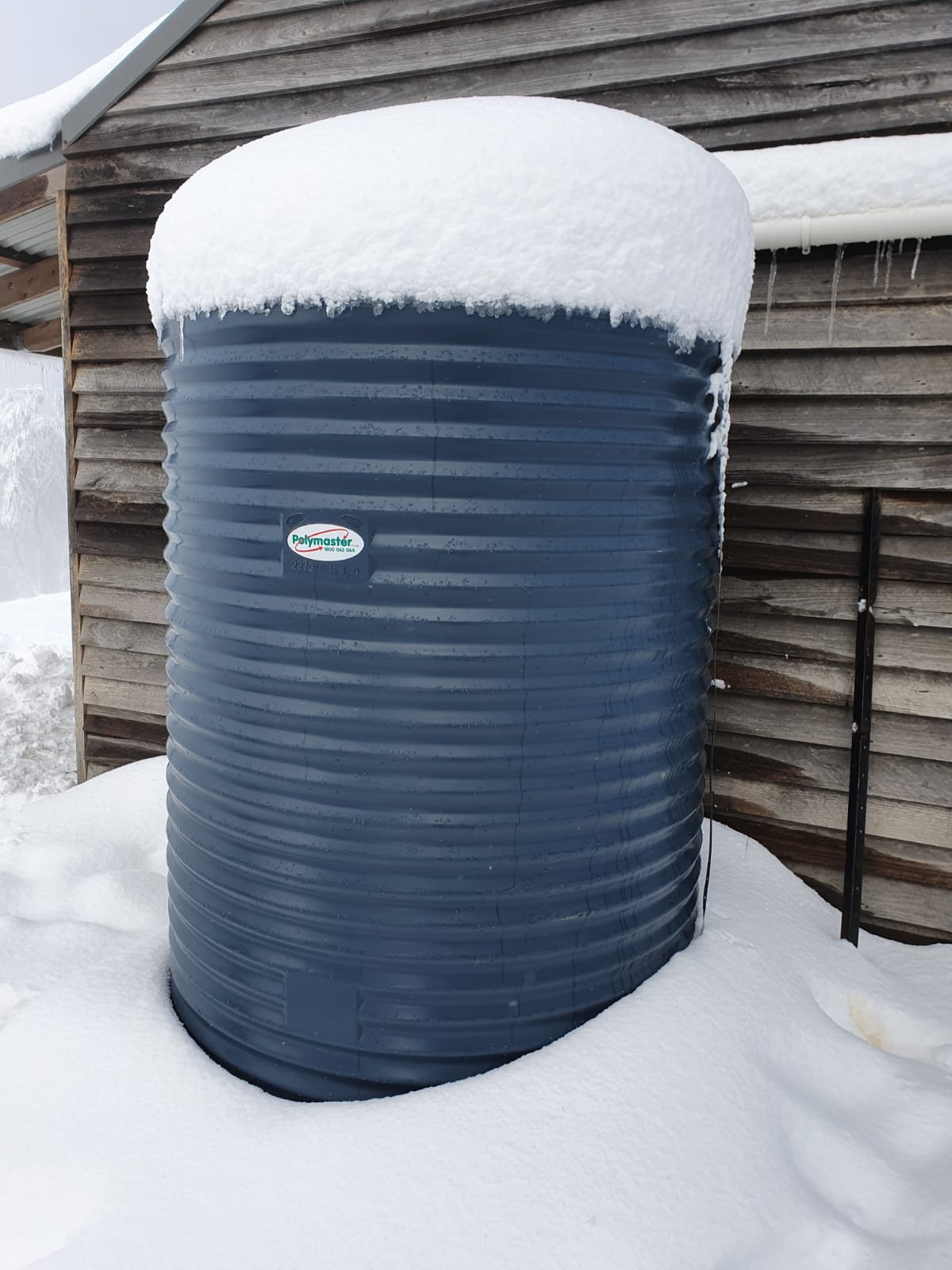
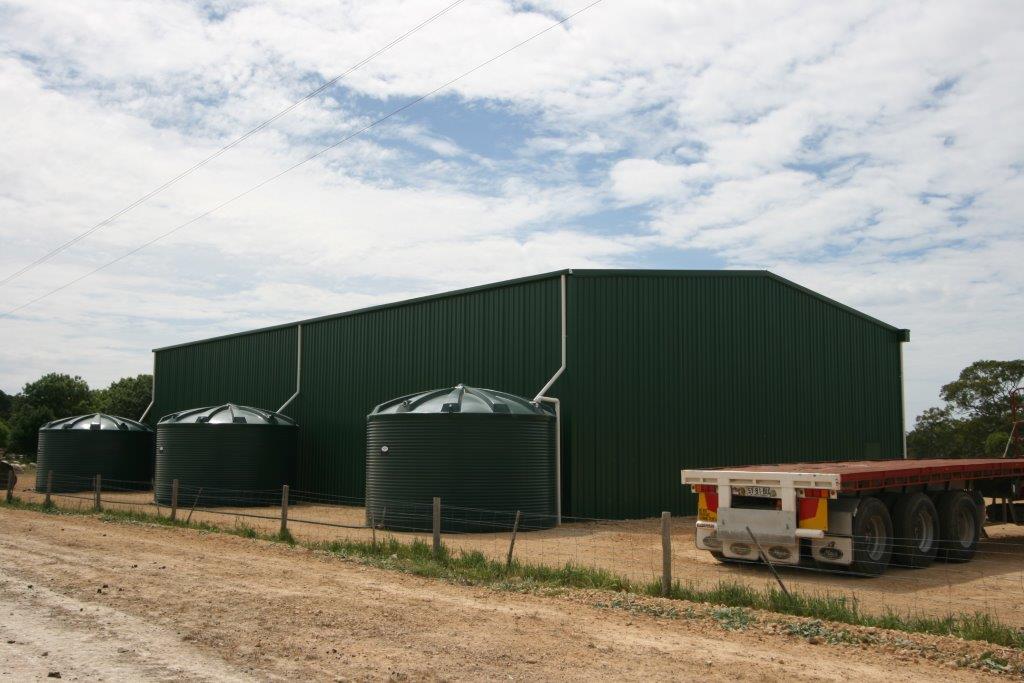
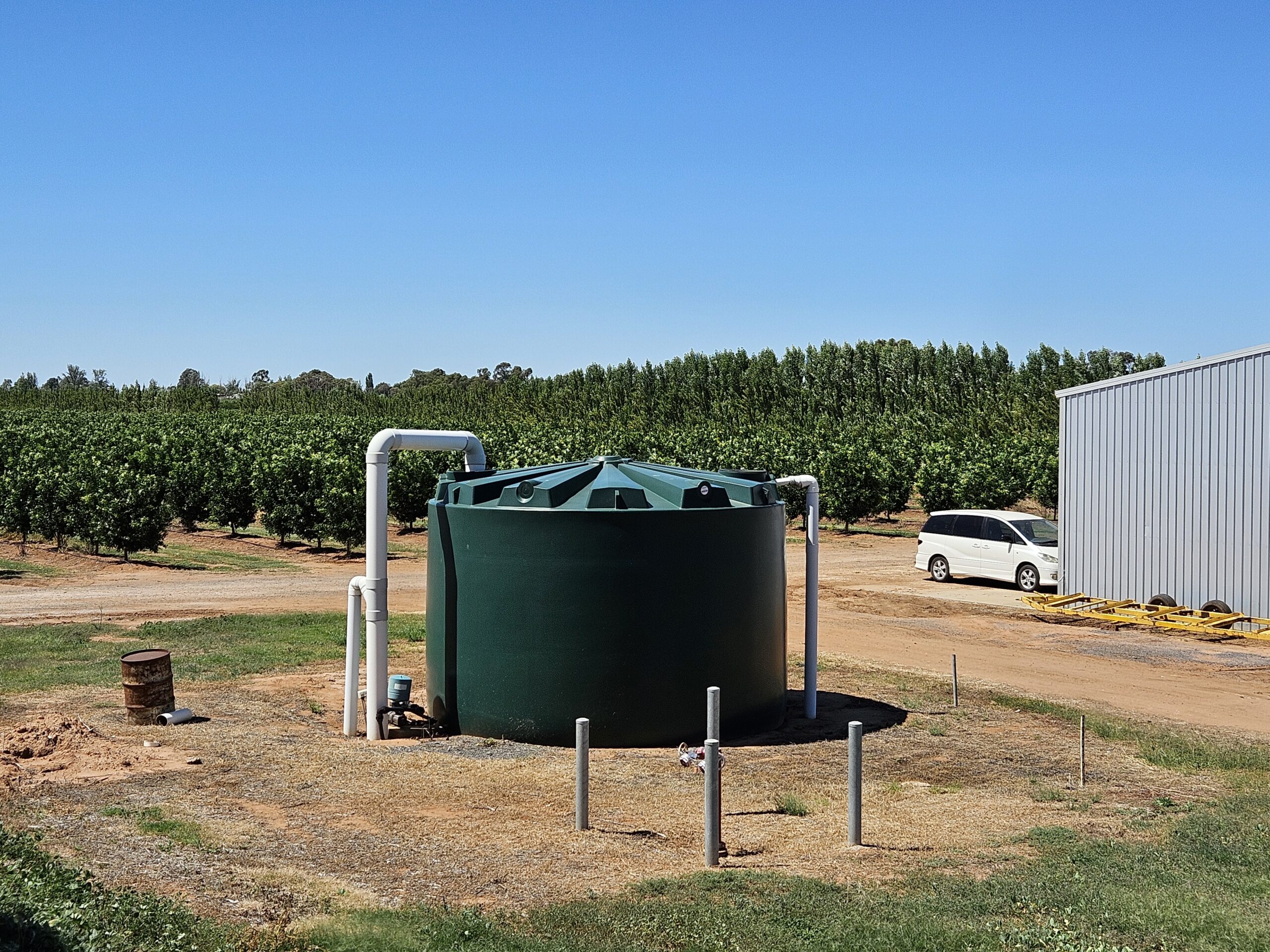
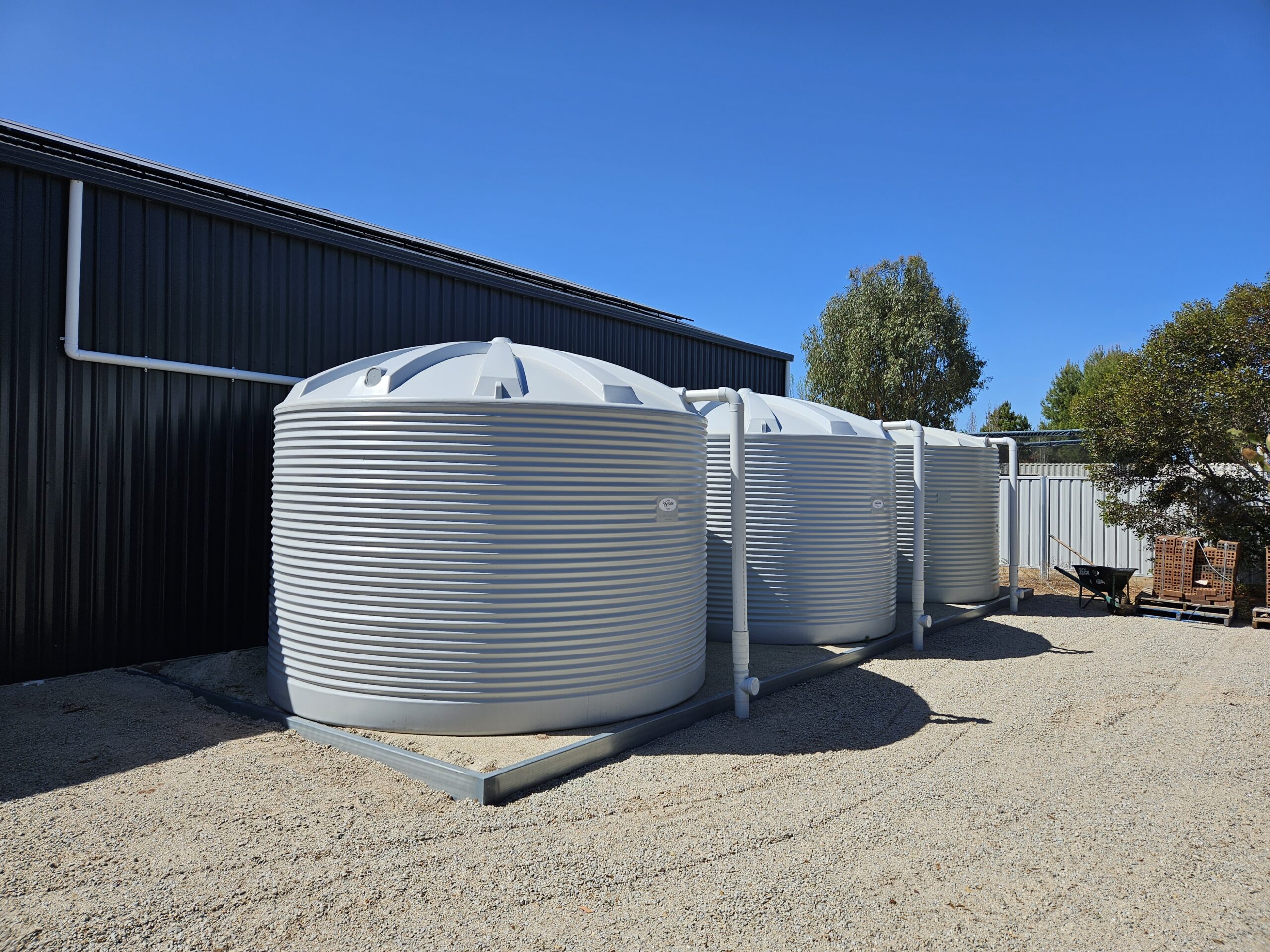
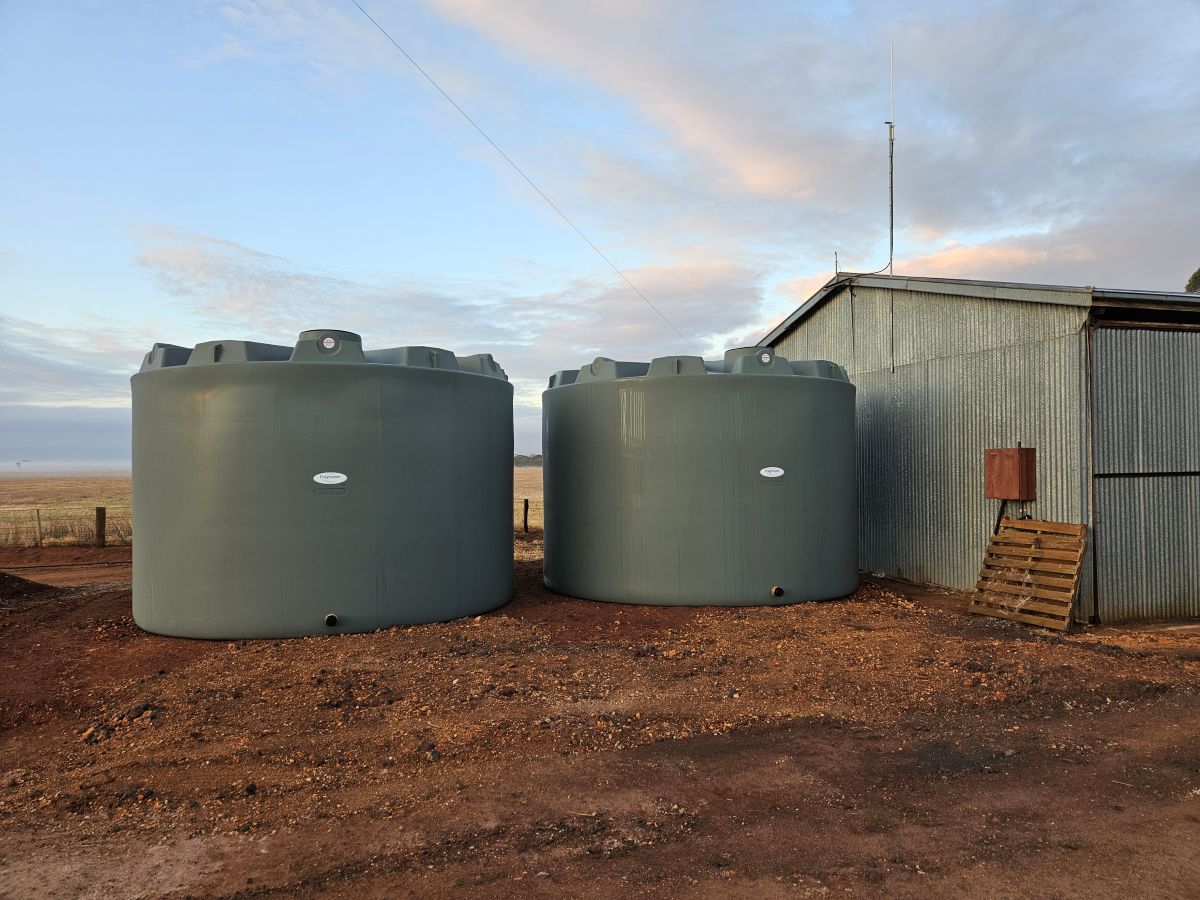
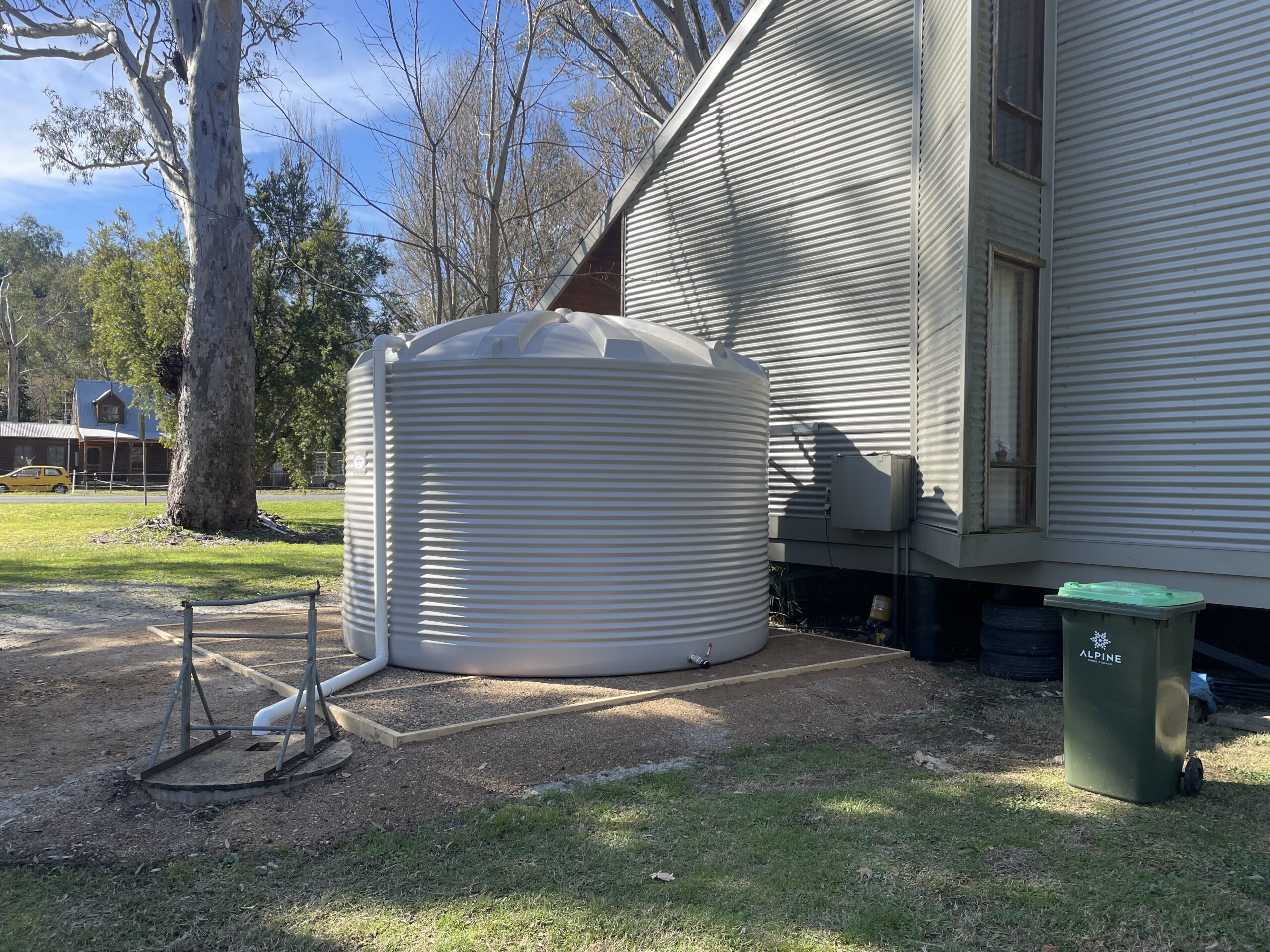
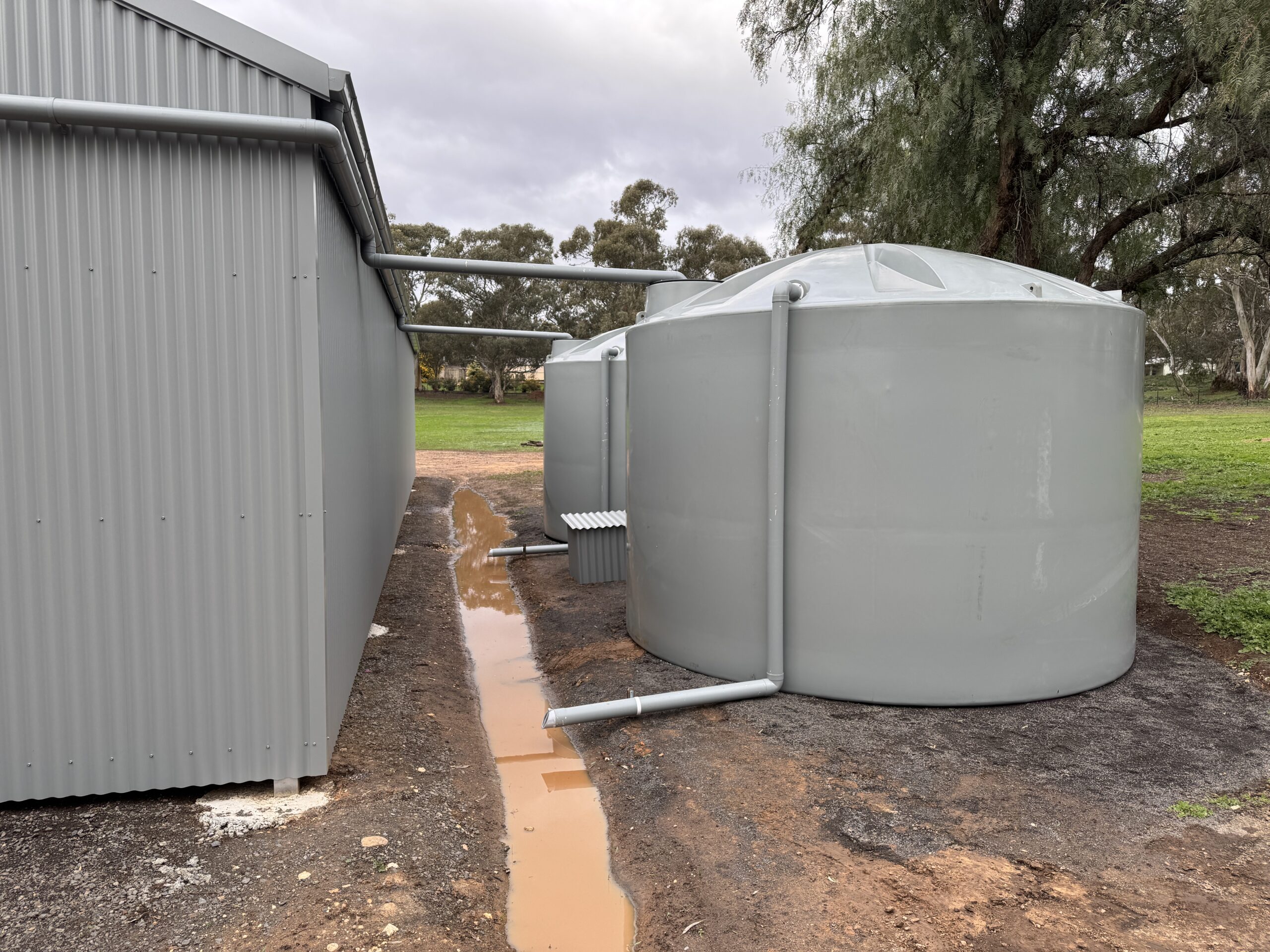
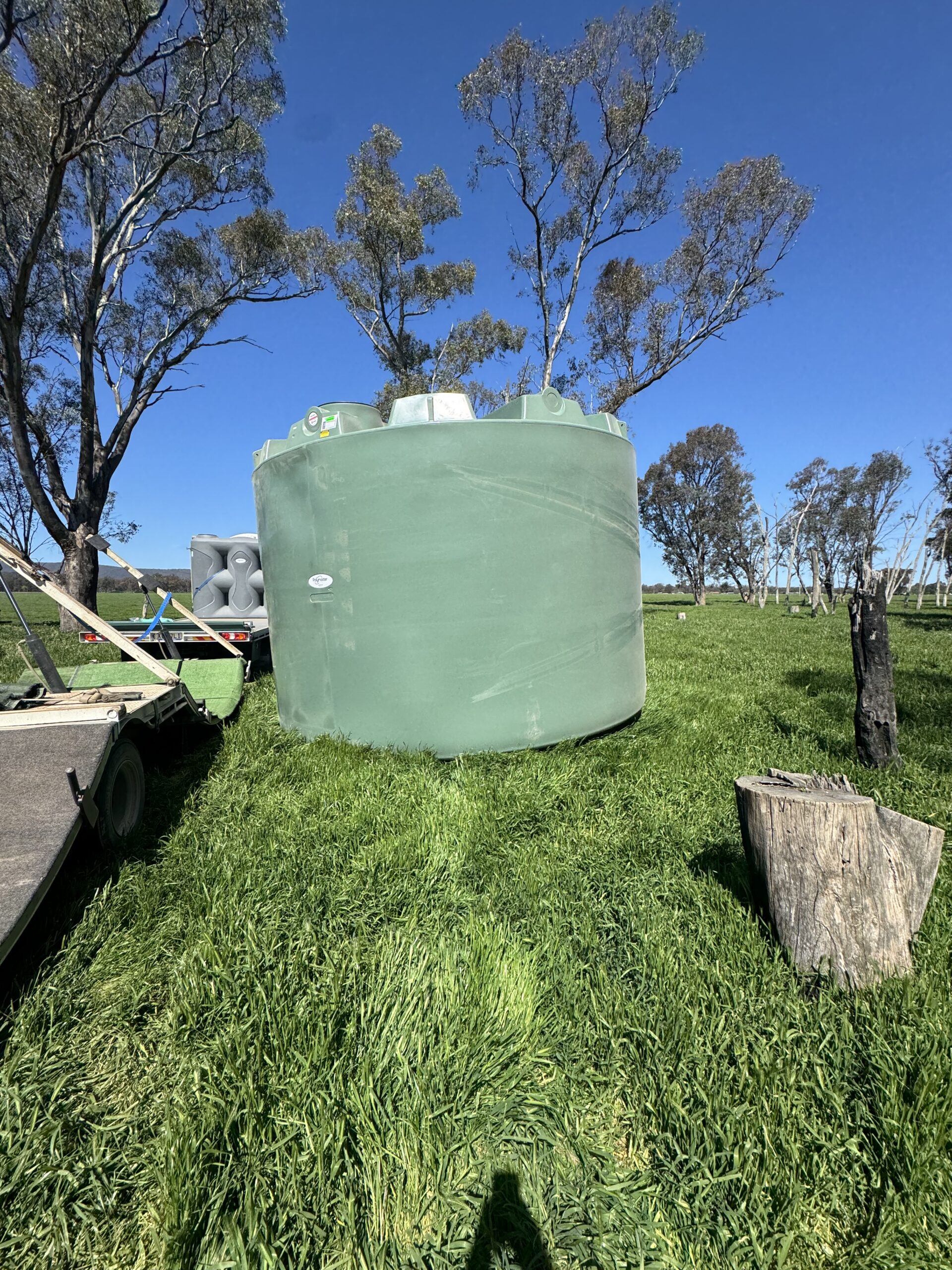
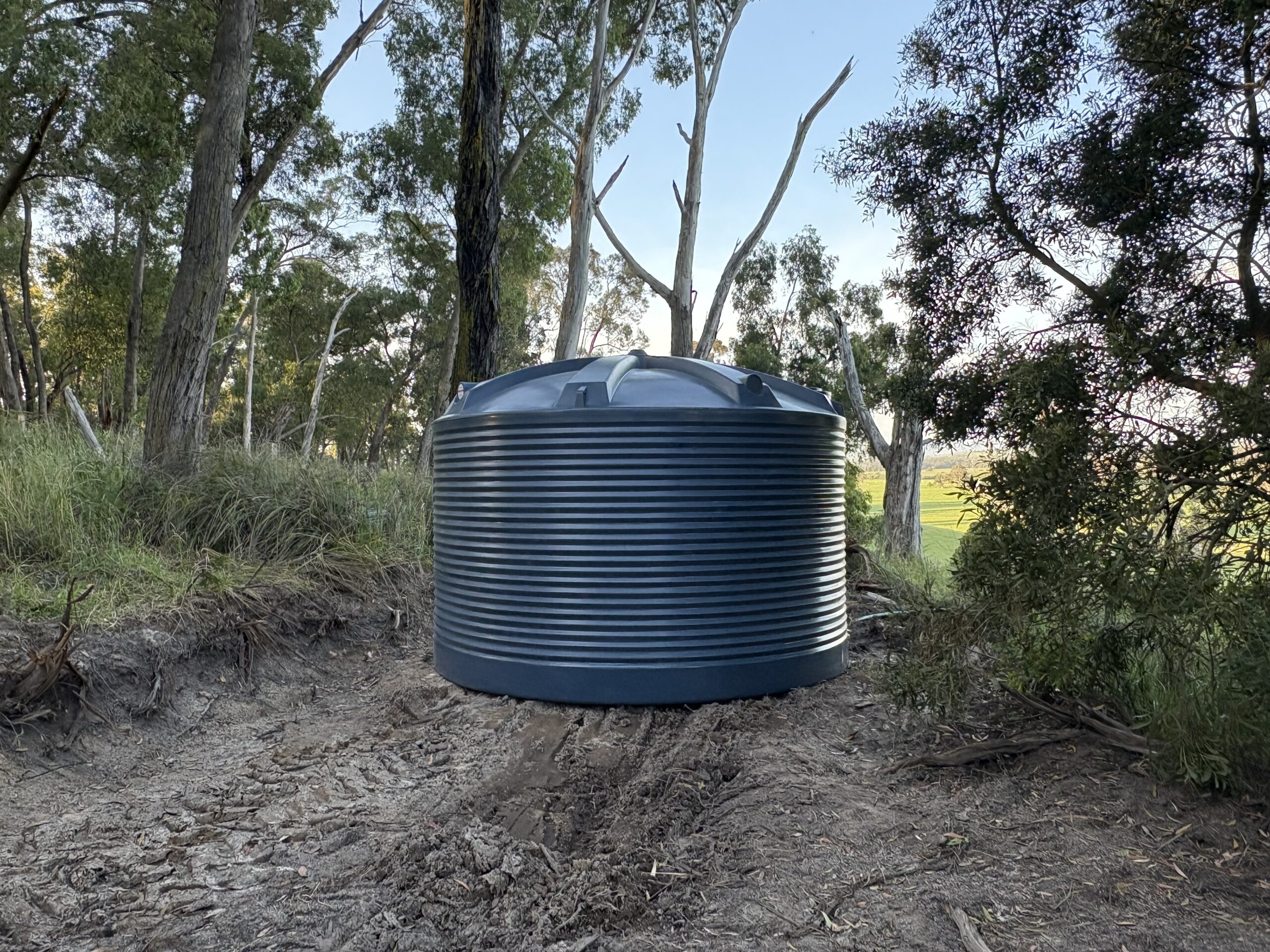
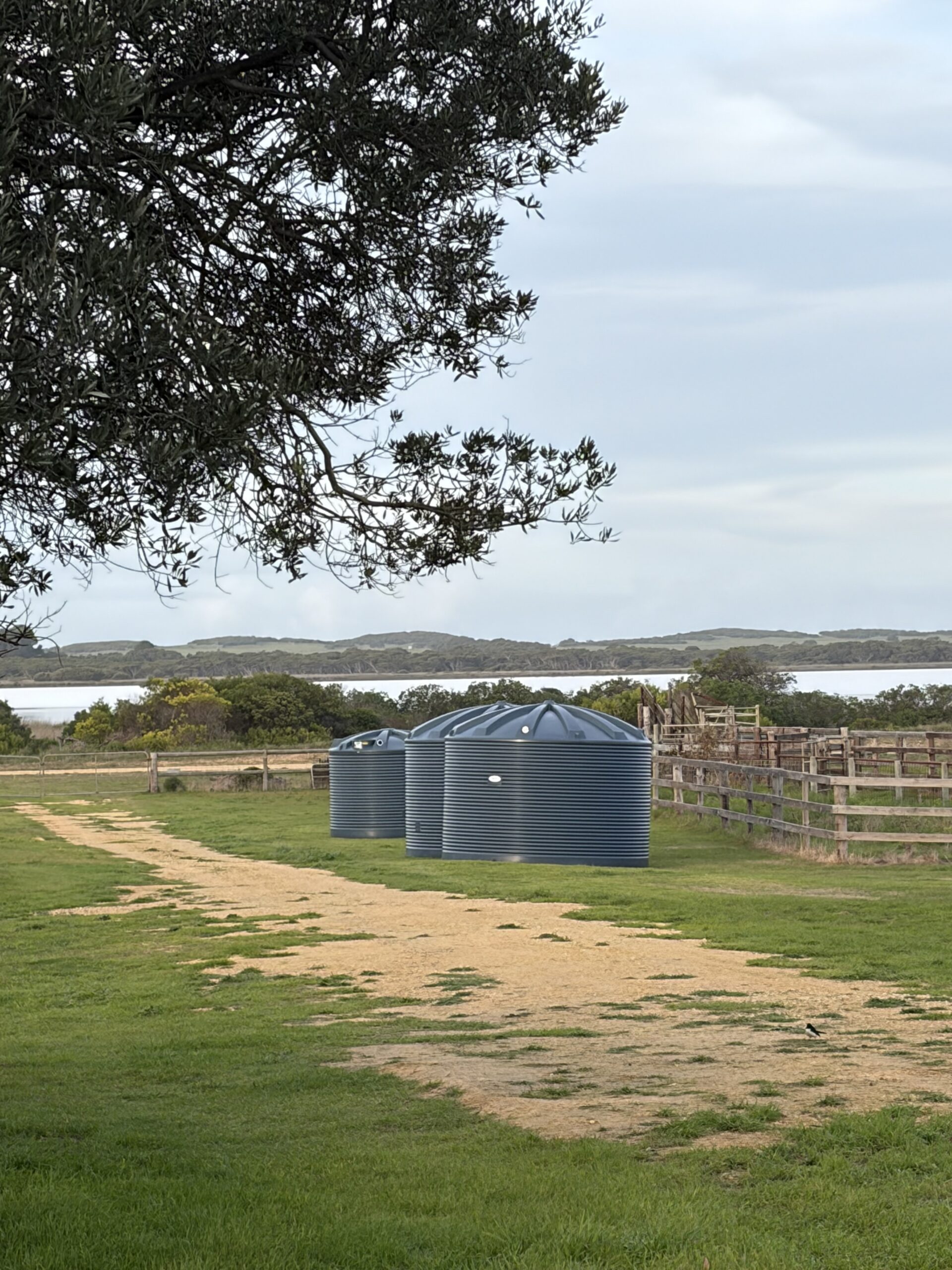
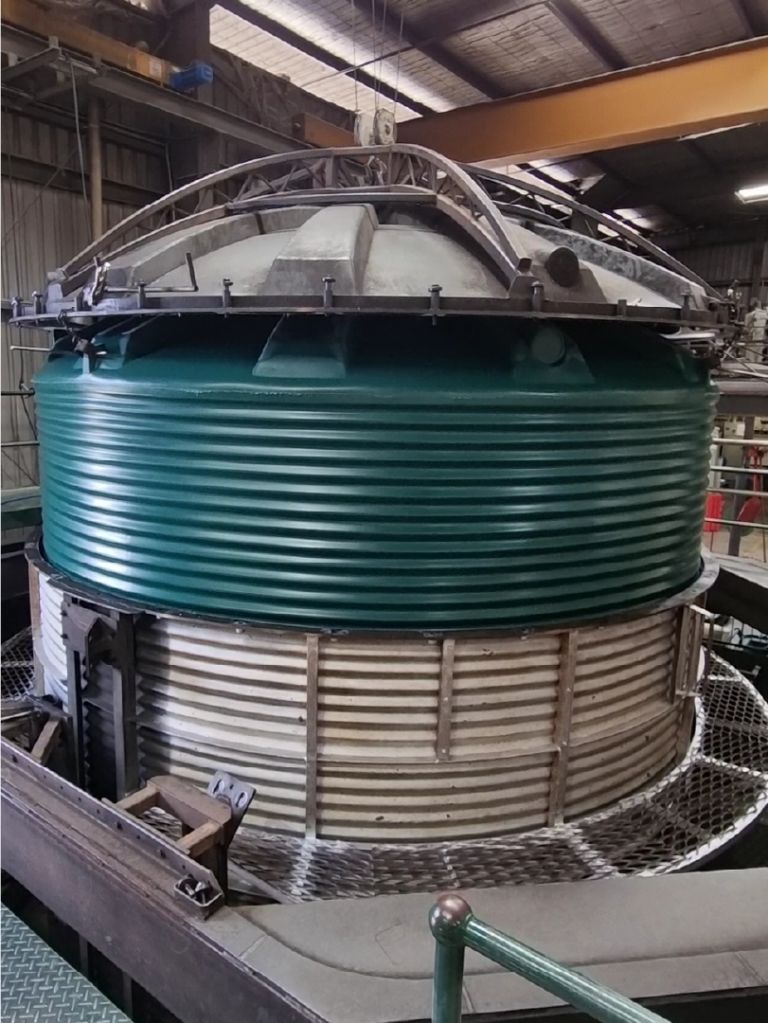
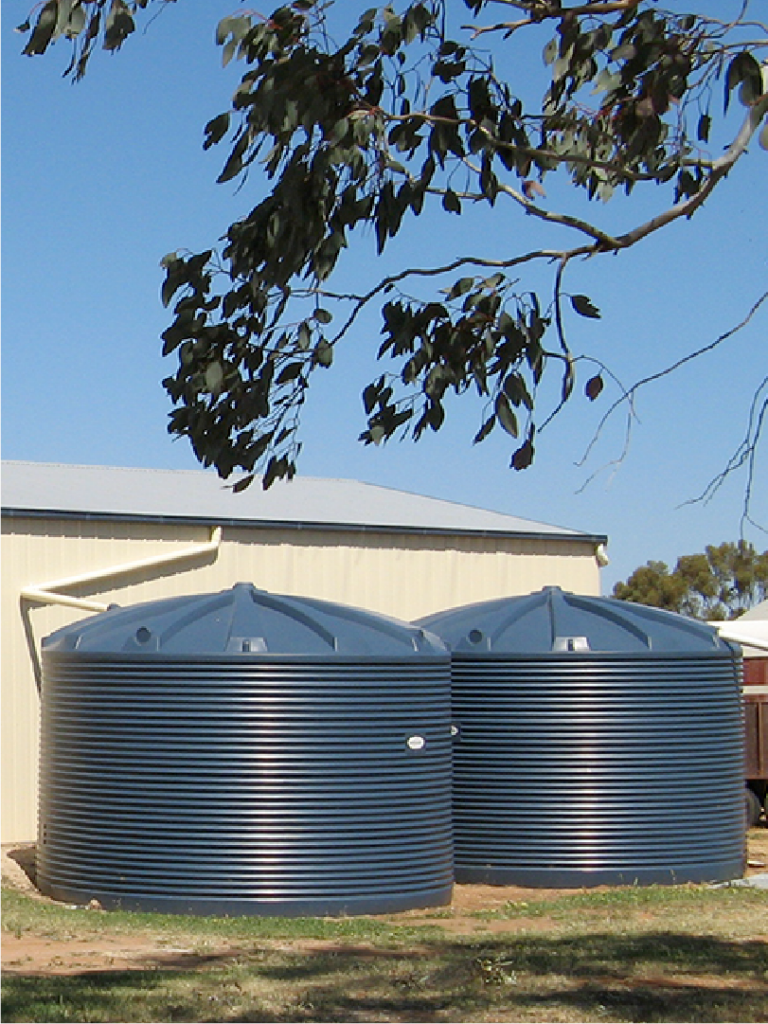
See Polymaster Rainwater Tanks hard at work in the field.
WATER TANKS CASE STUDIES
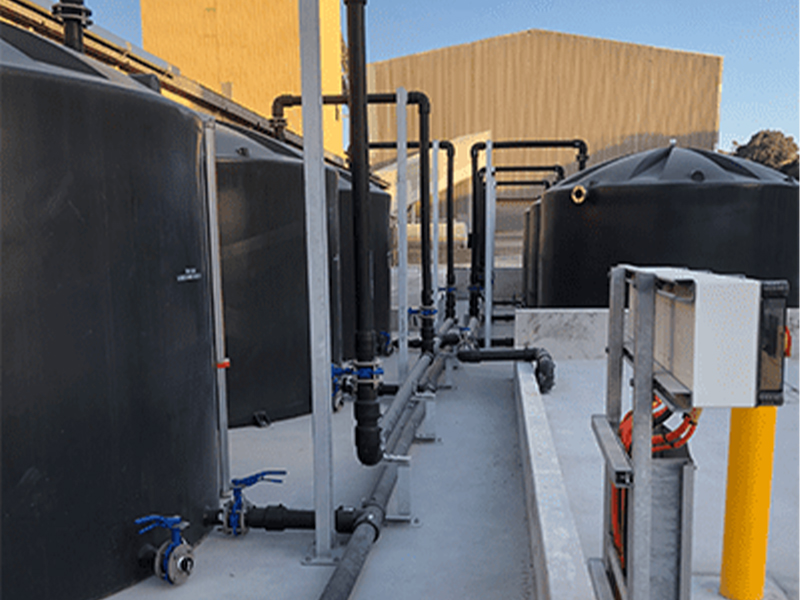
Trusted by Australian Businesses to Deliver These Projects
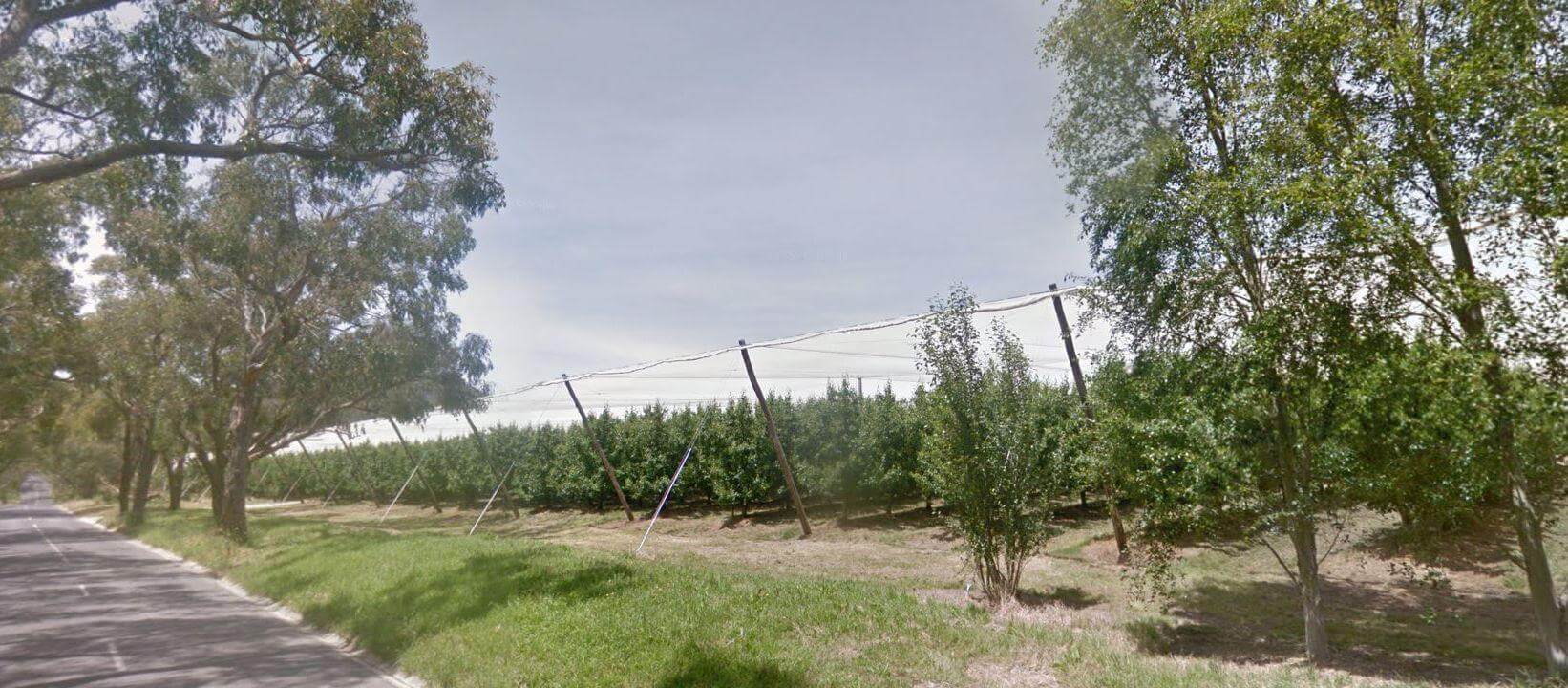
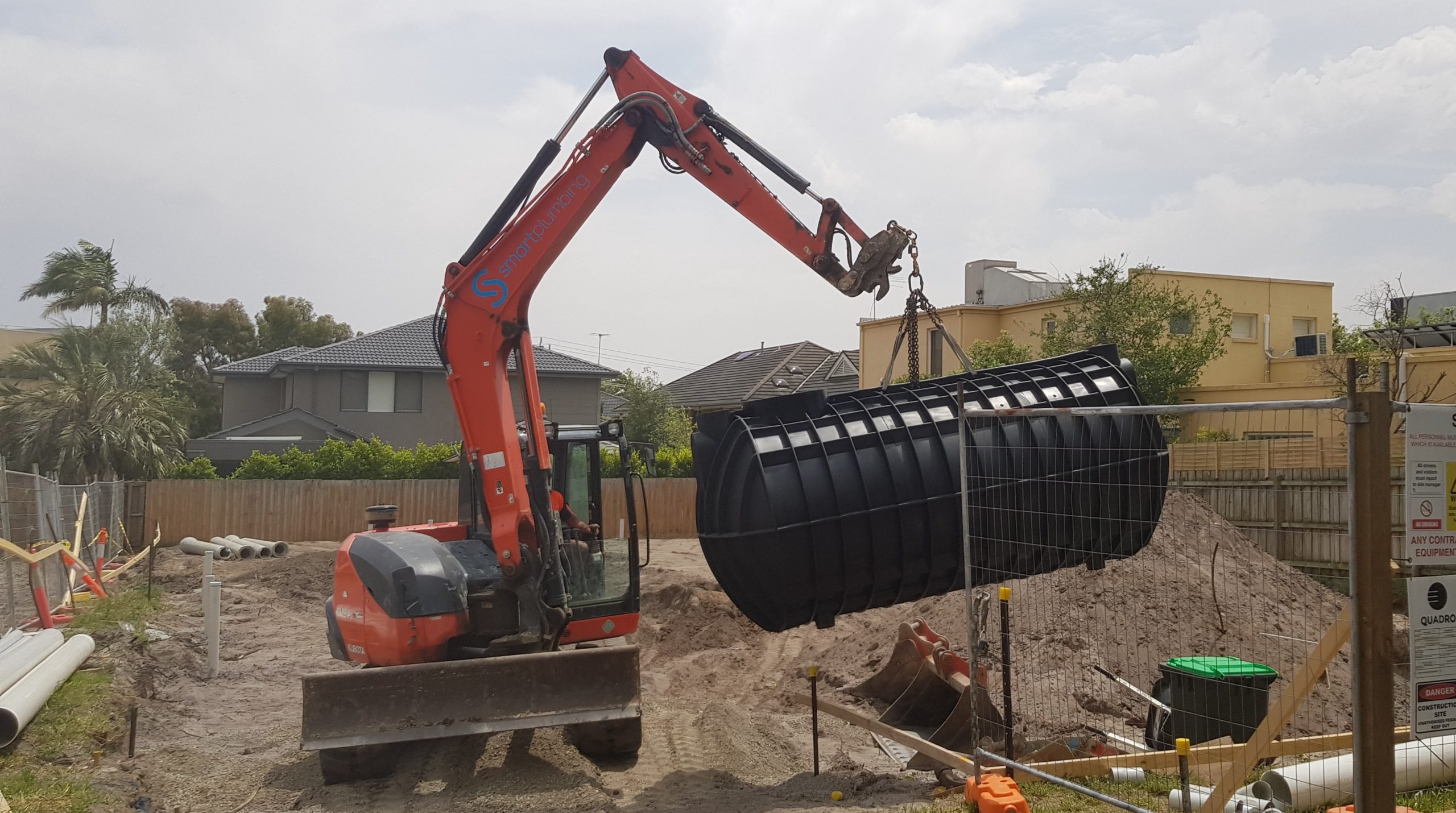
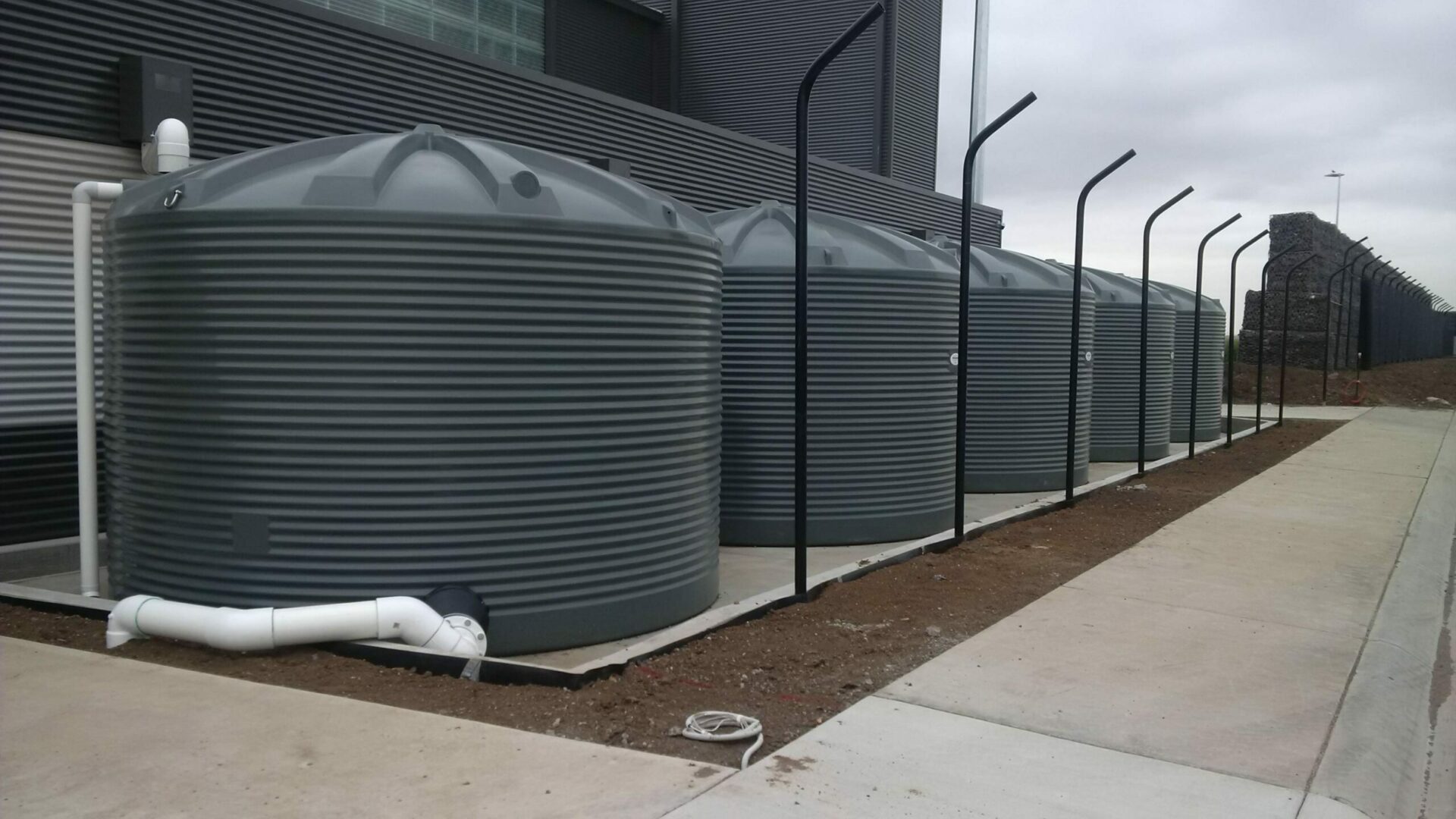
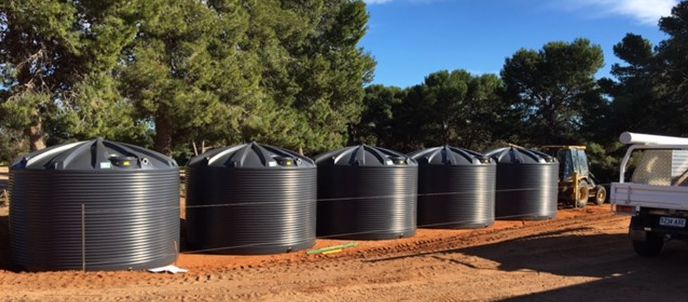
Polymaster rainwater tanks are installed on homes, farms, orchards, golf courses and commercial sites across Australia.
Not Sure Which Tank Suits Your Property?
Tell us your roof area, what you want the water for and how much room you have. We will work out the right size and the right type.


MORE FROM POLYMASTER
More Water Storage Solutions
Tank Accessories
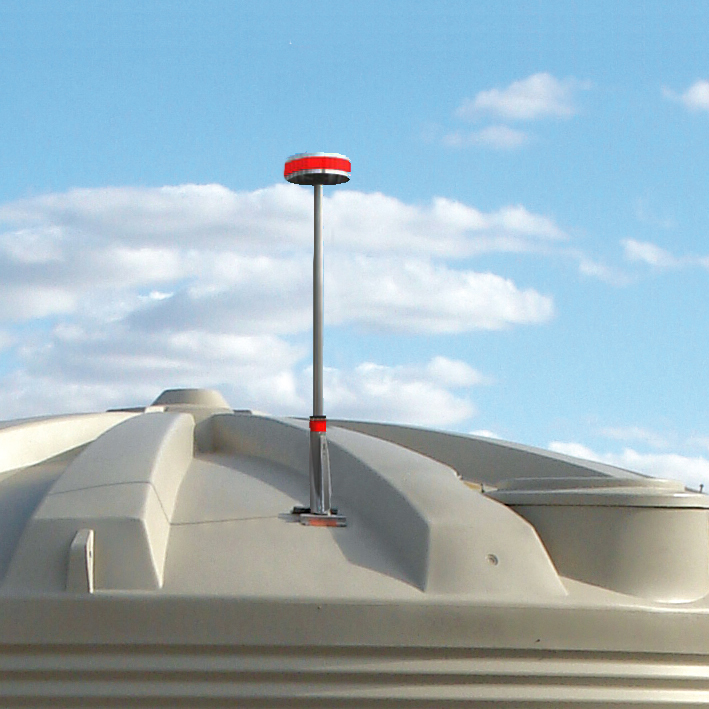
Pumps, brass outlets and ball valve taps, manhole covers and strainers, filters, water diverters and level indicators.
View Range
Retention and Detention Tanks
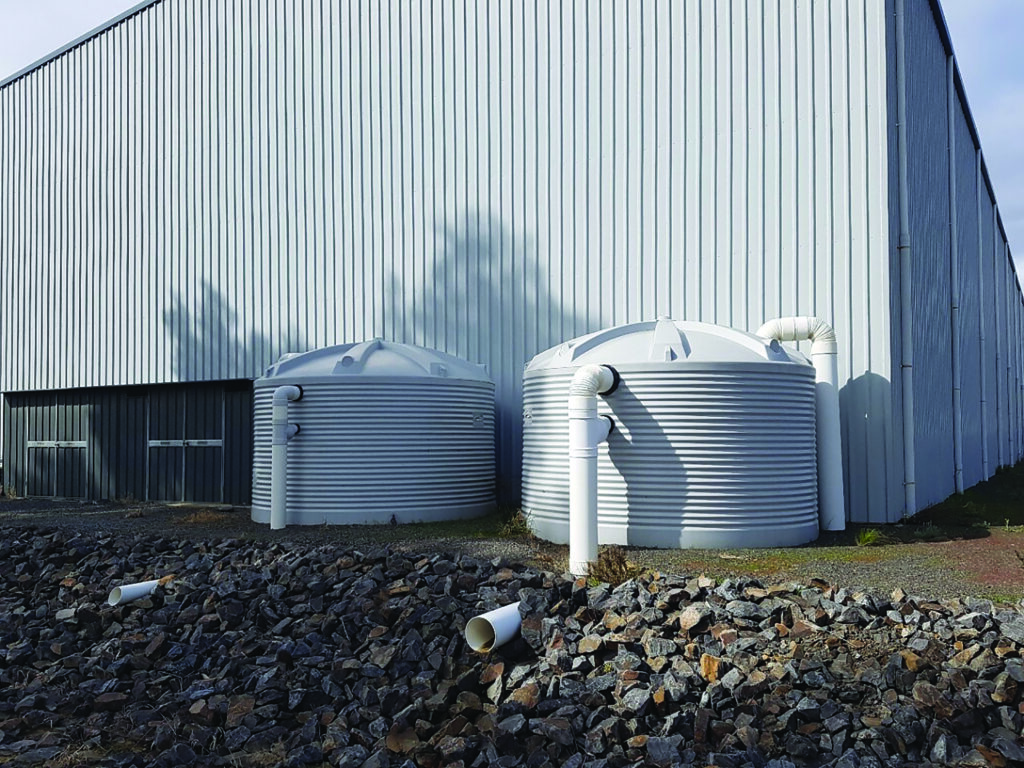
Where council requires stormwater detention as well as, or instead of, rainwater retention.
View Range
Rainwater Tanks for Sale
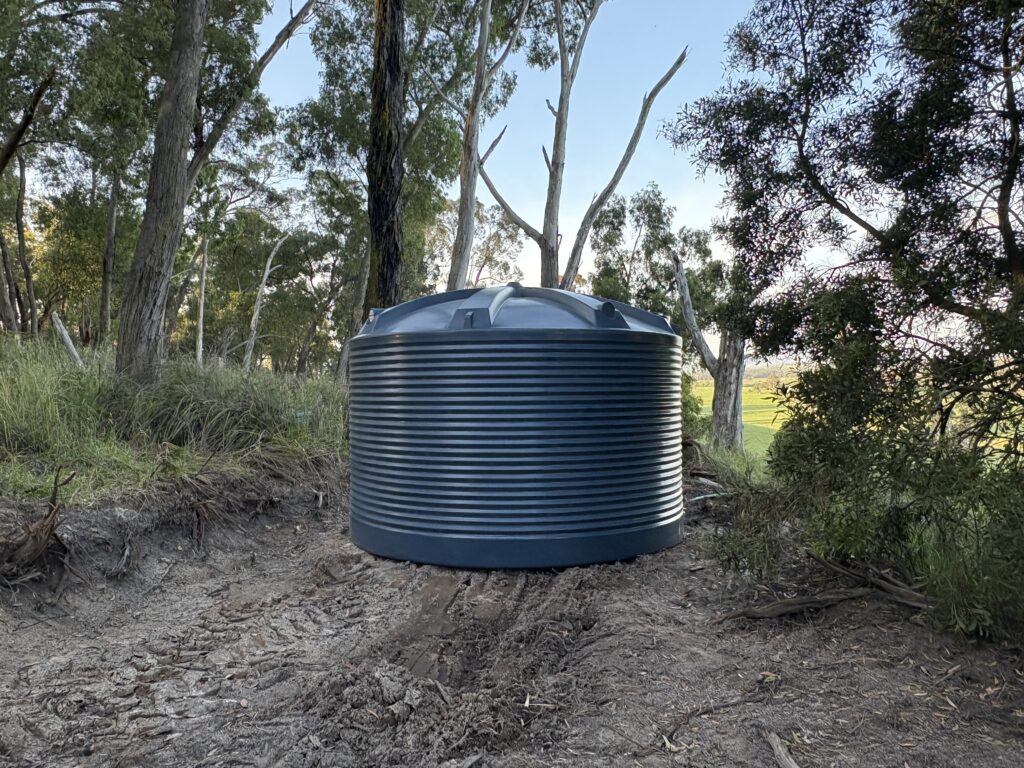
Current specials, bulk buy offers and promotions across the rainwater tank range.
View Range
FAQs
Frequently Asked Questions
Everything you need to know about Polymaster’s round water tank range, from sizing and profiles through to installation and maintenance.
What size rainwater tank do I need?
Start with what the water is for. Courtyard pots and herbs need around 1,000L. A vegetable patch up to 50 square metres wants 2,000L to 3,000L. A family lawn and mixed beds of 100 square metres or more suits 5,000L. Household supply including toilets and laundry runs 3,000L to 5,000L, and considerably more where rainwater is your only supply. For a precise figure, multiply your roof area in square metres by your postcode’s annual rainfall in millimetres, then divide by how many times you expect to fill and empty the tank each year. Our rainwater calculator does it for you.
Are rainwater tanks worth it?
Yes, on two counts. A tank turns rain that is already falling on your roof into free water for gardens, laundry, toilets and stock, which cuts your mains bill. It also gives you supply when restrictions come in or the mains goes down. With a 25 year design life and up to a 20 year warranty, the payback runs over decades rather than seasons.
What standard fittings come with a Polymaster rainwater tank?
Premium round tanks come with an inlet leaf screen and strainer, a 90mm overflow, a threaded outlet and a ball valve. Slimline tanks come with an inlet and leaf screen, a 90mm overflow and a threaded outlet. Outlet size varies with tank size: 200L to 5,000L tanks get a 25mm outlet and ball valve, and 7,100L to 50,000L tanks get 40mm. The threaded outlet is always fitted. The ball valve is supplied loose unless you ask otherwise. Other fittings are available on request.
Is corrugated stronger than smooth wall?
No, and this one comes up a lot. Wall strength comes from the thickness and grade of the polyethylene, not the profile. Both designs are equally strong. The choice is aesthetics, so pick the finish that suits the property.
How long will 5,000 litres of water last?
Depends entirely on what you are drawing it for. On garden use alone, 5,000L might cover a month of watering through summer. Connected to toilets and laundry, a household of four will work through it in three to four weeks. As a sole household supply including showers, it is closer to two weeks. That is why sizing starts with usage rather than with the tank.
How often should I clean my rainwater tank?
Clear gutters, leaf screens and first flush diverters every six months. Inspect the inside of the tank every two to three years, and if there is a layer of sludge on the floor, pump it out and hose the floor down, then disinfect if the tank supplies drinking water.
Should I drain my tank every year?
No. Emptying a tank annually wastes water and does nothing for maintenance. Drain it when a clean out is genuinely due, when fittings are being upgraded, or when local health rules require it.
What is the difference between a rainwater tank and a stormwater tank?
A rainwater tank captures roof runoff and holds it for use, so the water stays there until you want it. A stormwater detention tank holds peak flows after heavy rain and releases them slowly through an orifice to protect council drains. It is not storage. Many new builds now require a combination system, and Polymaster supplies certified solutions for both.
Can I drink rainwater from a tank?
Polymaster tanks are made from food grade polyethylene certified to AS/NZS 4020, the Australian standard for products in contact with drinking water, so the tank itself is suitable. What we cannot guarantee is the water going into it, since that depends on your roof, your gutters, your filtration and your maintenance. If the tank is your drinking supply, filtration and regular maintenance matter.
What base does a rainwater tank need?
Firm, flat and level in all directions, free from rocks, stones and sharp edges, 75mm to 100mm deep, and at least 600mm larger in diameter than the base of the tank. A concrete pad is the recommended base, and compacted sand or crusher dust also works. The outer edges must be retained to prevent erosion. A poorly prepared base causes structural fatigue and voids the warranty.
Can I connect two tanks together?
Yes. Polymaster tanks include a tank to tank connection point, so multiple tanks can be linked to increase total capacity. Common where you need more than a single tank holds, where delivery access rules out one large tank, or where you are collecting off separate roofs.
Poly or steel?
Both hold water. Polymaster manufactures poly, so the honest position is that we are not neutral, but the differences are real. Poly is moulded in one piece with no seams or joins, so there is nothing to fail along a weld line. It does not rust or corrode, it does not need a liner, and colour is moulded through the wall rather than painted on, so it does not flake. Steel tanks generally have a smaller footprint per litre and some people prefer the look. Where poly wins outright is on longevity in contact with water, and on not having a liner as a separate wear component.
What warranty comes with a rainwater tank?
It depends on the range. Premium corrugated round tanks carry a 20 year pro-rata warranty, which is double what most poly tank manufacturers offer. Smooth wall round tanks carry 15 years, underground tanks 10 years and slimline tanks 7 years. All run from date of purchase and no registration is required.