
Home Chemical & Industrial Chemical Storage Tanks Enclosed IBC Bund
Enclosed IBC Bund
An IBC on a pallet in the yard is exposed to weather, open to anyone walking past, and has nothing under it when a valve fails. Decanting from it outdoors is where most chemical spills actually start.
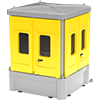
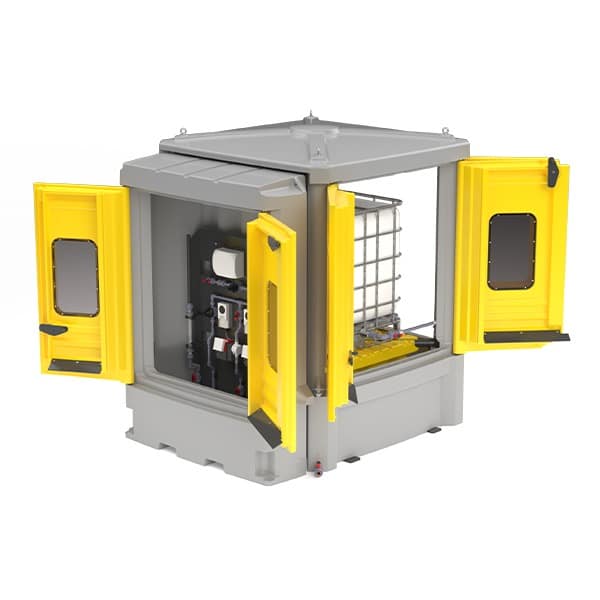
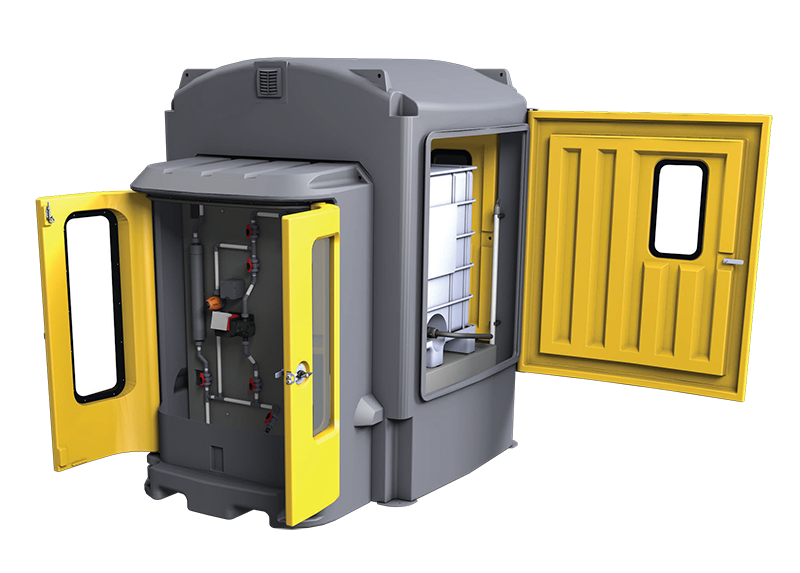
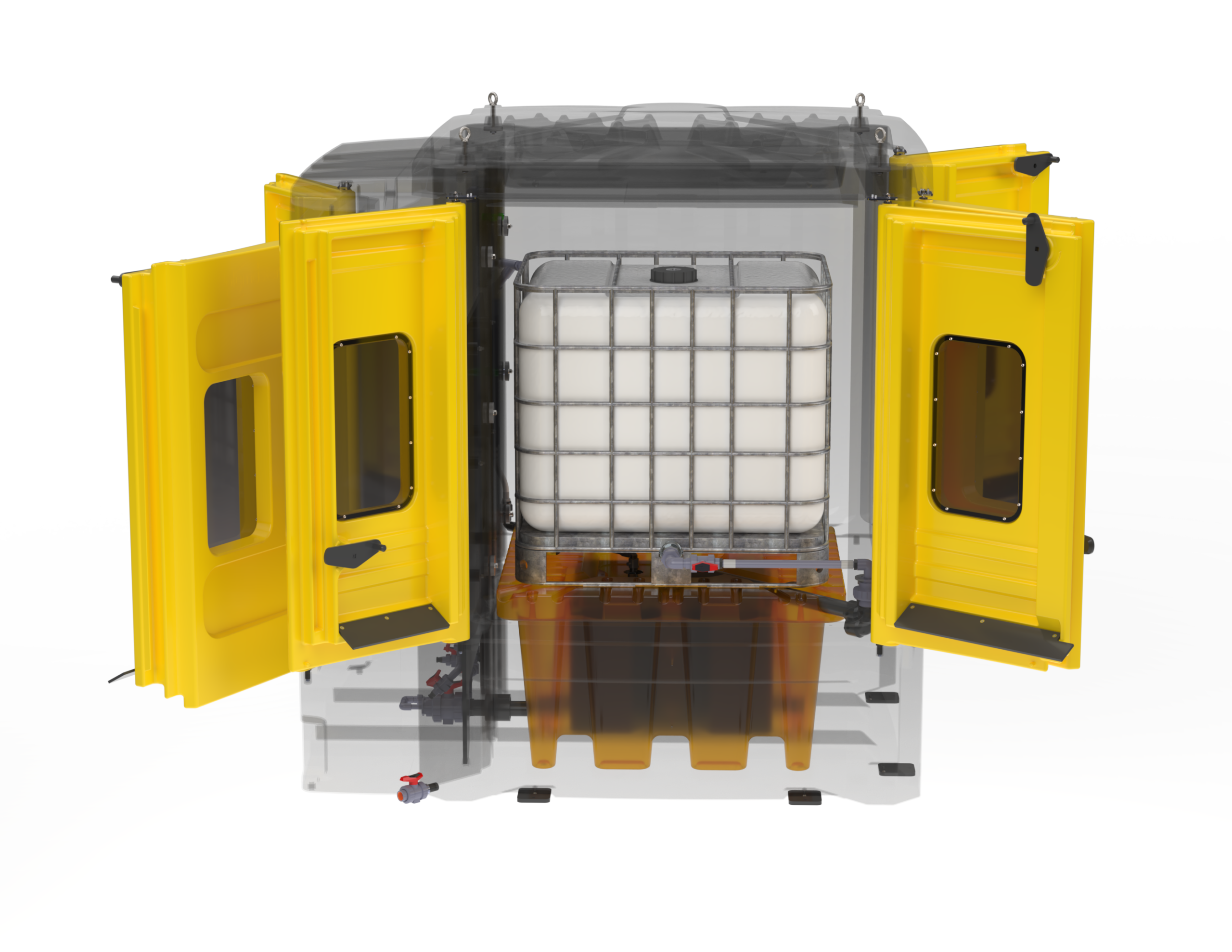
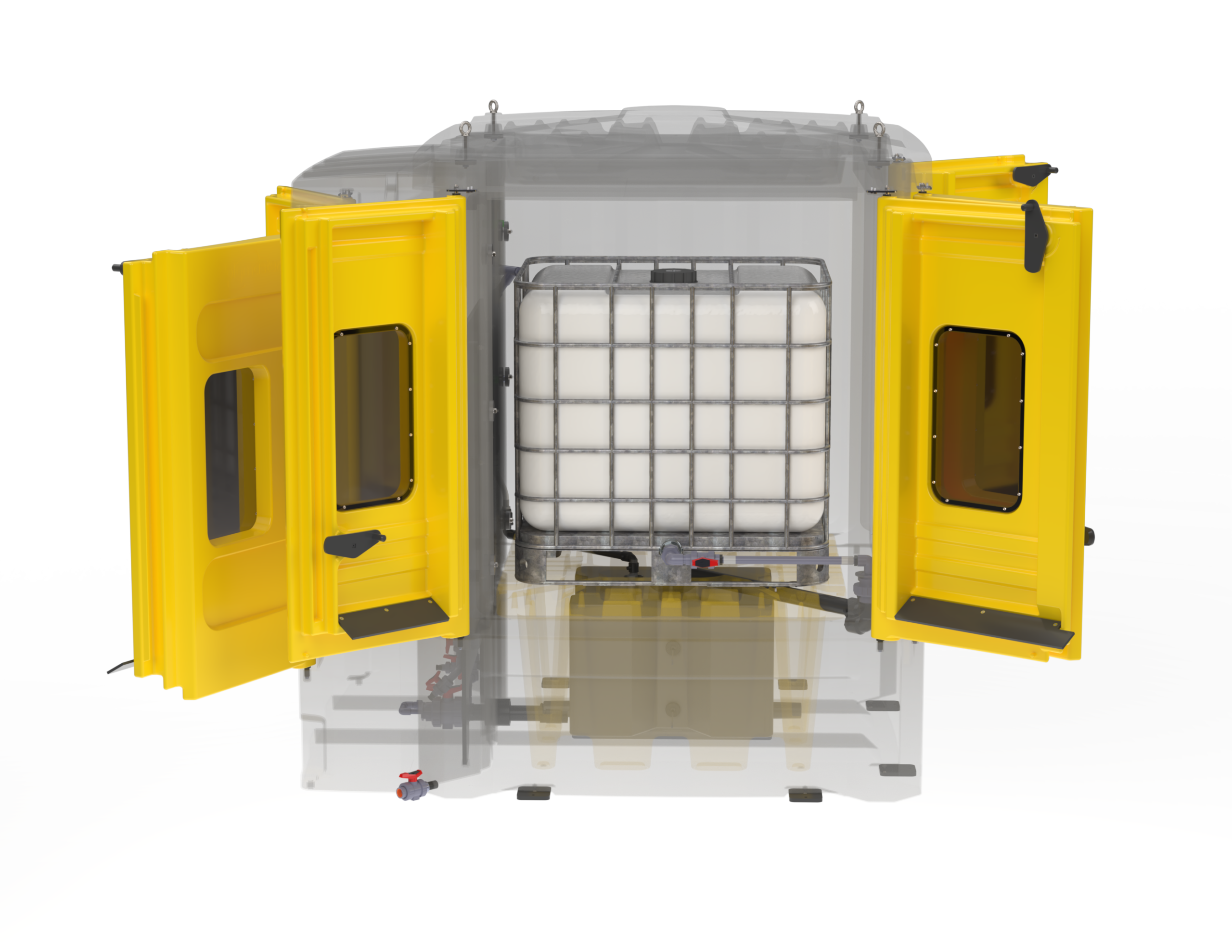
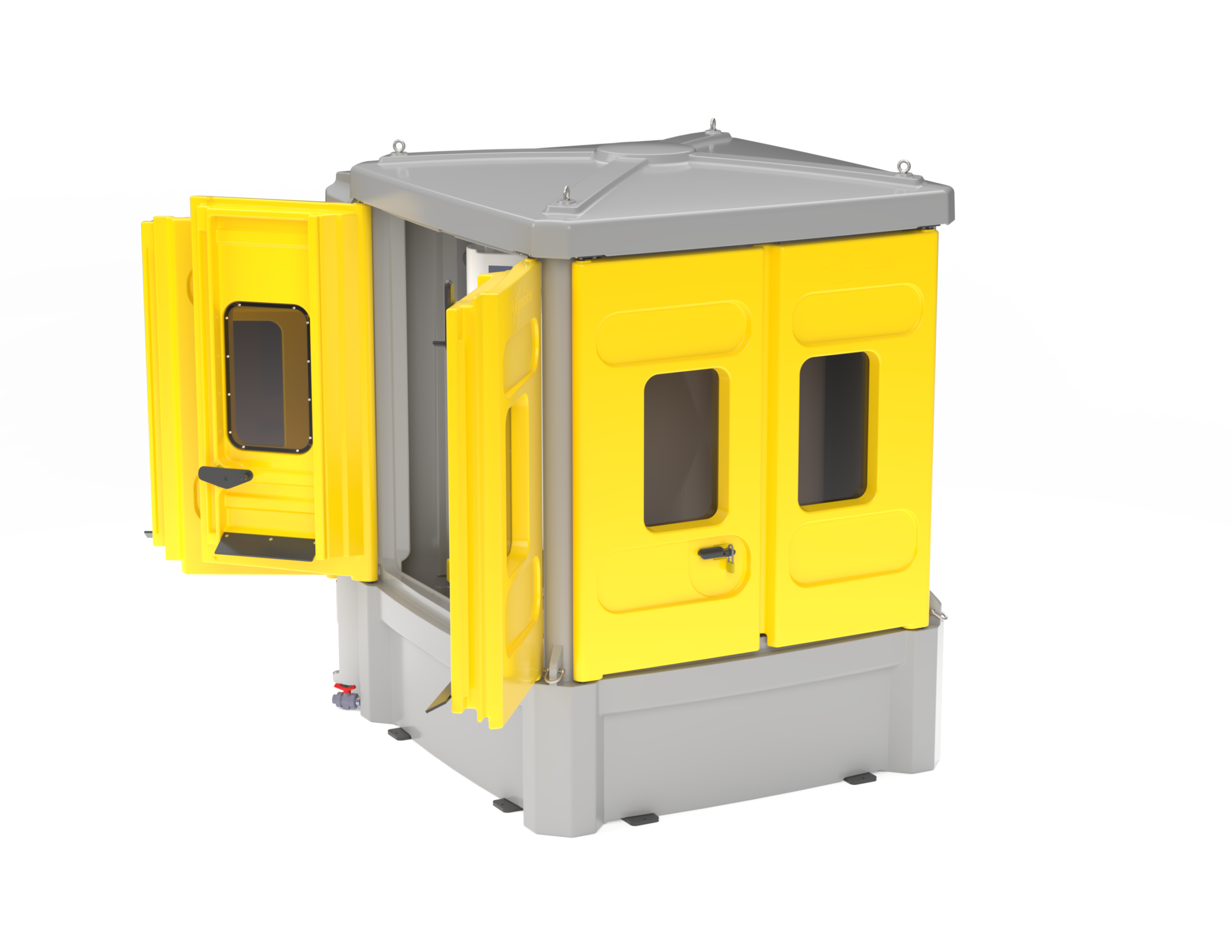
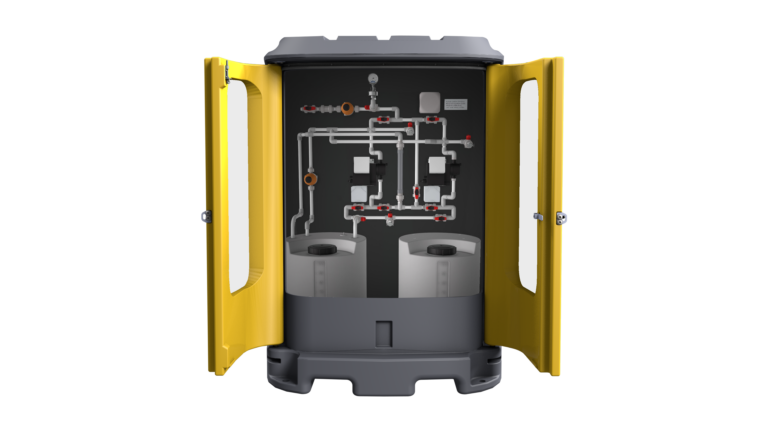
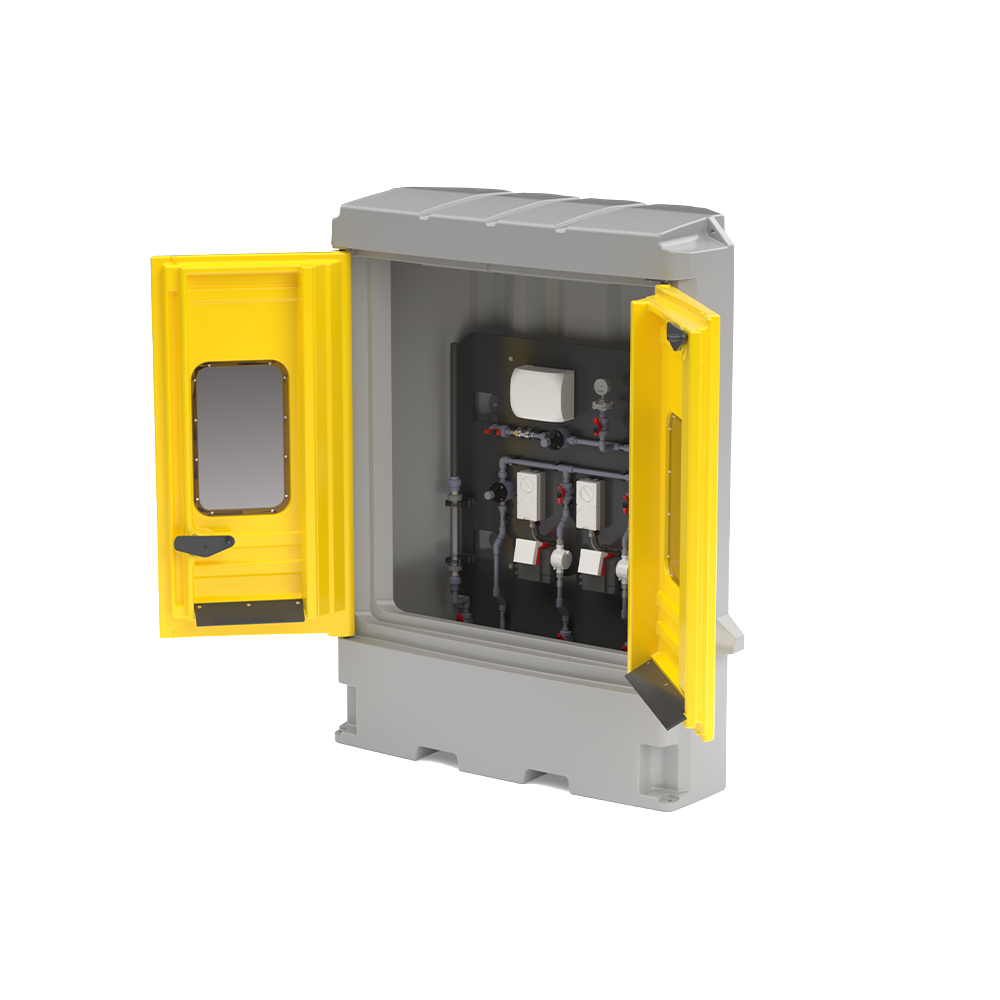
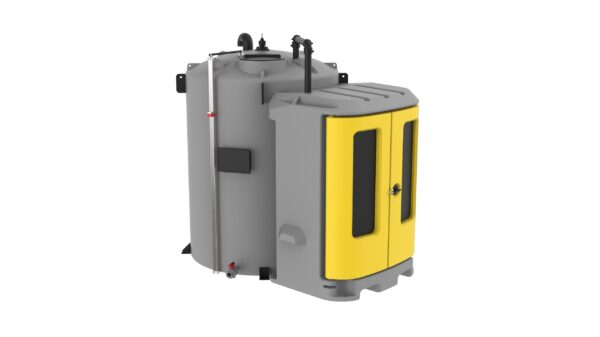
Polymaster’s Enclosed IBC Bund puts the whole job inside one weather resistant, lockable enclosure. High grade polyethylene, forklift loading from the side or rear, an integrated 250L day tank for uninterrupted dosing, and 110% bund capacity to AS 3780:2023, engineered to contain a full IBC rupture.
One Enclosure, Every Problem Solved
The Enclosed IBC Bund takes the frustrations of open IBC storage, rain ingress, spray exposure, spills on swap-over and unsecured chemical, and designs them out.
Weather Resistant, Rain-Out Doors
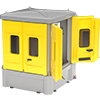
- Rain resistant butterfly doors hold chemical spray inside the enclosure and keep rainwater out of your product and your bund.
250L Day Tank for Continuous Dosing
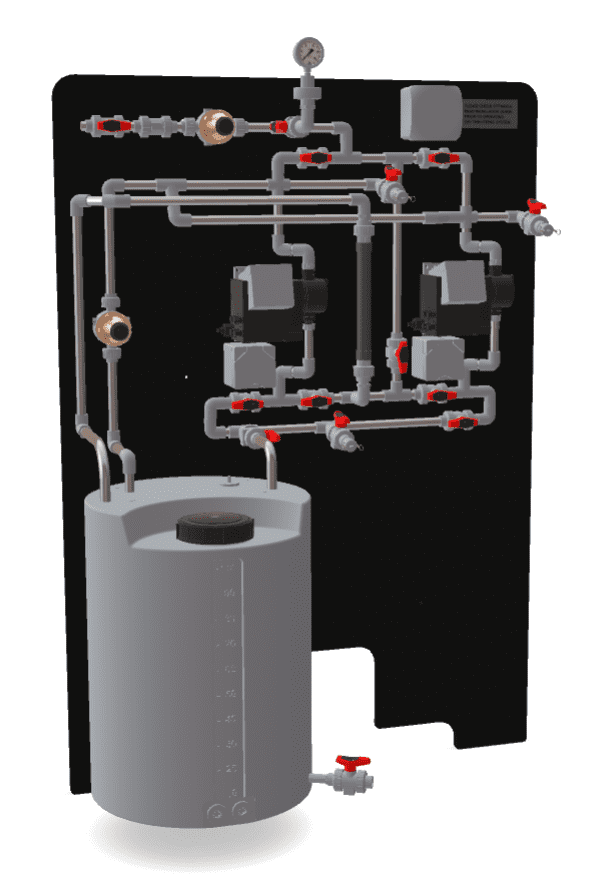
- An integrated 250L day tank gravity feeds your dosing line so chemistry never stops when an IBC runs dry or is swapped. Optional low level alarm, viewable through the door panels.
Safe, Simple IBC Handling
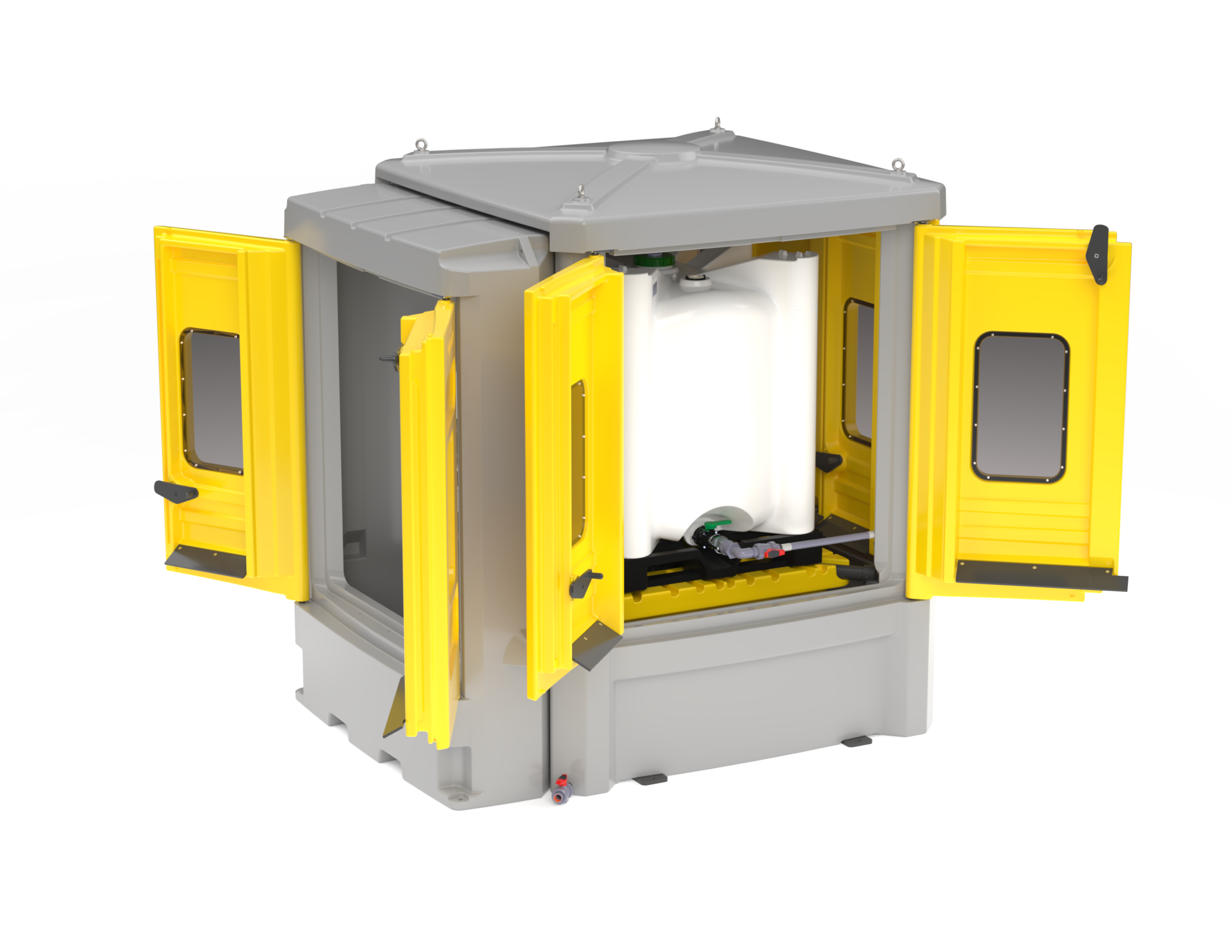
- Wide forklift access from the side and rear lets operators load and change IBCs without manual handling or disconnecting under pressure. Lifting lugs and tie down points included.
Contained and Secure
- 110% bund capacity to AS 3780:2023, venting to two sides, clear viewing panels, and all doors lockable to keep the system secure and compliant.
POLYMASTER ENCLOSED IBC BUND SOLUTIONS
Browse the Enclosed IBC Bund Range
Eight configurations, so you only pay for what your site needs. From a bare bund in left or right hand door orientation, through to a fully cabineted unit with day tank, hoses, venting and an integrated dosing system for aggressive chemicals. All units hold a standard 1,000L IBC and carry 1,250L bund capacity.
| Code | Product | Capacity | ||
|---|---|---|---|---|
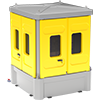
| ENIBCB-V2-LH | Enclosed IBC Bund – LH Config | 1,250L | Download Data Sheet Download Drawing Download STEP File | |

| ENIBCB-V2-LH-C | Enclosed IBC Bund – LH Config, Cabinet | 1,250L | Download Data Sheet Download Drawing Download STEP File | |
| ENIBCB-V2-LH-C-DT-AGC | Enclosed IBC Bund – LH Config, Cabinet, Day Tank, Hoses & Vent – Aggressive Chemicals | 1,250L | Download Data Sheet Download Drawing Download STEP File | |
| ENIBCB-V2-LH-DT-AGC | Enclosed IBC Bund – LH Config, Day Tank, Hoses & Vent – Aggressive Chemicals | 1,250L | Download Data Sheet Download Drawing Download STEP File | |
| ENIBCB-V2-RH | Enclosed IBC Bund – RH Config | 1,250L | Download Data Sheet Download Drawing Download STEP File | |
| ENIBCB-V2-RH-C | Enclosed IBC Bund – RH Config, Cabinet | 1,250L | Download Data Sheet Download Drawing Download STEP File | |
| ENIBCB-V2-RH-C-DT-AGC | Enclosed IBC Bund – RH Config, Cabinet, Day Tank, Hoses & Vent – Aggressive Chemicals | 1,250L | Download Data Sheet Download Drawing Download STEP File | |
| ENIBCB-V2-RH-DT-AGC | Enclosed IBC Bund – RH Config, Day Tank, Hoses & Vent – Aggressive Chemicals | 1,250L | Download Data Sheet Download Drawing Download STEP File |
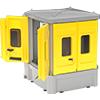
Enclosed IBC Bund – LH Config
ENIBCB-V2-LH
Enclosed IBC Bund – LH Config, Cabinet
ENIBCB-V2-LH-C
Enclosed IBC Bund – LH Config, Cabinet, Day Tank, Hoses & Vent – Aggressive Chemicals
ENIBCB-V2-LH-C-DT-AGC
Enclosed IBC Bund – LH Config, Day Tank, Hoses & Vent – Aggressive Chemicals
ENIBCB-V2-LH-DT-AGC
Enclosed IBC Bund – RH Config
ENIBCB-V2-RH
Enclosed IBC Bund – RH Config, Cabinet
ENIBCB-V2-RH-C
Enclosed IBC Bund – RH Config, Cabinet, Day Tank, Hoses & Vent – Aggressive Chemicals
ENIBCB-V2-RH-C-DT-AGC
Enclosed IBC Bund – RH Config, Day Tank, Hoses & Vent – Aggressive Chemicals
ENIBCB-V2-RH-DT-AGC
Not sure which configuration suits your site?
Our team can match the right bund, cabinet and dosing setup to your chemical and your process. Call us on 1800 062 064 or use the quote tool above.
Unmatched Chemical Compatibility
We understand chemicals, which is why our IBC storage undergoes chemical compatibility testing to make sure the specially formulated PE material will safely contain what is actually in use across Australian industry.
Commonly stored in the Enclosed IBC Bund:
- Sodium hypochlorite
- Caustic soda (sodium hydroxide)
- Hydrochloric acid
- Sulphuric acid (98%)
- Nitric acid
- Alum
- Flocculants and polymers
- Sodium metabisulphite
- Ferrous chloride and ferric chloride
- Magnesium hydroxide
That is a sample rather than the full list. Polymaster tanks are compatible with more than 1,965 chemicals. Always check the Chemical Compatibility Chart for your specific chemical and concentration, or tell us what you are storing and we will confirm it.
PROVEN ACROSS AUSTRALIA
Where the Enclosed IBC Bund Is Used
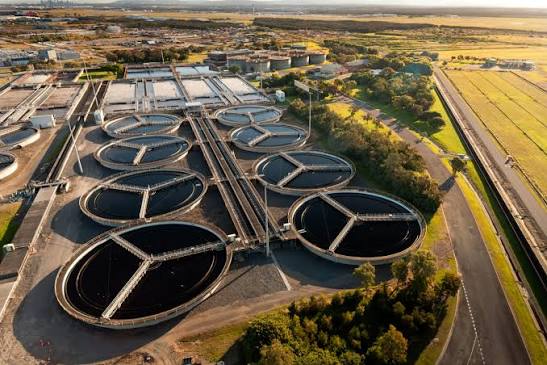
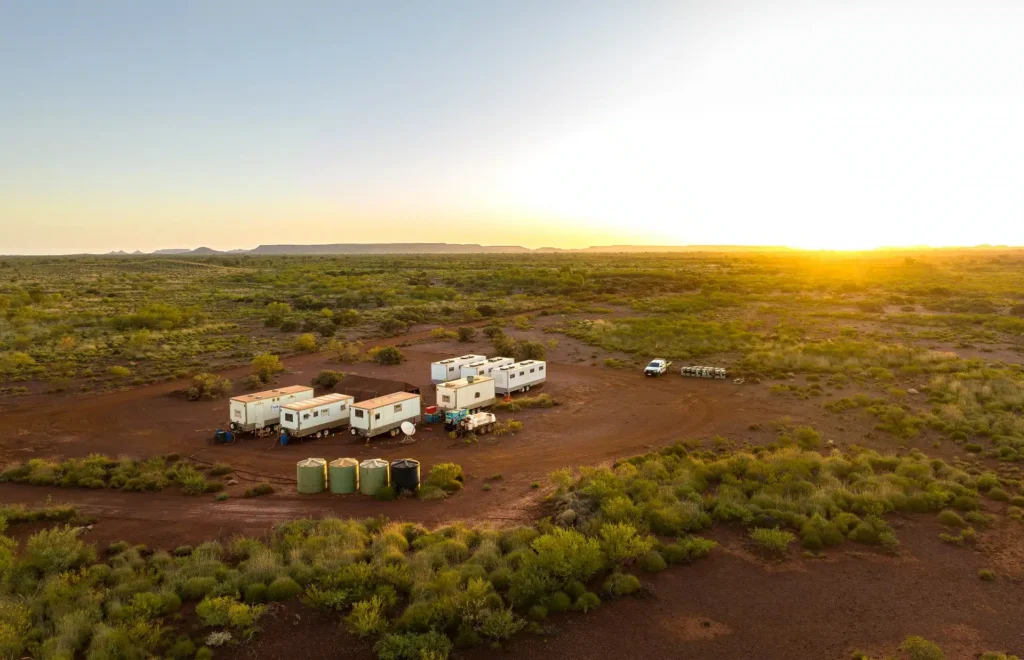
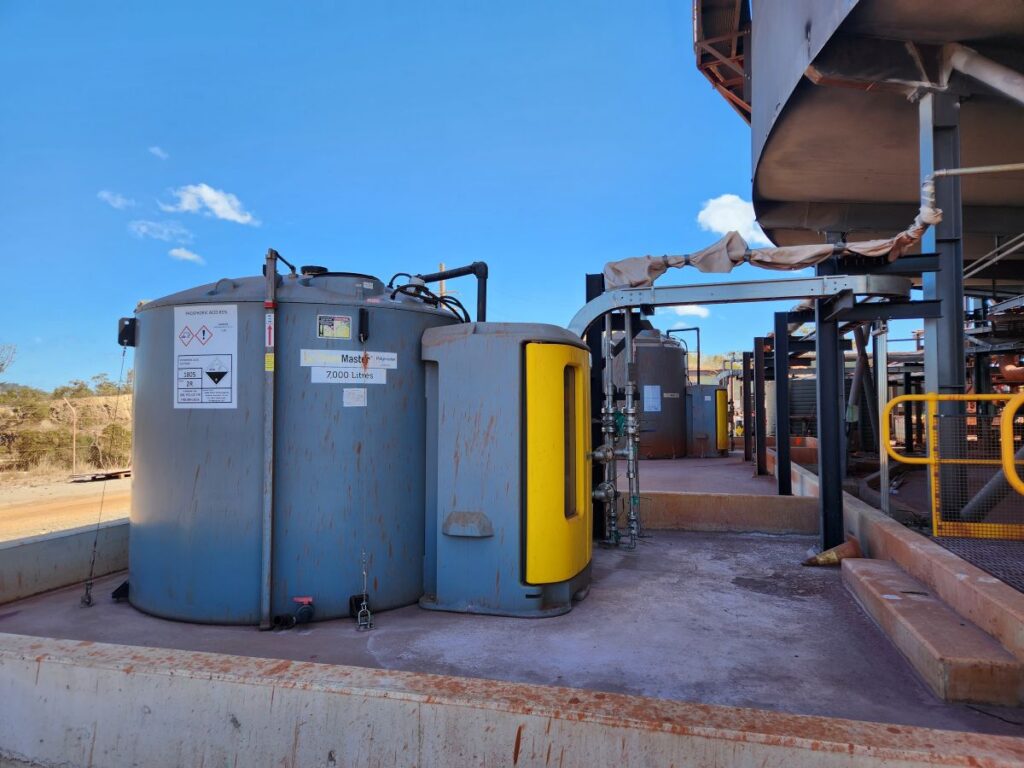
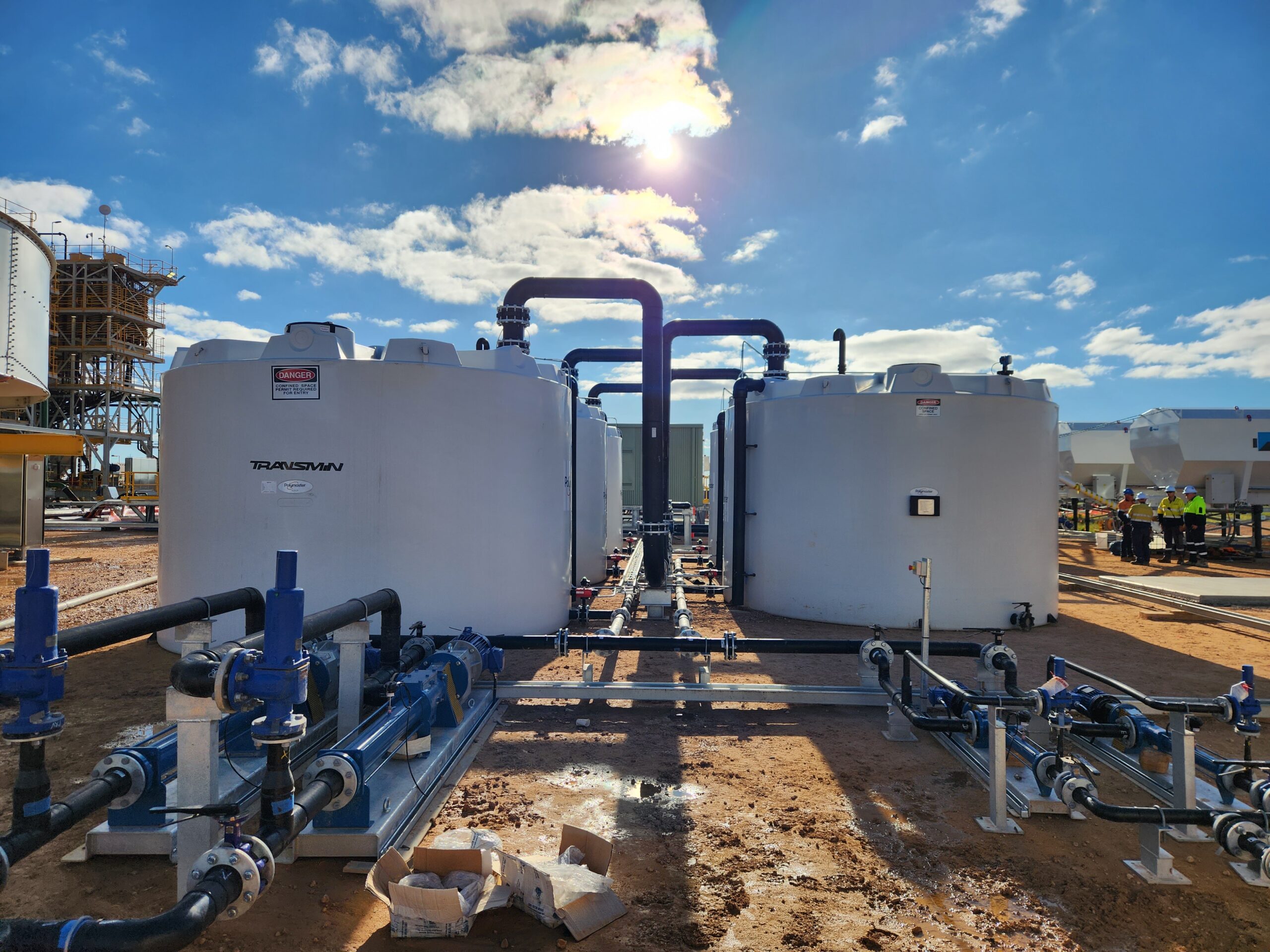
From council water treatment plants to remote mine sites, the Enclosed IBC Bund is used wherever chemicals are stored and dosed straight from an IBC and need protecting from weather, spills and tampering.
Water and Wastewater Treatment
Store and dose sodium hypochlorite, caustic soda, alum, flocculants and polymers, with the day tank feeding your dosing line continuously. No interruption when an IBC is swapped.
Mining and Remote Sites
A sealed, lockable, UV stabilised enclosure suits remote and dusty sites where chemicals sit outdoors and need protecting from weather and unauthorised access.
Industrial and Manufacturing
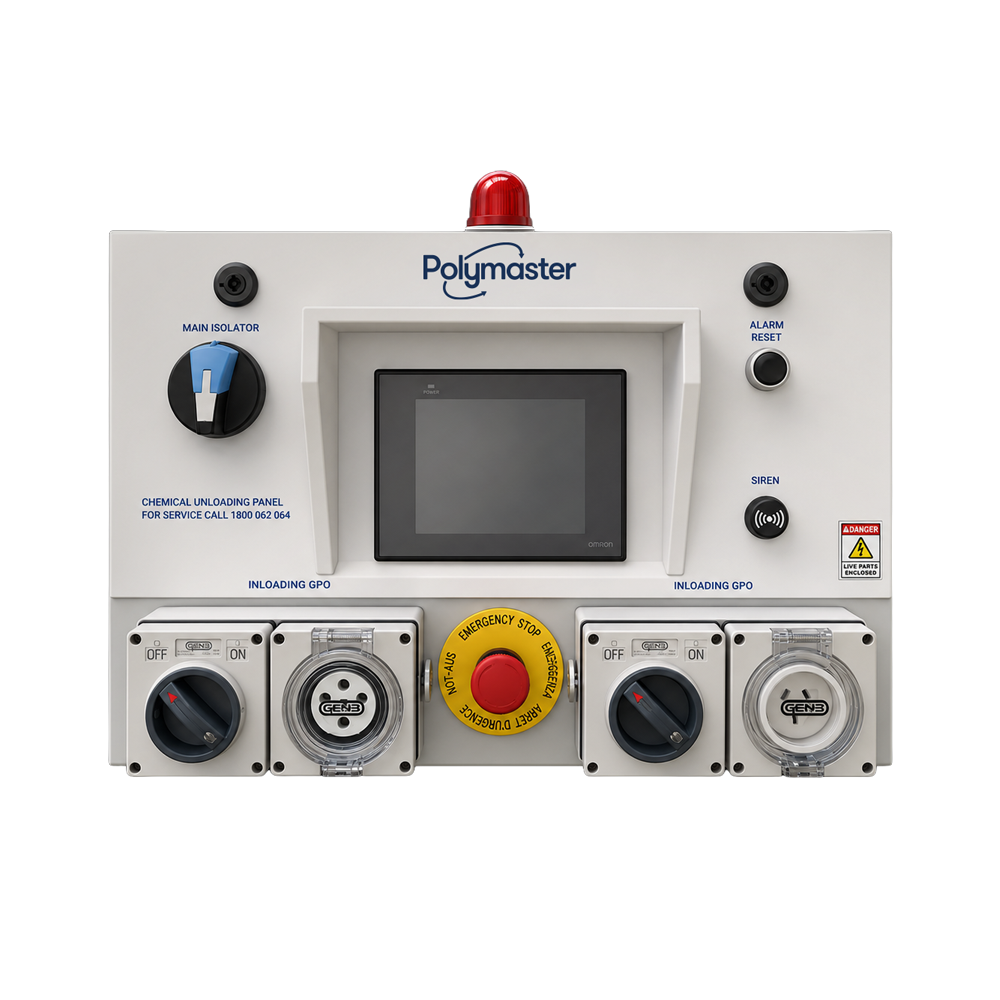
Integrate dosing pumps and PLC controlled systems in the front cabinet to keep process chemistry running while contained to AS 3780:2023.
Why Choose Polymaster
Australian Made Since 1994
Over 30 years designing and manufacturing polyethylene storage in Australia, for Australian conditions.
Factory Configured and Tested
Your bund arrives configured to your chemical and process and ready to connect. Not a flat pack kit to assemble on site.
One Supplier, One Warranty
Tank, bund, cabinet, day tank and dosing from a single manufacturer. One point of accountability, not a chain of suppliers.
Real Engineering Support
Talk to people who know how the product is used in the field and can help you specify the right setup for your site.
One supplier, one system, one point of contact
Tanks, drums, cabinets, skids and pipework from the people who make them. Nothing to integrate on site.
Highest Quality and Standards
Every Polymaster Enclosed IBC Bund is Australian made and engineered to handle aggressive chemicals in demanding water treatment, mining and industrial settings.
Australian Made
Designed, engineered and manufactured in Australia since 1994, built for our UV, our heat and our worksites.
ISO 9001 Quality Management
Manufactured under Polymaster’s ISO 9001 certified quality management system, with serial number traceability on every unit.
AS/NZS 4766:2020 Certified
Independently certified for polyethylene chemical storage tanks, rated to 1.0, 1.5 and 2.0 specific gravity. Licence BMP657671.
AS 3780:2023 Compliant Bunding
110% bund capacity exceeds the containment requirement of AS 3780, The Storage and Handling of Corrosive Substances, engineered to hold a full IBC rupture.
OPTIONS TO SUIT YOUR SITE
Configure the Bund to Your Site
Dosing System and Dosing Cabinet
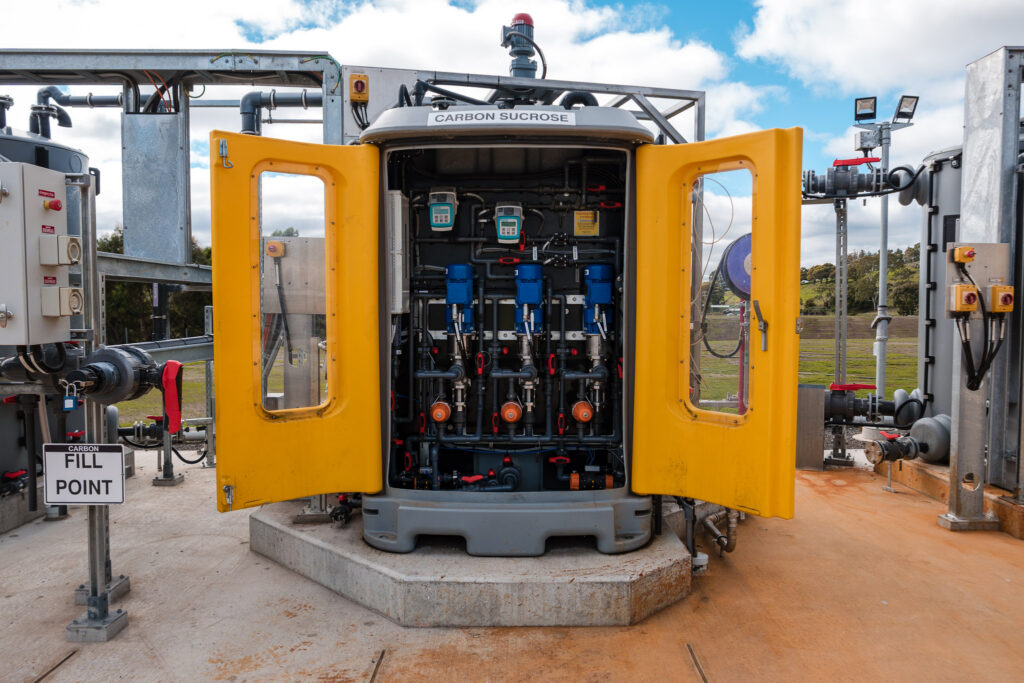
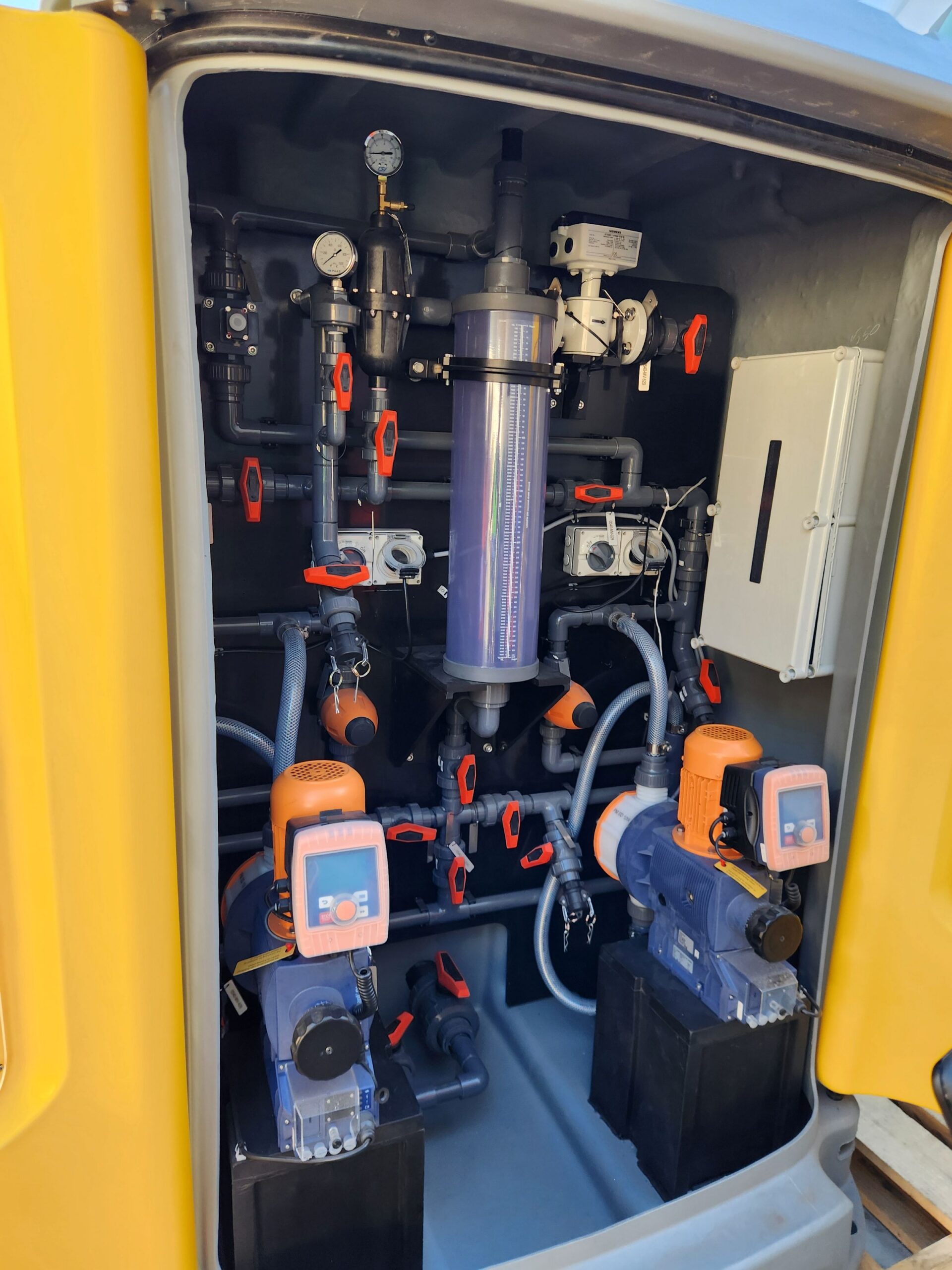
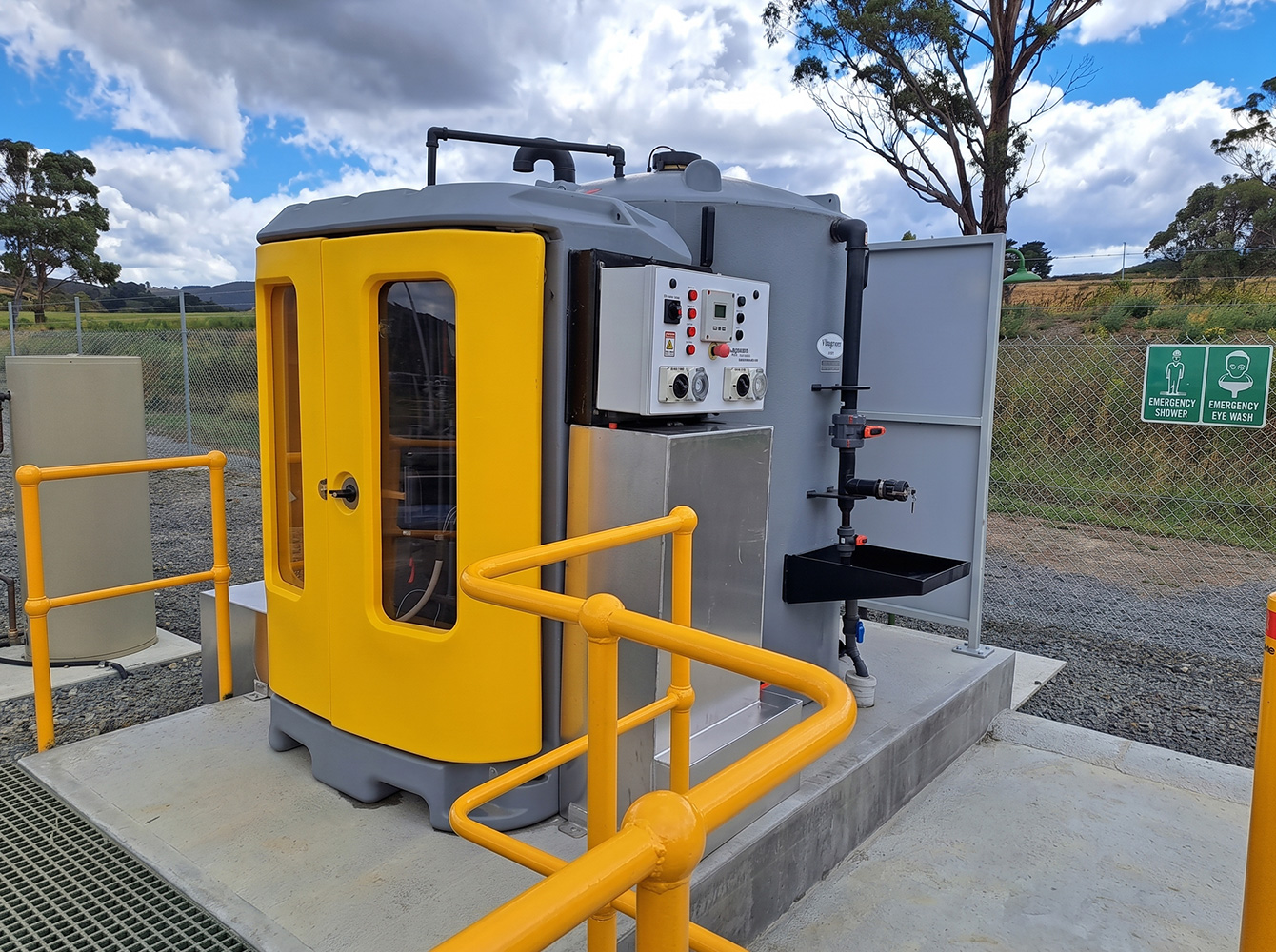
Off the shelf or fully customised dosing systems built into the functional front cabinet. Depending on pump size, up to three dosing pumps can be fitted, for example three 30 LPH Grundfos DDA units.
Day Tank and Monitoring
250L day tank with optional audible and visual low level alarm and pressure transducer level indication, viewable through the door panels.
Additional Doors and Multi-Unit Installations
Additional door options and multi-unit configurations for larger or expanding sites.
Aggressive Chemical Build
AGC configurations add chemical resistant hoses, venting and materials rated for aggressive chemicals.
If You Do Not Need the Enclosure
Some sites already have the IBC under cover, or the chemical does not warrant a full enclosure. For those, Polymaster supplies an open IBC bund: forklift accessible containment with the bund capacity to meet AS 3780:2023, and none of the weather protection, security or dosing provision that comes with the enclosed unit.
It is the cheaper option and it does less. If you are storing outdoors, decanting regularly, or running a dosing line off the IBC, the enclosed bund is the one to look at.
IBC Mother Tank, Bulk Decanting and Day Storage
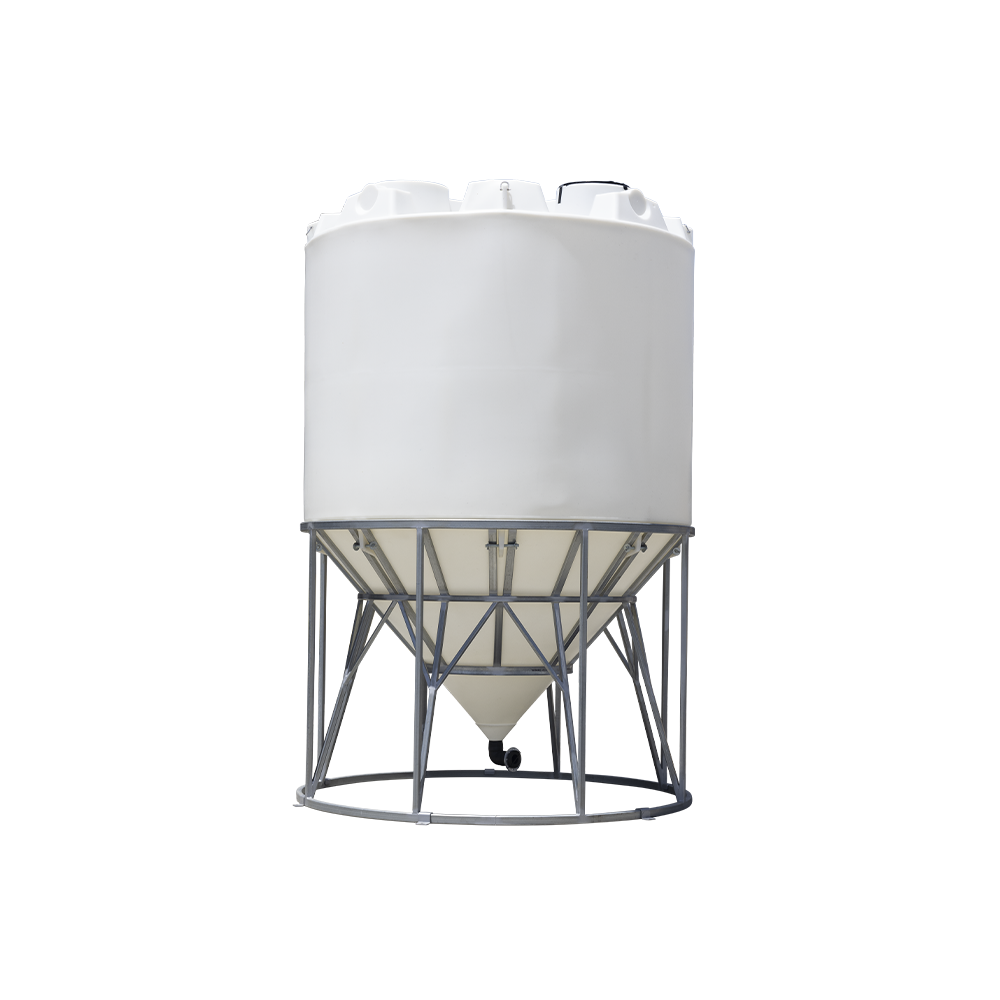
Where the Enclosed IBC Bund stores and doses from a single IBC, the IBC Mother Tank solves a different problem: emptying full IBCs and holding the chemical for continuous use. The 1,500L one-piece polyethylene tank sits on a powder coated steel frame with a 3 degree cradle gradient that drains an IBC completely, so none of your chemical, often $5 to $10 a litre, is left in the bottom of the tote. Gravity feed means no pump is required, and operators avoid the splash and safety risk of disconnecting IBCs under residual pressure.
Complete IBC Drainage
A 3 degree gradient built into the IBC cradle drains the tote completely, with excess holding capacity so nothing is wasted.
Continuous Process Operation
The 1,500L holding tank gravity feeds dosing pumps and in-line systems, so process chemistry continues while IBCs are changed.
Safe, Easy Loading
Four way forklift access for IBC loading, two way access for positioning the Mother Tank, integrated splash guards, and Camlock fill with flexible hoses.
Engineered for Heavy Chemicals
Certified to HSNOCOP 61:2012 and engineered for heavy weight chemicals. The IBC can be stored on top.
Customisation
Containment bund and access grate, stainless steel or PP fittings, sight tube, a range of connections, stainless steel frame option, agitators, heaters and fume scrubbers.
Several tank and bund configurations are available, in standard and chemical grade. Tell us the chemical and the volume and we will confirm what suits.
“Interest is high for safety reasons as we do not need to connect and disconnect pumps when changing over IBCs, and if they fully drain the connection hose there’s no spillage either. The IBC can be completely drained, which, as polymer is $5 to $10 a litre, adds up to a fair bit of money.”
Dirk N
Process Engineering Consultant
Installation, Operation and Maintenance
Installation
Install on a level, non-combustible base, concrete or bitumen, minimum 45mm thick and extending 300mm beyond the unit on all sides. Do not drill holes in the bund. Any penetrations must sit above bund level and be weatherproof sealed. Inspect the unit for transit damage before installing.
Transport and Storage
Never transport the unit with liquid inside. Move by forklift with extended forks only, never push or roll. Keep doors closed and secured in transit.
Operation and IBC Change-Over
Position the IBC centrally on the cradle. To change an IBC, close the IBC valve, drain the line to the hose, then disconnect at the Camlock. Flush the day tank and hoses when changing to a different chemical.
Maintenance
Carry out a daily visual check for leaks, damage and door operation. A scheduled inspection by a qualified engineer is required every 6 months. Replace any degraded hoses, seals or fittings.
Spill Response
Isolate the source and notify the site manager. Remove the unit from use, consult the chemical safety data sheet, then empty, clean and dry the bund. Neutralise strong chemicals before disposal and replace any degraded components before returning to service.
Safety
Trained personnel and correct PPE only. Take care with doors in high wind, since they have a large surface area. Control boards are not rated for explosive atmospheres.
Storing Chemical From an IBC?
Tell us the chemical, the volume and whether you are dosing from it. We will work out the configuration and quote it.
Delivery Australia-Wide
Polymaster delivers chemical and industrial storage Australia-wide, including site placement where required, with pre-delivery contact so you are ready to receive.
Related Chemical Storage Solutions
FAQs
Frequently Asked Questions
What is an IBC bund?
A bund is secondary containment. It sits under an IBC and holds the contents if the container fails, so the chemical stays on site rather than reaching drains or soil. AS 3780:2023 sets the capacity required. Polymaster’s Enclosed IBC Bund goes further by putting the IBC inside a lockable, weather resistant enclosure, so the bund also protects the chemical from rain and the operator from spray.
What is the best way to store an IBC safely?
Inside a bunded, weather resistant enclosure. That keeps rain out of your product, contains a full rupture, keeps the decanting point secure, and gives you somewhere to house a dosing system. An IBC on an open pallet does none of that.
Does the Enclosed IBC Bund meet safety standards?
Yes. It exceeds the 110% bunding requirement of AS 3780:2023, The Storage and Handling of Corrosive Substances.
What is the difference between an open bund and an enclosed bund?
An open bund catches a spill and meets the containment requirement, and that is all it does. An enclosed bund adds a lockable, weather resistant cabinet, keeps rainwater out of the chemical, holds spray in during decanting, and gives you space for a day tank and dosing system. If the IBC is outdoors or you are decanting regularly, the enclosed unit is the one worth having.
What features does the Enclosed IBC Bund provide?
A built-in vent to expel gases, a 250L day tank for continuous dosing into an in-line process, rain resistant doors that hold chemical spray in and keep rainwater out, a lockable cabinet, viewing windows in the doors, 110% bund capacity to AS 3780:2023, venting to two sides, and optional dosing pumps, systems and day tank level alarms.
Can it accommodate a customised dosing system?
Yes. The front cabinet can house a fully customised dosing system, or an off the shelf dispensing kit matched to your chemical.
How many dosing pumps can be fitted?
It depends on pump size. As a guide, up to three 30 LPH pumps, for example Grundfos DDA units.
Does it work with the CageBuster IBC tote?
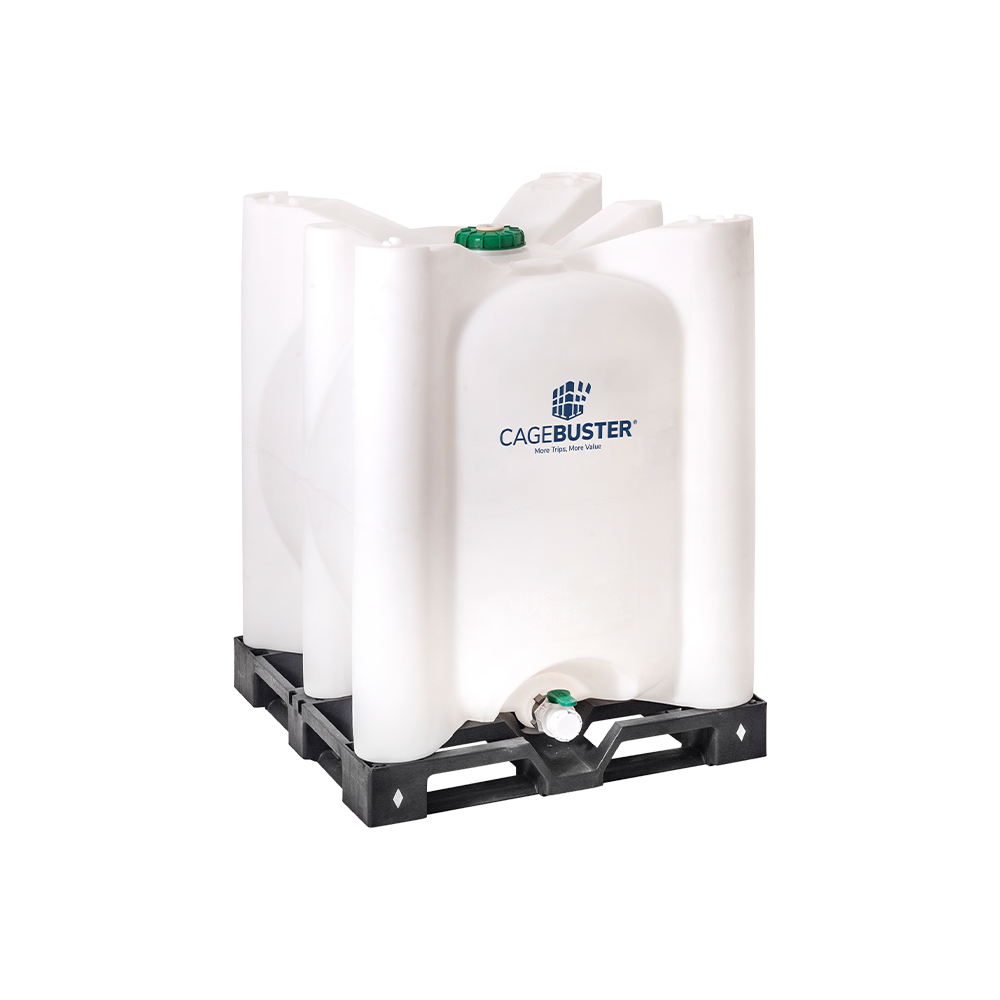
Yes. The Enclosed IBC Bund takes a standard 1,000L IBC, including the CageBuster.