

If you don’t empty your septic tank, solids keep building up until the system can no longer do its job. Sludge and scum take up the space the tank needs to separate waste; solids escape into the pipes and drain field (the area of soil where wastewater from the tank soaks away), and the result is blockages, sewage backup and eventually a failed system that has to be dug up and replaced. Most household septic tanks need pumping every 3–5 years, depending on household size and tank capacity, and staying on that schedule costs far less than repairing the damage.
What Are the Warning Signs Your Septic Tank Is Full?
Every septic tank is full of liquid in normal operation. What matters is how much of that volume is taken up by sludge on the bottom and scum on top. A common rule of thumb is to pump out before those layers reach about a third of the tank’s capacity. You can’t see that from the surface, so how do you know when your septic tank is full? These are the signs to watch for:
- Slow drains across the house: sinks, showers and toilets all draining slowly at once. One slow sink is usually a local blockage; several fixtures at the same time point to the tank.
- Foul odours: a sewage smell inside the home, around the tank lid or over the drain field.
- Gurgling pipes: air and water pushing back through the plumbing when you drain a bath or flush a toilet.
- Wet or unusually green grass over the drain field: effluent (the partly treated wastewater that flows out of the tank) is surfacing because the soil can no longer absorb it.
- Sewage backup: wastewater coming up through toilets, showers or floor drains. This is the most severe stage and needs a licensed plumber or pump-out contractor straight away.
How to tell if your septic tank is full:
- Check your records: if the tank hasn’t been pumped in more than 3–5 years, assume it is due.
- Walk the drain field after a dry spell: soggy patches or lush strips of grass while the rest of the yard is dry are a warning sign.
- Book an inspection: a pump-out contractor can measure the sludge and scum layers and tell you how much working capacity is left.
Never open the tank to look inside yourself, and never enter it. A septic tank is a confined space, and the gases inside are an extreme health risk.
What Actually Happens If You Never Pump It Out?
So what happens when a septic tank is full, and nobody pumps it out? The system fails in stages, and each stage costs more to fix than the one before it.
- Solids accumulate and capacity drops. Bacteria break down some of the waste, but not all of it. Sludge builds up on the bottom and scum on top, leaving less room for wastewater to settle before it leaves the tank.
- Outlet pipes clog. With less settling time, solids are carried out with the effluent and start blocking the outlet and the pipes leading to the drain field, also called the absorption trench or leach drain.
- The drain field fails. Solids seal the soil, and the ground becomes saturated. Effluent stops soaking away and starts pooling on the surface or backing up into the house.
- The system needs replacing. Once the drain field is clogged, pumping the tank won’t fix it. The trench usually has to be dug up and rebuilt, and an older concrete tank that has cracked may need replacing too. That work can run into thousands of dollars, compared with the cost of a routine pump-out.
A failing system is also a health and environmental problem. Untreated effluent can reach groundwater, bores, creeks and dams, which is why on-site wastewater systems are approved and regulated by local councils.
How long does it take for a septic tank to fill up?
How fast a septic tank fills up depends on the size of the tank and how many people use it. Septic tanks are sized by occupancy: Polymaster’s 3,100L septic tank suits 1–5 people, and the 4,550L tank suits 6–10. A correctly sized tank will typically need pumping every 3–5 years, but it will fill faster when:
- More people live in the home than the tank was sized for
- Water use is high, such as several loads of washing back to back
- Fats, oils, wipes, sanitary products or harsh chemicals go down the drain, adding solids or killing the bacteria that break waste down
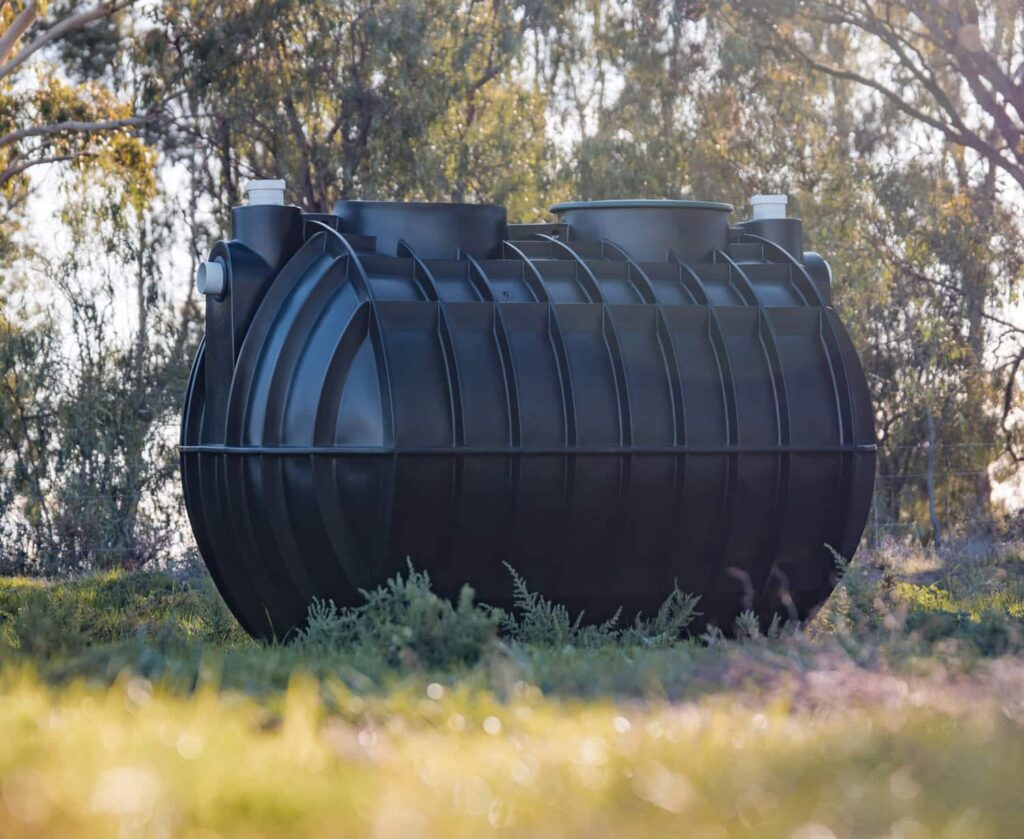
If your system is due for replacement, or you’re installing one on a new build, Polymaster’s poly septic tanks are Australian-made in one piece with no joins or seams, certified to AS/NZS 1546.1 (the Australian and New Zealand Standard for septic tanks used in on-site domestic wastewater treatment), and they resist the corrosion, cracking and root intrusion that wear out concrete tanks. For more on septic system maintenance, how septic systems work and how to size one, see our ultimate guide to septic tank systems in Australia.
Explore Polymaster’s septic tank range or contact your local Polymaster distributor for advice on the right tank capacity and maintenance schedule for your property.