


Home Chemical & Industrial Chemical Dosing Chemical Dosing Unit
Chemical Dosing Unit
Most dosing installations get assembled on site from parts. A cabinet from one supplier, pumps from another, a bund poured by someone else, and no single party who owns it when something doesn’t work.
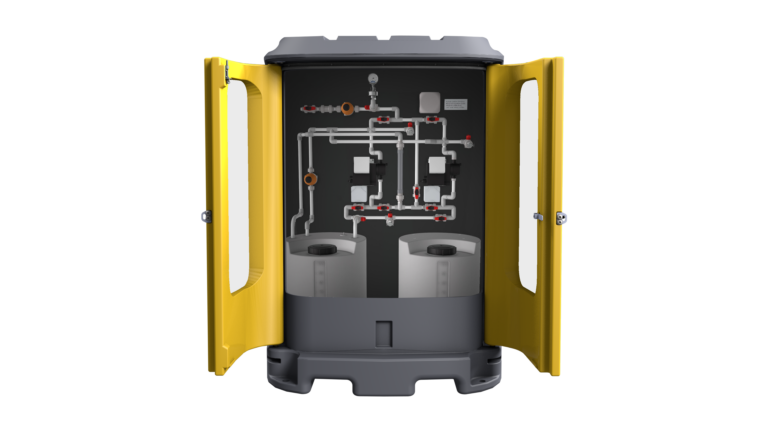
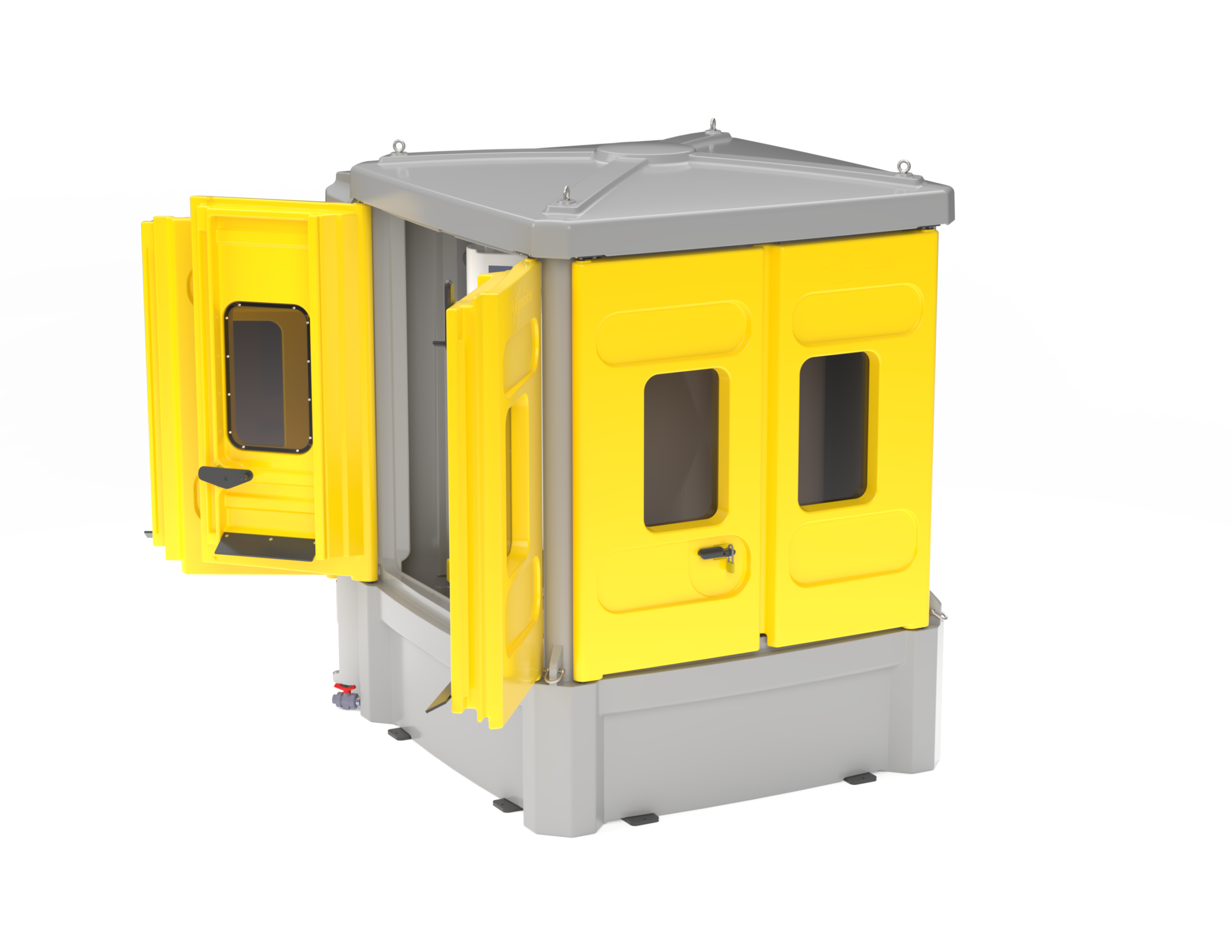
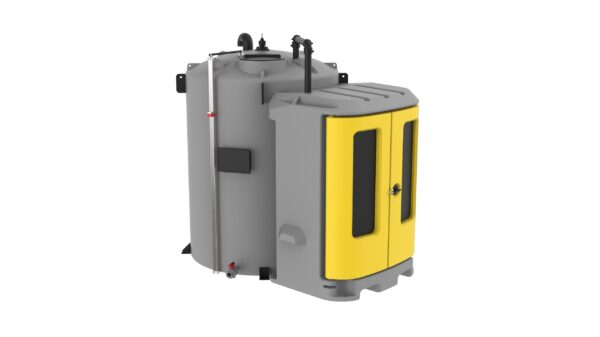
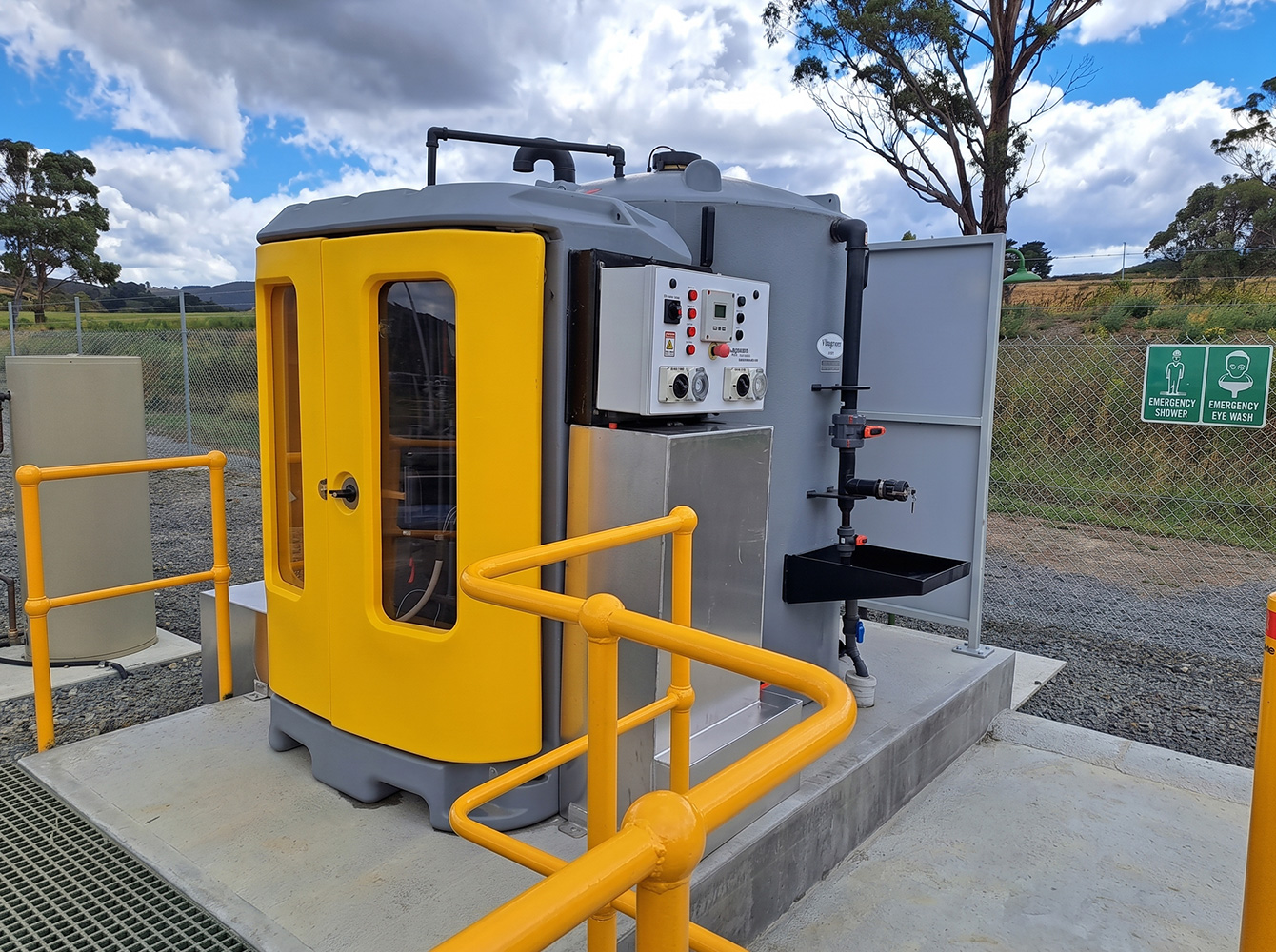
The Polymaster chemical dosing unit arrives as one piece. A lockable poly cabinet, a dosing skid configured to your chemical and flow rate, and a self-bunded base underneath the lot. Built and tested in Australia before it ships, with one supplier behind all of it.

One unit instead of four purchase orders
The dosing unit brings together the parts a dosing installation normally needs, built up as a single system before it leaves the factory.
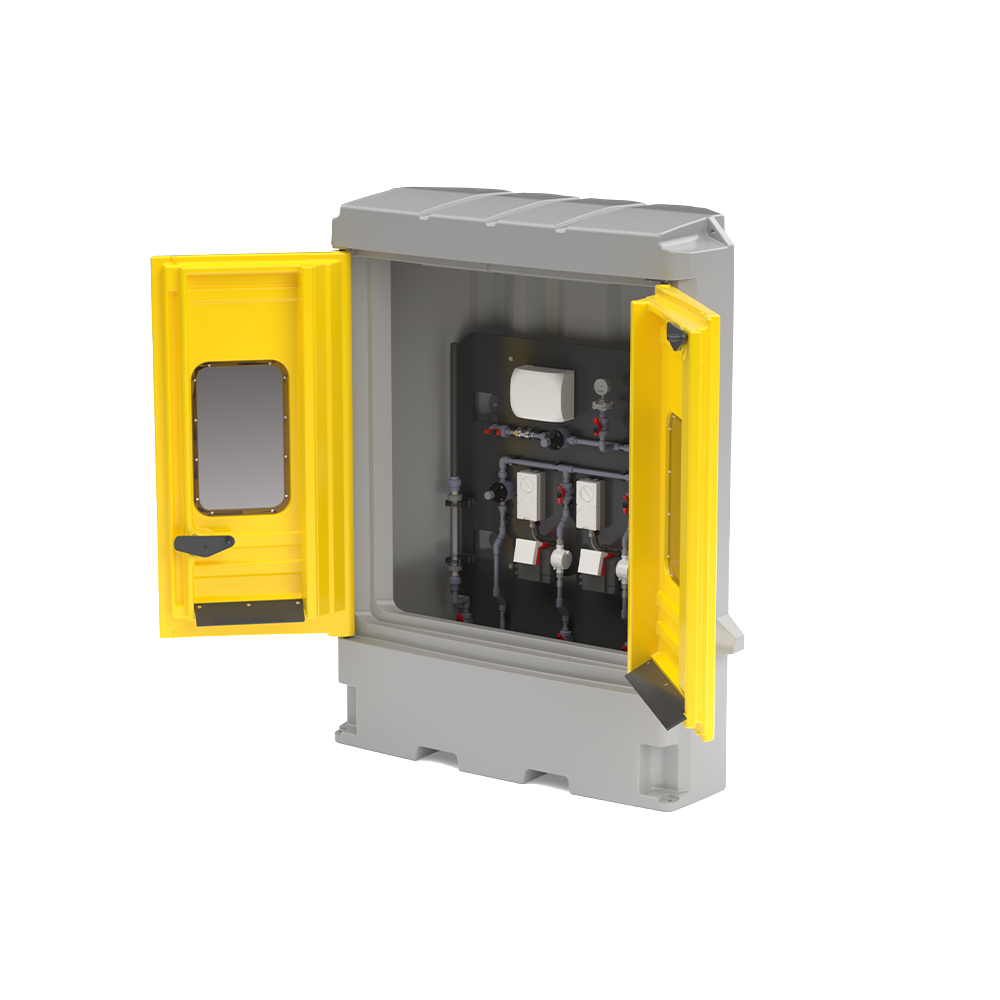
The cabinet. UV-stabilised polyethylene, lockable, with clear viewing panels so operators can check the system without opening the doors.
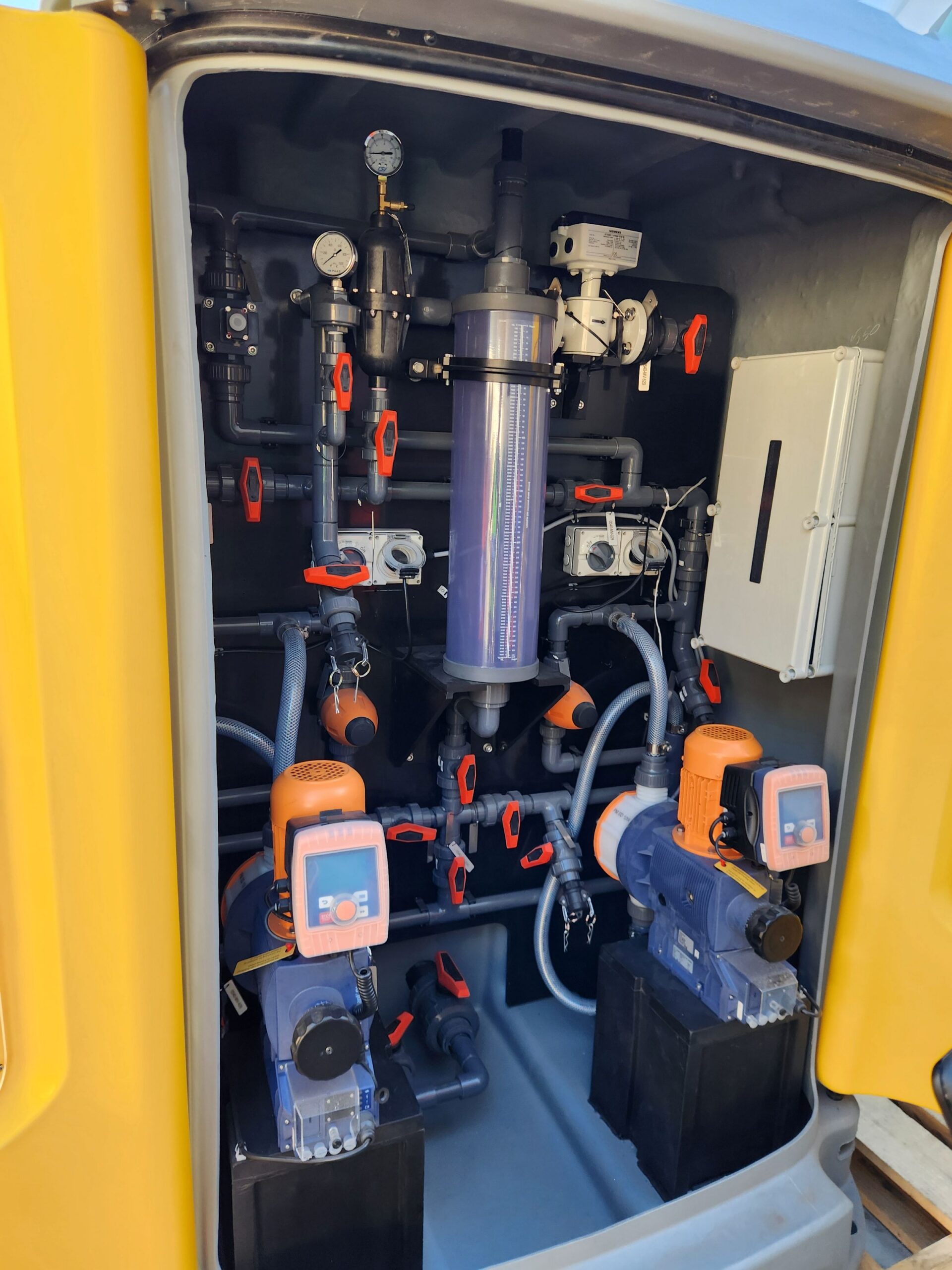
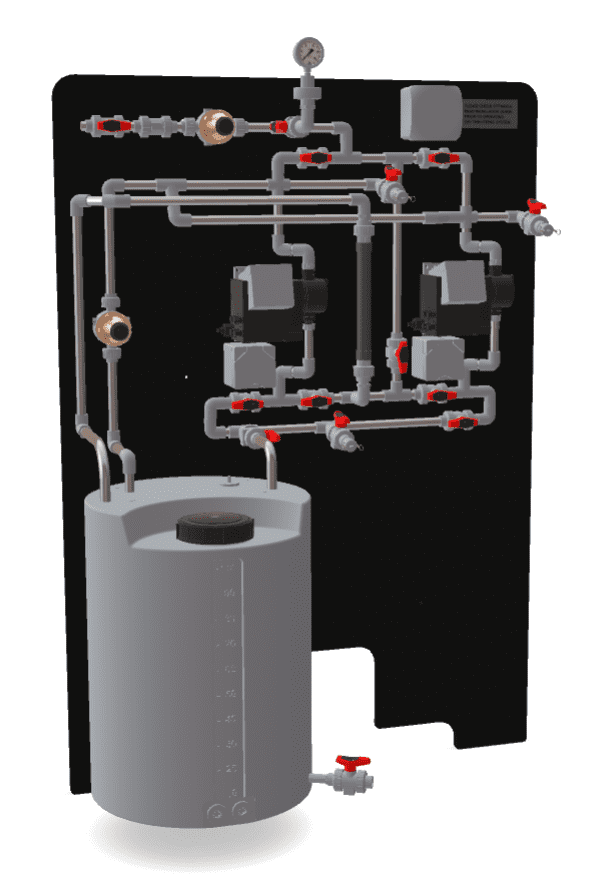
The dosing skid. Pumps, pipework, valves and instrumentation mounted to an HDPE backboard, configured to the chemical and the duty.
The chemical storage. Closed head drums in 110L or 210L sit inside the unit as part of the skid, so storage and dosing share the one footprint.
The bund. Built into the base at 110% capacity, meeting AS 3780:2023 for secondary containment. Nothing to pour, nothing to certify separately.
Estimation and Engineering
No two dosing duties are the same. Tell us the chemical, the flow rate and the site conditions, and we’ll configure the unit around them.
Built around your chemical
Pumps, pipework and seals are selected for the chemical you’re dosing. The poly construction handles the rest, with no corrosion and no coating to maintain.
Bunded from the base up
The bund is moulded into the unit at 110% capacity, meeting AS 3780:2023 for secondary containment. Spill containment arrives with the product rather than being built around it.
Suitable for potable water
Used for disinfection and pH correction in drinking water treatment, as well as wastewater and process water duties.
Locked and enclosed
The cabinet locks, so dosing equipment and chemical connection points stay away from anyone with no business adjusting them.
Clear viewing panels
Operators check pumps, gauges and drum levels at a glance with the doors closed. In an incident, the panels keep spray off the operator.
Small footprint
The whole system sits in the space a cabinet would take on its own. Suited to plant rooms and sites where floor area is the constraint.
One supplier, one system
Storage, containment, pumping and controls come from us, assembled and tested before delivery. No integration risk on site and no argument over whose part failed.
Australian made
Designed, moulded and assembled in Australia, with engineering support from the people who built it.
Tell us the chemical and the flow rate
That’s the starting point for every dosing unit we build. Send us those two things and we’ll come back with a configuration.
Where the dosing unit gets used
The unit suits any duty that needs accurate, repeatable dosing of a modest chemical volume in a contained, secure package. Water treatment is the most common application, in both municipal and industrial settings.
In drinking water treatment it doses disinfectants and pH correction chemicals, including at remote and unmanned sites where a locked, weatherproof, self-contained system matters more than it would inside a plant room. In wastewater it handles flocculants, coagulants and pH adjustment for meeting discharge conditions. In process water it doses to hold water quality steady where the process depends on it.
Beyond water treatment, the same unit is used across mining, food and beverage, agriculture and manufacturing. The constraint is rarely the industry. It’s the chemical, the flow rate, and how much room there is to put it.
Ready to spec a dosing unit?
Talk to our team. Tell us the chemical, the flow rate and what the site can take, and we’ll work out the right configuration and come back to you with it.

FAQs
Chemical Dosing Unit FAQs
What's the difference between the dosing unit, the dosing cabinet and the dosing skid?
The cabinet is the enclosure on its own. The dosing skid is the working end, with pumps, pipework and valves mounted to a backboard along with the chemical drums. The dosing unit is both of those together on a self-bunded base, supplied as one system. If you’re fitting out an enclosure you already have, you want the skid. If you want the whole thing to arrive built, you want the unit.
How much chemical does it hold?
Closed head drums in 110L or 220L, depending on how much chemical you need on hand between deliveries. Tell us your consumption rate and we’ll size it.
Does it need a separate bund?
No. The bund is built into the base at 110% capacity, which meets AS 3780:2023 for secondary containment. That’s one of the main reasons customers choose the unit over assembling the parts themselves.
Can it be used for drinking water treatment?
Yes. The unit is used for disinfection and pH correction in potable water treatment, including at remote and unmanned sites. Tell us the chemical and the duty and we’ll confirm the configuration.
Can it sit outside?
Yes. The cabinet is moulded from UV-stabilised polyethylene and built for Australian conditions. It keeps rain off the pumps and instrumentation, and being poly throughout there’s nothing to corrode.
What dosing pumps does it use?
Pumps are selected for the chemical and the flow rate. Pipework is designed around the Grundfos DDA range in both AR and FCM models. If you’re running something else, tell us the model and we’ll configure the skid to suit.
Can operators check it without opening the doors?
Yes. Clear viewing panels let operators see pumps, gauges and drum levels with the doors closed and locked. In an incident, the panels also keep spray off the operator.
How do I get one specified?
Send us the chemical, the flow rate, the available footprint and any site constraints such as power or PLC integration. We’ll come back with a configuration. Call 1800 062 064 or use the enquiry form.