


Home Chemical & Industrial Chemical Tank Accessories Tank Agitators and Frames
Tank Agitators and Frames
Polymaster agitators are pre-engineered to the tank they mount on, so the shaft installs on site without modification — from 0.18kW to 5kW, suited to a wide range of viscosities, across vessels from 200L to 50,000L.

Pre-engineered Tank Agitators and Frames, so it fits when it arrives
The problem with a bought-in agitator is the mounting. Shaft length, offset, frame height and load path all have to be worked out against a specific tank, and if that happens on site it happens with a grinder.
Every Polymaster agitator and frame is engineered to suit a specific Polymaster tank before it ships. The shaft is the right length for the tank depth, the mounting is offset to centre for the flow pattern, and the frame is built to carry the load. It installs without modification.
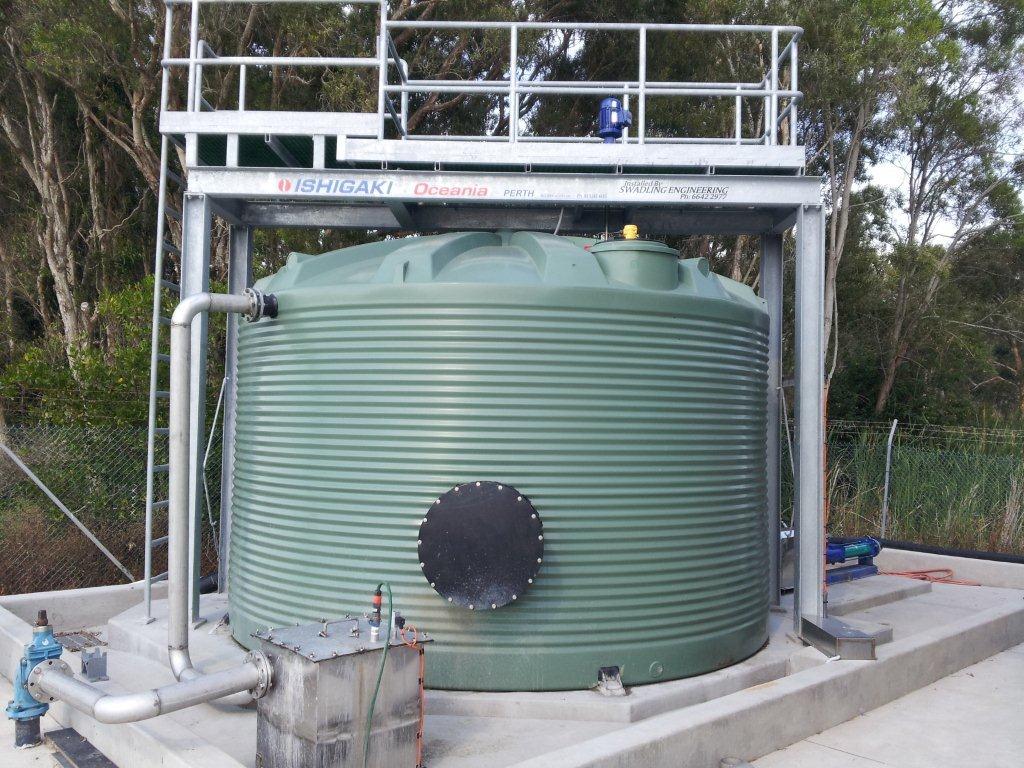
- Duragal RHS frame. Self-supporting, with all welds double-coated in zinc rich paint.
- 316 stainless steel shaft and blades. Standard across the pre-engineered range.
- Offset to centre mounting. Positions the impeller for the flow pattern rather than dropping it down the middle.
- Options across a wide variety of viscosities. Agitator selection accounts for what the liquid actually does, from free-flowing dosing chemicals through to products that settle hard at rest.
- Retrofit or new build. Agitators and frames can be added to any tank in the Polymaster range, including one already on site.
SPECIFICATIONS
Standard specification
- Vessel capacity range – 200L to 50,000L
- Agitator power – 0.18kW to 5kW
- Viscosity – Options available across a wide variety of viscosities and applications
- Shaft and blades – 316 stainless steel
- Frame – Duragal RHS, self-supporting.
- Frame Finish – All welds double-coated with zinc rich paint
- Mounting – Securely mounted, offset to centre
- Installation – Pre-engineered, no on-site modification required
Tanks we build for
Pre-engineered tank agitators and frames exist for tanks across the Polymaster chemical range, including bunded process storage tanks (BPST), chemical smooth wall tanks (CSW) and process storage tanks (PST), from 1,000 litres to 50,000 litres.
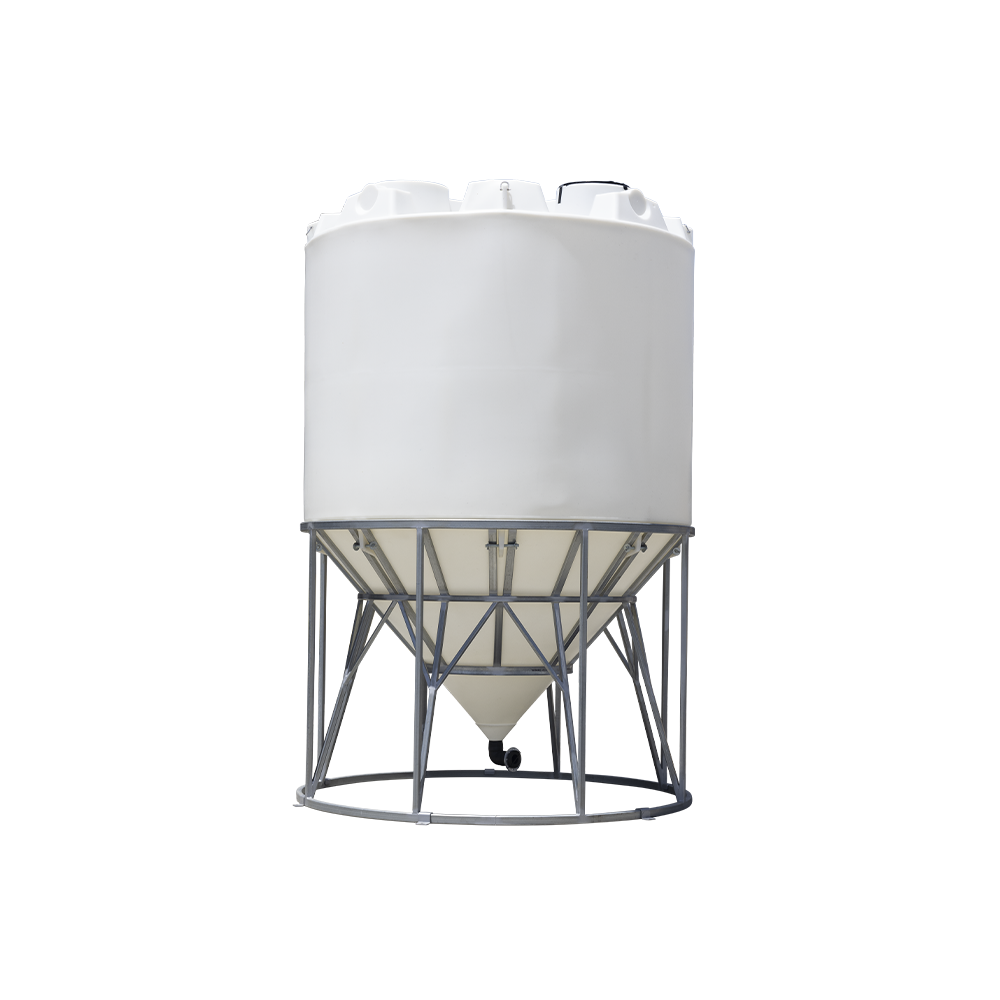
They can be fitted to bunded tanks, conical vessels and open tanks.
Options
- Custom agitator mechanisms for applications outside the pre-engineered range.
- Support stands and overhead frames where the mounting arrangement calls for it.
- High specific gravity vessels for heavier liquids.
- Fully compliant personal access platforms where operators need safe access at height.
Estimation and Engineering
Tell us what you’re mixing and what it has to do, and we’ll work out what the agitator needs to be.
What you’re mixing
Viscosity, specific gravity and how the chemical behaves at rest. Agitator options cover a wide variety of viscosities, and a product that settles hard needs more than one that simply stratifies.
Chemical compatibility
Polymaster undertakes chemical compatibility testing across a wide range of chemicals. Wetted components have to survive what they’re turning, which is why 316 stainless is standard on the shaft and blades.
How the tank is shaped
Diameter, height and whether the base is flat, sloped or coned. Tank geometry decides shaft length, impeller position and the flow pattern that forms.
How often it runs
Continuous agitation, intermittent before dosing, or blending on fill. Duty cycle drives the motor selection within the 0.18kW to 5kW range.
Frames built to the tank
The frame carries the load, not the tank wall. Duragal RHS, self-supporting, with every weld double-coated in zinc rich paint.
Retrofit to existing tanks
Agitators and frames can be added to any tank in the Polymaster range, so an existing installation can be upgraded rather than replaced.
Safe access where it’s needed
Fully compliant personal access platforms are available where operators need to reach the top of the vessel.
Australian made
Designed, built and supported in Australia, with the engineering team available to talk through the application.
Where Agitation Matters
Chemical dosing systems rely on the stored product being consistent. If a chemical has stratified or settled between fills, the first dose out of the tank is not the same as the last, and dosing accuracy goes with it. Agitation is what keeps the tank consistent from top to bottom, which is why it belongs in the same conversation as the dosing equipment rather than being bolted on afterwards.
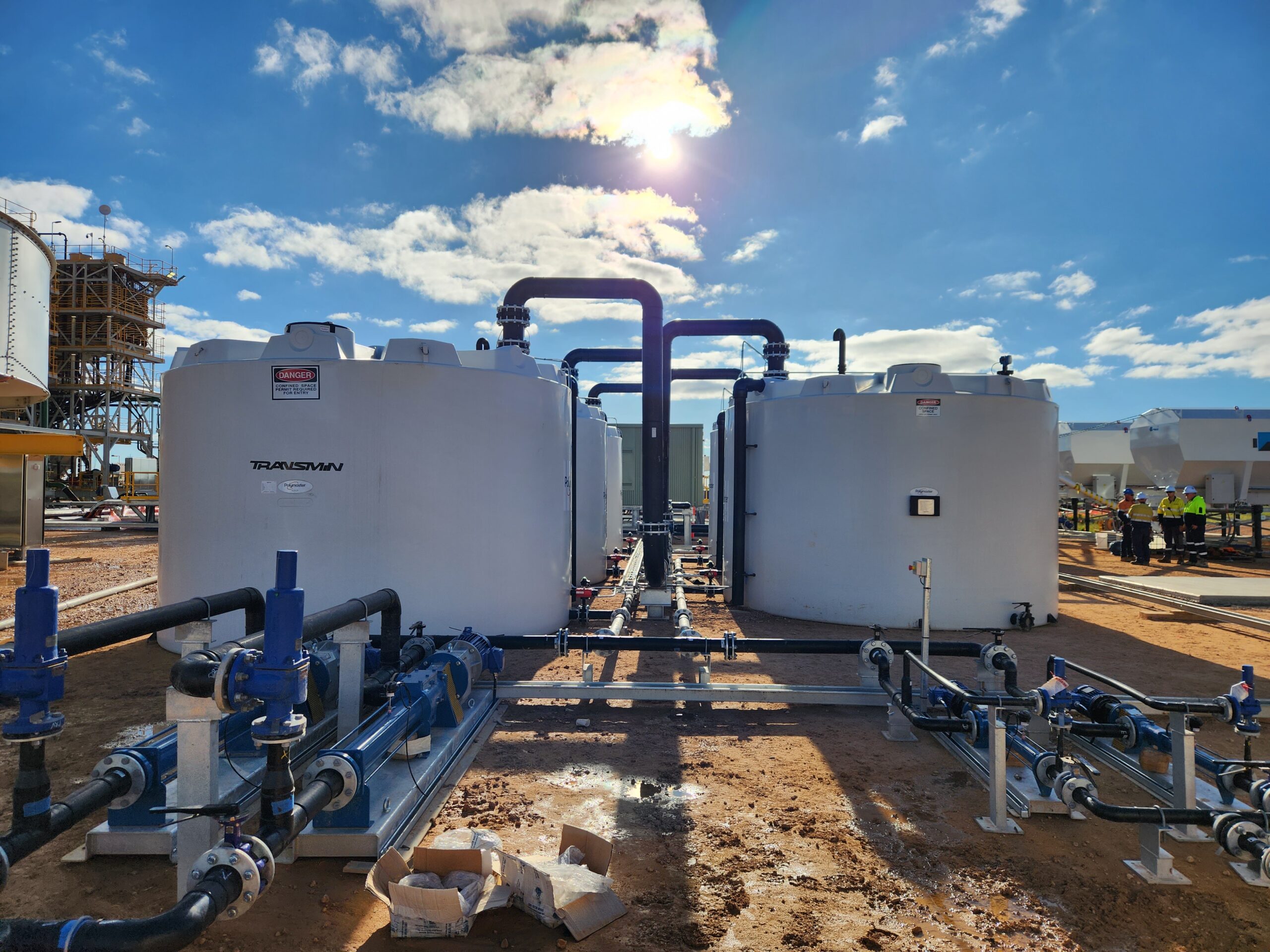
The applications vary widely. Water treatment operations agitate flocculants and coagulants that separate at rest. Mining and mineral processing sites hold slurries that settle hard and need continuous movement. Food and beverage plants blend and hold cleaning chemistry. Agricultural operators mix fertiliser and trace element packages before transferring them into bulk storage. In each case the mixing requirement is different, which is why the agitator is specified rather than selected.
Need something mixed?
Tell us what you’re mixing, the tank it’s in and how often it has to run. We’ll engineer the agitator and frame to suit.


FAQs
Tank agitator frequently asked questions
Can an agitator be added to a tank I already have?
Yes. Agitators and frames can be added to any tank in the Polymaster range, so an existing installation can be upgraded rather than replaced. Tell us the tank and we’ll confirm what suits it.
What size tanks can you agitate?
Vessels from 200 litres through to 50,000 litres. Agitators and frames have been pre-engineered for tanks across the bunded process, chemical smooth wall and process storage ranges, and can be fitted to bunded tanks, conical vessels and open tanks.
What power range do the agitators cover?
From 0.18kW up to 5kW. The motor is selected against the chemical, the tank volume and the duty cycle. Custom agitator mechanisms are available where the application falls outside that range.
What viscosities can you handle?
Agitator options are available across a wide variety of viscosities and applications, from free-flowing dosing chemicals through to products that settle hard at rest. Tell us what you’re mixing and we’ll specify to it.
What are the shafts and blades made from?
316 stainless steel as standard on the pre-engineered range, chosen for chemical resistance in the wetted components.
What is the agitator frame made from?
Duragal RHS, self-supporting, with all welds double-coated in zinc rich paint. The frame carries the agitator load rather than the tank wall doing it.
Will the agitator need modifying on site?
No, and that’s the point of pre-engineering it. The shaft length, the mounting position and the frame height are worked out against the specific tank before it ships, so it installs without cutting or adapting anything.
Why is the agitator offset rather than central?
A centrally mounted impeller in a round tank tends to spin the liquid as a body rather than turning it over. Offsetting the mounting breaks that rotation and creates the flow pattern that actually mixes.
Can you supply the tank and the agitator together?
Yes, and it’s worth doing. Where the tank, the dosing equipment and the agitation are designed together, the interfaces are engineered rather than worked out on site.
Is there safe access to the top of the vessel?
Fully compliant personal access platforms are available where operators need to reach the top of the tank for inspection or maintenance.
What information do you need from me?
The chemical and its concentration, the tank size and shape, whether it is an existing tank or a new one, how often the agitator needs to run, and what the mixing has to achieve. Call us on 1800 062 064 and we’ll work through it.