
Search

Stormwater and Grey Water Pump Stations

Water collects at the low point whether the site was designed for it or not. A stormwater pump station clears it, moving surface water and grey water up to the legal point of discharge when there is no fall to work with.

Plumbing - Customer Service Team Member

Stormwater and Grey Water Pump Station Range

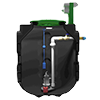
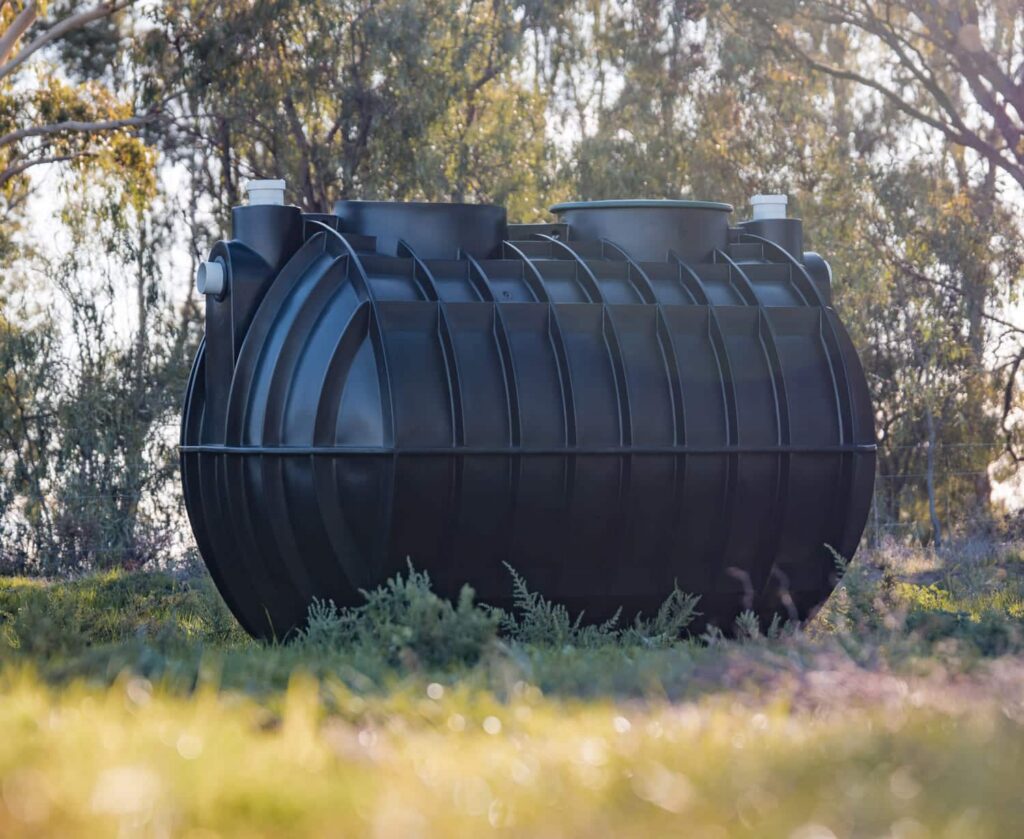
Three sizes. One-piece polyethylene chamber. Certified to AS/NZS 1546.1. The pump, valves, pipework and high-level alarm are fitted and tested before it arrives, so the install is a matter of connecting three things and backfilling.

The right one comes down to inlet depth and how much water you need to hold between pump cycles during a downpour.

Code Product CapacityDiameter (mm)Height (mm)
700L Pump Station (Storm / Grey Water)PS700-STM700L Pump Station (Storm / Grey Water)700L10901650
1,000L Pump Station (Storm / Grey Water)PS1000-STM1,000L Pump Station (Storm / Grey Water)1,000L10922030
1,300L Pump Station (Storm / Grey Water)PS1300-STM1,300L Pump Station (Storm / Grey Water)1,300L10942420
700L Pump Station (Storm / Grey Water)

700L Pump Station (Storm / Grey Water)

PS700-STM

Specifications
Capacity700L
Diameter (mm)1090
Height (mm)1650
1,000L Pump Station (Storm / Grey Water)

1,000L Pump Station (Storm / Grey Water)

PS1000-STM

Specifications
Capacity1,000L
Diameter (mm)1092
Height (mm)2030
1,300L Pump Station (Storm / Grey Water)

1,300L Pump Station (Storm / Grey Water)

PS1300-STM

Specifications
Capacity1,300L
Diameter (mm)1094
Height (mm)2420

For pricing, Call us on 1800 062 064 or request a quote.

We will get you a price from your nearest stockist.

WHAT YOU GET

It Arrives Ready to Connect

Everything inside the chamber is fitted and tested before it leaves our manufacturing facility. There is no internal plumbing to build in a wet hole. 

  • Pump, fitted and tested. Matched to stormwater and grey water duty and installed at the factory. 
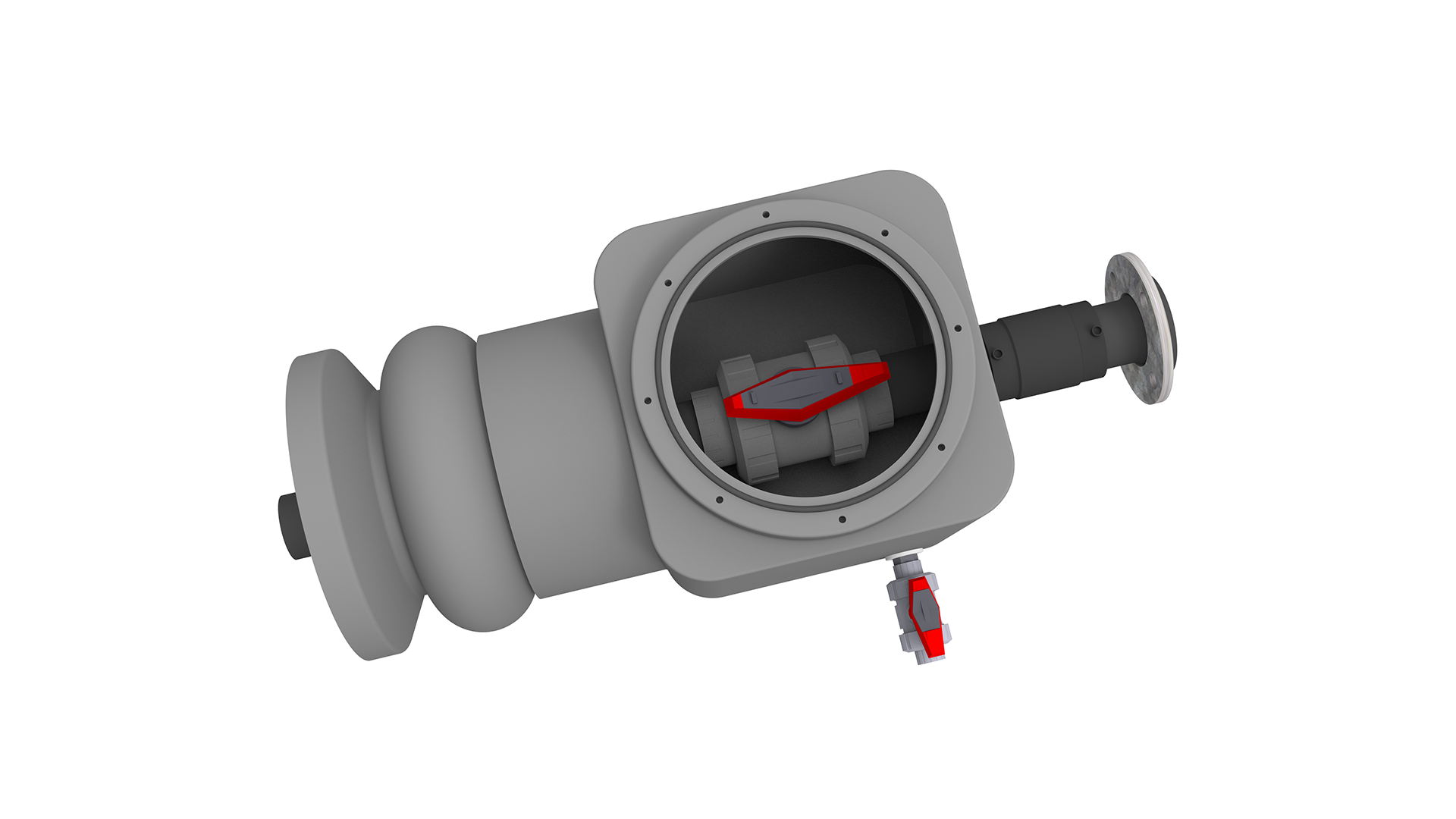
  • Brass ball valve. For isolating the discharge line without draining the chamber. 
  • Swing check valve. Stops water running back into the chamber once the pump shuts off. 
  • PVC barrel union. The pump lifts out through it, so servicing never means reaching into the liquid. 
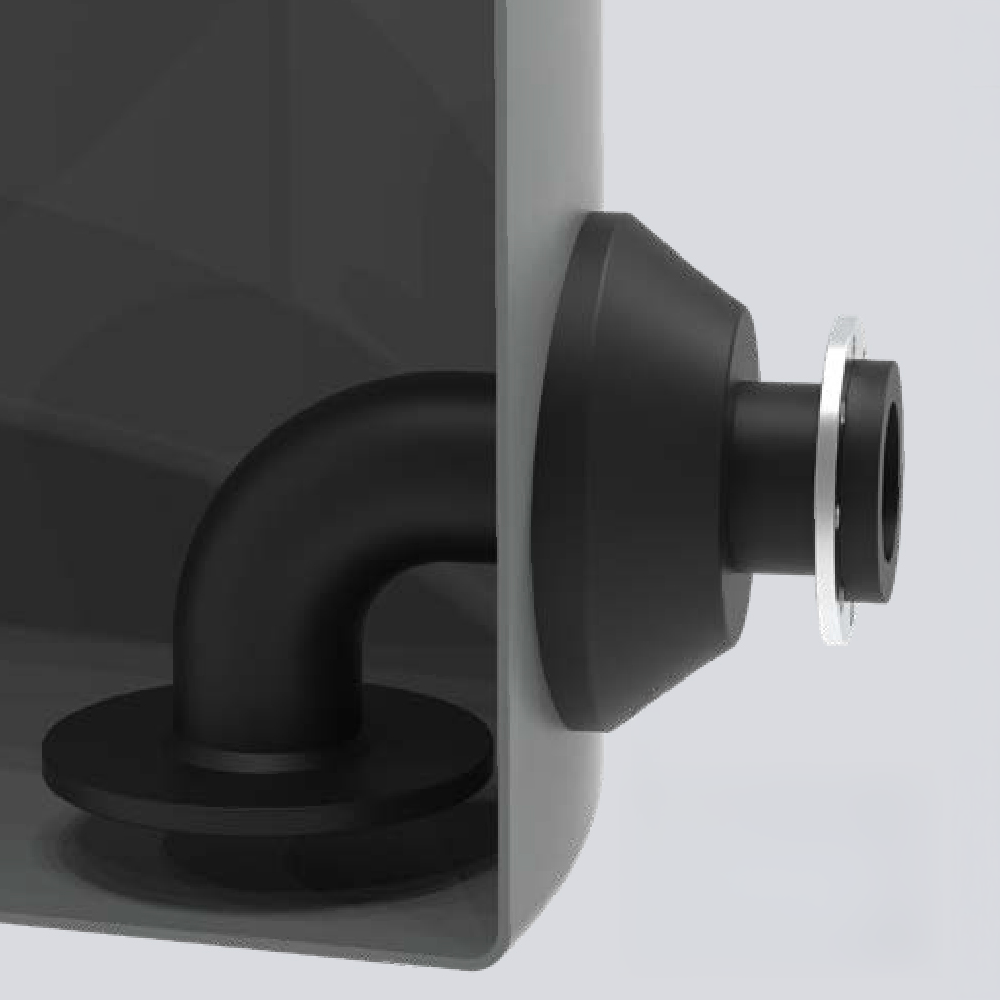
  • 40mm brass discharge outlet. Fitted with a 40mm poly pipe connector, ready for the rising main. 
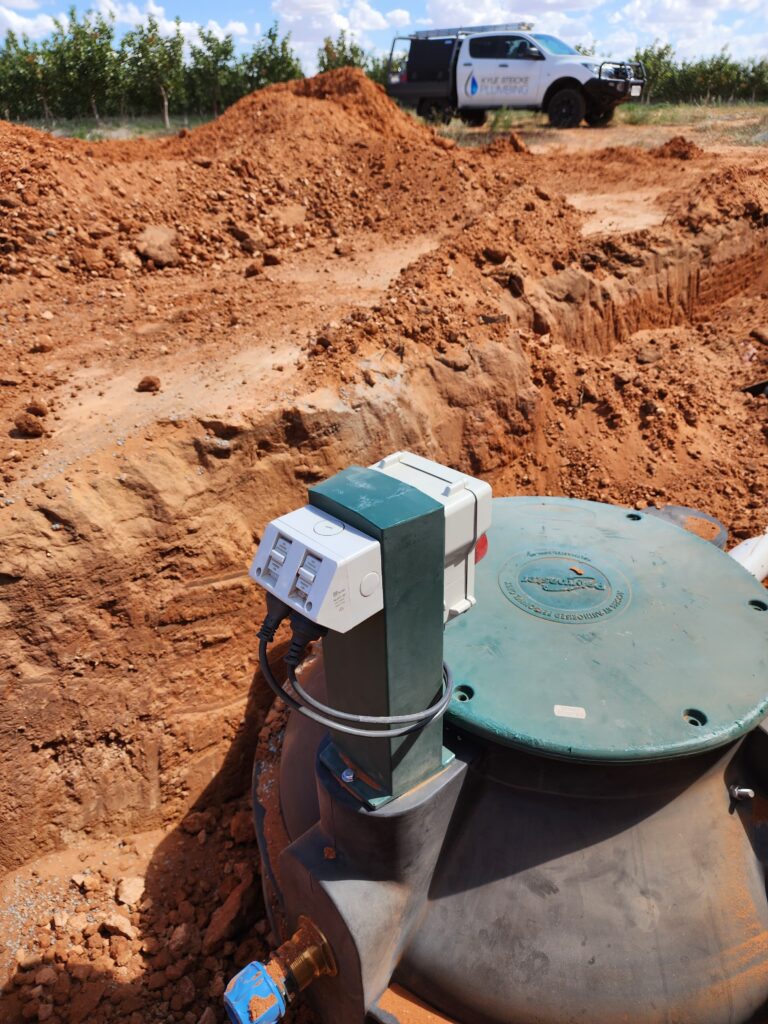
  • High-level alarm on a pre-installed stand. Visual and audible, with an outdoor power point for the electrical connection. 
  • Lifting lugs. Moulded in, so a mini excavator can place it. 
  • 500kg rated lid. Rated for pedestrian loading. 

BUILT FOR STORMWATER DUTY

Built to Pass Grit and Debris

This is what separates the stormwater configuration from the sewer one, and it is worth understanding before you order.

Stormwater is cleaner than sewage, but it is not clean. It arrives with grit, sand, leaf litter and whatever else has been sitting on the surface since the last rain, and the first flush after a dry spell brings the worst of it. A pump that lets solids settle will jam. The stormwater configuration uses a vortex pump, which keeps material suspended and moving so it passes through the discharge line instead of collecting in the bottom of the chamber.

The chamber itself is moulded as one piece, so there are no seams to leak and nothing to corrode when it spends its life full of wet grit.

WHERE THEY GO IN

Where Stormwater Pump Stations Are Used

Car Parks and Hardstand

Basement and at-grade car parks collect a lot of water fast and usually sit below the drainage network. A pump station clears the low point before it becomes somebody standing in it.

Large Roof Catchments

Warehouses, sheds and commercial buildings shed a big volume in a short burst. Where the downpipe network cannot reach the street drain by gravity, the flow gets pumped.

Industrial Yards and Washdown Areas

Yards, wash bays and hardstand where surface water and washdown water have to be cleared through the working day, not just after rain.

Low-Lying Properties

Blocks that sit below the street, or with a fall running the wrong way, where surface water has nowhere to go on its own.

Grey Water Transfer

Laundry and bathroom grey water, sometimes called sullage in older council documentation, lifted to a treatment system or a legal discharge point where gravity will not get it there.

GETTING THE SPEC RIGHT

How to Size a Stormwater Pump Station

Sizing a stormwater station is a different exercise to sizing a sewer one. Sewage arrives at a fairly predictable rate. Stormwater arrives all at once. 

  • Catchment area. The total roof and paved area draining to the pit, in square metres. This is the number everything else works from. 
  • Design rainfall intensity. The storm event the system has to cope with, taken from the local council or water authority requirement rather than assumed. 
  • Peak flow rate. Catchment area and rainfall intensity together give you the flow the pump has to clear. 
  • Head and run length. How high and how far to the discharge point. Both set the pump duty required. 
  • Working volume. Enough storage between start and stop levels to absorb the peak without the pump short cycling. This is where chamber size is decided. 
  • Discharge conditions. Where it can legally discharge to, and whether council has conditions on the rate of release. 

On anything commercial, the hydraulic consultant will usually have run these numbers already. Send us the flow and the head and we will confirm whether the duty suits.

HOW IT FITS THE SITE

Does a Pump Station Replace an On-Site Detention Tank?

No, and this catches people out. They do different jobs.

An on-site detention tank holds stormwater back and releases it slowly, so the development does not overload the street drainage during a storm. Councils impose it as a planning condition. A pump station moves water uphill when there is no fall. One controls the rate of release. The other provides the lift.

Plenty of sites need both. If your development has a detention condition on it and the discharge point sits above the collection point, you will be installing a detention tank and a pump station, not choosing between them.

ON SITE

Installing a Stormwater Pump Station

The short version. Excavate, bed it, drop it in, connect three things, backfill.

Excavation

To the depth in the installation guide for the chamber size, with a clean base.

Bedding

A compacted layer of sand or crusher dust for a level seat.

Placement

Lifting lugs are moulded in. A mini excavator handles it, so there is no crane and no concrete surround on a standard install.

Connections

Inlet at the correct fall, 40mm outlet to the rising main, and power to the pump and alarm.

Backfill

Granular material in compacted layers. The ribbed profile anchors into it and resists uplift.


Worth thinking about on stormwater specifically. These pits often go into the lowest, wettest part of the site, which is exactly where a poly chamber will try to float if it is not backfilled properly. Follow the anchoring detail in the installation guide.

A licensed plumber and a licensed electrician are needed for the install. Requirements vary by council and state regulator.

Certification and Warranty

  • AS/NZS 1546.1. Certified to the Australian and New Zealand standard for on-site domestic wastewater treatment units. 
  • Australian made. Moulded and assembled in Swan Hill, Victoria. 
  • 10-year warranty on the chamber. Covering the one-piece polyethylene vessel. 

Highest Quality and Standards

Every Polymaster pump station is certified to the Australian standard for on-site wastewater, moulded as one piece, and made here. Here is what stands behind it.

10-Year Warranty

The polyethylene chamber is backed by a 10-year Polymaster warranty.

ISO 9001 Quality Management 

Polymaster holds ISO 9001 certification, the international standard for quality management systems.

Independently Certified 

Certified to AS/NZS 4766:2006 for polyethylene storage tanks.

Send Us the Flow and the Head

Tell us the catchment, the levels and where it has to discharge to. We will confirm the chamber size and the duty before you order, so the first install is the only one.

Reliability for every drop.

Plumbing - Customer Service Team Member

FAQs

Stormwater Pump Station FAQs

No. It is not built to handle solids and putting sewage through it will block the discharge line. If you are moving sewage or black water, use the sewer configuration. The chamber is the same, the pump is not.

That is the situation the stormwater configuration is designed for. Material stays suspended and passes through rather than settling in the bottom of the chamber. A leaf guard or silt pit upstream still helps on a heavily treed catchment and will extend the service interval.

To the legal point of discharge for the property, which the council or water authority determines. It is not a decision made on site. Confirm it before you set the levels, because it drives the head and therefore the pump duty.

It depends on the catchment area, the design rainfall intensity for your area, and the head to the discharge point. Send us the flow rate and the head and we will confirm whether the duty suits, or talk to us at the design stage.

The pump stops and the chamber holds what comes in until power returns. In a storm, that is a real consideration, because the inflow is at its highest exactly when the outage is most likely. The PS range is single pump, so on critical sites talk to us at the design stage about a pump well with duty and standby instead.

The standard lid is rated to 500kg, which is pedestrian loading. Anything carrying vehicles needs a heavier lid class. Given how often these go into car parks, talk to us about the loading before you set the location.

It depends on what the catchment brings in. A clean roof catchment needs less attention than an industrial yard. Check the pump, the float switches and the bottom of the chamber on a regular schedule, and more often after a heavy season. The pump lifts out through the barrel union without anyone entering the chamber.

Ask a Specialist

Fill in the form below and a specialist will be in touch within 24 hours to discuss your needs and answer any questions.

Ask A Specialist Form

"*" indicates required fields

This field is for validation purposes and should be left unchanged.
Name*

Download Step File

Lorem ipsum dolor sit amet consectetur. Cursus enim dictum pellentesque vulputate elementum at. Adipiscing ut massa praesent.

Download Step File Form

"*" indicates required fields

This field is for validation purposes and should be left unchanged.
Postcode
Country

Cow Popup