



Home Chemical & Industrial Chemical Storage Tanks Application Odour Control
Chemical Storage for Odour Control
Effective odour control in wastewater treatment, industrial processing and municipal infrastructure depends on storing and dosing neutralising chemicals safely and accurately. The dosing system is only as reliable as the storage behind it.
Polymaster supplies the chemical storage tanks, dosing cabinets and containment systems used in odour control applications across Australia. Australian made, independently certified, and built to handle the chemicals these systems run on.
What is Odour Control?
Odour control is the management and reduction of unpleasant or offensive smells in industrial, commercial and municipal environments. It matters because odour affects community wellbeing, sits under environmental compliance obligations, and is one of the most common sources of complaint against wastewater and industrial sites in Australia. Chemical dosing is among the most effective and widely used methods available, particularly in wastewater treatment and industrial processing. Where dosing is the chosen method, the storage and containment infrastructure becomes part of the system rather than an accessory to it.
- What chemical dosing does: neutralising chemicals are introduced into the waste stream, where they react with odorous compounds, most commonly hydrogen sulphide, and convert them into forms that do not produce a smell.
- Where it is used: wastewater treatment plants, sewer pump stations, rising mains, industrial processing facilities, food and beverage plants and waste transfer stations.
- Which chemicals are involved: magnesium hydroxide, iron salts such as ferrous and ferric chloride, and calcium nitrate are the most common. Each has different handling and compatibility requirements.
- Why it does more than remove the smell: hydrogen sulphide is corrosive. Left untreated, it attacks concrete structures, pipework and mechanical assets across a wastewater network, so dosing protects the infrastructure as well as the surrounding community.
- Why storage matters: a dosing system cannot run accurately if the chemical is not stored in a compatible, correctly contained tank. Degraded storage means inconsistent dosing, and inconsistent dosing means the odour returns.
Common Sources of Odours
Wastewater Treatment
Sewage treatment plants generate hydrogen sulphide and other gases as organic matter decomposes.
Industrial Processing
Chemical manufacturing, food processing and refineries release odorous compounds as by products.
Solid Waste Management
Landfills and waste treatment facilities produce odours as organic waste breaks down.
Agricultural Activities
Livestock farming, composting and fertiliser application contribute to odours in rural and peri-urban areas.
Commercial Facilities
Food processing plants, abattoirs and waste storage areas generate odours that require active management.
Municipal Infrastructure
Pump stations, rising mains and sewer manholes are common odour sources across urban wastewater networks.
Odour Control Methods
Chemical Neutralisation
Chemical agents react with odorous compounds and render them non-odorous. Common in wastewater and industrial applications.
Biological Treatment
Microorganisms break down the organic compounds causing the odour. Widely used within wastewater treatment plants.
Adsorption
Activated carbon captures and removes odorous compounds from air streams.
Oxidation
Oxidising agents such as ozone or hydrogen peroxide chemically break down odorous compounds.
Ventilation and Air Exchange
Adequate ventilation disperses odorous air and replaces it with fresh air.
Covering and Containment
Physical covers and barriers stop odorous gases dispersing beyond the source.
Chemical Storage Requirements for Odour Control

Chemical Compatibility
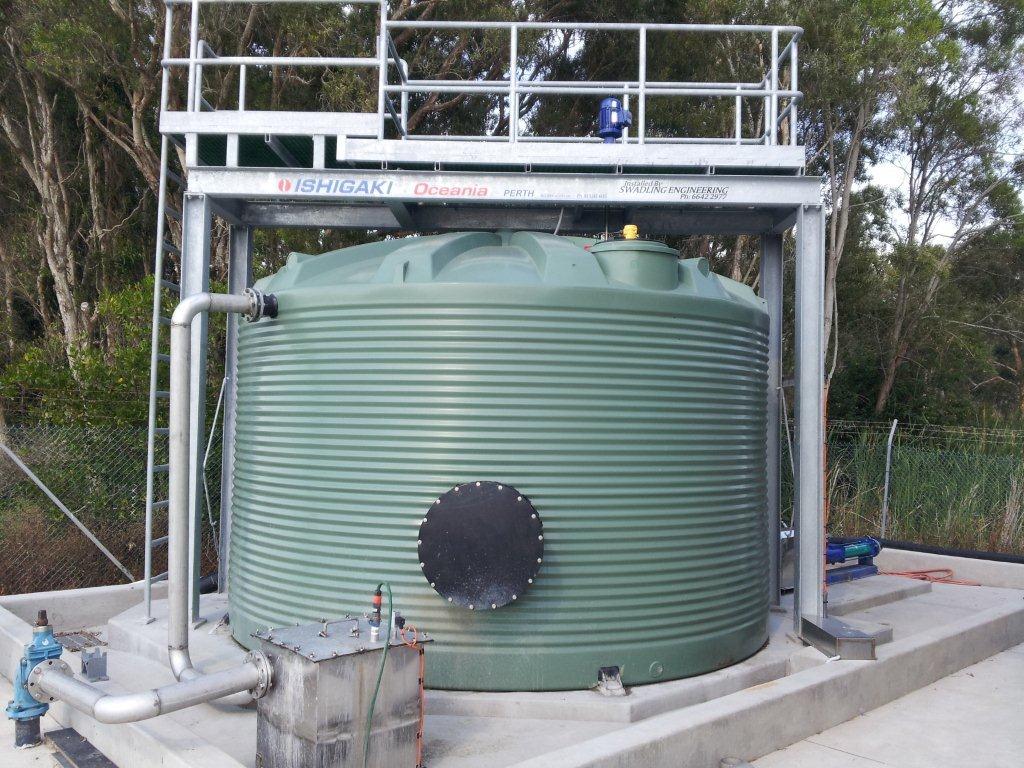
Odour control chemicals including magnesium hydroxide, ferrous and ferric chloride and calcium nitrate require tanks manufactured from compatible materials. Polyethylene is well suited to these applications because it does not corrode on contact and needs no lining, coating or cathodic protection over its service life.
Bunding and Containment
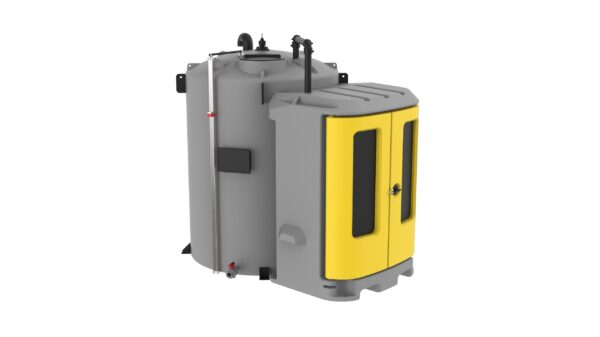
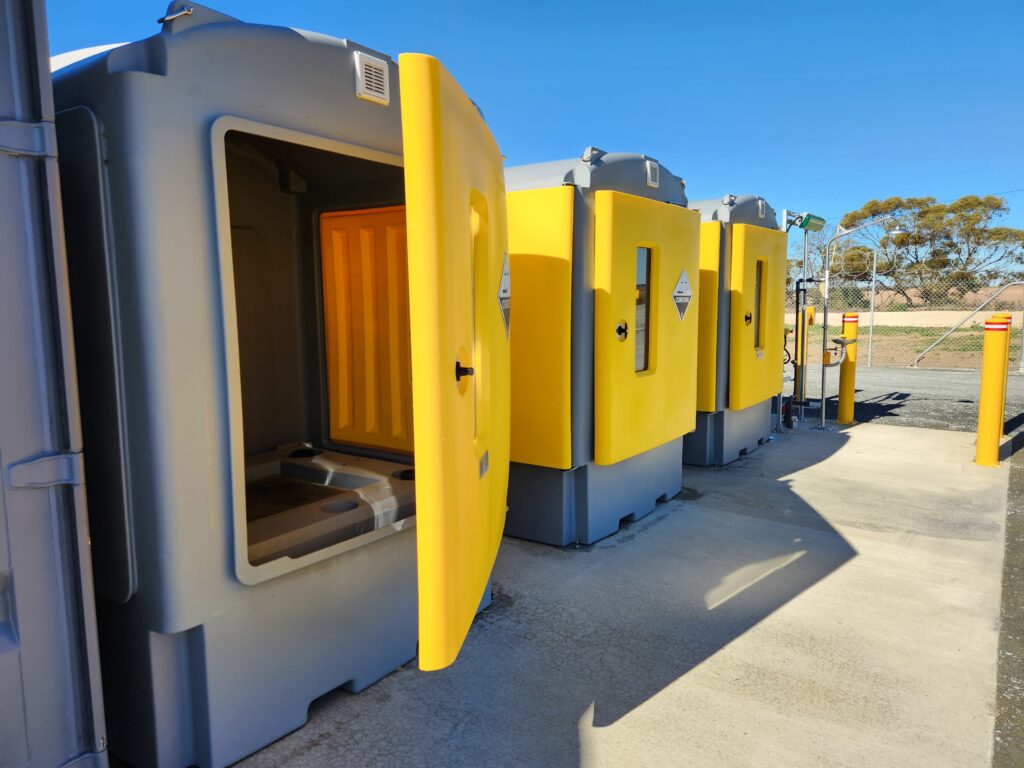
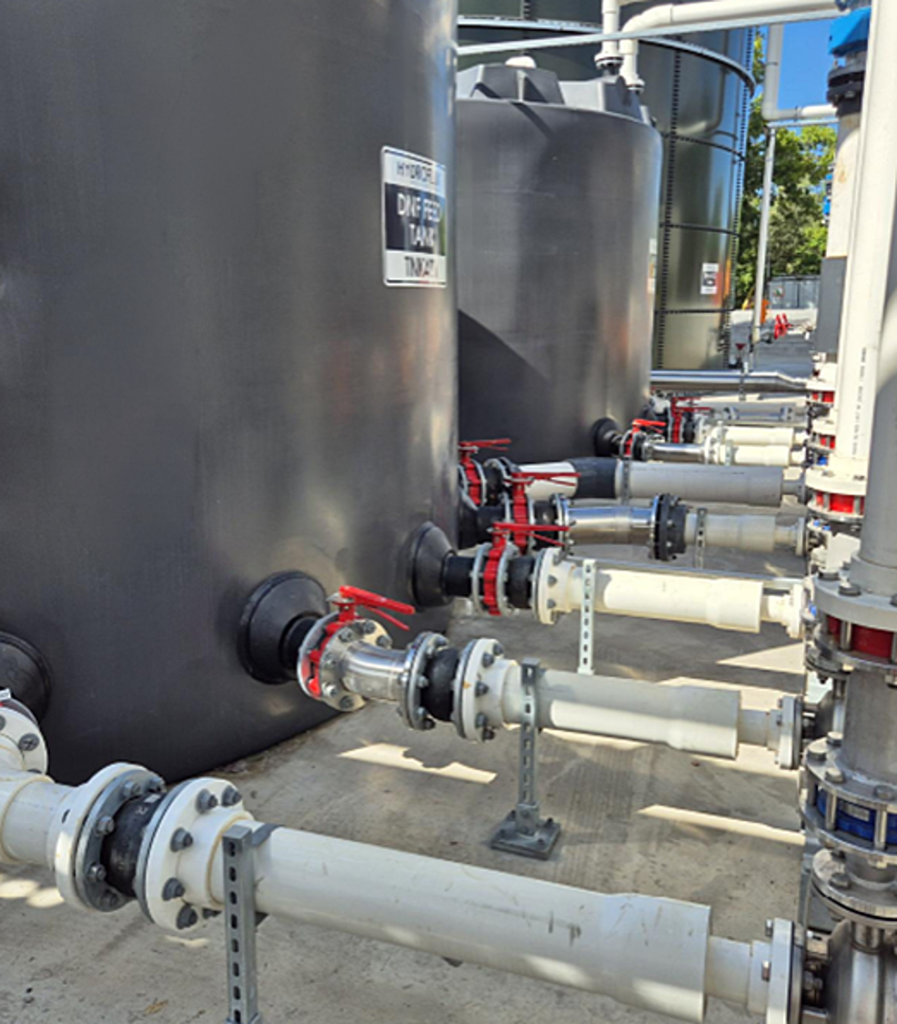
Secondary containment is required under Australian standards for chemicals used in odour control dosing systems. Bunded tank systems and IBC containment protect against spills and leaks without the cost and footprint of a traditional concrete bund.
Dosing Cabinet Requirements
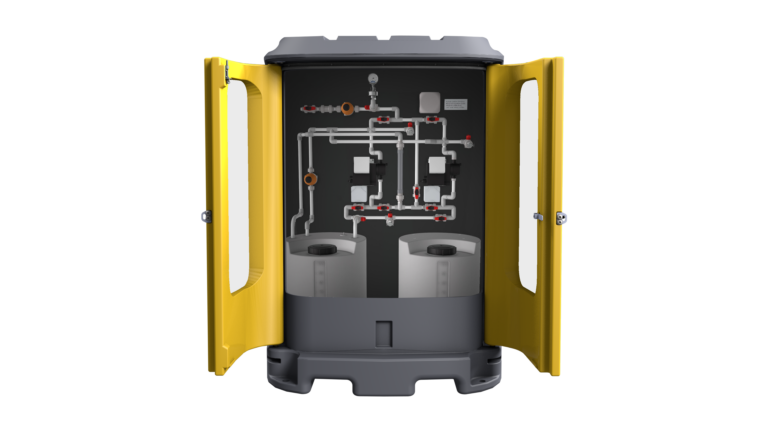
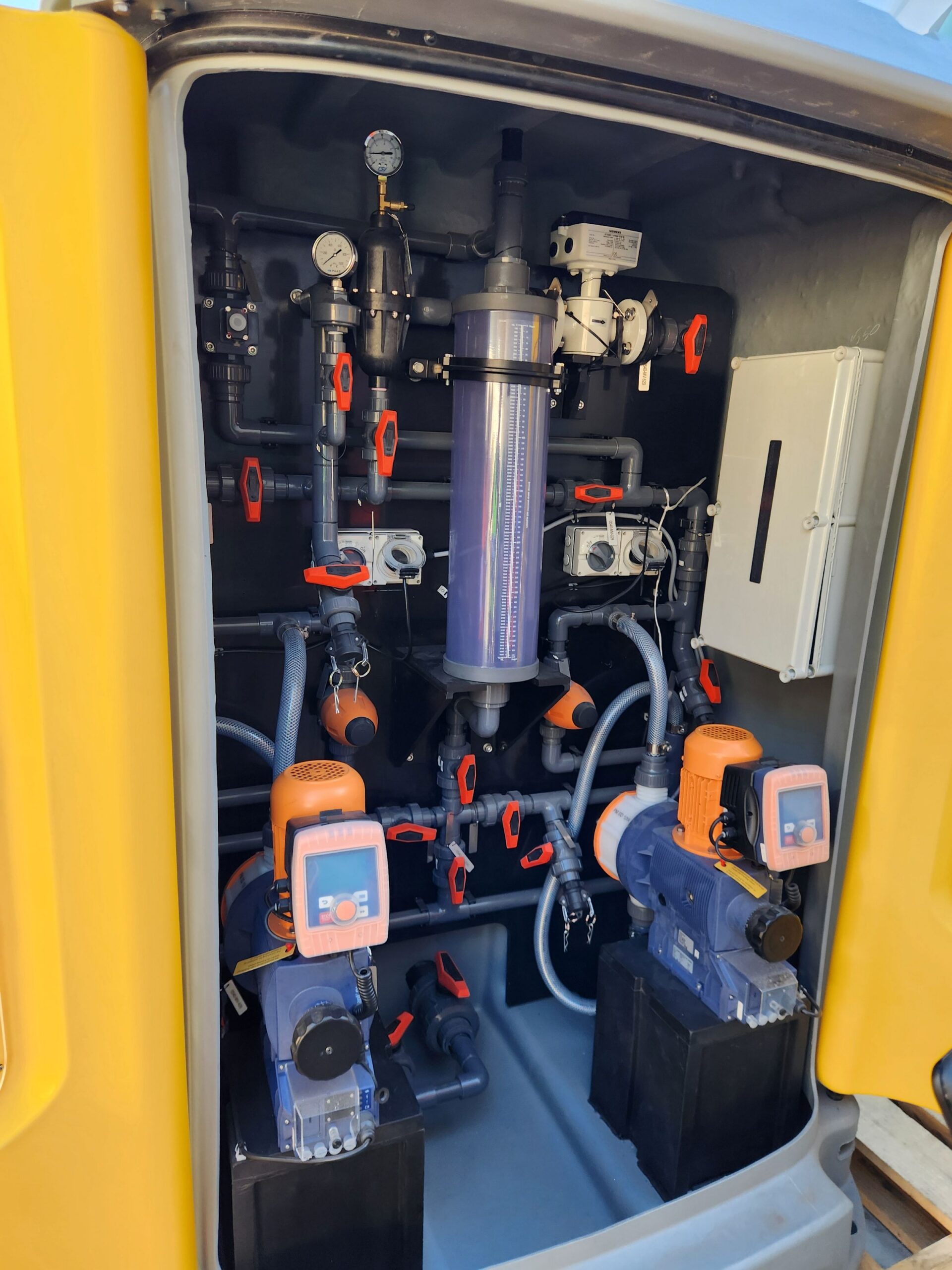
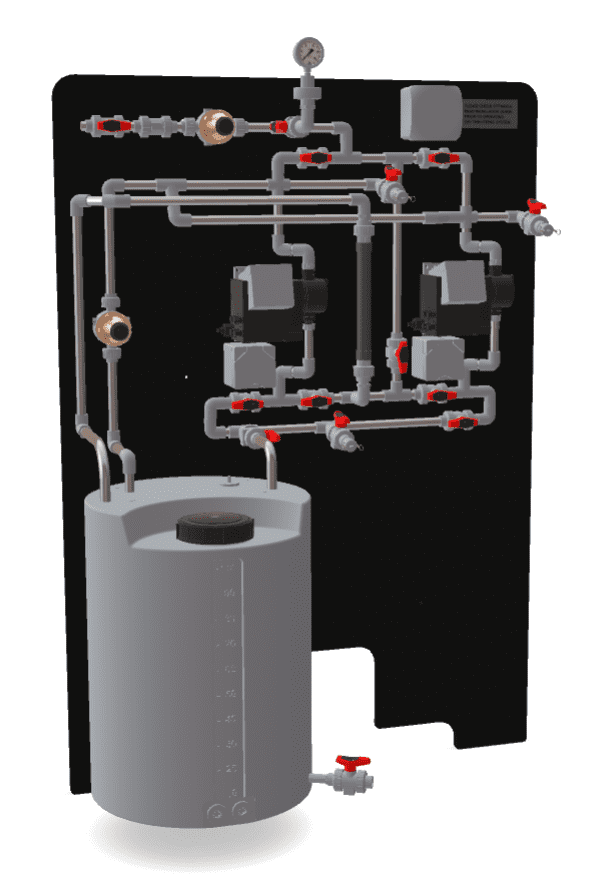
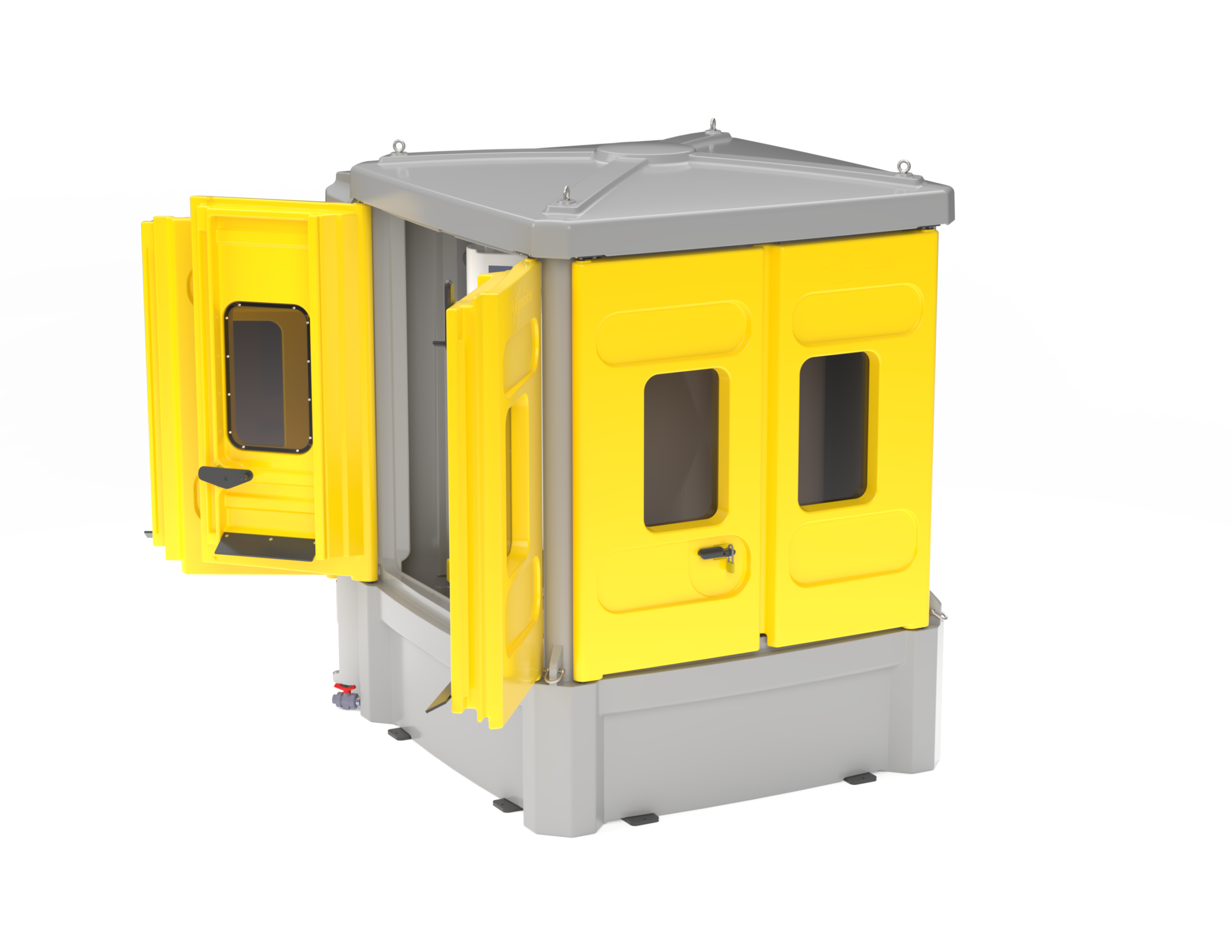
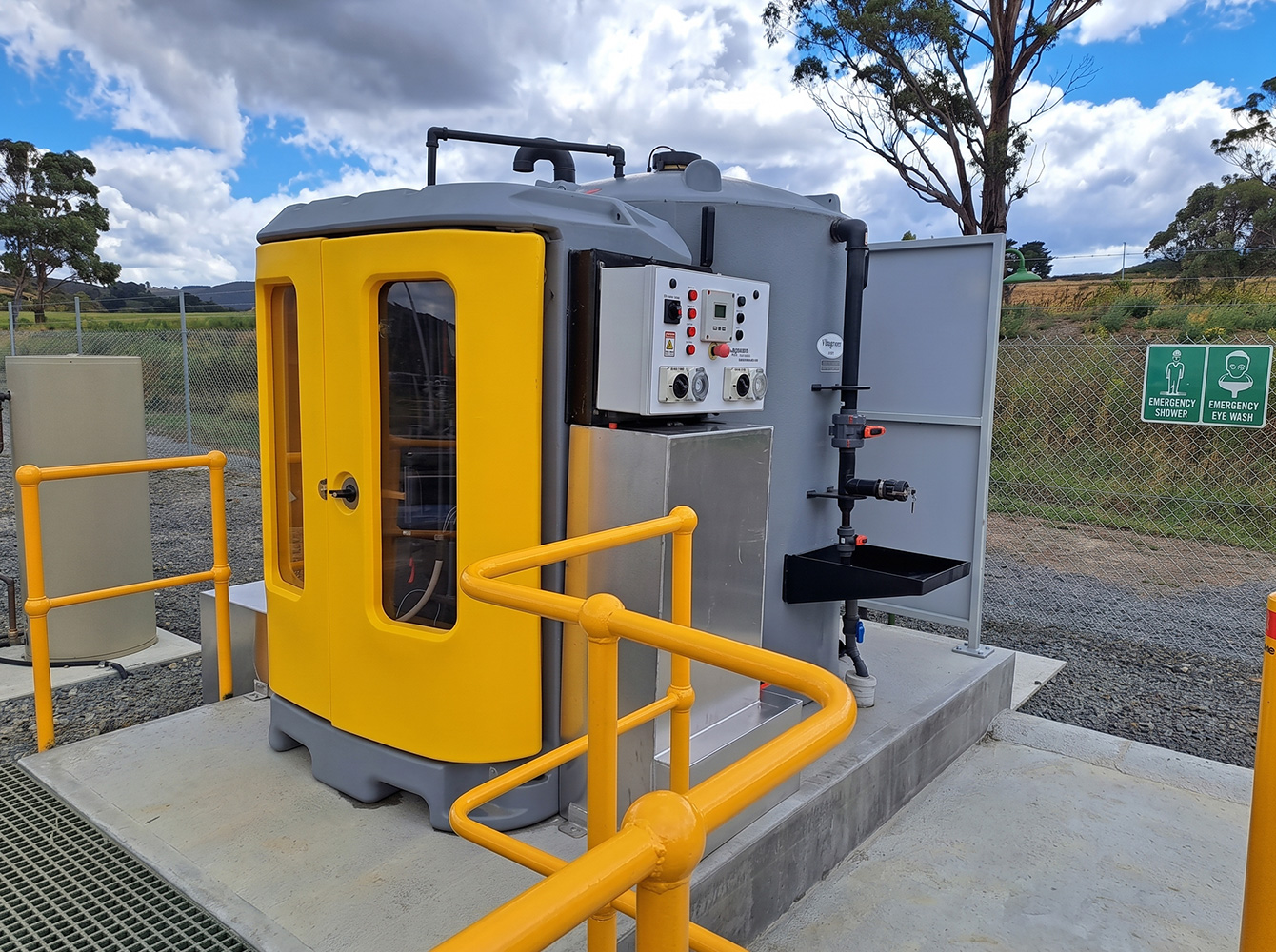
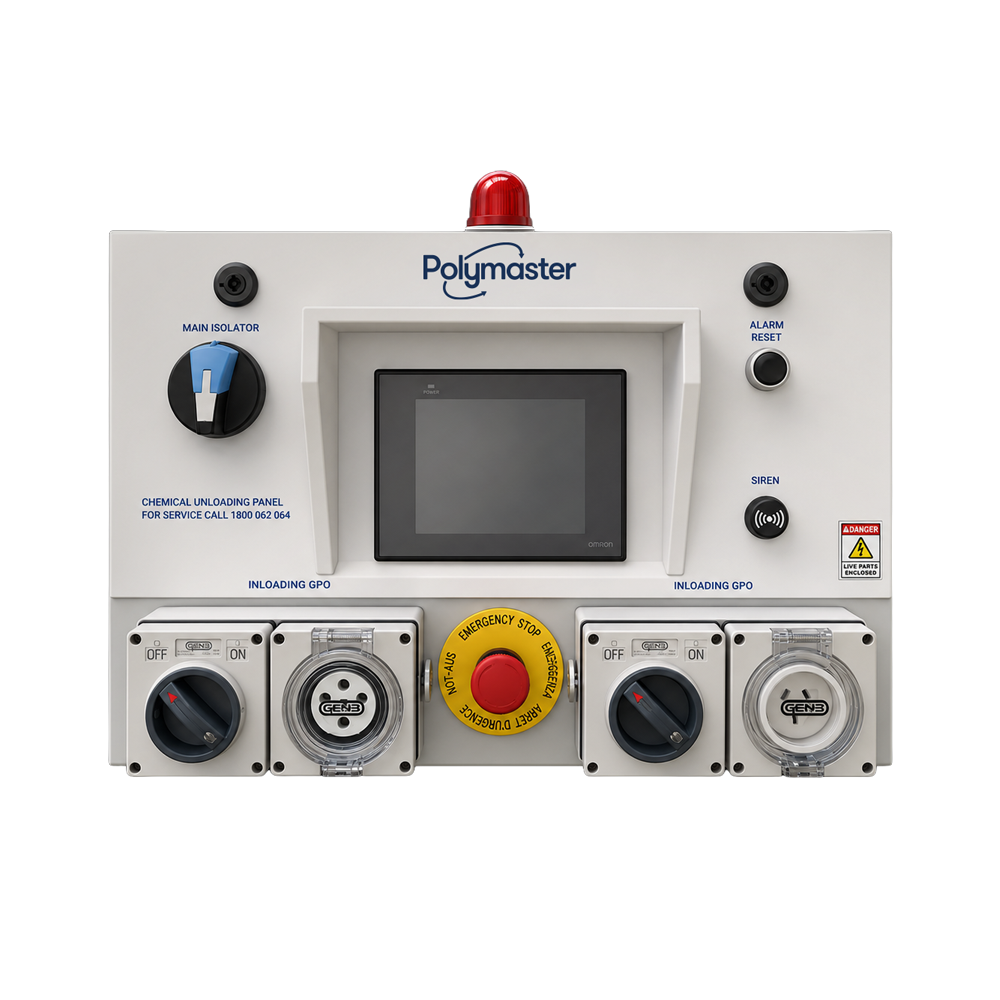
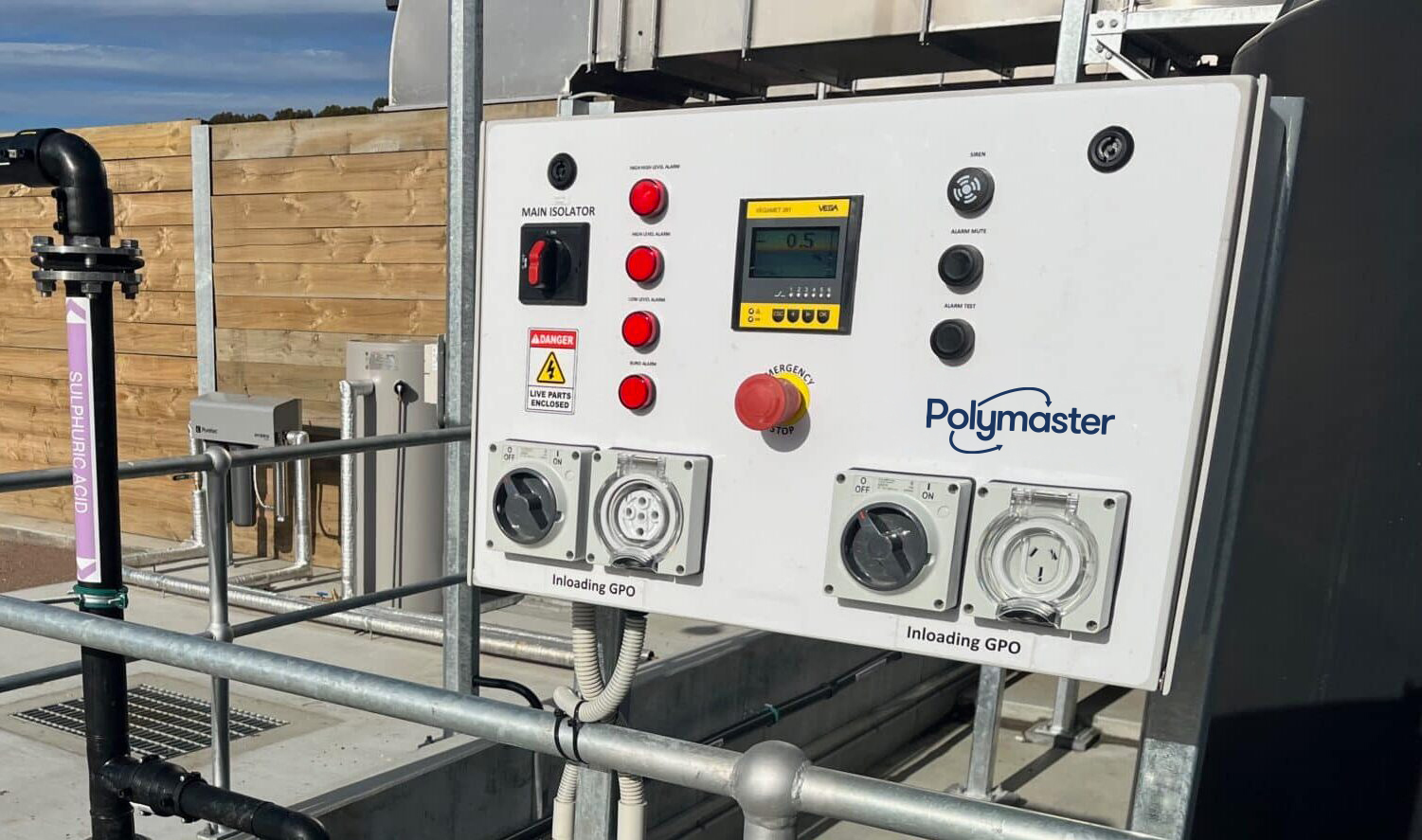
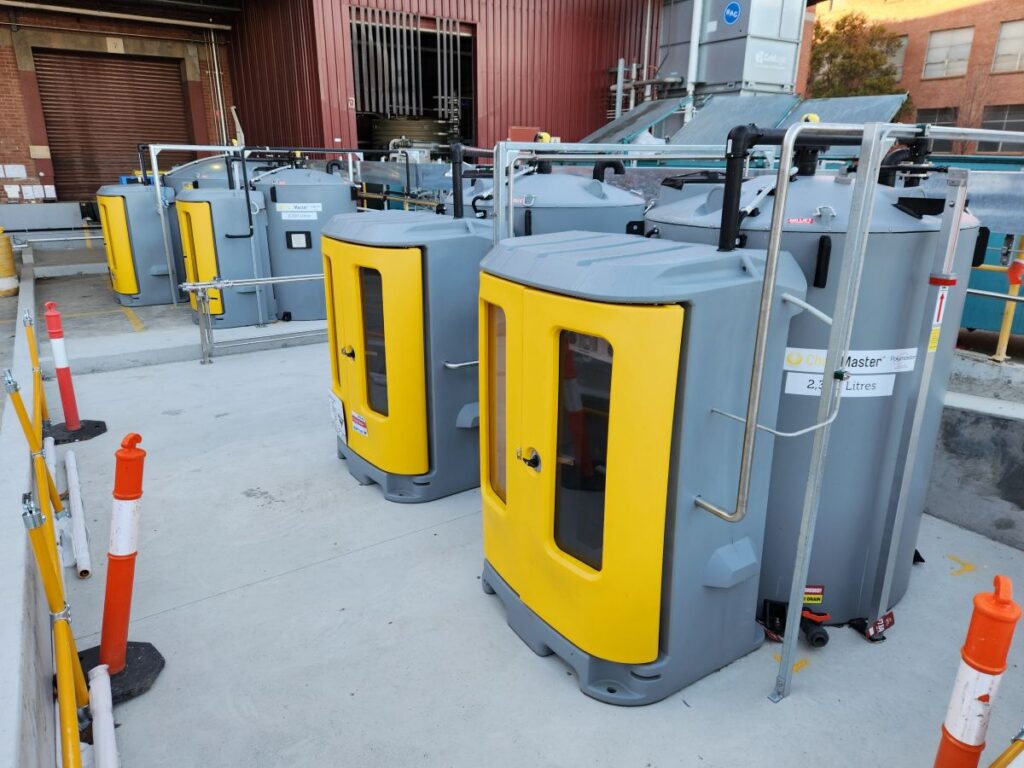
Dosing cabinets house the pumps, pipework and controls, and keep operators clear of chemical exposure during normal operation and maintenance. Corrosion-resistant construction is essential where the cabinet shares an enclosure with the chemical.
Australian Standards Compliance
Chemical storage for odour control applications must meet the relevant Australian standards, including AS 3780:2023 for the storage and handling of dangerous goods.
Why Polyethylene for Odour Control Chemical Storage
Chemical storage in this sector is supplied in several different materials, and each has its place. These are the reasons polyethylene is specified for odour control dosing installations.
One-Piece Construction
Polymaster tanks are rotationally moulded as a single piece. There are no welds, seams or joints in the tank wall, which removes the points where a chemical storage vessel is most likely to fail over time.
Non-Corrosive Throughout
Polyethylene does not corrode on contact with the chemicals used in odour control dosing. It requires no internal lining or protective coating, so there is no coating system to inspect, maintain or eventually recoat.
Relocatable and Fast to Install
A poly tank and bund arrives as a complete unit, tested and fitted out before it reaches site. It can be positioned without a traditional concrete bund and relocated later if the installation moves.
Polymaster Products for Odour Control Applications
Chemical Storage Tanks
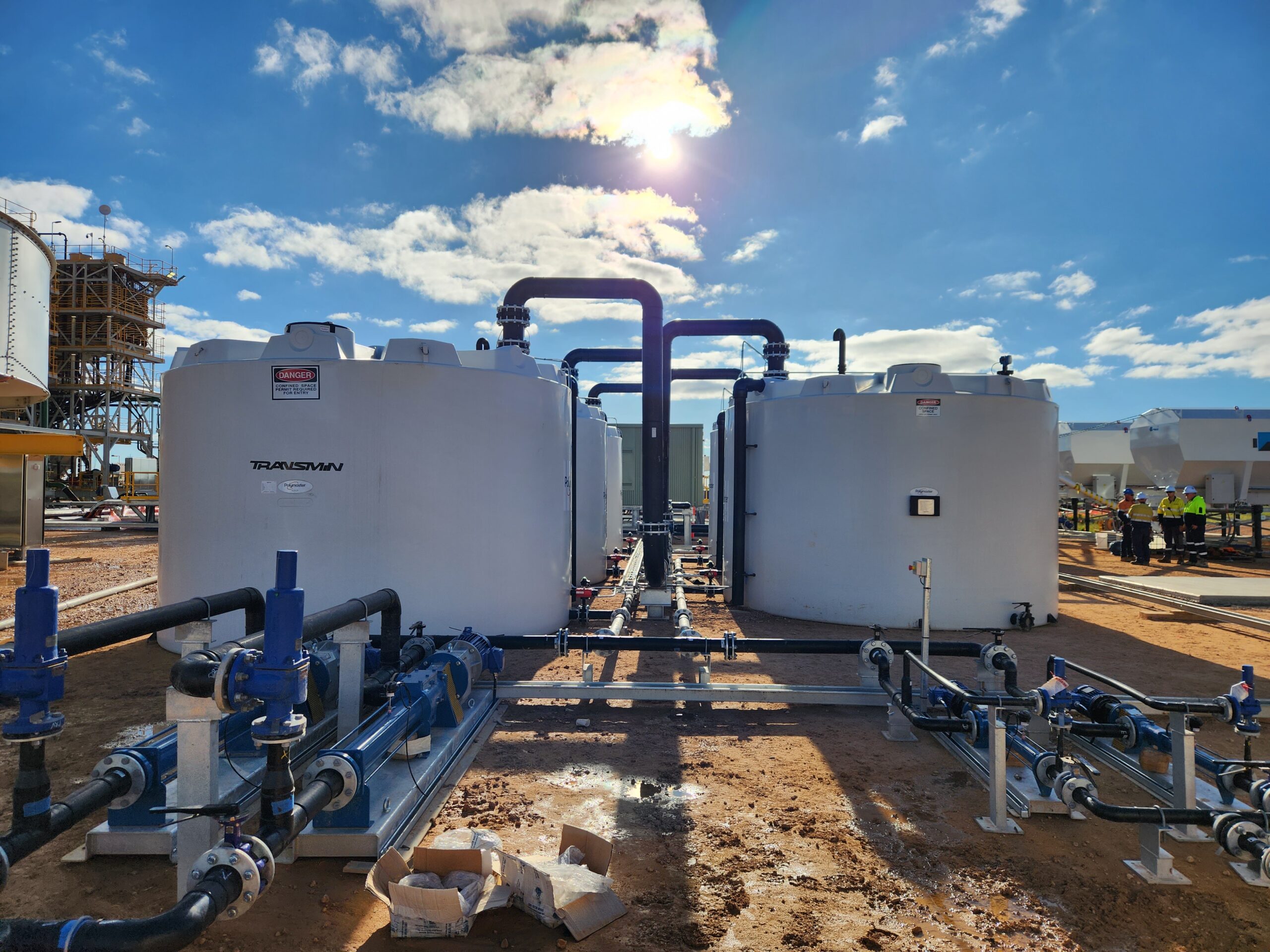
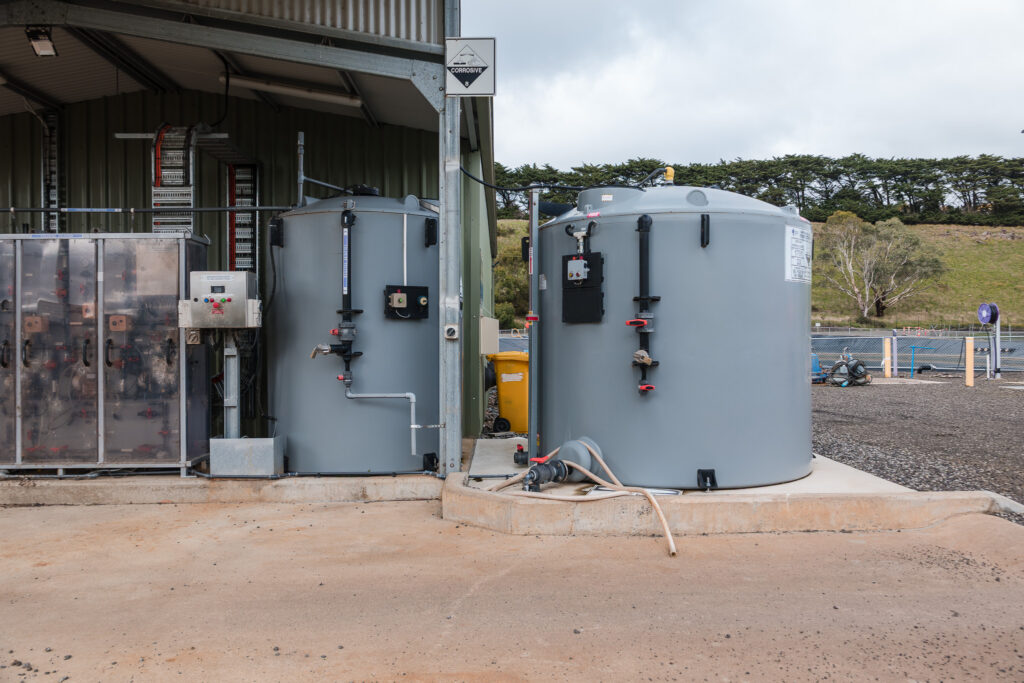
Purpose-built poly tanks for storing magnesium hydroxide, iron salts, calcium nitrate and other odour control chemicals.
View Product
Chemical Dosing Cabinets
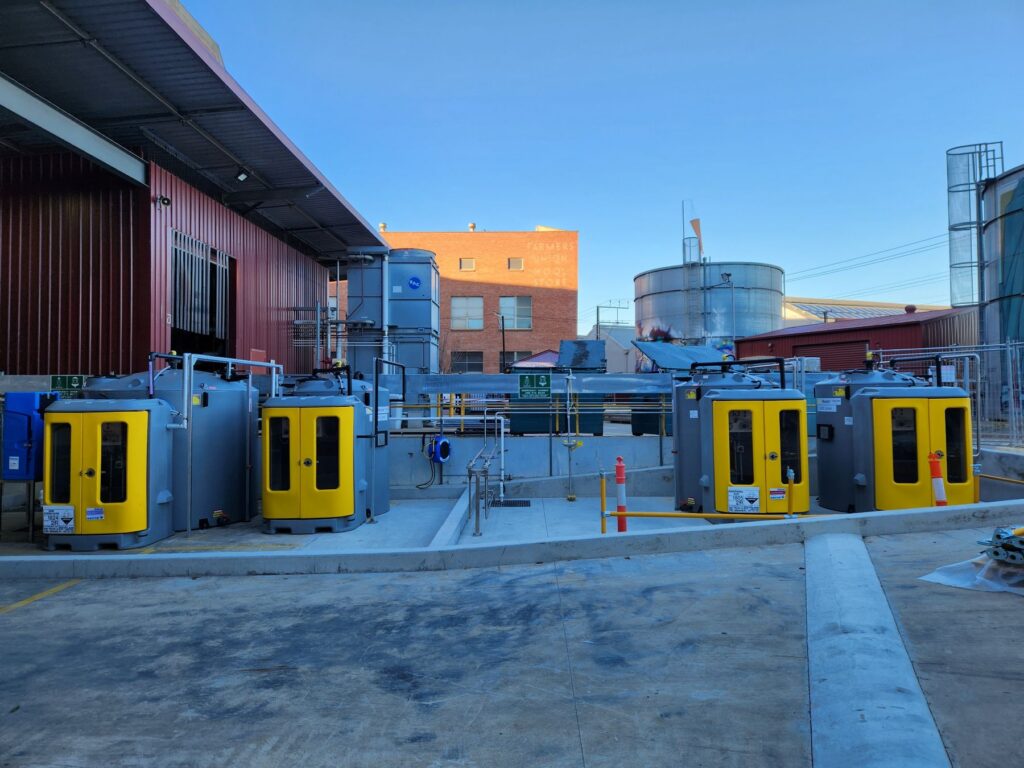
Corrosion-resistant cabinets housing dosing pumps, pipework and controls for safe, contained chemical dosing.
View Product
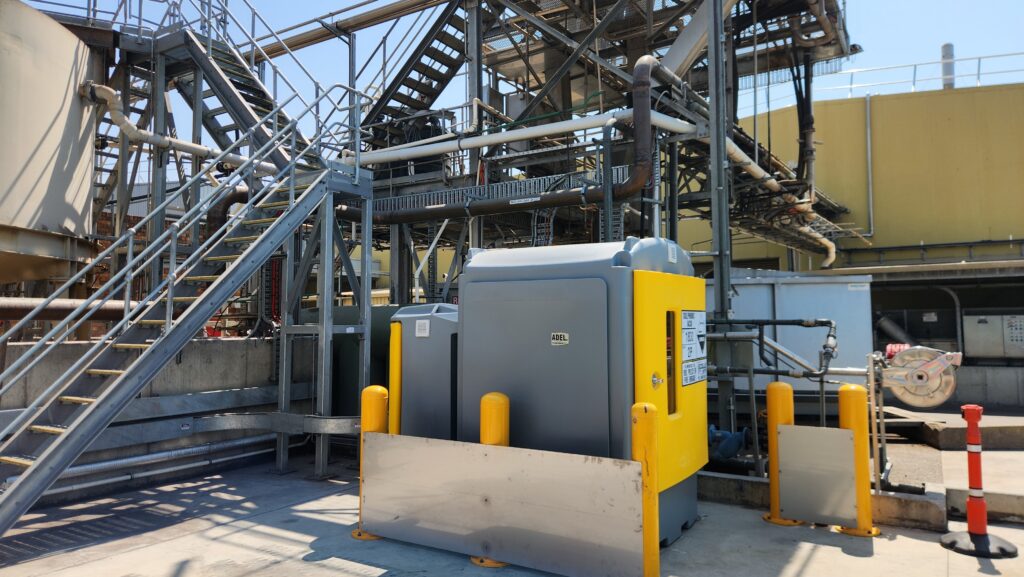
IBC Bund Systems
Secondary containment for IBC chemical storage, with provision for an integrated dosing system inside the lockable cabinet.
View Product
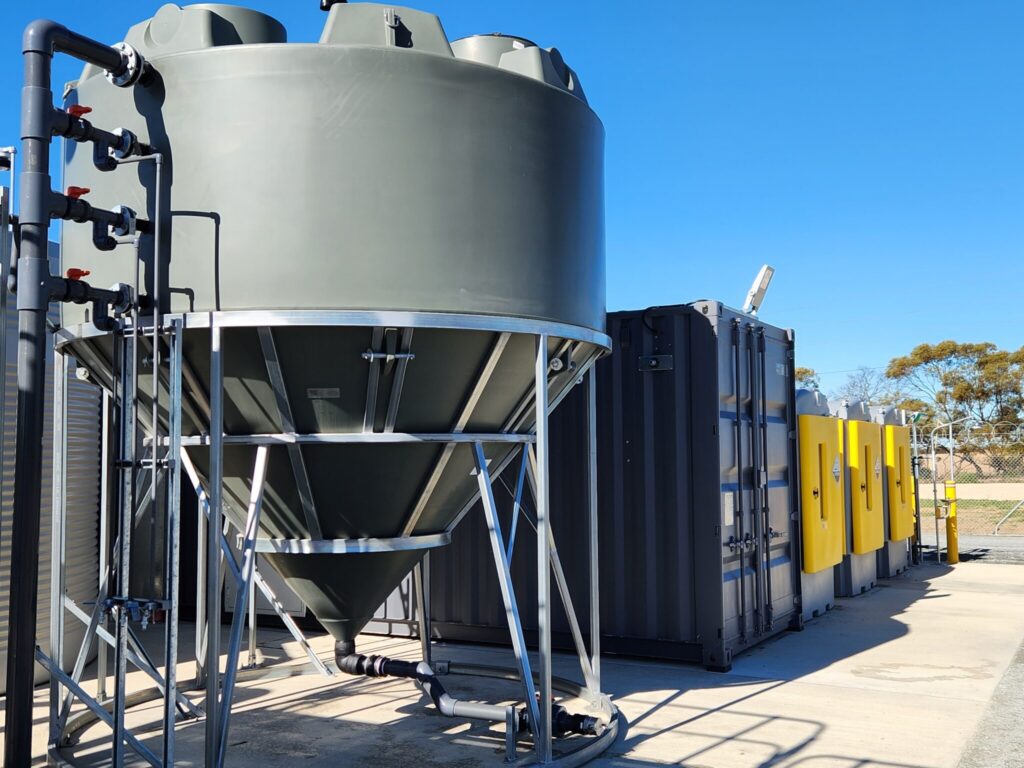
Cone Bottom Tanks
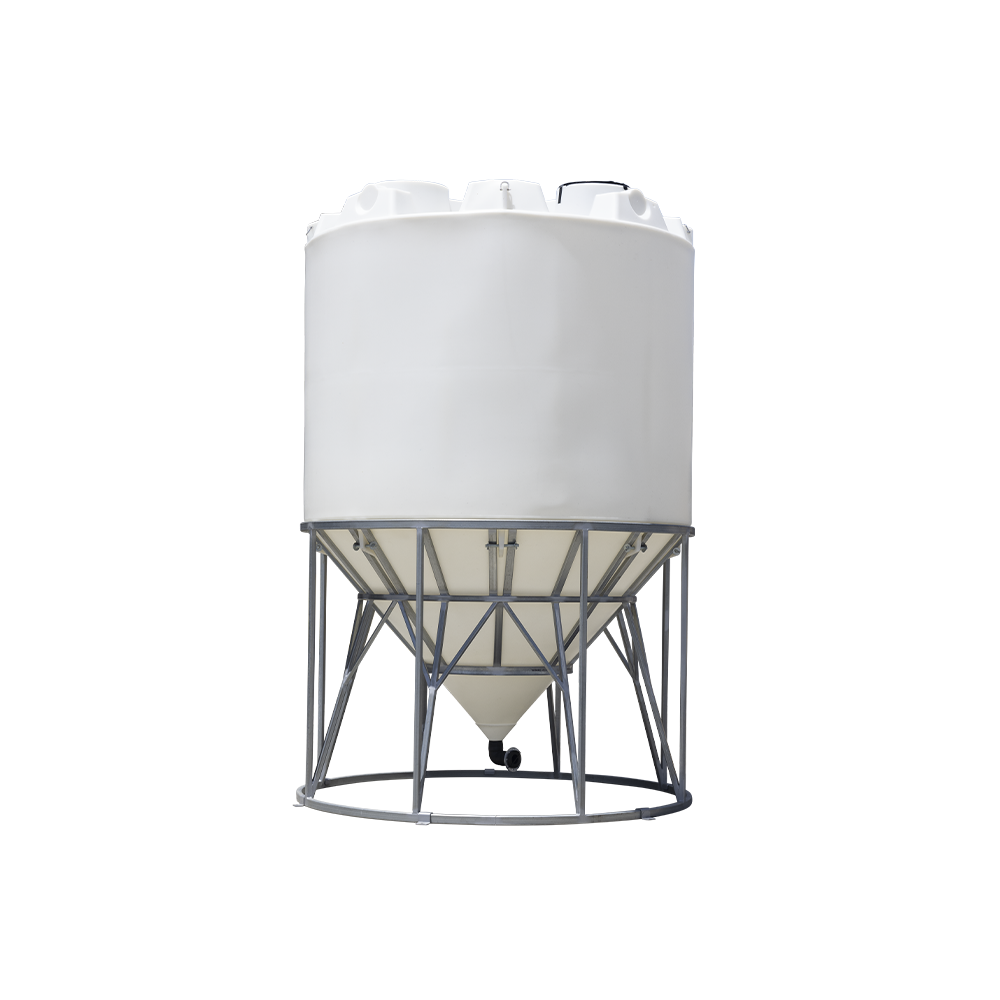
For applications requiring full drainage of odour control chemicals between dosing cycles.
View Product
How Polymaster Supports Odour Control Projects
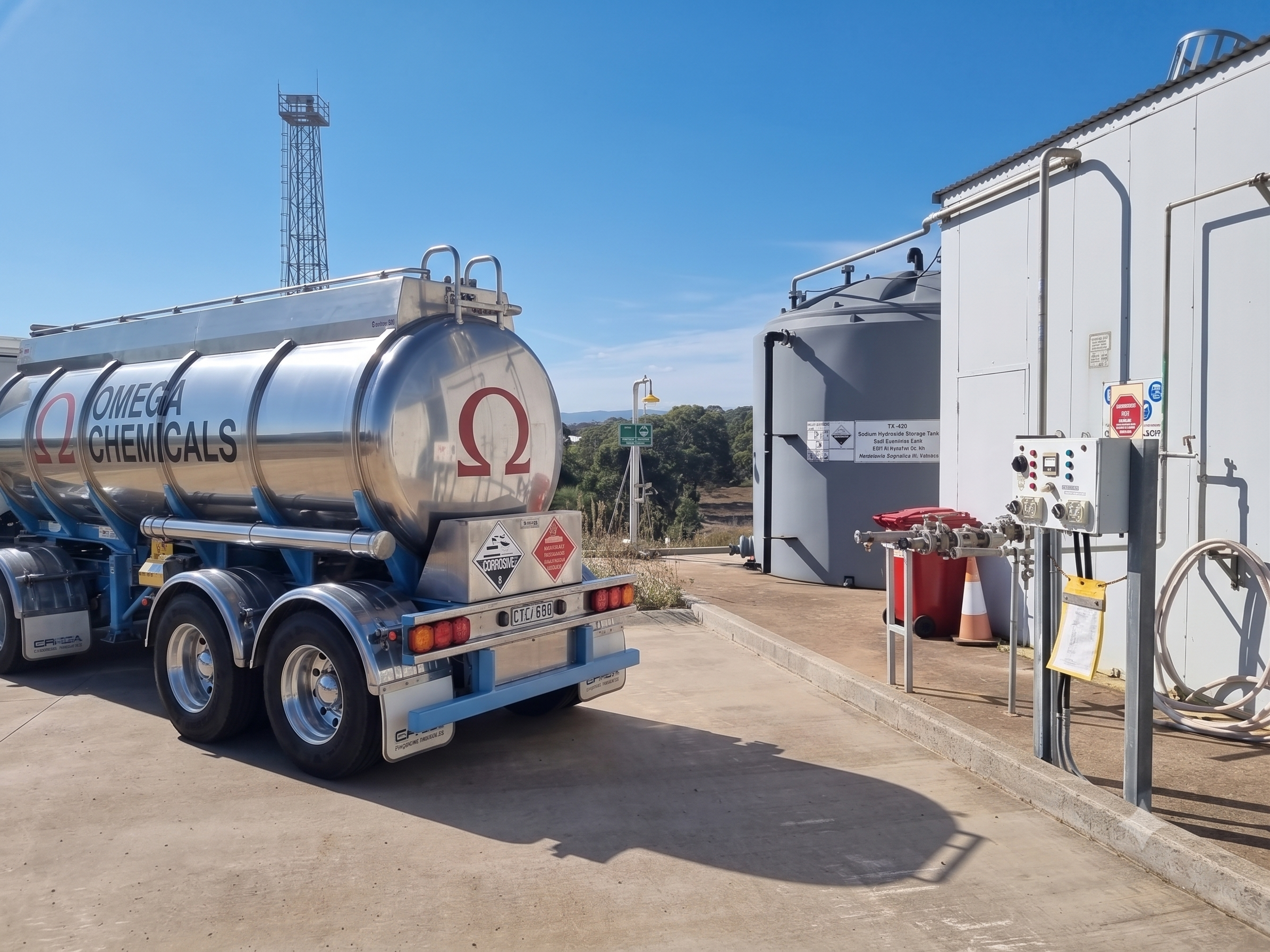
Polymaster is regularly engaged on odour control projects to supply the chemical storage and containment infrastructure that makes dosing possible. Our role is storage and containment, working alongside the engineers, contractors and operators who design and commission the dosing system itself.
Polymaster poly tanks are chemically compatible with the most common odour control chemicals, including magnesium hydroxide, iron salts and calcium nitrate. Every product is Australian made, independently certified, and backed by more than 30 years of experience in chemical storage and liquid management.

Providing Australian Industries with Chemical Storage Solutions for Over 30 Years
Polymaster chemical storage tanks are Australian made, independently certified to AS/NZS 4766:2020 and AS/NZS 4020, and trusted by water utilities, industrial operators and civil contractors across Australia.
FAQs
Frequently Asked Questions
What chemicals are commonly used in odour control dosing systems?
Magnesium hydroxide, iron salts such as ferrous chloride, and calcium nitrate are the most widely used. Each works differently on the compounds causing the odour, and each has its own storage and handling requirements. Your dosing system designer will specify which suits the waste stream.
What type of tank is best for storing odour control chemicals?
Polyethylene is the preferred material for these chemicals because it does not corrode on contact and does not require lining or coating. Tank selection then comes down to volume, whether secondary containment is integrated or separate, and whether the application needs full drainage between dosing cycles.
What technologies are used in odour control systems?
Chemical neutralisation, biological treatment, adsorption using activated carbon, oxidation, ventilation and physical containment are all in use. Chemical dosing is the most common approach in wastewater and industrial applications because it treats the odour at the source rather than after it has dispersed.
What bunding and containment is required for odour control chemical storage?
Secondary containment is required, and bund capacity must meet AS 3780:2023. Polymaster self-bunded tanks and enclosed IBC bunds provide 110% bund capacity in a single unit, which removes the need for a separate concrete bund structure.
How do communities manage odour complaints from industrial facilities?
Complaints are typically directed to the operator and to the relevant state environment protection authority, which can investigate and set conditions on the site. Operators generally respond by identifying the source, then treating it, which is where chemical dosing systems are commonly introduced.
What is hydrogen sulphide and why does it matter in wastewater?
Hydrogen sulphide is the gas produced when organic matter decomposes without oxygen, and it is responsible for the characteristic rotten egg smell around sewers and treatment plants. It is also corrosive, so it attacks concrete structures, pipework and mechanical assets. Controlling it protects both the surrounding community and the network itself.
Where in a wastewater network is chemical dosing normally installed?
Most commonly at sewer pump stations, at the head of rising mains, and upstream of treatment plant inlet works. The dosing point is placed ahead of where the odour becomes a problem, so the chemical has contact time with the waste stream before the gas is released.
What Australian regulations apply to odour control?
Odour is regulated at state level through environment protection authorities, and requirements vary between jurisdictions. Separately, the storage and handling of the chemicals used in dosing systems falls under Australian standards including AS 3780:2023 for dangerous goods.
What preventive measures reduce odour generation at industrial sites?
Covering and containing odour sources, maintaining adequate ventilation, reducing the retention time of organic material, and dosing chemicals before decomposition all reduce odour generation. Prevention at the source is consistently more effective than treating the air afterwards.
Why choose polyethylene over fibreglass for chemical storage?
Both materials are used in this sector. Polyethylene is rotationally moulded as one piece with no welds or seams in the tank wall, does not corrode on contact with odour control chemicals, and needs no internal lining or protective coating to maintain over its service life. It also arrives as a complete, tested unit that can be relocated if the installation moves.