


Home Chemical & Industrial Chemical Storage Tanks Application Disinfection
Chemical Storage for Disinfection Applications
Disinfection by chemical dosing is one of the most critical processes in water treatment, industrial processing and municipal infrastructure. The dosing system only performs if sodium hypochlorite behind it has been stored properly, because sodium hypochlorite loses strength in the tank long before it reaches the injection point.
Polymaster supplies the chemical storage tanks, self-bunded containment systems and dosing solutions used to store and dose sodium hypochlorite and other disinfection chemicals safely across Australia.
What is Chemical Disinfection?
Chemical disinfection is the process of eliminating harmful microorganisms, including bacteria, viruses and parasites, from water, surfaces and industrial equipment using chemical agents.
Sodium hypochlorite (NaOCl) is the most widely used disinfection chemical in Australia, applied across drinking water treatment, wastewater management, food processing, pool treatment and industrial applications. When sodium hypochlorite is added to water, it initiates chlorination, producing hypochlorous acid, which is the active disinfecting agent.
- Eliminates harmful microorganisms in drinking water and wastewater.
- Prevents bacterial growth in distribution systems and storage vessels.
- Used in food and beverage processing to meet hygiene and regulatory requirements.
- Applied in industrial cooling towers, pool treatment and municipal infrastructure.
Where is Chemical Disinfection Used?
Drinking Water Treatment
Sodium hypochlorite is dosed into water treatment plants to purify and disinfect drinking water in accordance with the Australian Drinking Water Guidelines.
Wastewater Treatment
Disinfection chemicals reduce pathogen load in wastewater treatment plants before treated water is discharged.
Food and Beverage Processing
Disinfection chemicals sanitise processing equipment, pipelines and contact surfaces in food and beverage manufacturing.
Cooling Towers
Sodium hypochlorite and chlorine-based chemicals control bacterial growth, including Legionella, in cooling tower water systems.
Pool and Aquatic Facilities
Chlorine-based disinfection chemicals maintain safe bacteriological water quality in pools and aquatic facilities.
Industrial and Municipal Infrastructure
Pump stations, reservoirs and distribution systems require ongoing disinfection dosing to maintain safe water quality.
Chemical Storage Requirements for Sodium Hypochlorite Disinfection Systems
Chemical Grade Polyethylene Required
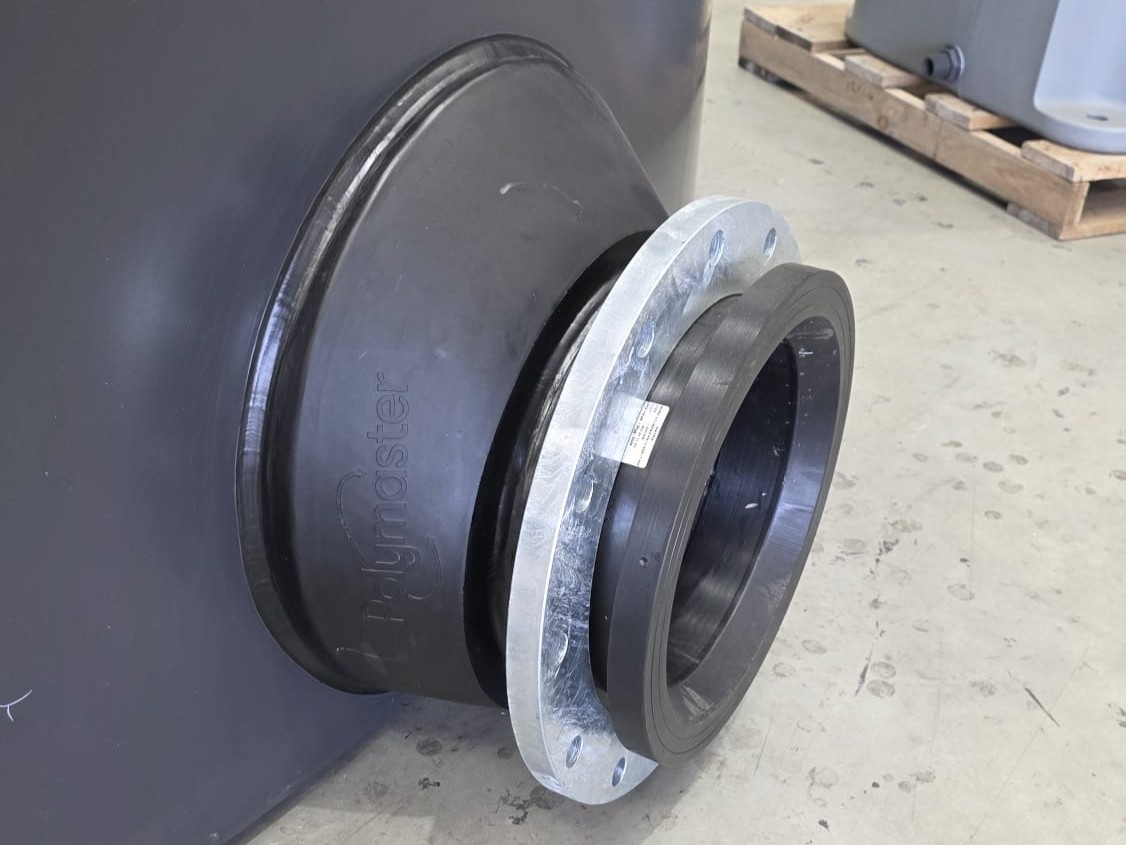
Sodium hypochlorite is a corrosive oxidiser and requires storage built from compatible chemical-grade polyethylene. A standard tank is not suitable. Polymaster manufactures specially formulated PE material options for aggressive chemicals including sodium hypochlorite.
Self-Bunded Containment
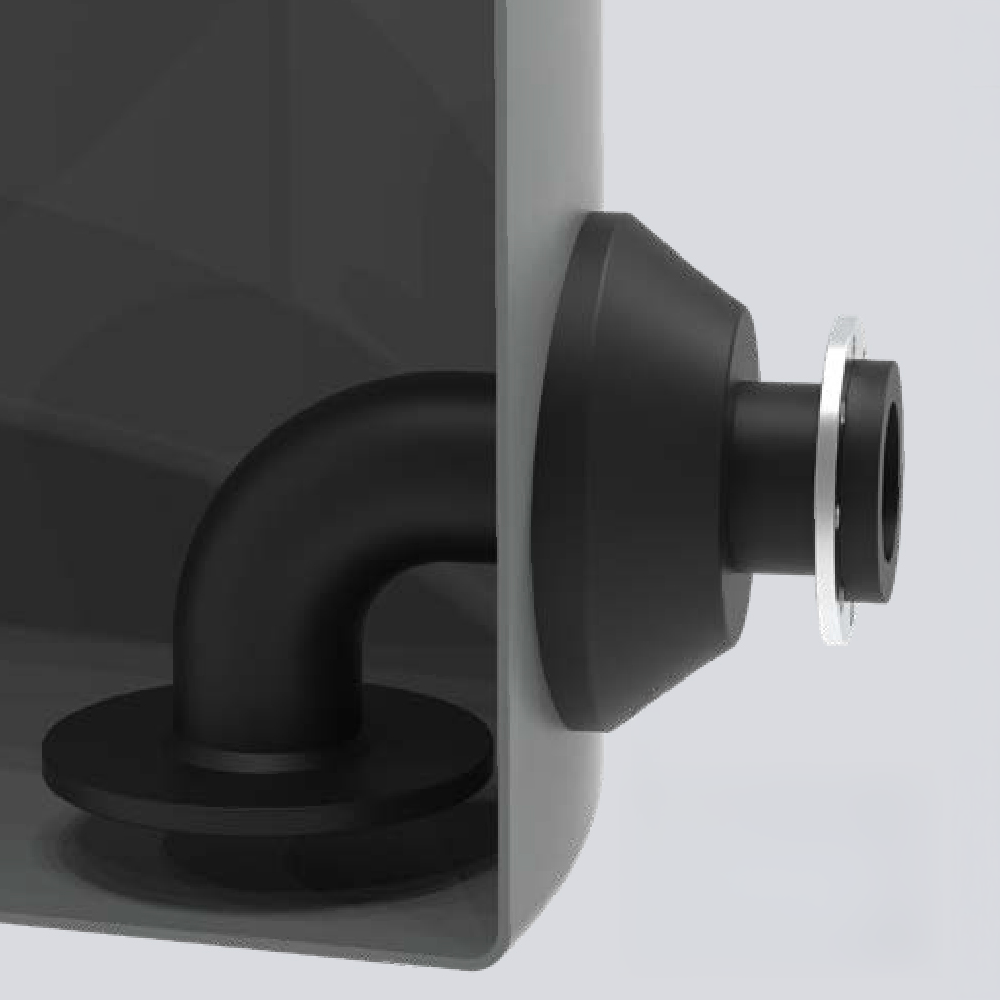
Sodium hypochlorite storage requires secondary containment so a leak cannot reach the environment or personnel. The Polymaster self-bunded range builds the bund into the tank and provides 110% of the internal tank capacity, complying with AS 3780:2023.
Temperature and UV Control
Sodium hypochlorite degrades with heat and UV exposure, losing strength over time. Tanks must be UV stabilised, and the chemical kept cool and shaded to maintain dosing effectiveness. Venting matters as well, since decomposition releases gas.
Segregated Storage
Sodium hypochlorite must be stored away from acids and ammonia, which react with it to produce toxic chlorine gas. Dedicated tanks with correct labelling and hazard warnings are required.
Polymaster Products for Disinfection Chemical Storage
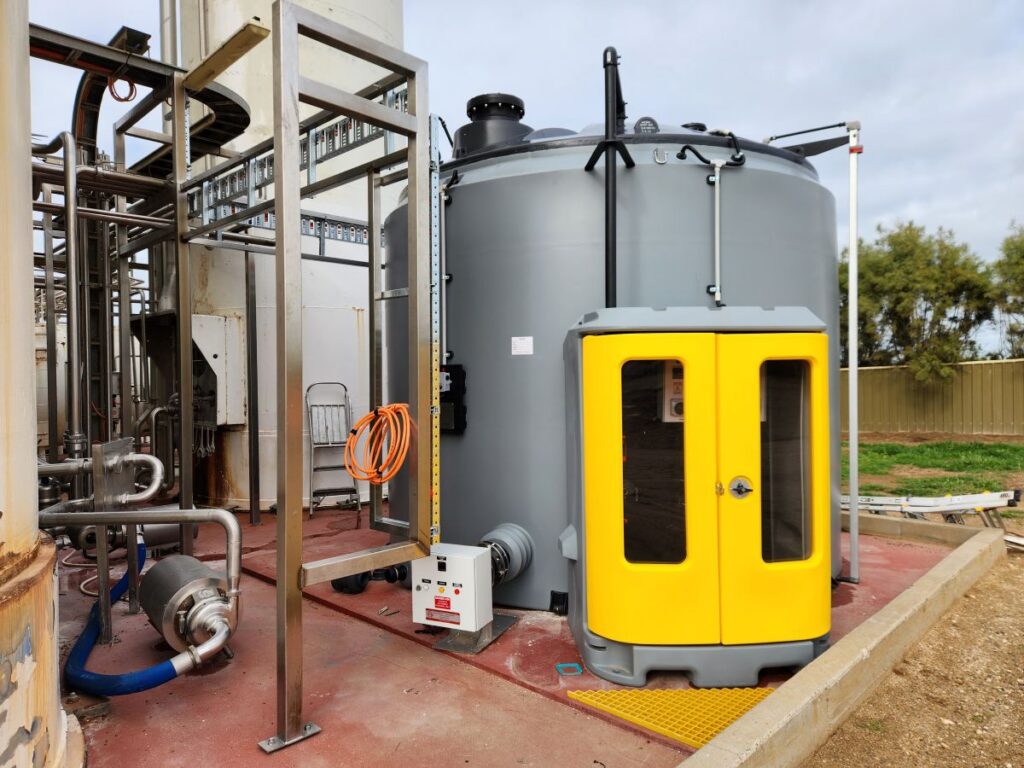
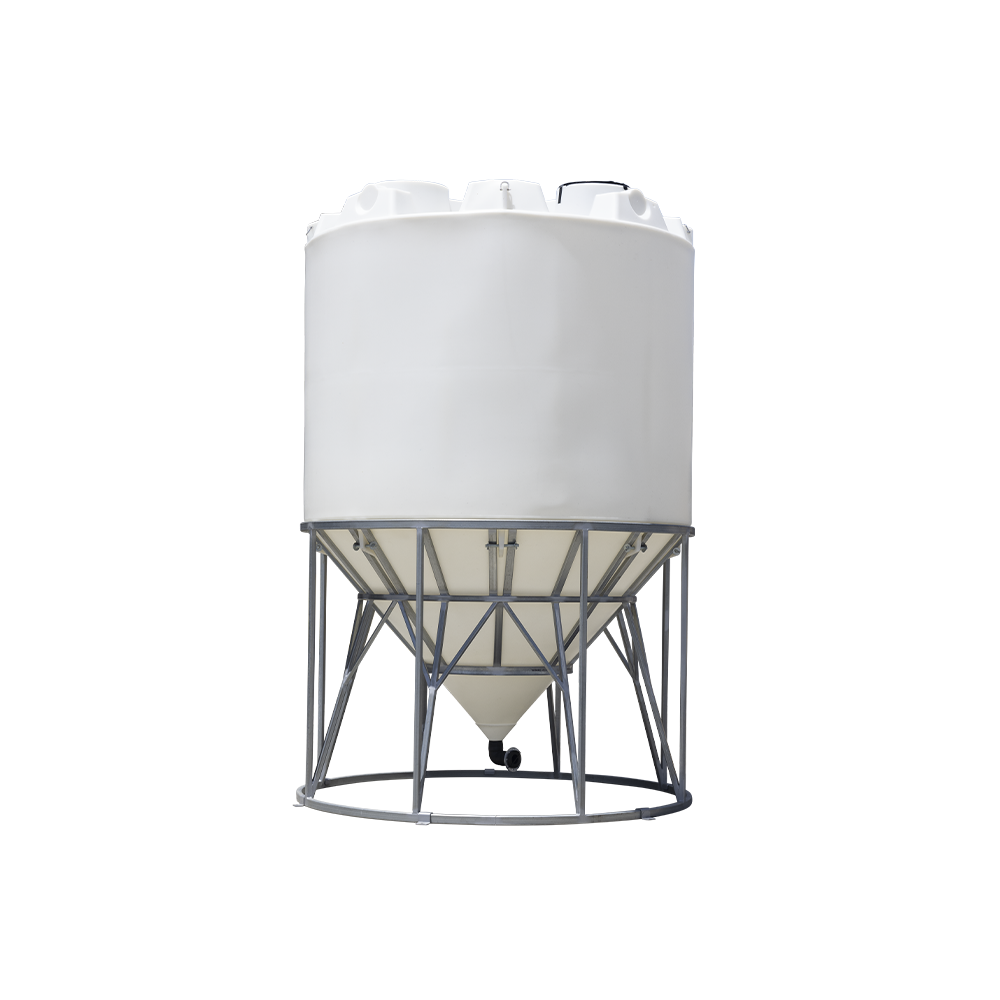
Self-Bunded Chemical Tanks
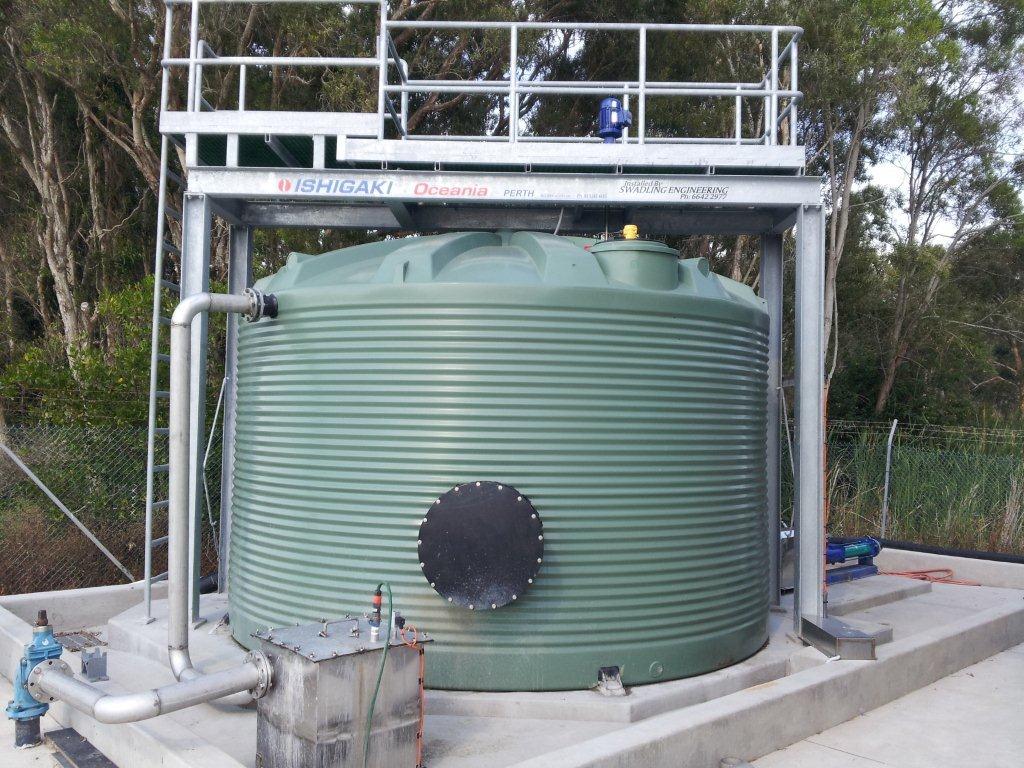
Integrated bund and storage tank from 110L to 30,000L, providing 110% secondary containment for bulk sodium hypochlorite storage.
View Product
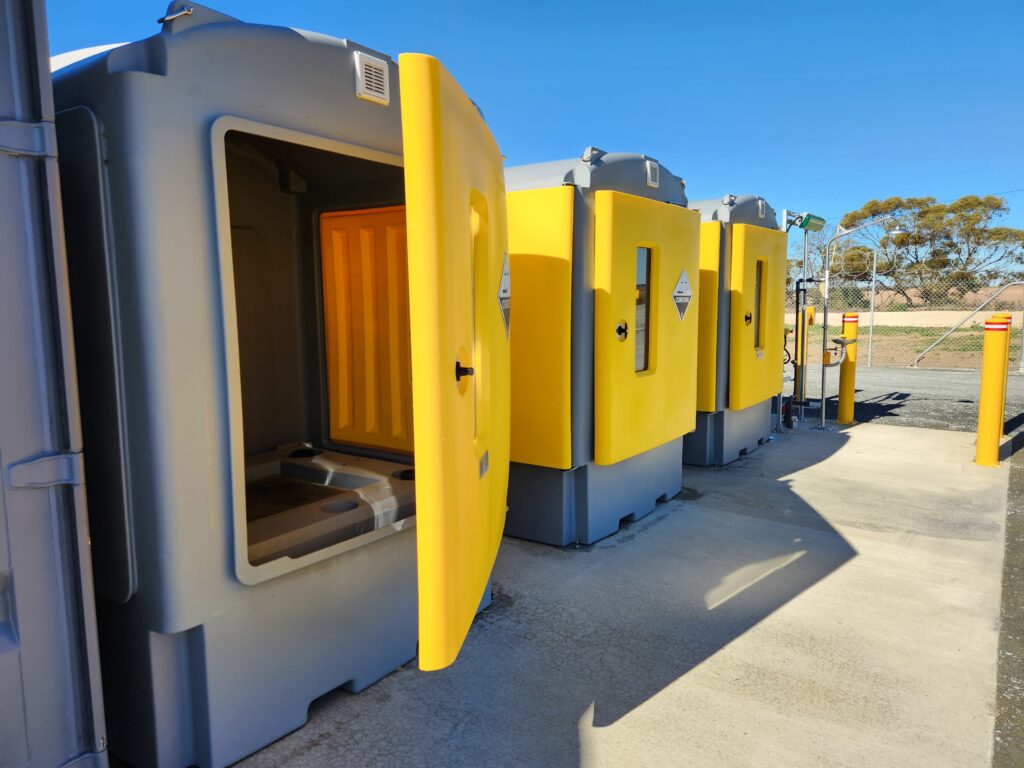
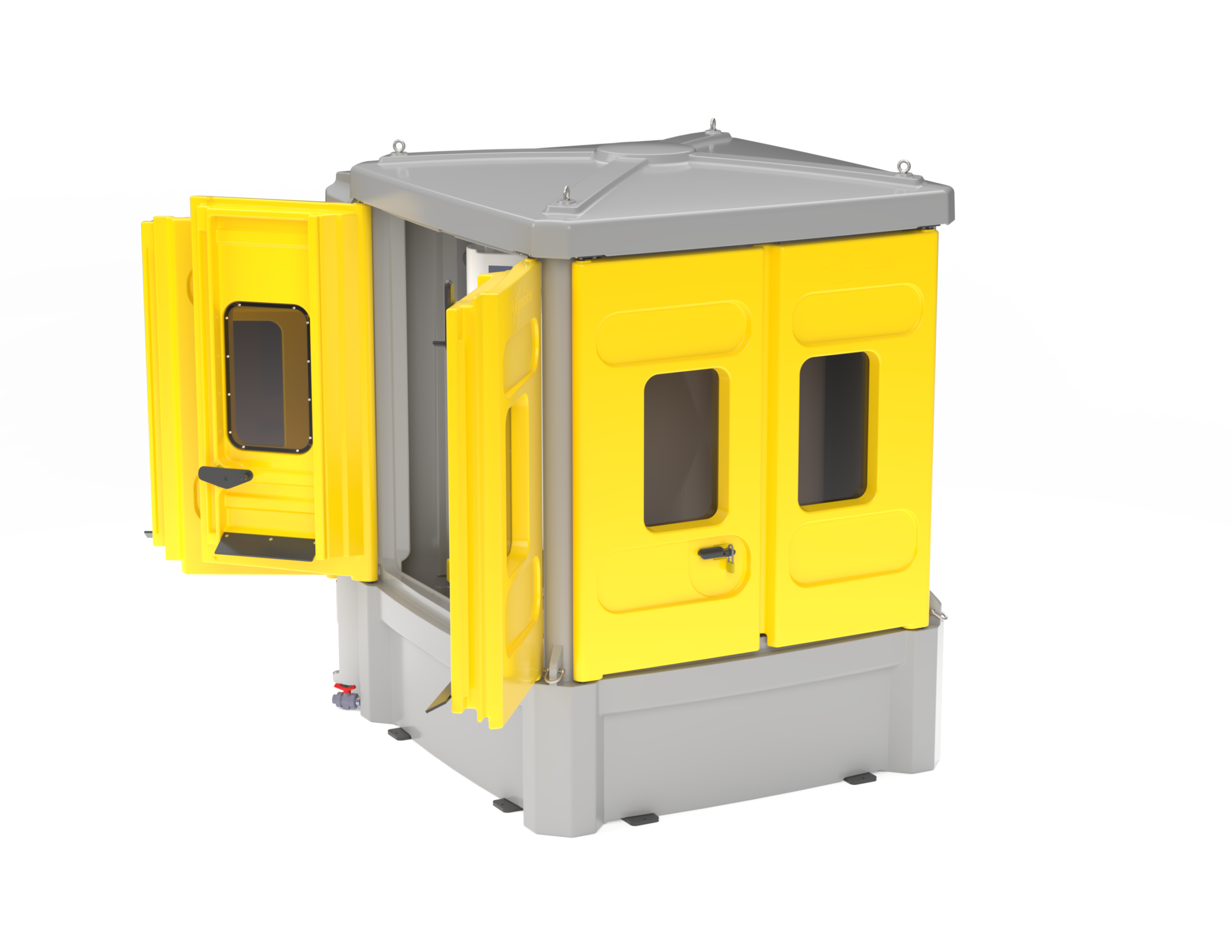
Enclosed IBC Bund
All-weather secondary containment for IBC sodium hypochlorite storage, with forklift access and the option of an integrated dosing system.
View Product
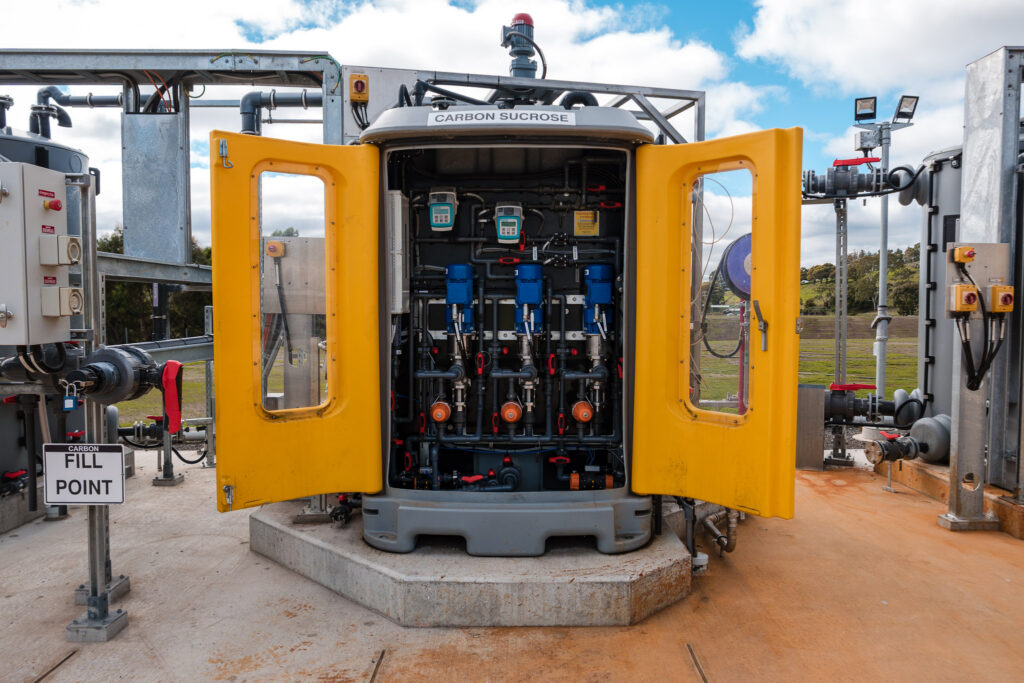
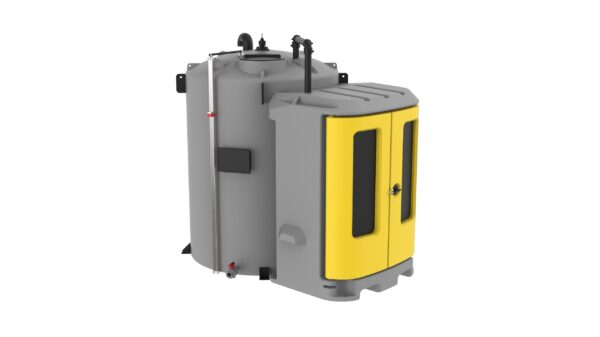
Chemical Dosing Units
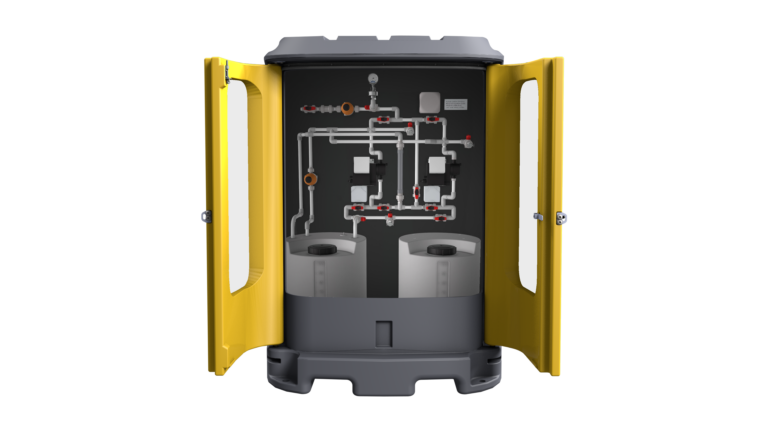
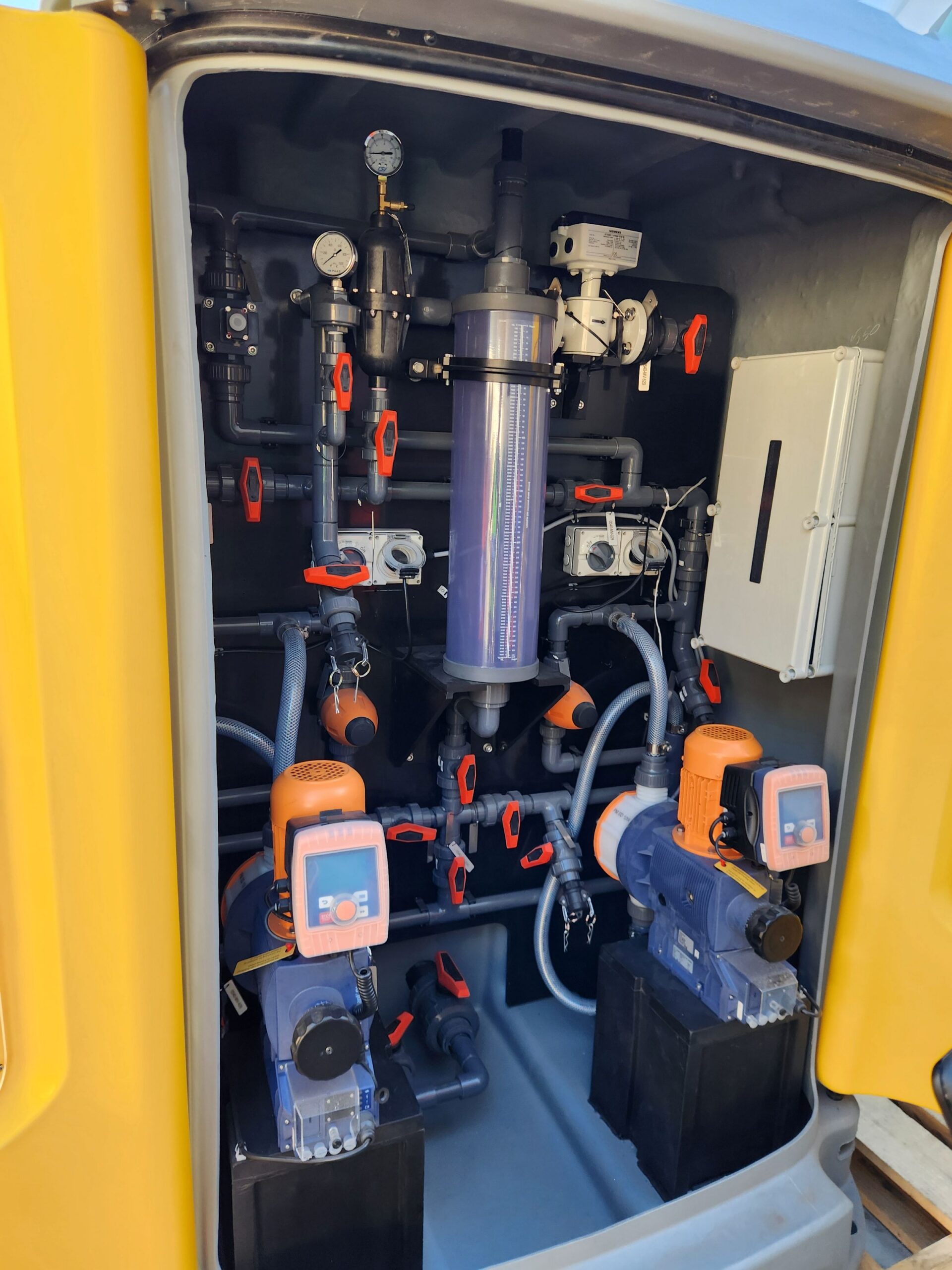
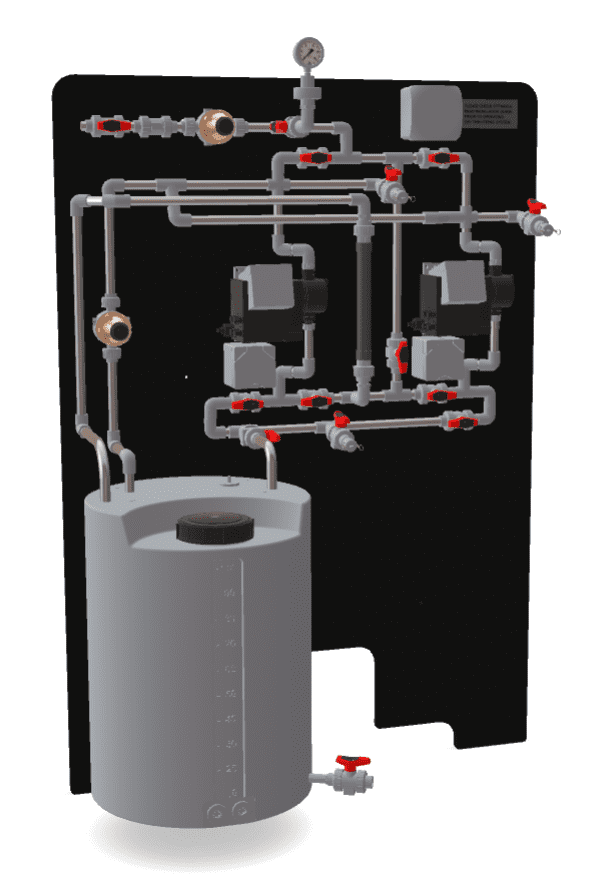
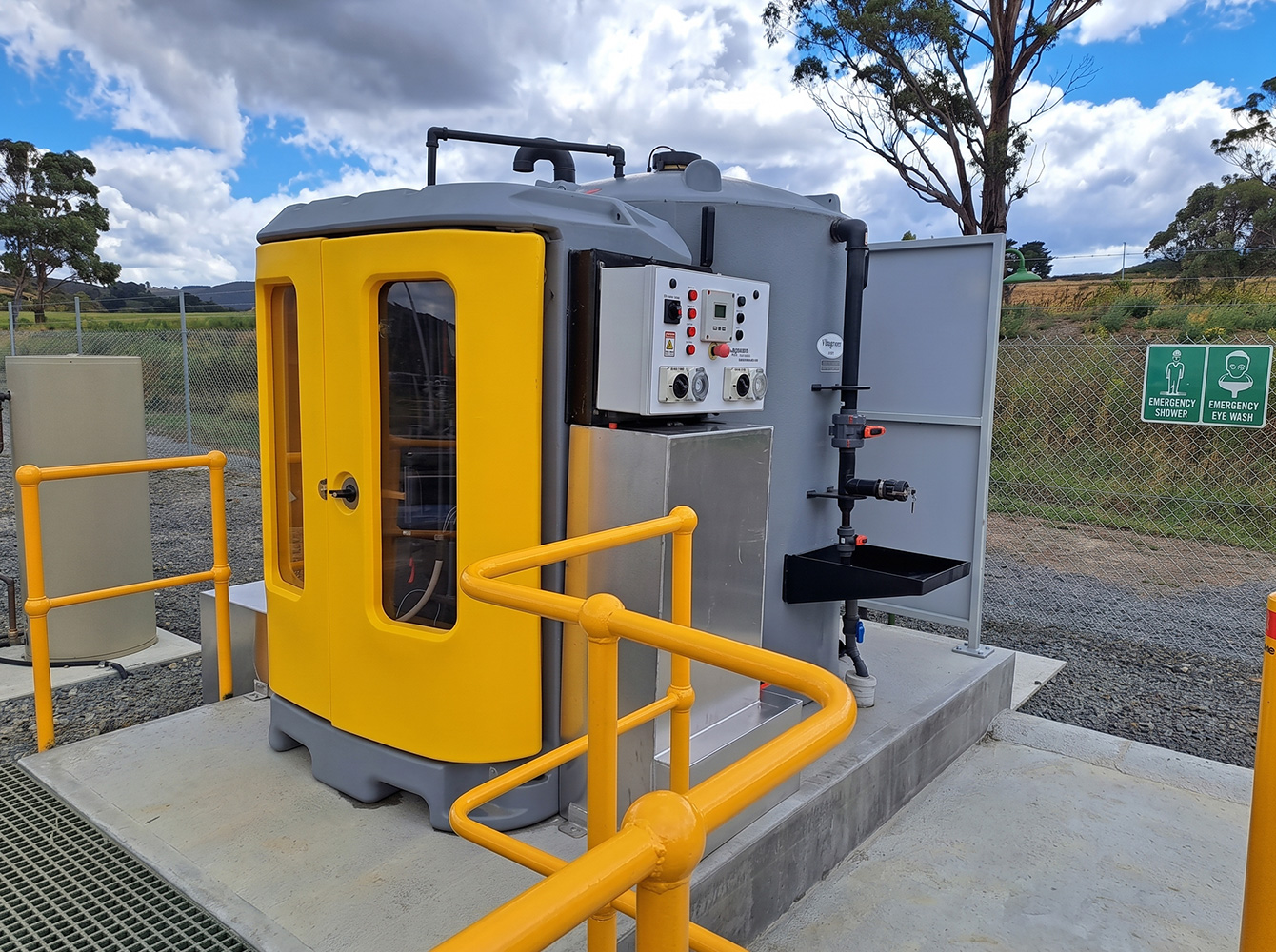
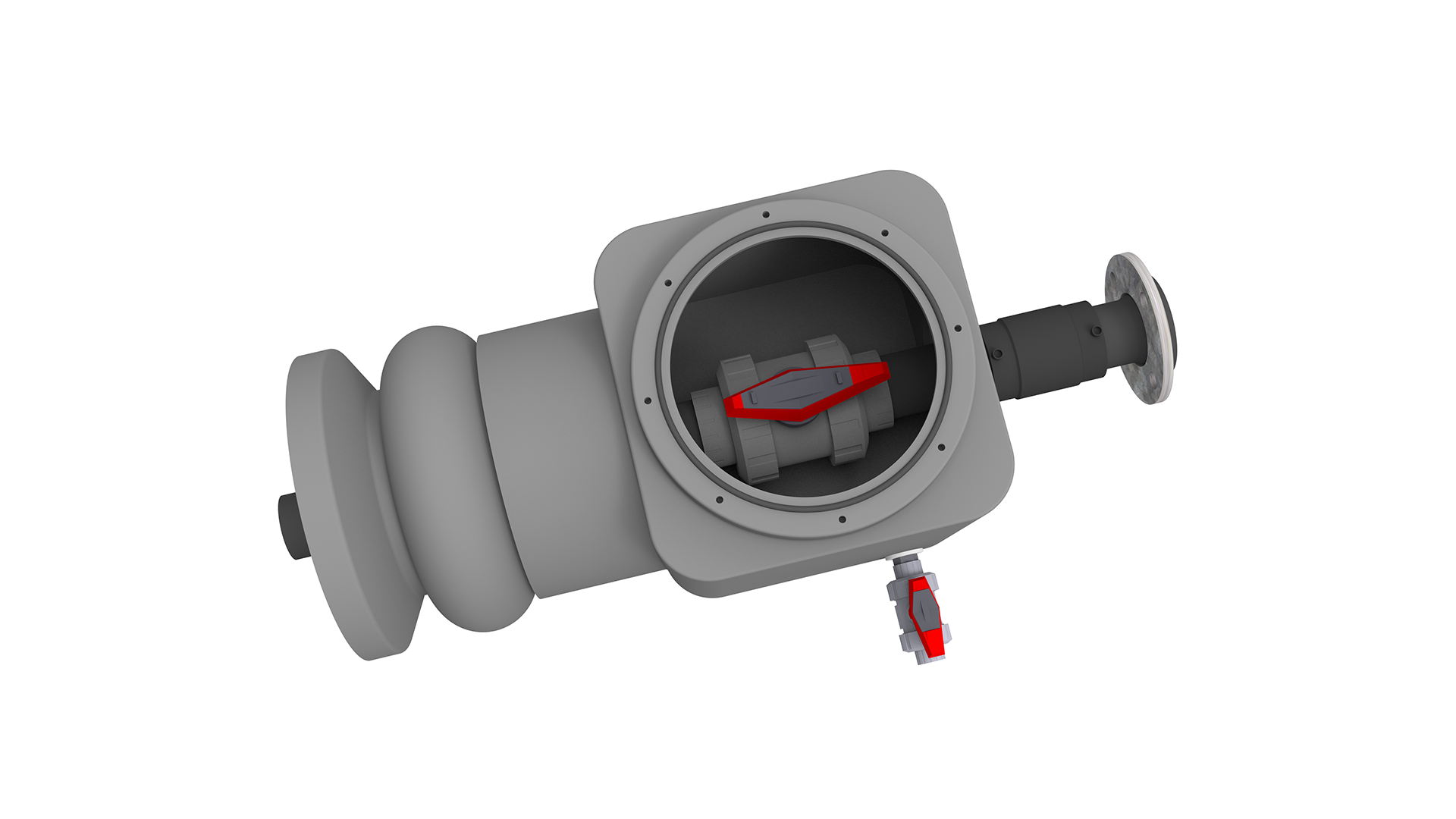
Pre-engineered dosing systems for precise, controlled sodium hypochlorite dosing, available as stand-alone cabinets or integrated with a self-bunded tank.
View Product
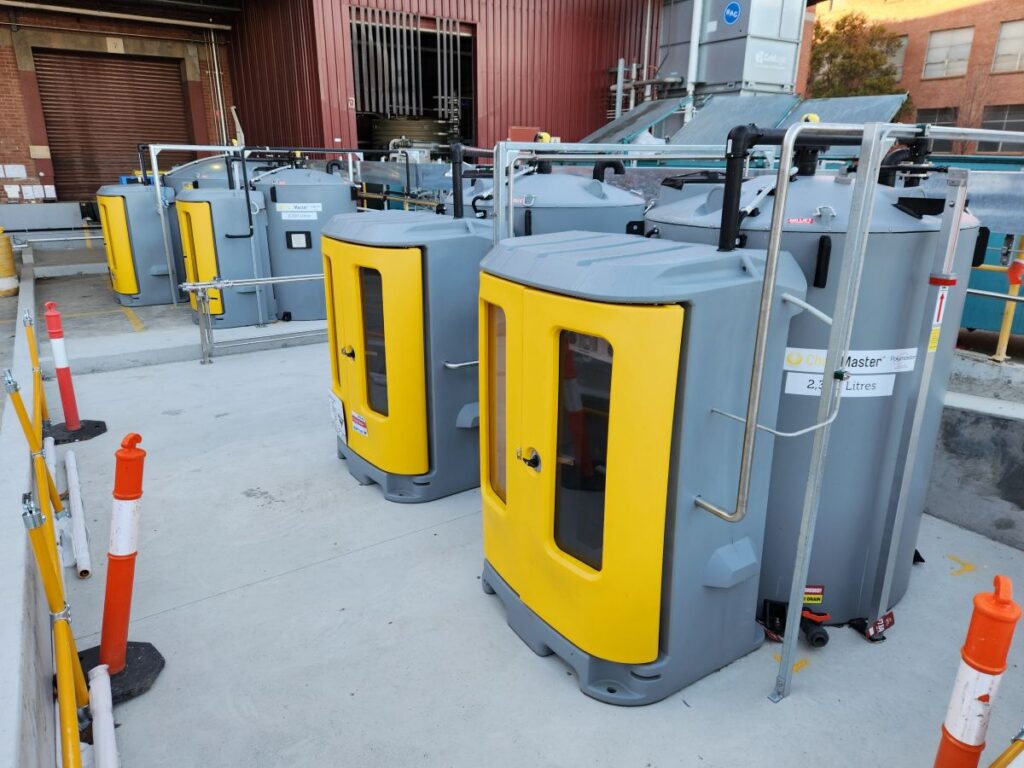
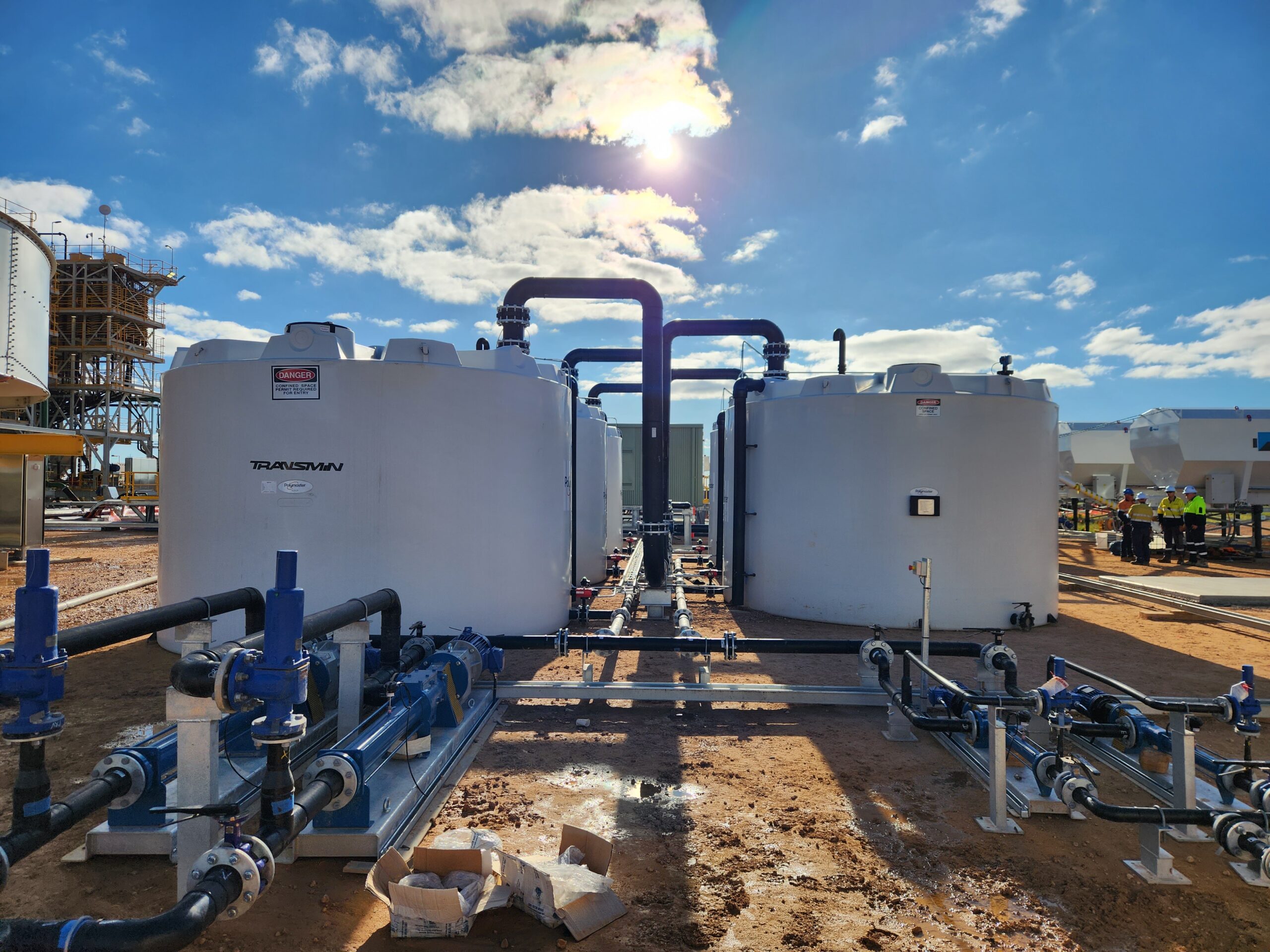
Chemical Dosing Cabinets
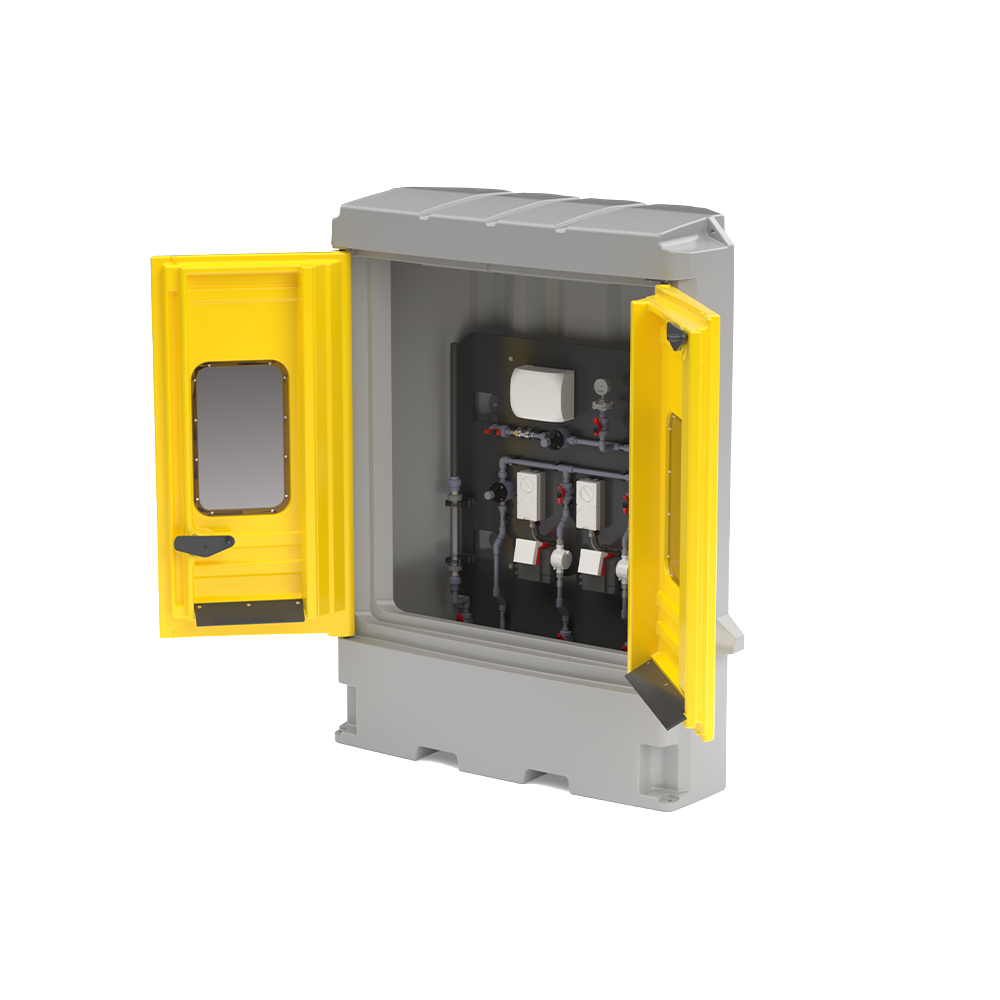
Corrosion-resistant housing for dosing pumps, pipework and controls in sodium hypochlorite dosing installations.
View Product
How Polymaster Supports Disinfection Applications
Polymaster designs and manufactures chemical storage and dosing solutions specifically for sodium hypochlorite and other disinfection chemicals, supplying tanks to water treatment plants and industrial facilities across Australia. Our role is storage, containment and dosing equipment, working alongside the engineers and operators responsible for the treatment process itself.
Polymaster tanks can hold more than 1,965 chemicals, with multiple grades of polyethylene available and specially formulated material options for aggressive duties including sodium hypochlorite. Tanks are built to a 25-year design life. Pre-engineered and custom dosing systems, chemical fill stations, GA drawings, step files and datasheets are all available, so specifiers can design around the tank rather than wait for it.

Providing Australian Industries with Chemical Storage Solutions for Over 30 Years
Polymaster chemical storage tanks are Australian made, independently certified to AS/NZS 4766:2020 and AS/NZS 4020, and trusted by water utilities, industrial operators and civil contractors across Australia.
Need Chemical Storage for a Disinfection System?
Our team can help you specify the right chemical storage and containment for your disinfection application. Tell us the chemical, the concentration and the volume, and we will work through the rest with you.


FAQs
Frequently Asked Questions about Clean in Place Chemical Storage
What is the best way to store sodium hypochlorite?
Store it in a tank made from compatible chemical-grade polyethylene, inside secondary containment, kept cool and out of direct sunlight, with venting appropriate to the chemical. Keep it well away from acids and ammonia. Size the tank to your actual turnover rather than to the largest delivery you can take, because sodium hypochlorite weakens as it sits.
What material is compatible with sodium hypochlorite storage?
Sodium hypochlorite is a strong oxidiser and needs a material chosen for that duty rather than a general-purpose tank. Polymaster manufactures specially formulated PE material options for aggressive chemicals including sodium hypochlorite, with multiple grades available. Polyethylene tanks are moulded as one piece with no seams or welds in the tank wall, arrive as a complete tested unit with the bund built in, and can be relocated if the installation moves. The right grade depends on concentration, temperature and how long the chemical sits in the tank, so compatibility is confirmed against the Polymaster chemical compatibility chart before anything is specified.
Why can I not store sodium hypochlorite in a standard rainwater tank?
A rainwater tank is made from potable water grade polyethylene, which is formulated for drinking water rather than for a corrosive oxidiser. Sodium hypochlorite will attack it over time. Rainwater tanks also lack the secondary containment, venting and fittings that a corrosive chemical requires.
What chemicals must not be stored with sodium hypochlorite?
Acids and ammonia. Contact with either produces toxic chlorine gas. Sodium hypochlorite needs its own dedicated tank, kept physically separate from acid storage, with clear labelling and hazard warnings on both.
What secondary containment is required for sodium hypochlorite storage?
Secondary containment is required, and bund capacity must meet AS 3780:2023. Polymaster self-bunded tanks and enclosed IBC bunds provide 110% bund capacity in a single unit, which removes the need for a separate concrete bund and cuts the civil works that go with it.
How does temperature affect sodium hypochlorite storage?
It degrades faster as temperature rises, and faster again at higher concentrations or in sunlight. As it breaks down, it loses available chlorine and releases gas, which is why venting matters. Storing it cool and shaded, and sizing tanks to your turnover, keeps sodium hypochlorite closer to full strength at the point of dosing.
What dosing systems are used with sodium hypochlorite in water treatment?
Polymaster supplies pre-engineered and custom dosing systems, available as stand-alone cabinets or integrated with a self-bunded tank. A typical configuration houses dosing pumps, pipework, isolation valves, pressure relief and a back pressure valve inside a double-door cabinet, with the bund drain and containment built in.
How is sodium hypochlorite used in drinking water treatment?
It is dosed into the water to produce hypochlorous acid, which inactivates bacteria, viruses and parasites. A chlorine residual is maintained through the distribution network so the water stays protected between the plant and the tap, in line with the Australian Drinking Water Guidelines.
What Australian standards apply to disinfection chemical storage?
AS 3780:2023 covers the storage and handling of corrosive substances, including bund capacity. AS/NZS 4766:2020 is the standard for polyethylene storage tanks, and Polymaster tanks are independently certified to it. Your state dangerous goods obligations apply as well, since sodium hypochlorite is a Class 8 corrosive.
What is the difference between pre-engineered and custom dosing systems?
A pre-engineered system is a proven configuration built to a standard specification, which shortens lead time and removes integration risk on site. A custom system is designed around a specific site, chemical and control philosophy where the standard configuration does not fit. Both arrive assembled and tested.