

Polyethylene (PE), the material most poly tanks are made from, is one of the most widely used chemical storage materials in the world because it resists a broad range of acids, alkalis and water treatment chemicals without rusting or corroding. But not all polyethylene is the same. The grade of PE a tank is made from, and how the tank is built, decides whether it can safely hold your chemical. This guide covers which chemicals poly tanks can hold, how the main grades compare, which chemicals need a specialist tank and what Australian standards apply to chemical storage tanks.
What Types of Chemicals Can a Poly Tank Hold?
One of the most common questions our team hears is “what chemicals can be stored in your tanks?” The short answer to what chemicals can be stored in Polymaster’s tanks is most water-based chemicals, as long as the tank is made from the right grade of polyethylene. Polymaster chemical tanks are compatible with more than 1,900 chemicals, and the chemical compatibility of polyethylene generally falls into these groups.
Polyethylene is generally compatible with:
- Water and aqueous solutions: chemicals dissolved in water
- Strong industrial acids: hydrochloric, sulphuric, nitric and phosphoric acid, with the right grade for the concentration
- Alkalis: sodium hydroxide (caustic soda) and potassium hydroxide
- Oxidising chemicals (chemicals that attack and break down other materials): sodium hypochlorite (liquid chlorine) and hydrogen peroxide, in a chemical-grade tank
- Fertilisers: UAN (urea ammonium nitrate), calcium nitrate and potassium nitrate solutions
- Water treatment chemicals: ferric chloride, alum, coagulants and flocculants (chemicals that clump dirt together so it can be filtered out)
- Cleaning chemicals: detergents and mild solvents in diluted form
Polyethylene is generally not suitable for:
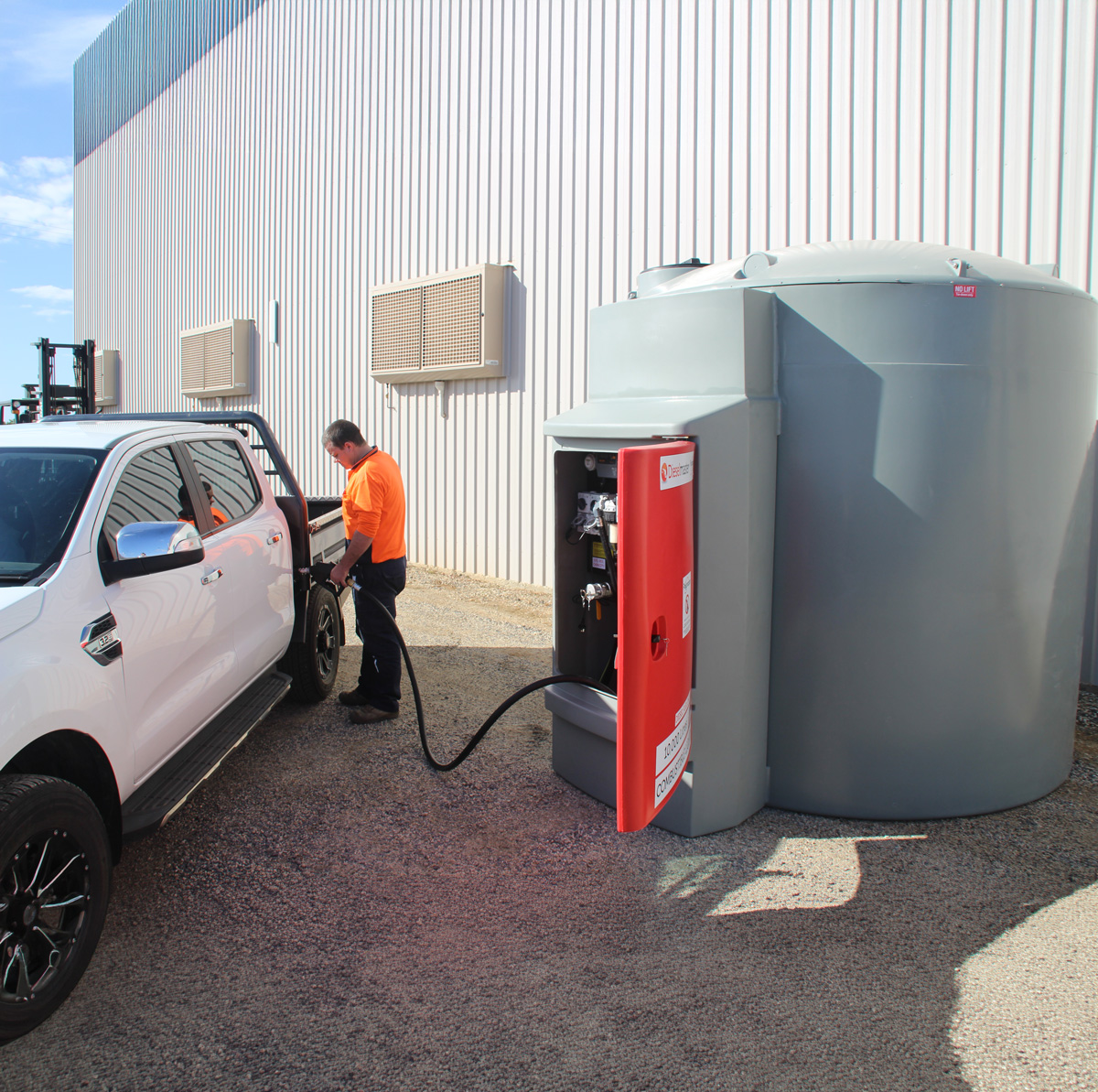
- Petrol and other low flash point fuels: these give off flammable vapour at low temperatures, which creates a fire risk. Diesel is different because it has a much higher flash point, which is why poly diesel tanks are widely used.
- Strong solvents: chemicals such as xylene, toluene and chlorinated degreasers can soak into and pass through the tank wall.
- Some strong oxidising acids at high concentrations: these may need a specialist grade or a different material altogether.
Always check compatibility against the chemical’s Safety Data Sheet (SDS), the document every chemical supplier provides that sets out how it should be stored and handled.
Polymaster also tests each application in-house and matches it to the right polyethylene grade before a tank is made.
Do poly water tanks leach chemicals?
Not if they are certified for drinking water. Polymaster water tanks are made from food-grade polyethylene certified to AS/NZS 4020, the Australian Standard that tests products in contact with drinking water to make sure nothing harmful leaches into it. The bigger risk runs the other way: rainwater tanks aren’t made from a chemical-grade blend, so storing aggressive chemicals in them can break the tank down.
What’s the Difference Between LLDPE, HDPE and XLPE?
If you’re asking what the best polyethylene for storing chemicals is, the answer depends on the chemical, its concentration and the size of the tank. Polyethylene is grouped by its density (how tightly packed the plastic is) and how its molecules are bonded. These are the three types you’ll hear about most when choosing an LLDPE, HDPE or XLPE chemical tank:
- LLDPE (linear low-density polyethylene): the most common material for rotationally moulded tanks (tanks moulded in one seamless piece). It’s tough with good general chemical resistance, which is why it’s used for water tanks and milder chemicals. Polymaster’s standard LLDPE grade is the one used in its water tanks.
- HDPE (high-density polyethylene): denser and stiffer, with better resistance to aggressive chemicals. Polymaster uses HDPE (Hexathene Chem-Plus) for aggressive chemicals in its tanks.
- XLPE (cross-linked polyethylene): the plastic’s molecules are chemically bonded to each other during moulding, which makes it very tough and resistant to stress cracking (cracks that form when plastic is under constant load). The trade-off is that it can’t be re-melted, so it can’t be welded or recycled.
The base plastic is only part of the answer. The additives blended into it matter just as much, because they are what protect the tank wall from chemical attack over time.
What is Hexathene™?
Hexathene™ is Polymaster’s own range of engineered polyethylene grades, blended in-house. The Hexathene™ polymer includes additives that resist oxidation, along with better resistance to cracking, antimicrobial properties and flame retardancy. Two grades are used for chemical storage: Hexathene Chem for most common process chemicals, and Hexathene Chem-Plus for more aggressive chemicals such as sodium hypochlorite and sulphuric acid up to 98%.
What Chemicals Require a Specialist Chemical-Grade Tank?
Some chemicals are aggressive enough that the wrong tank will crack and fail, sometimes within months. As we’ve long warned, aggressive chemicals need a specialised poly tank. A chemical-grade poly tank is essential for these:
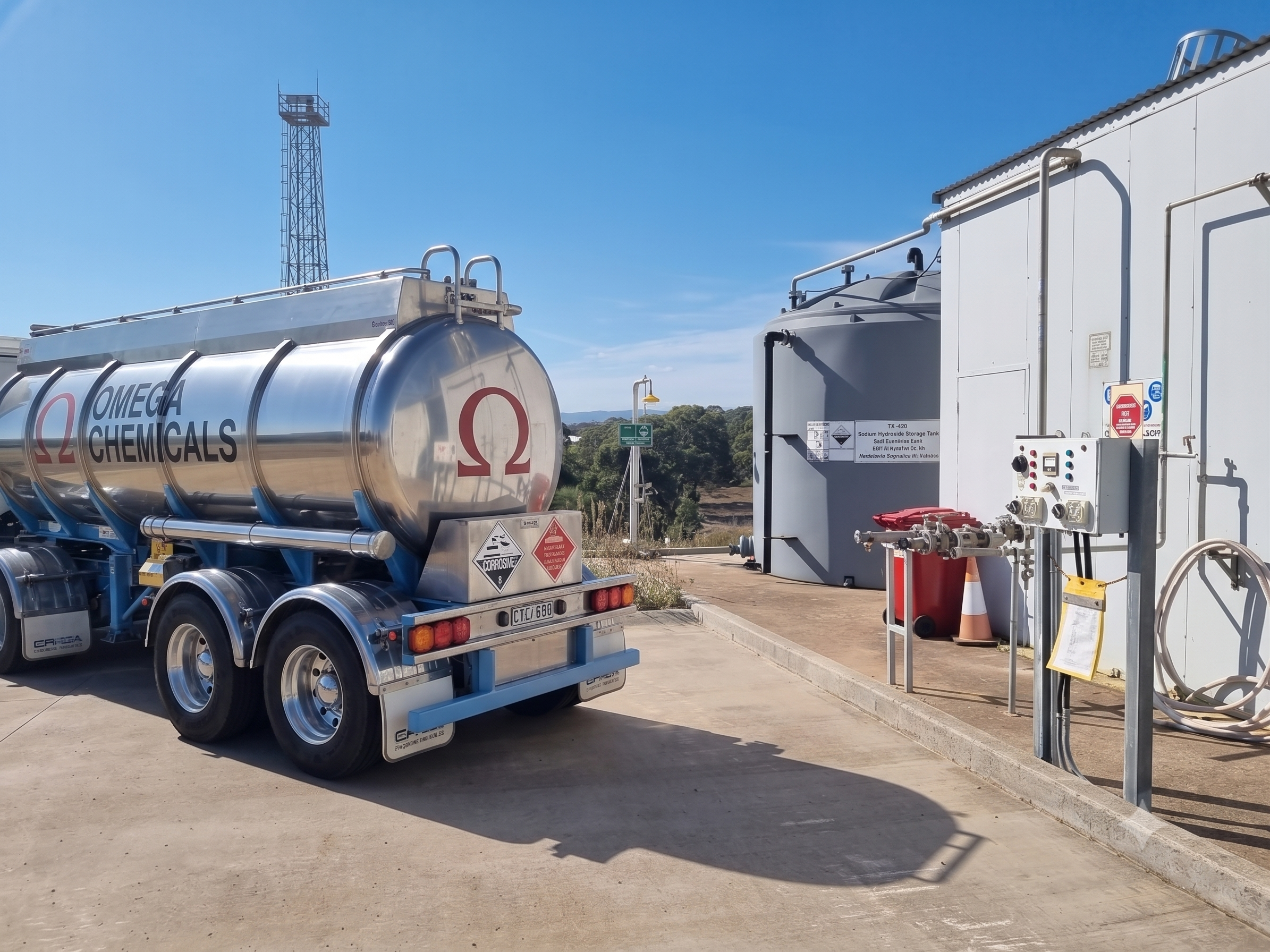
- Sodium hypochlorite: liquid chlorine used for disinfection and water treatment. It attacks standard polyethylene through oxidation, causing fine cracks that spread until the tank fails, so a sodium hypochlorite storage tank must be made from a chemical-grade blend. Read why you can’t store sodium hypochlorite in a rainwater tank.
- Sulphuric acid: highly corrosive and heavy, with concentrated grades at about 1.84 SG (specific gravity, meaning 1.84 times heavier than water). A sulphuric acid poly tank must be rated for that weight, and self-bunding (a tank within a tank that catches any leak) is strongly recommended. See our guidelines for storing sulphuric acid.
- Nitric acid: a strong oxidising acid used for cleaning in dairy production. It needs a high-density, chemical-grade tank rated for its weight. Learn more about nitric acid in dairy production.
- Hydrochloric acid: used widely in mining and water treatment at concentrations up to about 37%. It gives off corrosive fumes, so the tank’s venting and fittings need to be specified for it. Read about hydrochloric acid in gold mining.
- PFAS-contaminated water: water containing “forever chemicals” from firefighting foam. It isn’t aggressive to the tank, but self-bunded storage stops contamination spreading if there’s a leak. See our tank solutions for PFAS remediation.
Chemical Tank Compliance in Australia: What AS3780 Requires
Another question we hear often is “do your chemical tanks meet Australian safety standards?” Two standards matter most.
- AS/NZS 4766: the Australian and New Zealand Standard for polyethylene storage tanks for water and chemicals. Polymaster chemical tanks are independently certified to AS/NZS 4766.
- AS 3780: the Australian Standard for the storage and handling of corrosive substances, it covers how corrosive chemicals are stored, including secondary containment (a bund, or second barrier that catches a leak), separation from incompatible chemicals, labelling, ventilation and emergency planning.
For AS3780 chemical storage compliance, the tank needs AS3780 secondary containment, and Polymaster designs its bunded products to hold at least 110% of the tank’s contents. A standard water tank or a loose IBC (a 1,000L plastic cube in a metal cage) on a pallet provides none of this. A self-bunded tank (a tank within a tank) builds the containment into the unit, so there is no concrete bund to construct on site. Local and state regulations can add further requirements, so check with the relevant authority before installation.
How Polymaster engineers and tests its chemical tanks:
- Finite element analysis (FEA): computer modelling of the stresses on the tank to confirm its structural design
- Hydrostatic testing: filling the tank with water to check it holds pressure without leaking
- Ultrasonic thickness testing: using sound waves to confirm the wall is the correct thickness all the way around
- UV stabilisation: resin rated to a minimum of UV12 (a rating for how well the plastic resists sun damage) for harsh Australian outdoor conditions
Types of Chemical Storage Available From Polymaster
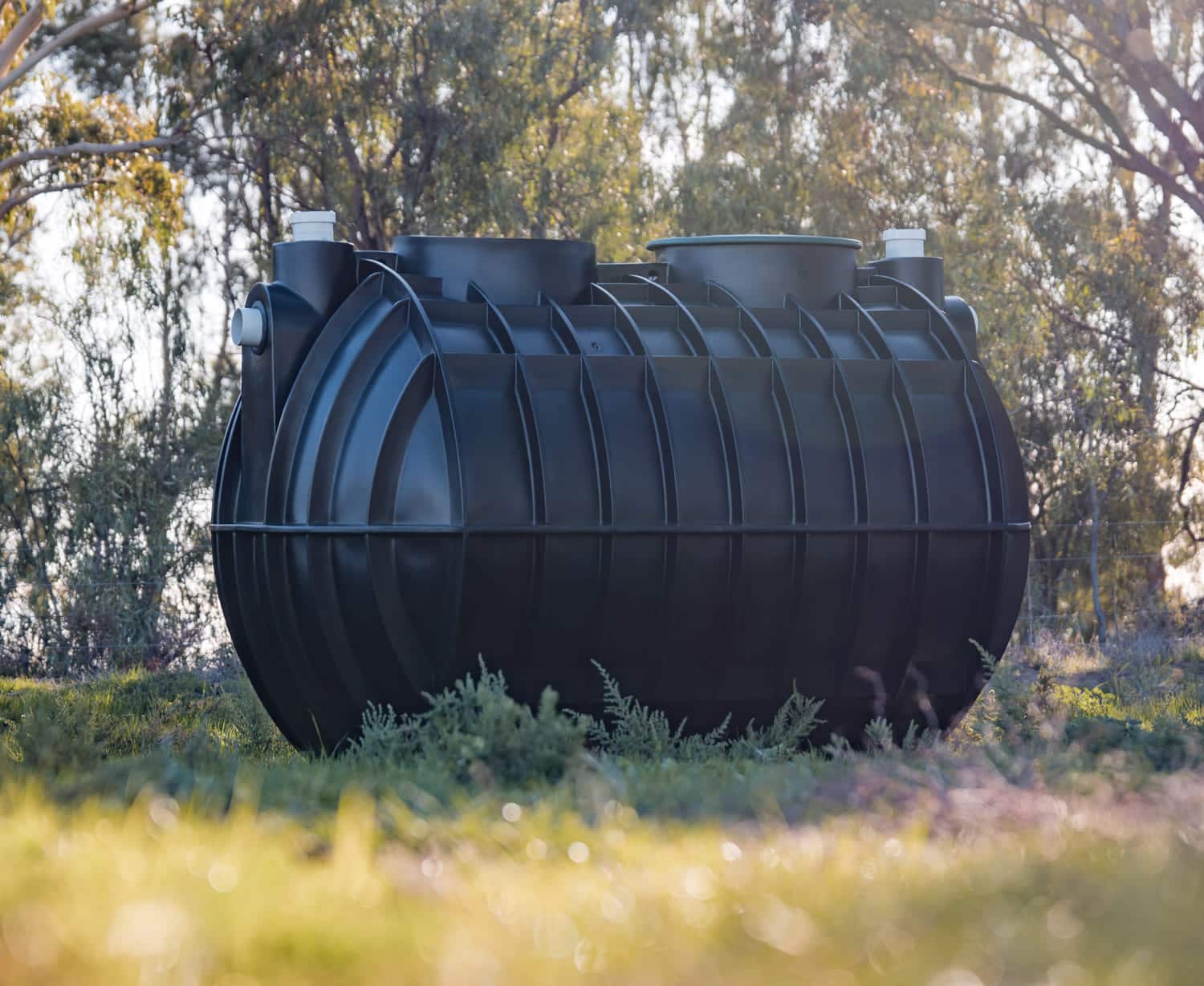
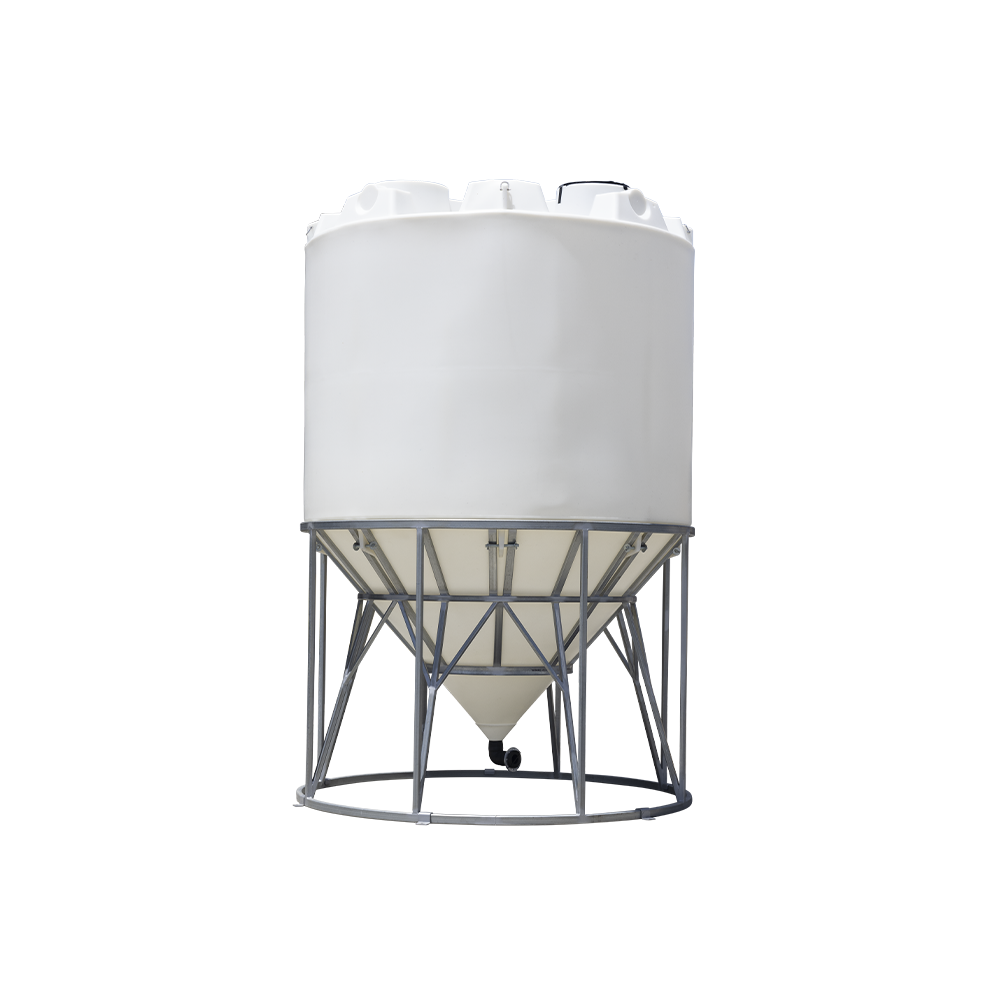
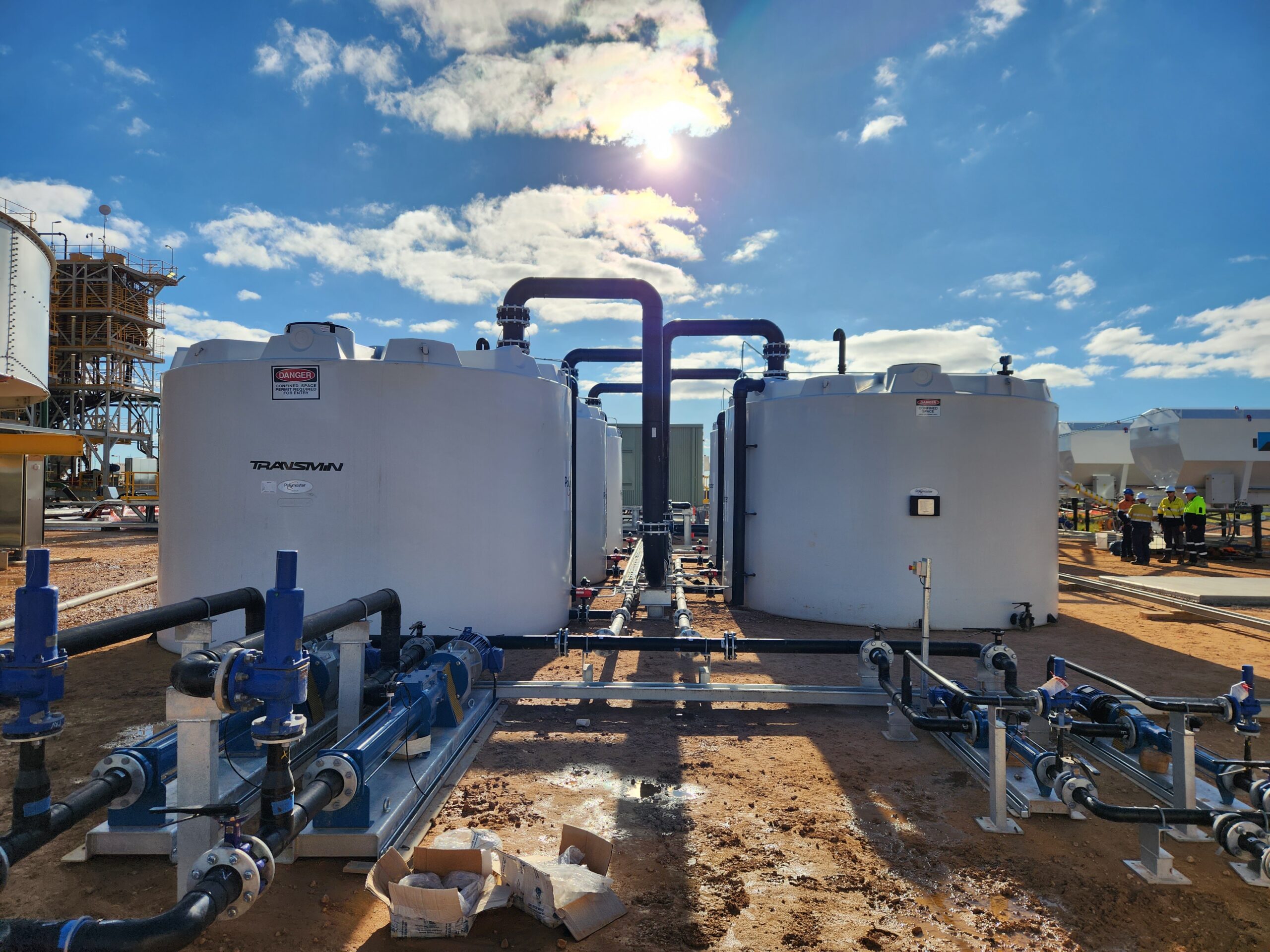
- Chemical storage tanks: one-piece, seamless tanks from 200L to 50,000L, rated from 1.0 to 2.0 SG and made from a polymer grade matched to the chemical.
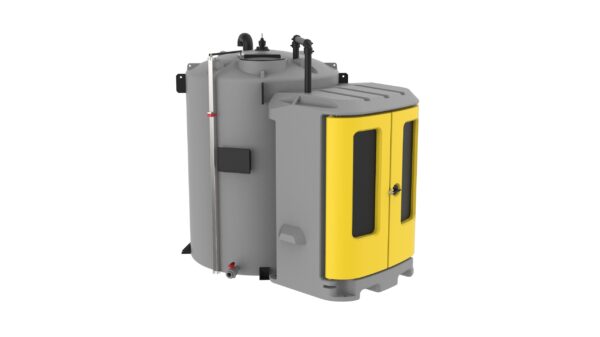
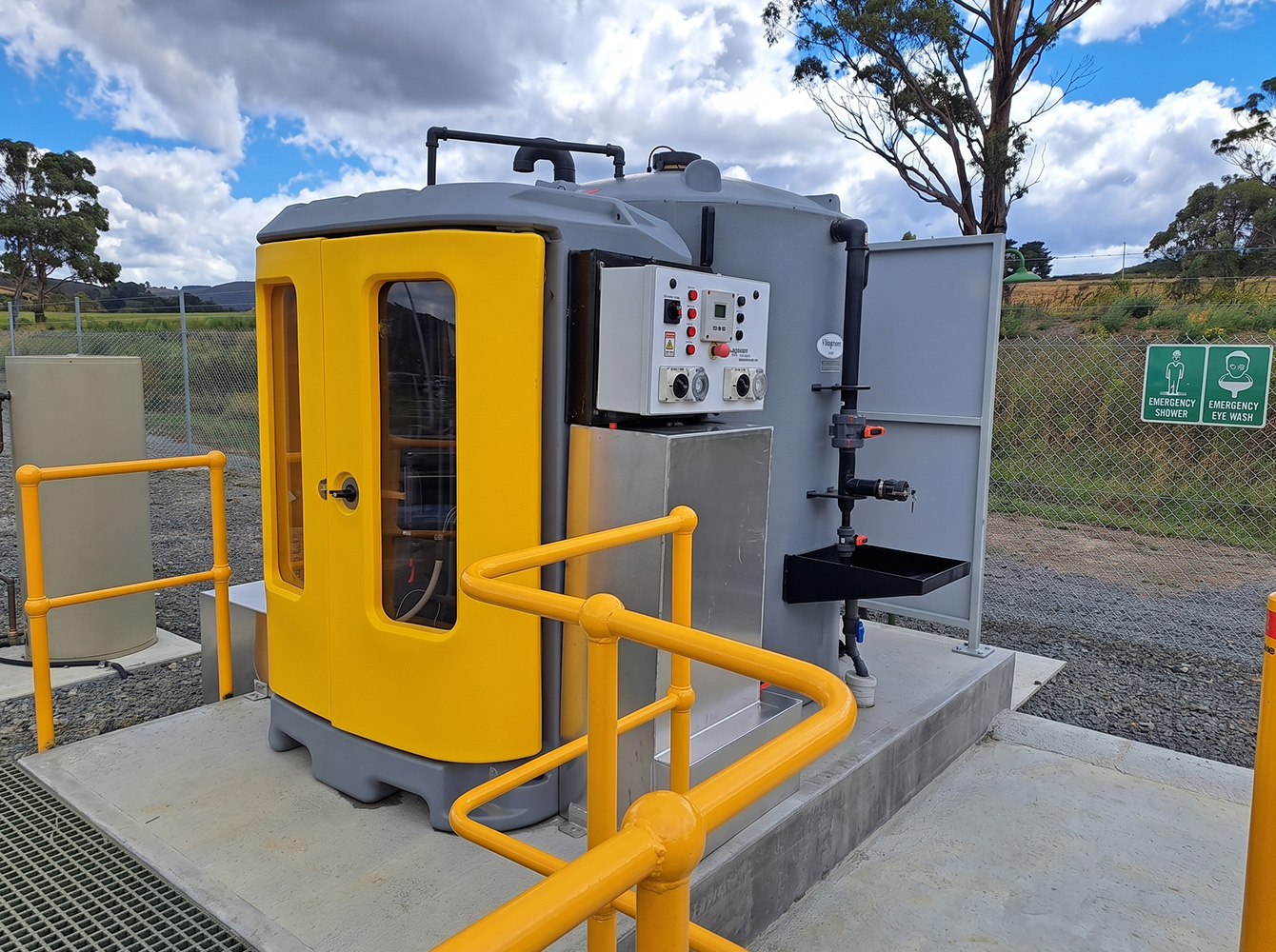
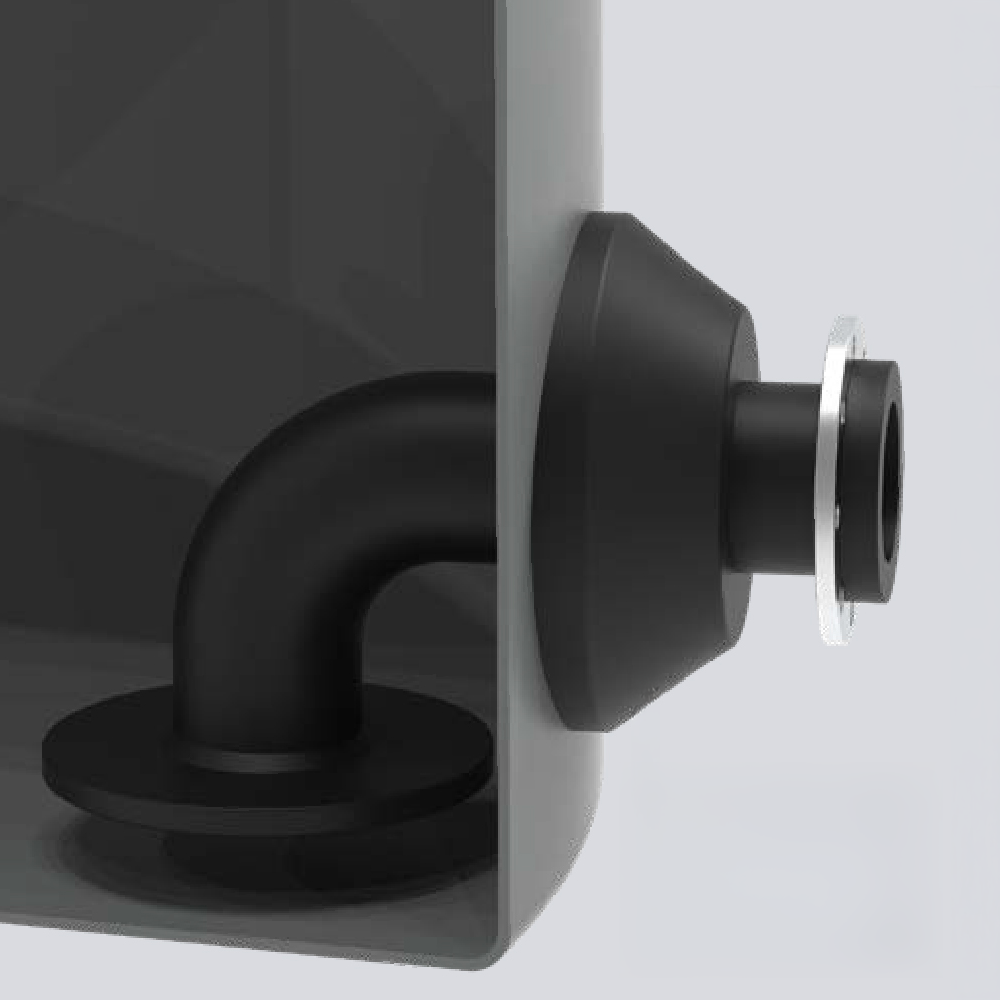
- Self-bunded chemical tanks: 1,500L to 30,000L, with at least 110% containment built in, certified to AS/NZS 4766 and designed in line with AS 3780. Here’s why a self-bunded tank outperforms a single-walled tank.
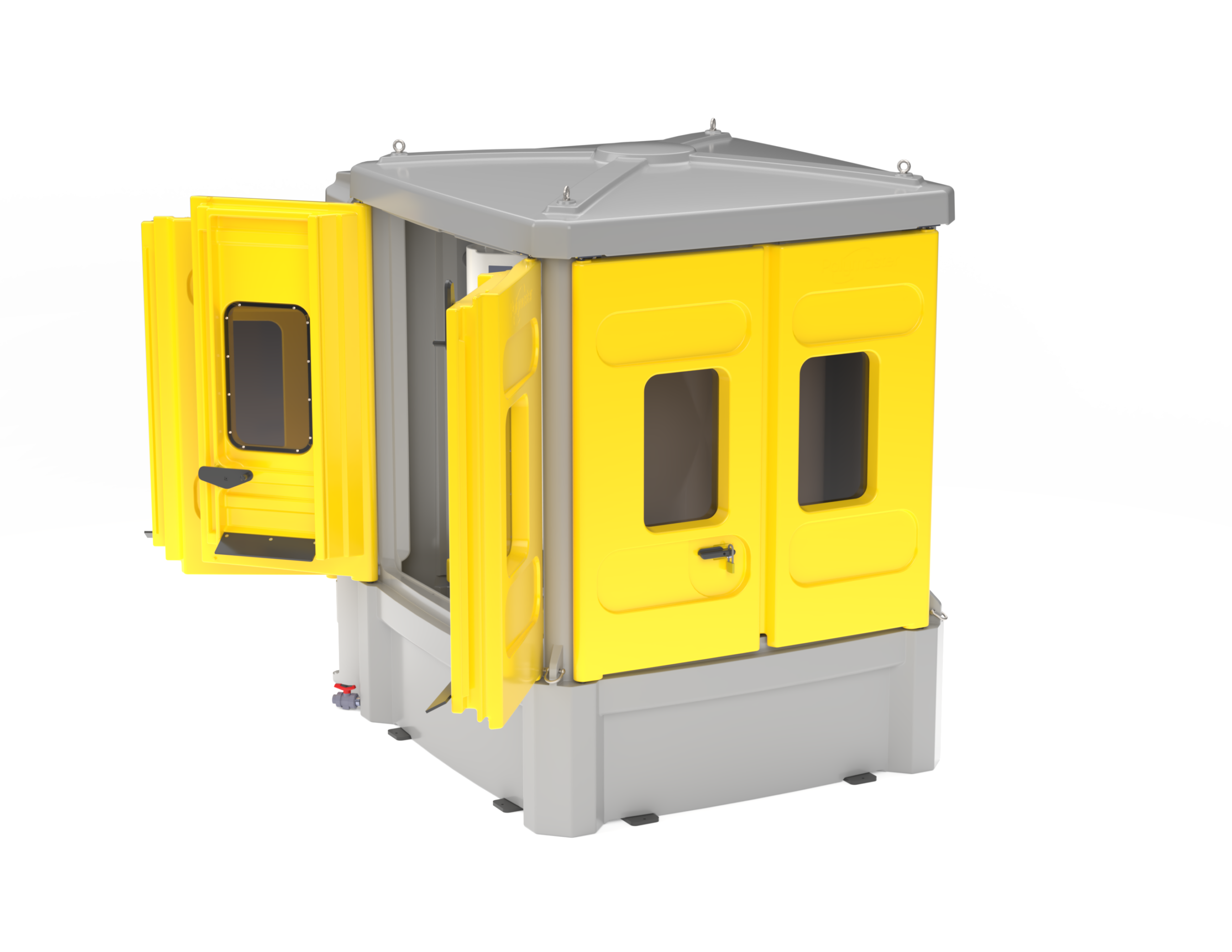
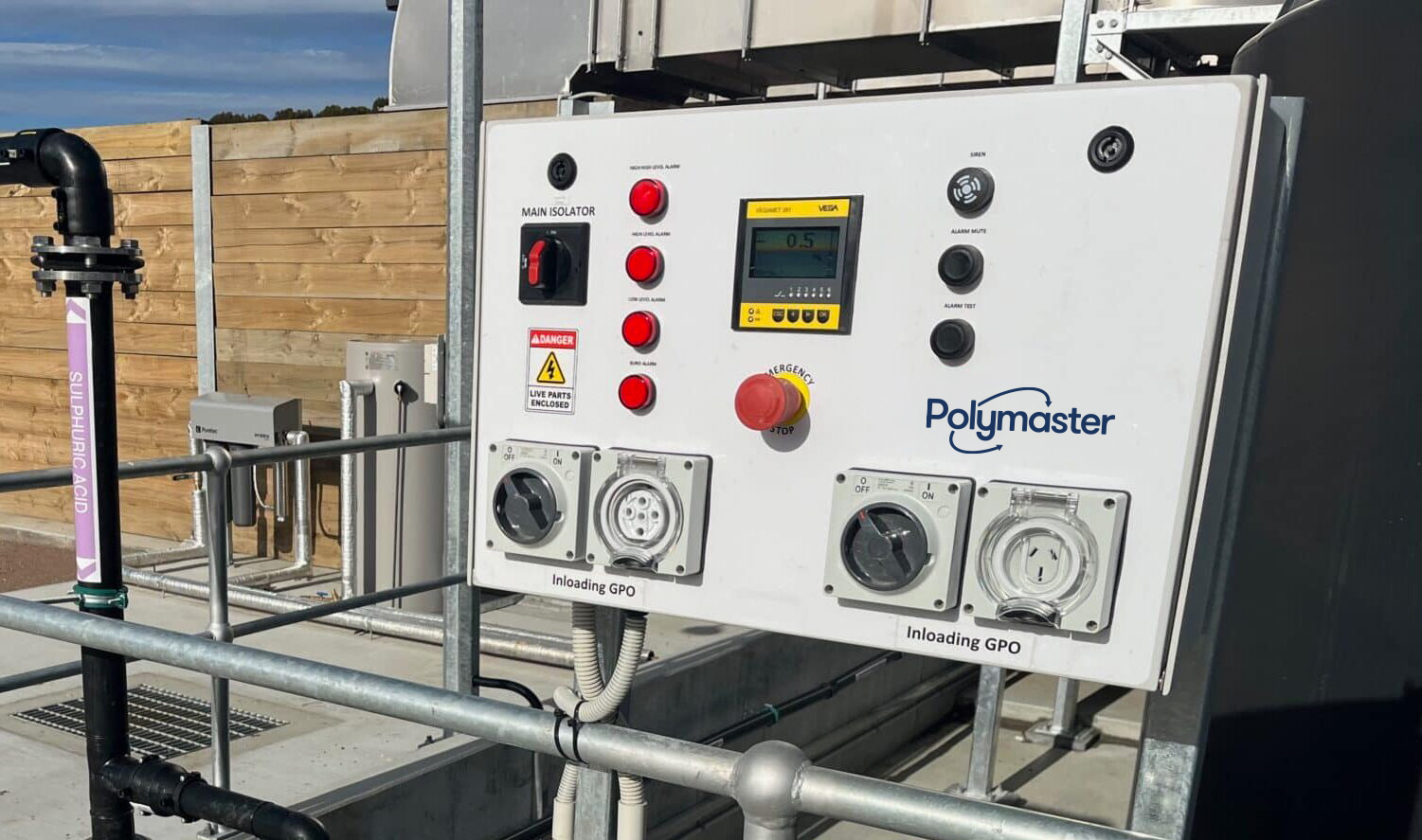
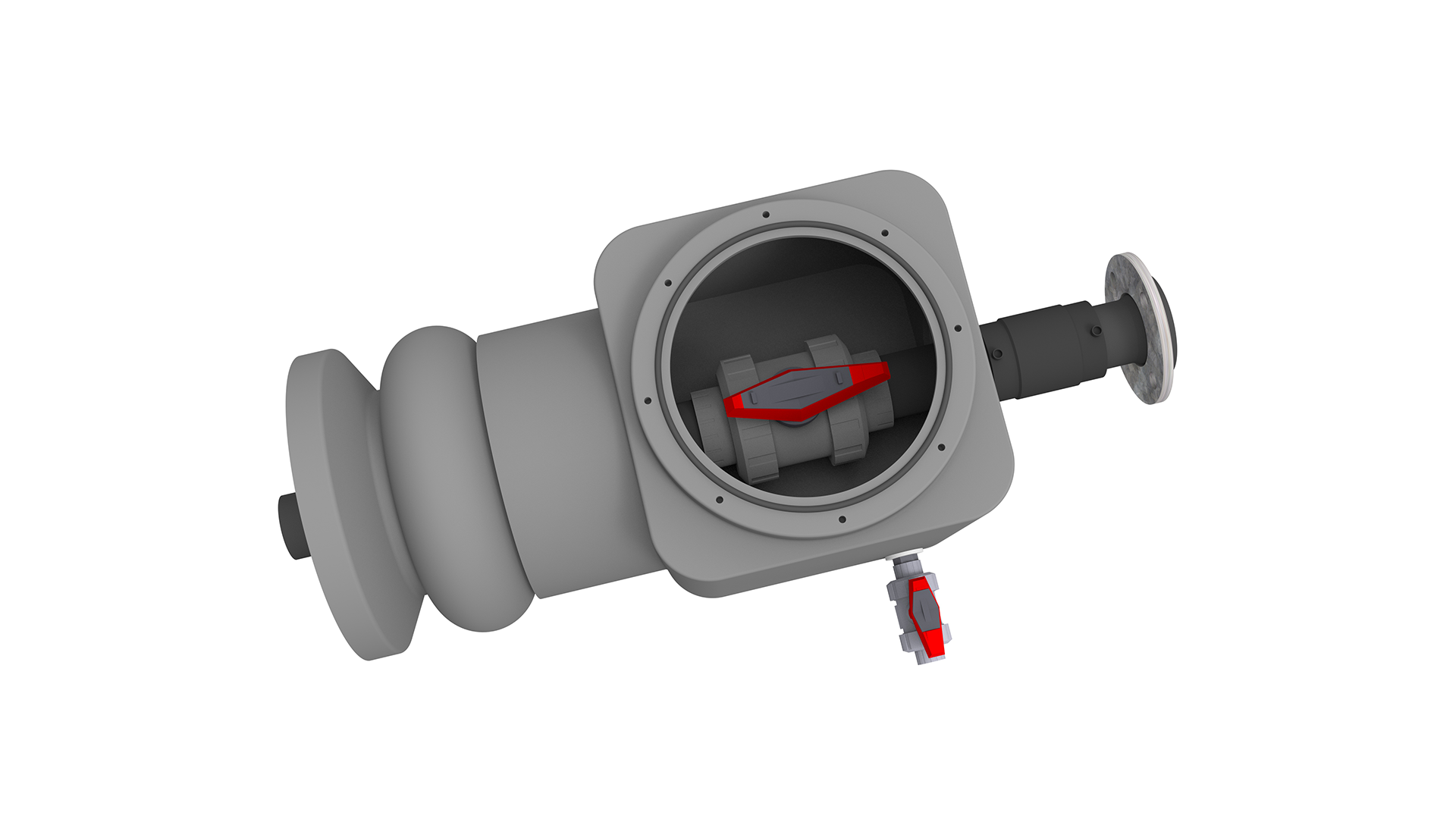
- Enclosed IBC bund: for sites using IBCs (intermediate bulk containers, the 1,000L cubes in a metal cage). Each IBC tank sits inside a lockable, weather-resistant enclosure with side or rear forklift loading, an integrated 250L day tank (a small feed tank) so dosing (adding the chemical in measured amounts) isn’t interrupted. It also has a built-in bund (a spill tray) that can hold 110% of the IBC’s contents.
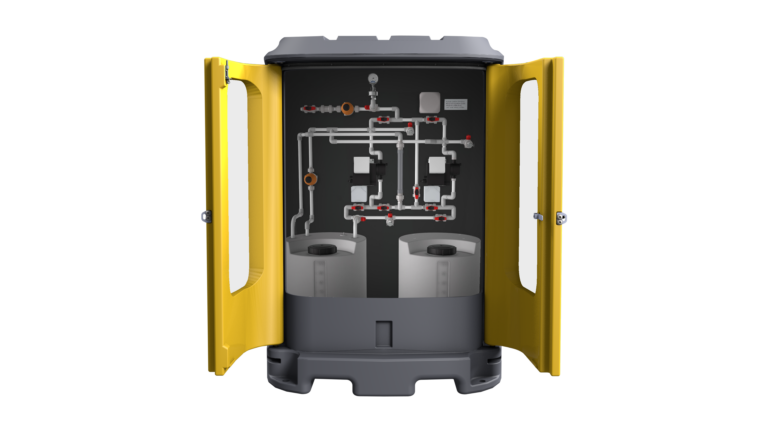
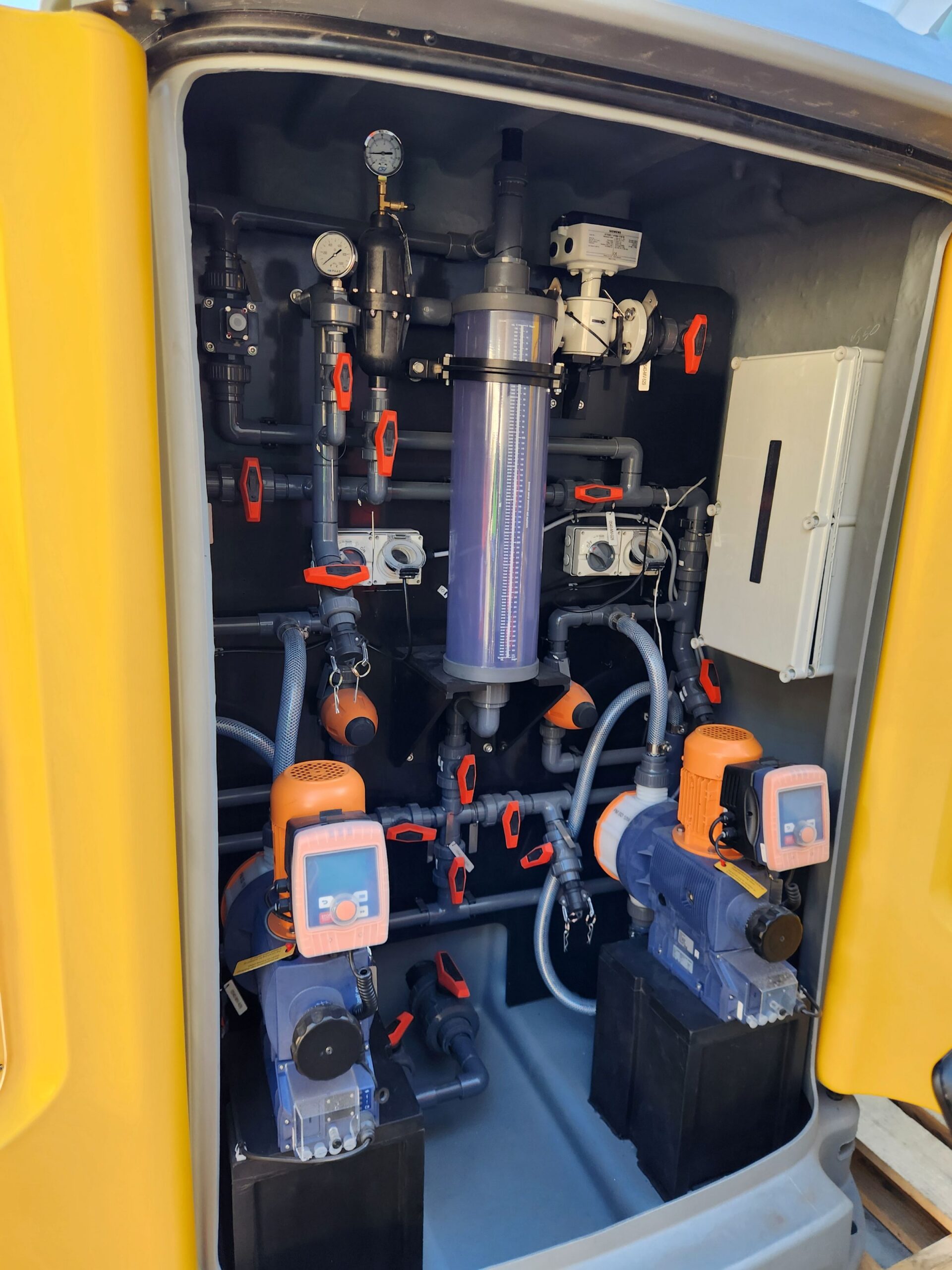
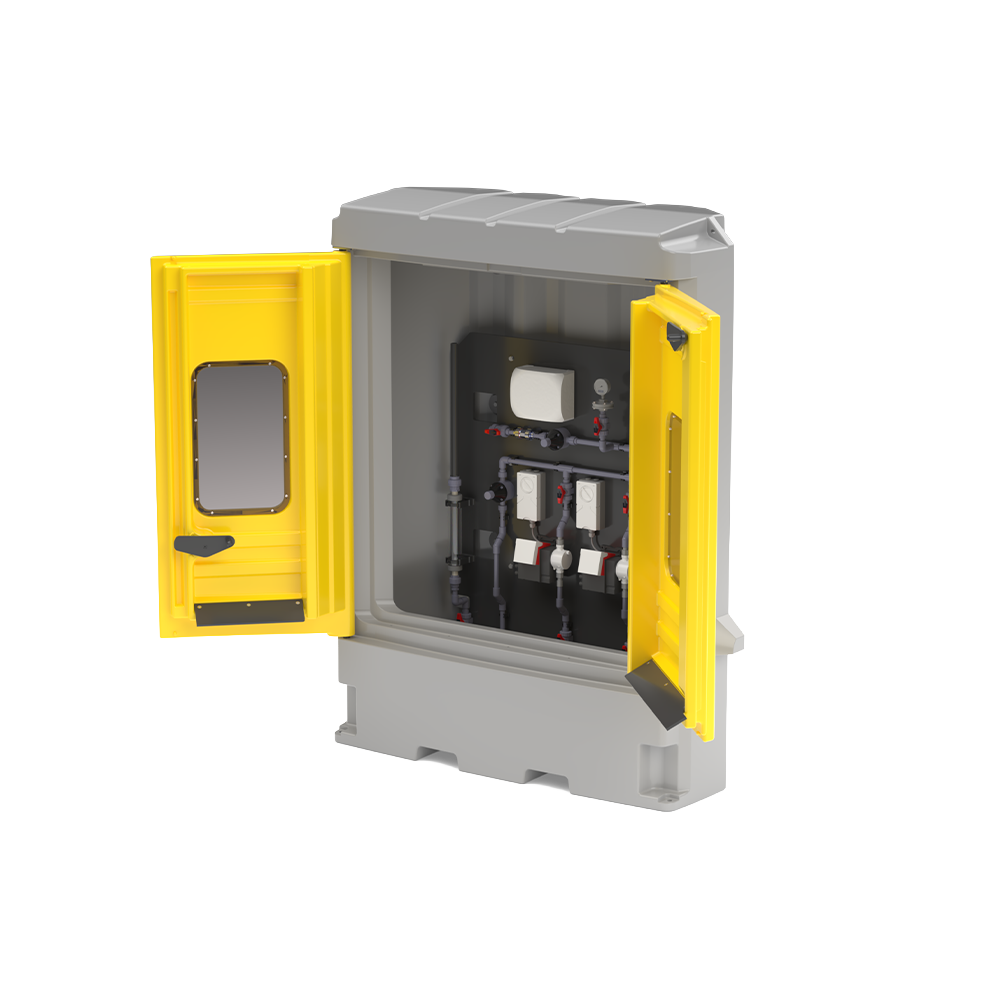
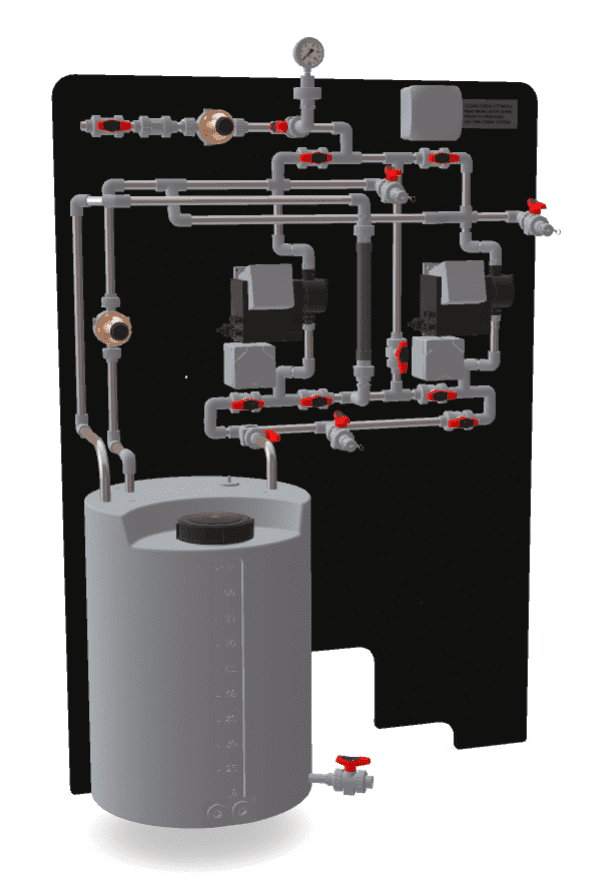
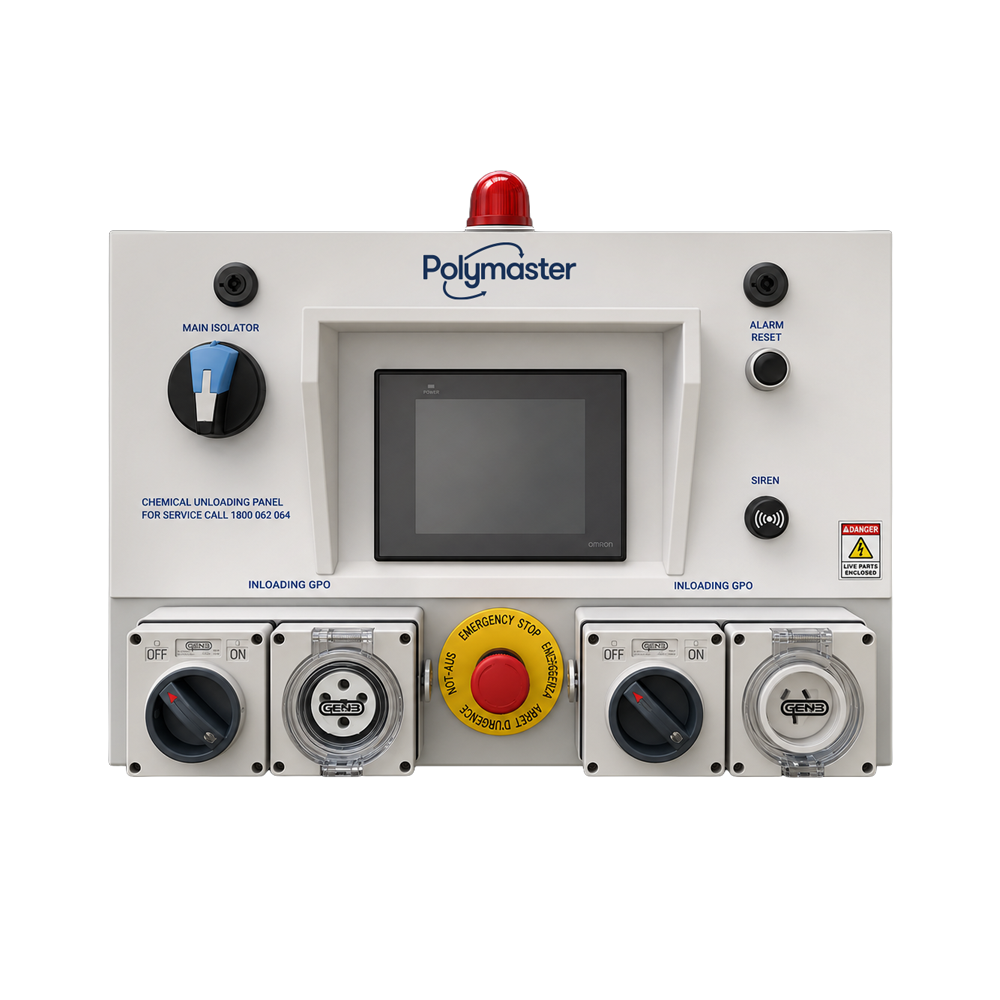
- Chemical dosing skids: a complete chemical dosing unit that combines the storage tank, chemical dosing pumps and controls. Find out how a chemical dosing skid works.
- Industrial water storage tanks: tanks for process water (water used in industrial processes rather than for drinking).
How to Choose the Right Chemical Storage Tank for Your Application
- Identify the chemical you need to store, including its concentration and SG.
- Check compatibility against the SDS and Polymaster’s chemical compatibility list, or ask our team.
- Work out the capacity you need and whether AS 3780 requires a self-bunded tank.
- Consider how the chemical will be filled, dispensed or dosed.
- Confirm the certifications your site or project requires, such as AS/NZS 4766 and AS 3780.
Send Polymaster’s technical team your chemical, its concentration and the volume you need, and we’ll recommend a compatible tank. Browse Polymaster chemical tanks for sale in our chemical storage range, or contact our team to start your enquiry.